What Is Cat Food Made Of? Decoding the Bowl for a Healthier, Happier Cat
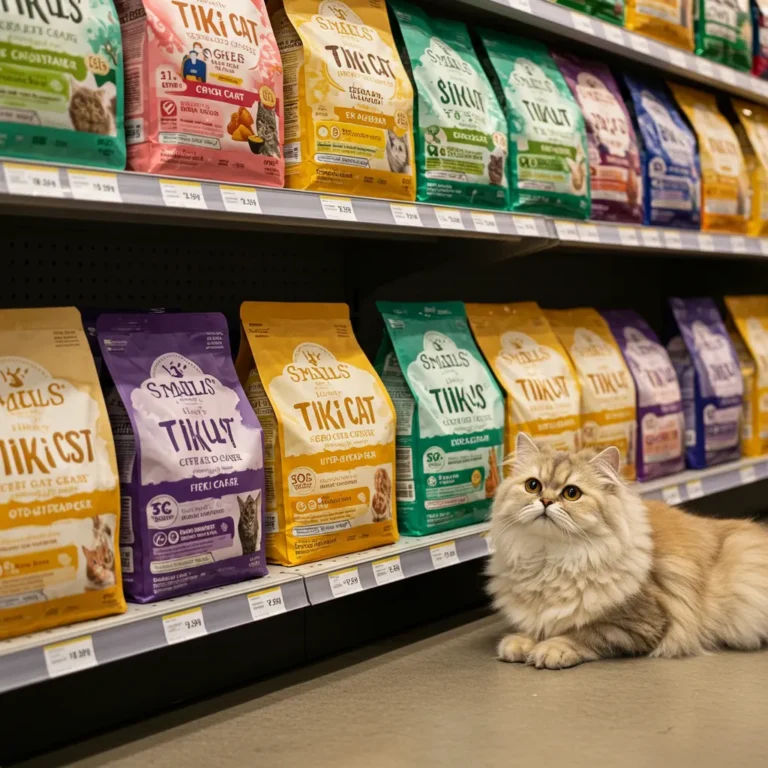
You stand in the pet food aisle, a bag of kibble in one hand and a can of pâté in the other. Your eyes scan the labels: “Chicken Dinner,” “With Real Beef,” “Grain-Free,” “Natural.” But what does it all really mean? What is cat food made out of beyond the marketing slogans and appealing pictures?
The truth is, understanding cat food ingredients is the single most powerful thing you can do for your feline friend’s long-term health. It’s the difference between feeding them a diet that merely fills their belly and one that fuels their carnivorous nature.
This definitive guide will pull back the curtain. We’ll move beyond the jargon and dissect the cat food composition of kibble, wet food, and raw diets. You’ll learn how to decode labels, understand the cat food manufacturing process, and make empowered choices about what goes into your cat’s bowl. Let’s transform you from a confused consumer into a confident, informed cat parent.
Key Takeaways: Your 60-Second Nutrition Primer
- Obligate Carnivores Rule: Cats are biologically designed to thrive on animal-based protein in cat food. This is the non-negotiable foundation of their diet.
- Ingredient Order Matters: Ingredients are listed by weight. Look for a named animal protein (e.g., “chicken,” “salmon”) as the first ingredient.
- “Meal” Isn’t a Dirty Word: High-quality chicken meal in cat food or beef meal in cat food is a concentrated protein source, often more nutrient-dense than fresh meat alone.
- Water is a Critical Nutrient: Wet food provides essential hydration, which is crucial for preventing urinary and kidney issues, especially in male cats.
- You Are the Label Detective: Understanding cat food labeling is your superpower to avoid fillers and unwanted artificial additives in cat food.
The Carnivore’s Core: Why Protein is King
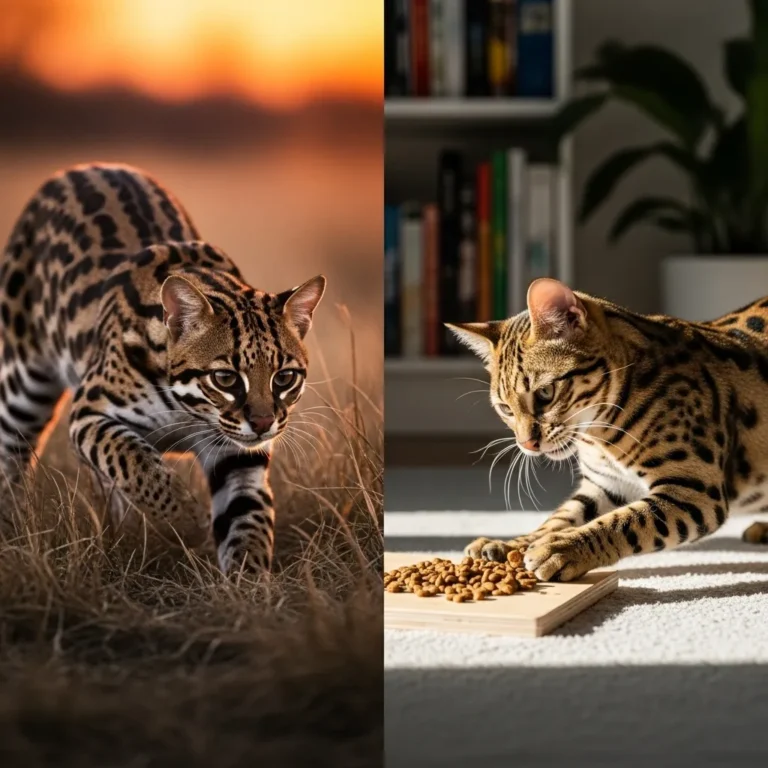
Before we dive into the bag, we must understand the cat. Felines are obligate carnivores. This isn’t a preference; it’s a biological imperative. Their bodies are engineered to get vital nutrients from animal tissue. They require specific amino acids, like taurine and arginine, and vitamins like A and D, which are readily available in meat but difficult or impossible to source sufficiently from plants.
A taurine deficiency, for instance, can lead to irreversible heart failure and blindness. This is why the quality and source of protein in cat food are paramount. When evaluating cat food nutrition, protein should always be your primary focus.
A Deep Dive into Common Cat Food Ingredients
So, what exactly are you looking at on that ingredients panel? Let’s break down the most common components, from the essential to the questionable.
The Power Players: Animal-Based Proteins & Fats
These are the building blocks of a species-appropriate diet.
- Whole Meats (e.g., Chicken, Salmon, Turkey): These are the fresh, muscle-based proteins listed with their water content included. While excellent, their high moisture weight means they may drop in the ingredient order after processing.
- Meals (e.g., Chicken Meal, Fish Meal): Don’t be alarmed by the term “meal.” This is simply meat that has been cooked, dried, and ground into a concentrated protein powder. Chicken meal in cat food provides a dense, reliable source of protein without the water weight, making it a valuable and high-quality component.
- Animal By-Products: This is a controversial category. By-products are the non-rendered, clean parts of an animal other than muscle meat (e.g., liver, heart, lungs, kidneys). From a biological perspective, these are incredibly nutrient-rich—in the wild, a cat would eat the entire prey. The concern arises with quality control. While “named” by-products (e.g., “chicken by-products”) from a reputable brand can be beneficial, vague terms like “meat by-products” are a red flag, as the source is unknown. Learn more about the specifics in our guide, Meat By-Products in Cat Food: The Unvarnished Truth.
- Fats (e.g., Chicken Fat, Salmon Oil): Essential for energy, a healthy coat, and the absorption of fat-soluble vitamins. Named animal fats are excellent sources. Look for omega-3 and omega-6 fatty acids for skin and brain health.
The Supporting Cast: Carbohydrates, Vitamins & Minerals
- Carbohydrates: While cats have no biological requirement for carbs, they are used in many types of cat food (especially kibble) as a binding agent and an inexpensive energy source. Sources can include:
- Grains: Rice, barley, oats, corn, wheat.
- Grain-Free Carbs: Potatoes, peas, lentils, tapioca.
- The debate between grain-inclusive and grain-free is complex and should be discussed with your vet, especially in light of concerns about certain grain-free diets and heart health.
- Fiber: Sources like beet pulp, chicory root, or pumpkin aid in digestion and hairball control.
- Vitamins & Minerals: A “complete and balanced” food must include supplemental vitamins (A, E, etc.) and minerals (calcium, phosphorus, etc.) to meet the stringent standards set by organizations like the AAFCO (Association of American Feed Control Officials).
- Taurine: This critical amino acid is always supplemented to ensure adequate levels, as it’s vital for heart and eye health. Discover why Taurine for Cats is non-negotiable.
The Additives: Functional, Flavorful, and Sometimes Controversial
- Preservatives: Necessary to prevent fats from going rancid. Natural preservatives like mixed tocopherols (Vitamin E) are preferred over synthetic ones like BHA and BHT.
- Flavor Enhancers: While “natural flavors” are common, be wary of diets that rely on “digests” or artificial flavors to be palatable.
- Thickening Agents: In wet food, you’ll see guar gum, carrageenan, or agar-agar. These are generally safe in small amounts, though some cats may have sensitivities.
- Probiotics & Prebiotics: These are beneficial additives that support a healthy gut microbiome.
From Factory to Feline: The Cat Food Manufacturing Process
Understanding how cat food is made demystifies the final product. The process varies significantly between types of cat food.
How Kibble is Made: The Art of Extrusion
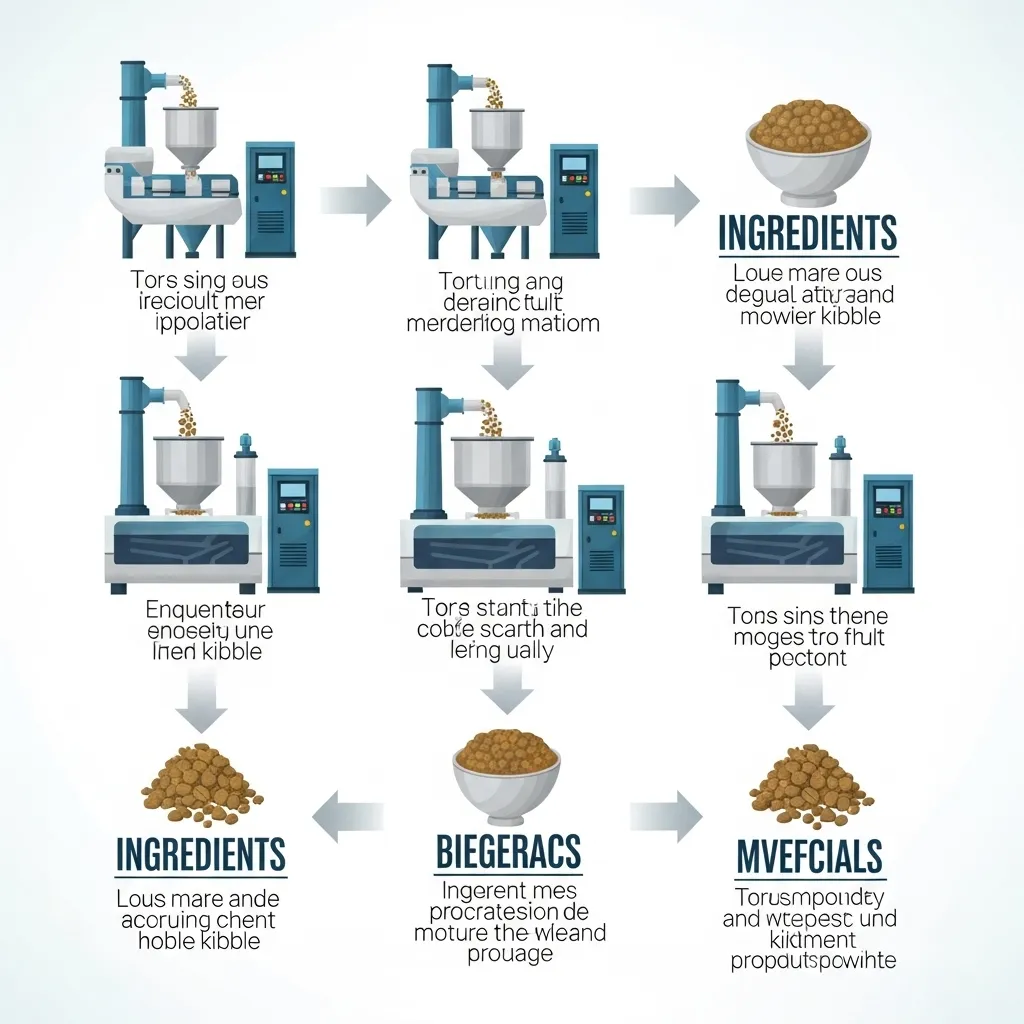
The cat food manufacturing process for dry food is a high-heat, high-pressure operation called extrusion.
- Grinding & Mixing: All ingredients are ground into a fine powder and mixed with steam and water to form a dough.
- Extrusion: The dough is forced through a machine called an extruder under intense pressure and heat. This cooks the food and gives it its shape.
- Drying & Cooling: The kibble pieces are dried in an oven to remove moisture, making them shelf-stable.
- Coating: After cooling, the kibble is sprayed with a palatability coating—often digest and fat—to make it appealing to cats. This is a critical step, as the high-heat processing can destroy natural flavors.
How Wet Food is Made: The Simplicity of Canning
The process for wet food is more straightforward and retains more moisture.
- Weighing & Mixing: Ingredients are precisely weighed and mixed into a slurry.
- Cooking & Canning: The mixture is cooked and then sealed into cans or pouches.
- Retorting: The sealed containers are heated again (retorted) under pressure to sterilize the contents, ensuring they are shelf-stable.
The Rendering Process: A Key First Step
A crucial, often misunderstood, part of the supply chain is the rendering process in cat food. Rendering is the recycling of animal by-products. Tissues not intended for human consumption (fat, bones, offal) are cooked at high temperatures for hours, separating fat (tallow) from protein solids (which become meat meal). This process is essential for sustainability and safety, as it destroys pathogens. The quality of the final cat food ingredients depends heavily on the quality of the raw materials sent to the renderer.
Cracking the Code: A Practical Guide to Decoding Cat Food Labels
Decoding cat food labels is your most powerful tool. Here’s how to become a label-reading pro.
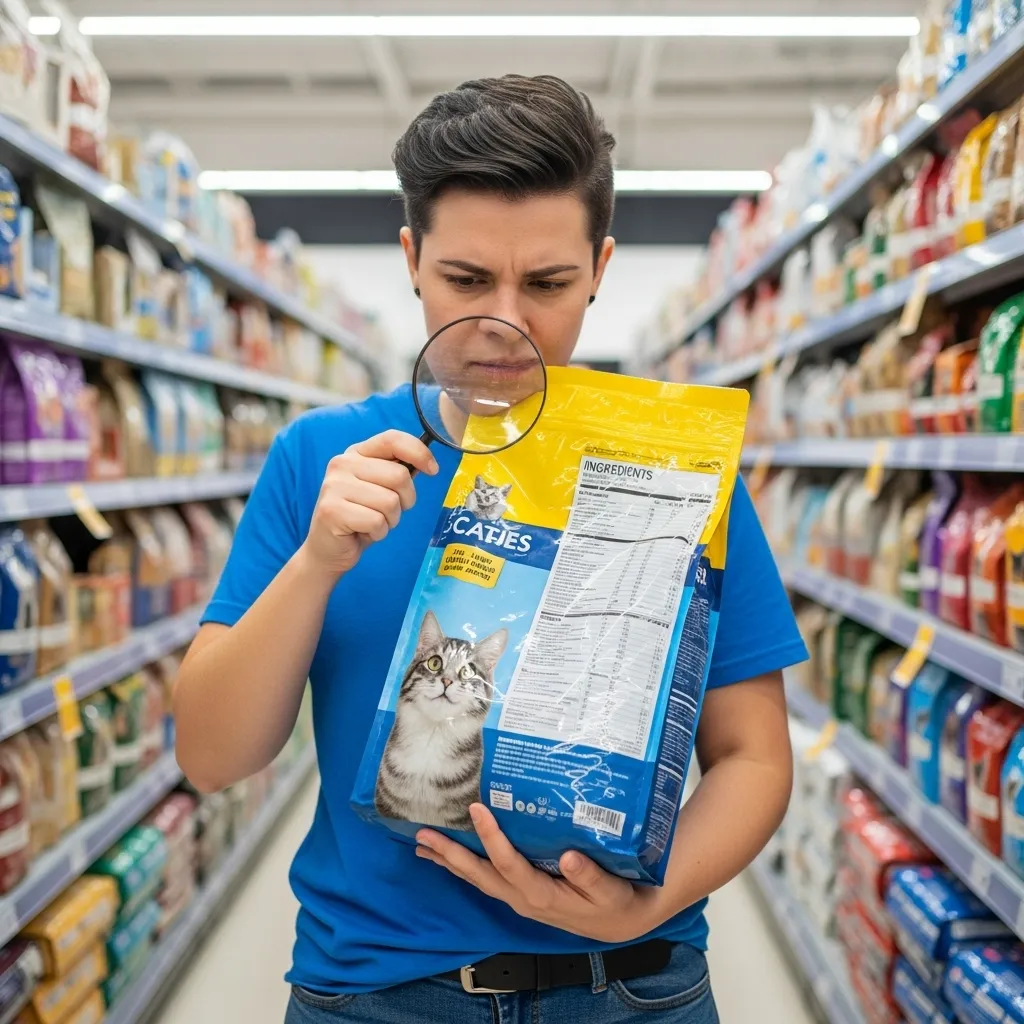
- Look for an AAFCO Statement: This tells you the food is “complete and balanced” for a specific life stage (e.g., kitten, adult, all life stages). It’s the baseline for nutritional adequacy.
- Analyze the Ingredient List:
- The First Five: The first five ingredients make up the bulk of the food. The first ingredient should be a high-quality, named animal protein.
- Beware of Ingredient Splitting: If a manufacturer uses corn, corn gluten meal, and corn bran, they can list them separately, pushing “corn” lower on the list, even if corn is the cumulative primary ingredient.
- Identify Unnecessary Fillers: While some carbs are functional, an over-reliance on low-quality fillers like corn and wheat gluten means less room for protein.
- Understand the Guaranteed Analysis: This chart gives you the minimum or maximum percentages of key nutrients.
- Protein: Look for high numbers (ideally over 30% for dry food, over 10% for wet food).
- Fat: A crucial energy source (ideally 15-20% for dry, 5-10% for wet).
- Fiber: Should be low (less than 5%).
- Moisture: Wet food will be around 78%, dry food around 10%.
- **To compare wet and dry food on an equal footing, you must convert them to a “dry matter basis.” Our guide on *Choosing Cat Food* walks you through this simple calculation.**
The Great Debate: Natural vs. Conventional Cat Food
The trend towards natural cat food is more than a fad; it’s a shift towards transparency. But what does “natural” mean?
- Conventional Cat Food: Often relies on the standard cat food manufacturing process, which may include more by-products, artificial colors, flavors, and preservatives. It’s affordable and widely available.
- Natural & Organic Cat Food: This category emphasizes natural cat food benefits like whole-food ingredients, minimal processing, and the absence of artificial additives. Human-grade cat food takes this a step further, using ingredients fit for human consumption.
- The Rise of Sustainable & Ethical Choices: Today’s consumers also seek sustainable cat food from brands that prioritize sustainable pet food brands, eco-friendly cat food packaging, and cruelty-free cat food production. This reflects a desire for transparency in pet food manufacturing.
Ultimately, the “best” choice depends on your cat’s individual needs, your budget, and your personal values. For many, finding a healthy cat food options that balances quality and cost is the goal.
Choosing the Right Cat Food for Your Feline
With all this knowledge, how do you make the final choice? Consider these factors:
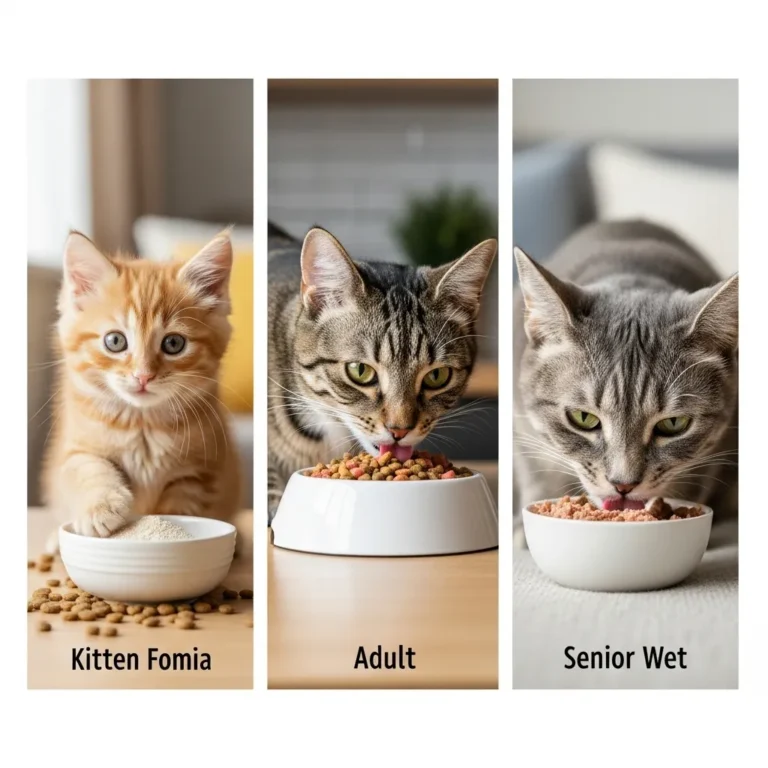
- Life Stage: A kitten has different nutritional needs than a senior cat. Our Best Foods for Senior Bengal Cat article is a great example of life-stage-specific advice.
- Health Considerations: Cats with issues like obesity, diabetes, or kidney disease require specialized diets. If your cat has specific needs, our Cat Diabetes Guide offers valuable insights.
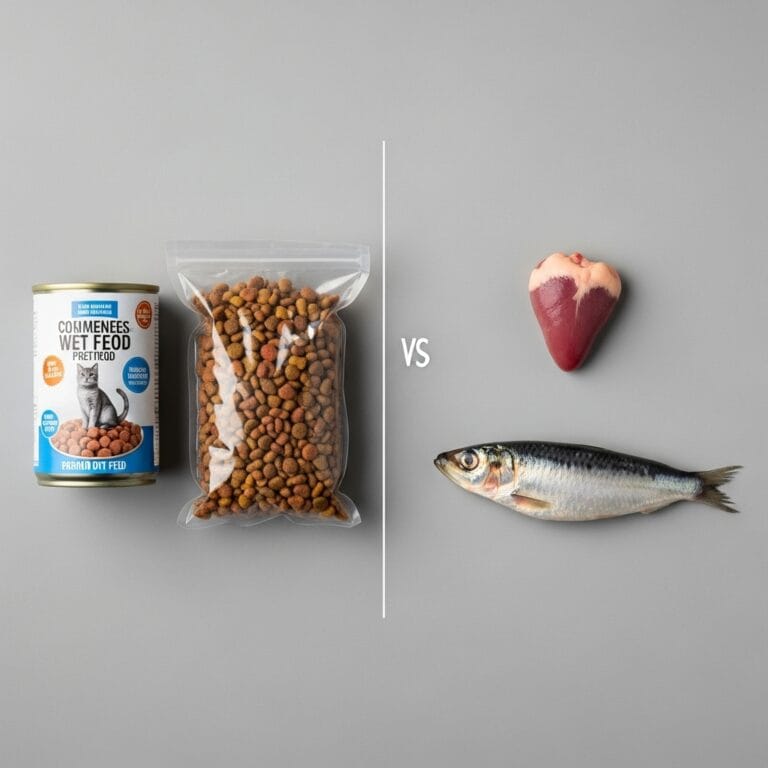
- Wet vs. Dry: Many experts recommend a combination. Wet food provides hydration, while dry food can be better for dental health (though not a substitute for brushing). For a deep dive into the benefits of moisture, read our guide on the Best Wet Cat Food.
- Your Cat’s Preference: Even the most perfect food is useless if your cat won’t eat it.
Frequently Asked Questions (FAQ)
Q1: What is the difference between natural and conventional cat food?
A: Natural cat food typically avoids artificial colors, flavors, and preservatives, focusing on whole-food ingredients. Conventional food may contain these synthetic additives and often relies on a more complex cat food manufacturing process.
Q2: Why is protein the most important aspect of cat food composition?
A: Cats are obligate carnivores. Their bodies are designed to use protein from animals as their primary energy source and to obtain essential, life-sustaining nutrients like taurine that they cannot produce themselves.
Q3: How can I identify artificial additives in cat food?
A: Scan the ingredients list for terms like Blue 2, Red 40, Yellow 5 (artificial colors), BHA, BHT, ethoxyquin (artificial preservatives), and “artificial flavors.”
Q4: Are “meal” ingredients in cat food, such as chicken meal or beef meal, good or bad?
A: They are generally good. Chicken meal and beef meal are concentrated, rendered protein sources. They provide more protein per ounce than fresh chicken because the water and fat have been removed. They are a high-quality component when derived from named animals.
Q5: What should I look for when decoding cat food labels?
A: Focus on: 1) A named animal protein as the first ingredient, 2) An AAFCO nutritional adequacy statement, 3) The absence of unwanted artificial additives, and 4) A guaranteed analysis that shows high protein and moderate fat.
Q6: How does environmental sustainability factor into the natural cat food trend?
A: The trend extends beyond ingredients. It includes sustainable cat food sourcing (e.g., using responsibly caught fish), eco-friendly cat food packaging (recyclable or compostable materials), and ethical manufacturing practices that reduce the environmental pawprint.
Conclusion: Empowered Choices for a Thriving Cat
Unraveling the mystery of what’s in cat food is an act of love. You are no longer at the mercy of marketing. You are a label-decoding, ingredient-savvy cat parent equipped to make the best possible choice for your unique feline.
Remember, the goal isn’t to find a “perfect” food, but to find a high-quality, appropriate diet that supports your cat’s health and vitality for years to come. By understanding cat food nutrition, the cat food manufacturing process, and how to read cat food labeling, you hold the key to your cat’s well-being, right there in the palm of your hand.
Ready to continue your journey into expert feline care? Explore our comprehensive library of guides on cat health, behavior, and nutrition at Cat Bloom Haven.