Why Does My Dog Lick My Cat? Decoding Canine-Feline Bonds
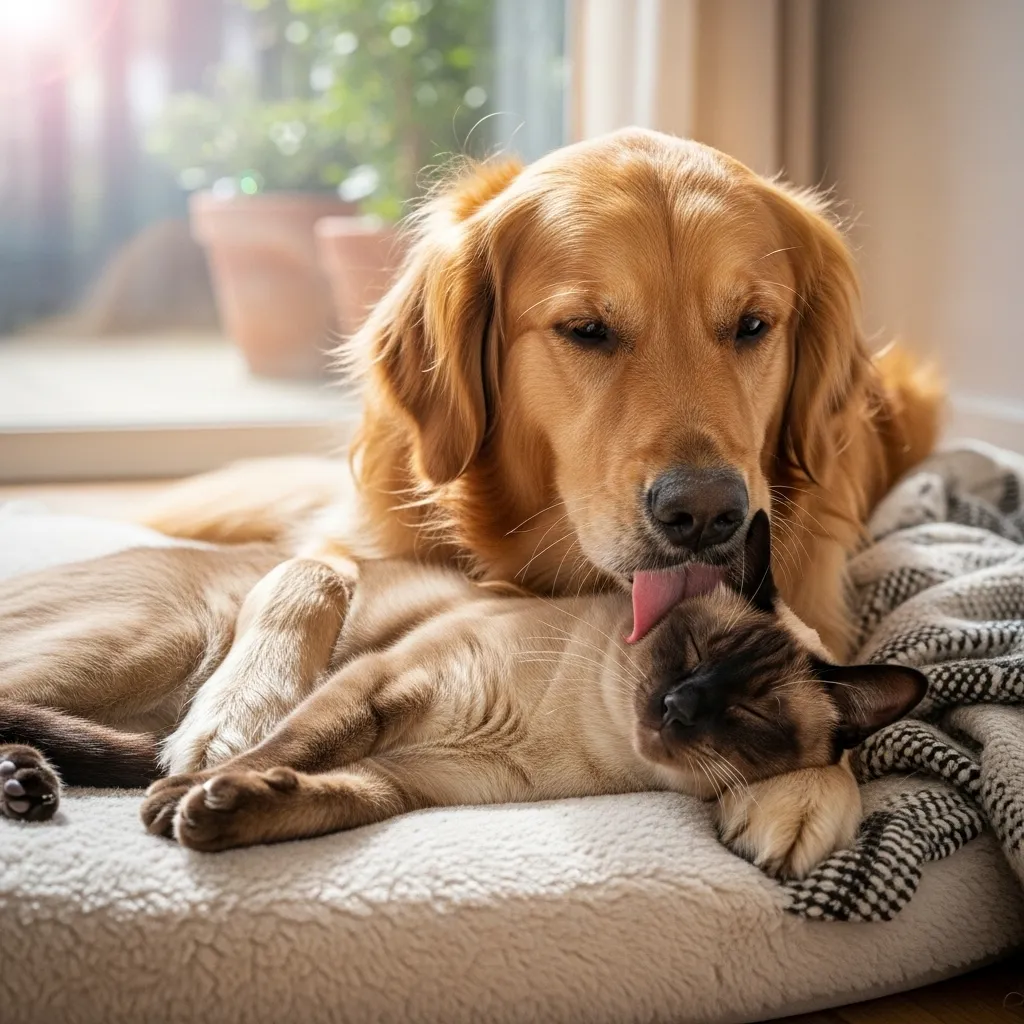
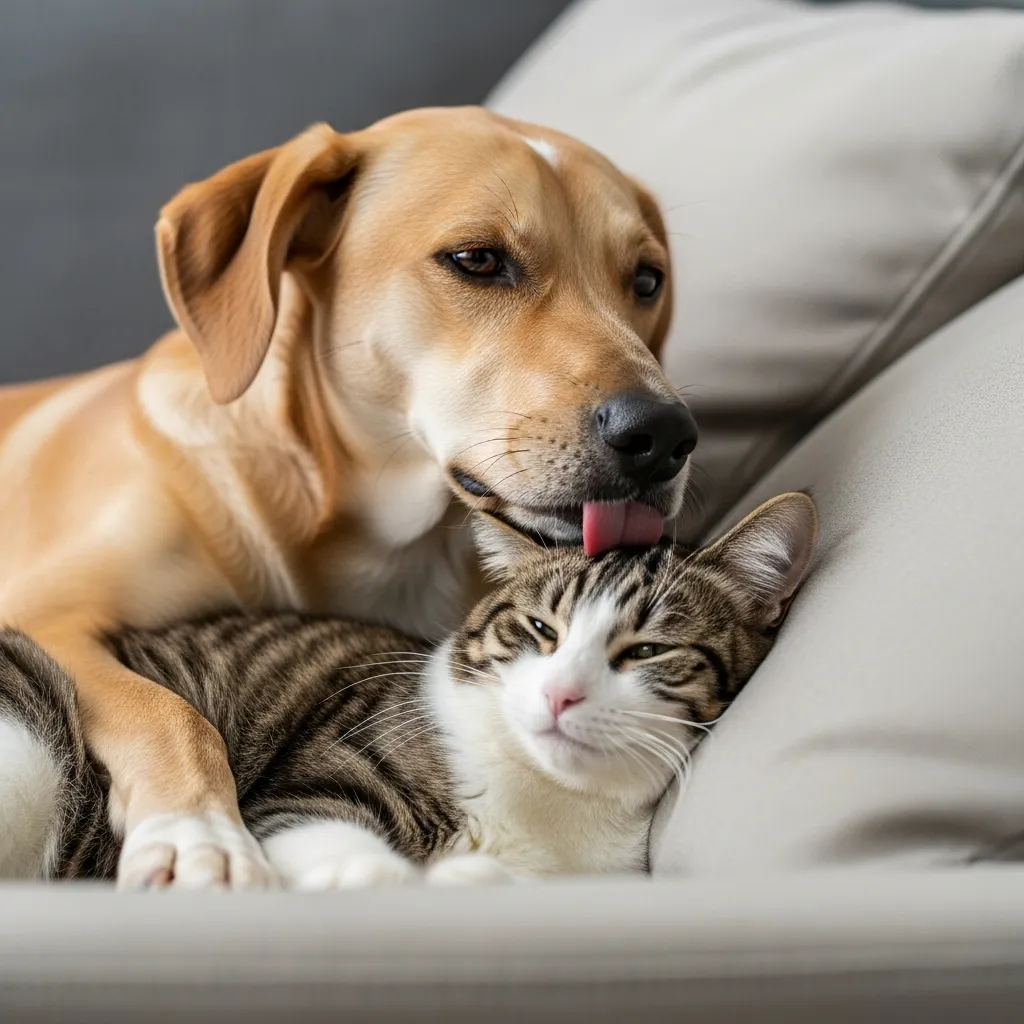
Ever caught your dog licking your cat and wondered, What’s going on here? This quirky dog licking cat behavior is more common than you might think, sparking curiosity among pet parents everywhere. Whether it’s a gentle lick or an all-out grooming session, this inter-species interaction can leave you puzzled, amused, or even concerned. Is it affection, instinct, or something else entirely? At Cat Bloom Haven, we’re diving deep into the reasons behind this behavior, offering expert insights and practical tips to help you understand and manage your pets’ unique bond.
In this guide, you’ll uncover why dogs lick cats, what it means for their relationship, and how to ensure both your furry friends are happy and comfortable. From dog and cat interaction to pet communication and body language, we’ve got you covered with vet-backed advice and actionable steps. Let’s explore the fascinating world of inter-species pet bonding!
Key Takeaways for Curious Pet Parents
- Affection and Bonding: Dogs often lick cats to show affection, strengthen social bonds, or mimic grooming behaviors seen in canine packs.
- Instinct at Play: Licking can stem from a dog’s natural grooming instincts, especially in breeds with strong nurturing tendencies.
- Communication Signals: Licking is a form of pet communication, conveying everything from submission to curiosity.
- Watch for Excess: Excessive licking might signal stress, boredom, or health issues in dogs, requiring closer attention.
- Cat’s Perspective: Cats may tolerate or enjoy licking, but some may feel stressed—watch for their body language.
- Actionable Tips: Learn how to manage dog grooming cat behavior and foster a harmonious dog and cat relationship.
The Canine Mind: Why Dogs Lick Cats
Dogs and cats speak different languages, but licking is a universal gesture that bridges the gap. To understand why dogs lick cats, we need to peek into the canine brain and explore their instincts, emotions, and social dynamics. Here are the primary reasons behind this behavior:
1. Affection and Social Bonding
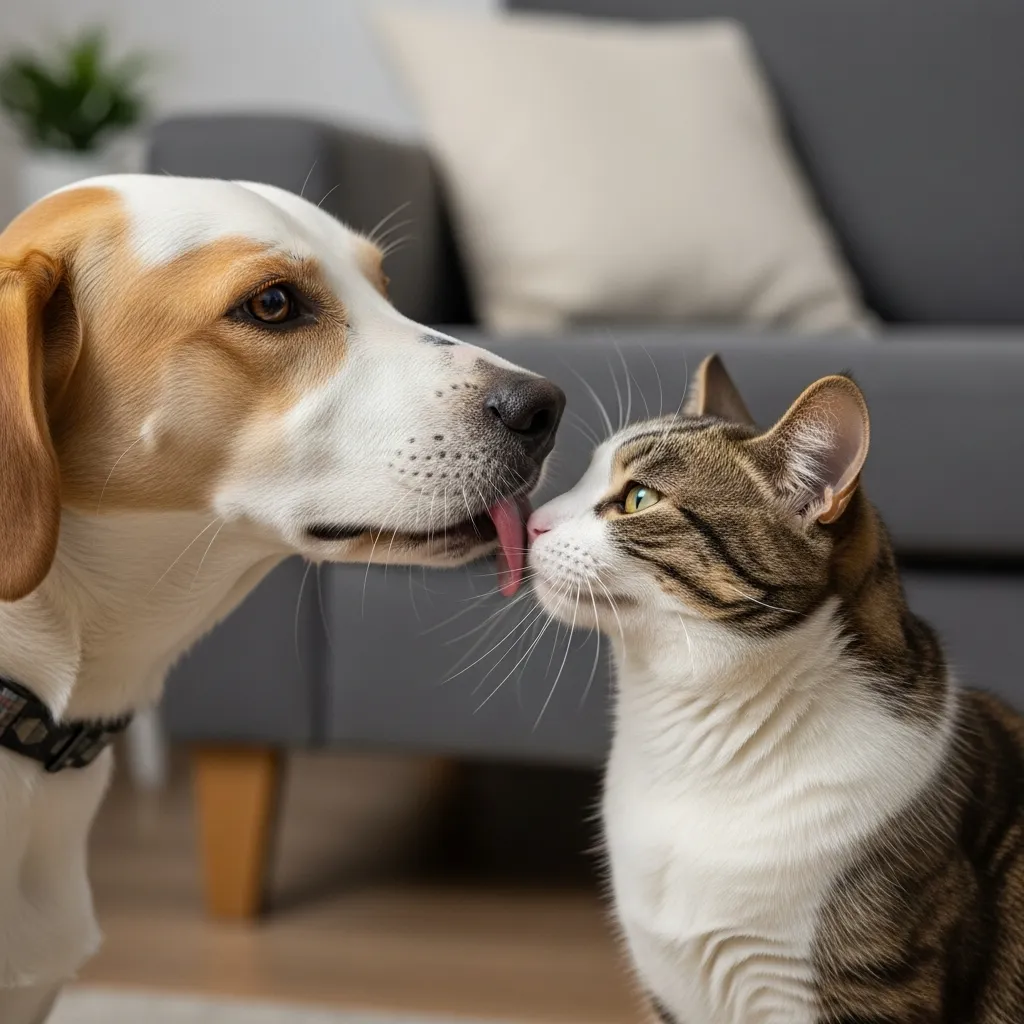
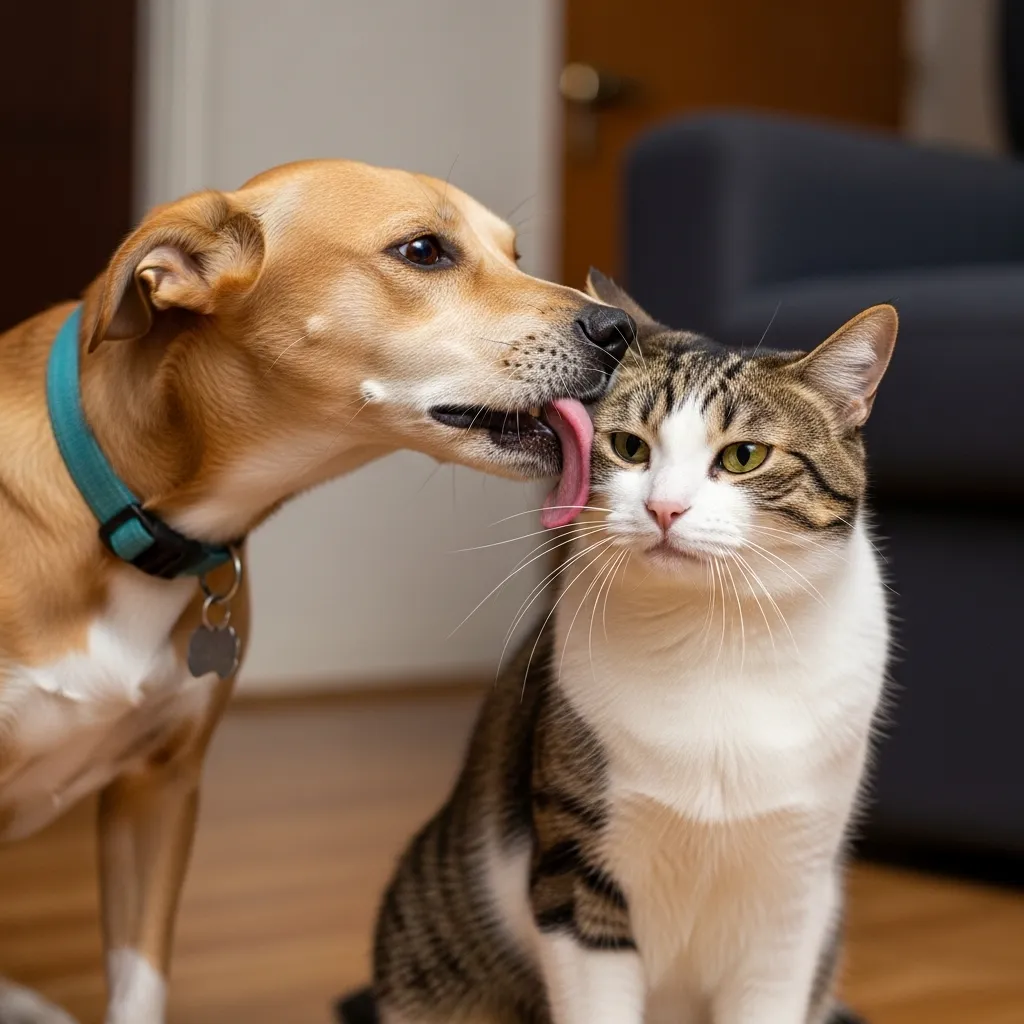
Dogs are pack animals, and licking is a key way they build and maintain relationships. When your dog licks your cat, it’s often a sign of affection, signaling that they view the cat as part of their “pack.” This mirrors how dogs lick each other to reinforce social bonds.
- What it looks like: Gentle, slow licks on the cat’s head or back, often accompanied by a wagging tail or relaxed posture.
- Why it happens: Dogs release feel-good hormones like oxytocin during licking, strengthening their emotional connection with the cat.
- Real-life example: A Golden Retriever named Max was observed licking his feline housemate, Luna, every evening after dinner. Over time, Luna began reciprocating by nuzzling Max, showing a mutual bond.
Explore more on fostering pet bonds in our pet bonding tips guide.
2. Grooming Instincts at Work
Licking is a natural dog grooming instinct, rooted in their ancestral behaviors. Mother dogs lick their puppies to clean them and stimulate bodily functions, and this instinct carries into adulthood. When a dog licks a cat, they may be treating them like a puppy, attempting to “groom” them.
- Breeds prone to grooming: Breeds like Retrievers, Collies, or other nurturing types are more likely to exhibit this behavior.
- Why cats are targets: Cats, with their soft fur and smaller size, may trigger a dog’s caregiving instincts.
- Vet insight: Dr. Sarah Thompson, a feline behavior specialist, notes, “Dogs often groom cats to reinforce their role as a caretaker in the household, especially in multi-pet homes.”
3. Communication and Exploration
Licking is a dog’s way of “reading” their environment. Cats carry unique scents, and licking allows dogs to gather information about their feline friend’s health, diet, or recent activities. This is a key part of pet communication and body language.
- Curiosity-driven licking: Dogs may lick to investigate new smells on the cat, like after a vet visit or outdoor adventure.
- Submission signal: In some cases, licking is a dog’s way of showing deference to a cat they perceive as dominant.
- Fun fact: Dogs have over 200 million scent receptors, making licking a powerful tool for sensory exploration.
Learn more about decoding pet signals in our cat tail language guide.
4. Stress, Boredom, or Health Issues
Sometimes, excessive licking in dogs goes beyond affection or grooming. It can indicate underlying issues like stress, boredom, or even medical conditions.
- Stress or anxiety: Dogs may lick compulsively to self-soothe, especially in new environments or during household changes.
- Boredom: A lack of mental or physical stimulation can lead to repetitive behaviors like licking.
- Health concerns: Conditions like allergies, dental issues, or gastrointestinal problems can trigger excessive licking. If your dog’s licking seems obsessive, consult a vet.
Discover how to spot cat stress signs that may overlap with dog behaviors.
How Cats React to Dog Licking
Not all cats take kindly to a dog’s slobbery affection. Understanding cat reaction to dog licking is crucial for maintaining a peaceful dog and cat coexistence. Cats communicate through subtle body language, so watch for these cues:
- Acceptance: Relaxed ears, slow blinking, or purring indicate the cat is comfortable or enjoys the attention.
- Tolerance: A neutral posture with occasional ear flicks suggests the cat is indifferent but not distressed.
- Discomfort: Hissing, swatting, flattened ears, or a tucked tail signal that the cat wants the licking to stop.
Case Study: Bella and Rusty
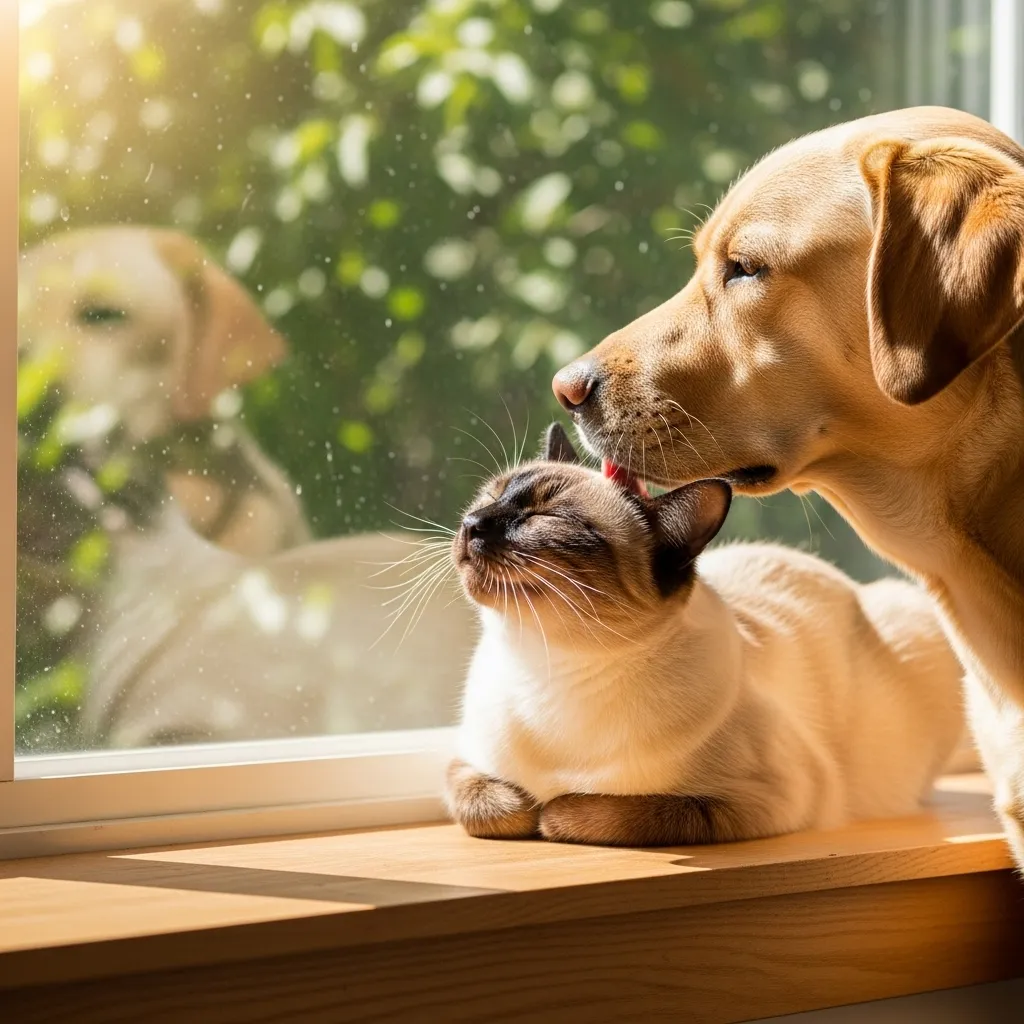
Bella, a Siamese cat, initially hissed when Rusty, a Labrador, began licking her. Over weeks, Bella grew accustomed to Rusty’s grooming, even napping beside him. Gradual introductions and positive reinforcement (treats for calm behavior) helped Bella accept Rusty’s affection.
For tips on introducing pets, check out our American Shorthair introductions guide.
When Licking Becomes a Problem
While occasional licking is harmless, excessive licking in dogs can disrupt the dog and cat relationship or indicate deeper issues. Here’s how to spot and address problematic licking:
Signs of Excessive Licking
- Frequency: Licking that dominates your dog’s interactions with the cat.
- Cat distress: The cat hides, hisses, or avoids the dog.
- Physical signs: Redness, hair loss, or skin irritation on the cat from constant licking.
- Dog behavior changes: Increased anxiety, restlessness, or licking other objects excessively.
Causes and Solutions
| Cause | Solution |
|---|---|
| Boredom | Increase mental stimulation with toys, training, or walks. Try our teach cat to fetch guide for cross-species play ideas. |
| Stress | Identify triggers (e.g., loud noises, new pets) and create a calm environment. See our how to calm an angry cat guide. |
| Health Issues | Schedule a vet visit to rule out allergies, dental problems, or neurological conditions. |
| Dominance or Habit | Redirect the dog’s attention with commands or toys when licking starts. |
Pro Tip: Use positive reinforcement (treats or praise) to reward calm behavior instead of scolding your dog, which can increase stress.
Fostering a Harmonious Dog and Cat Relationship
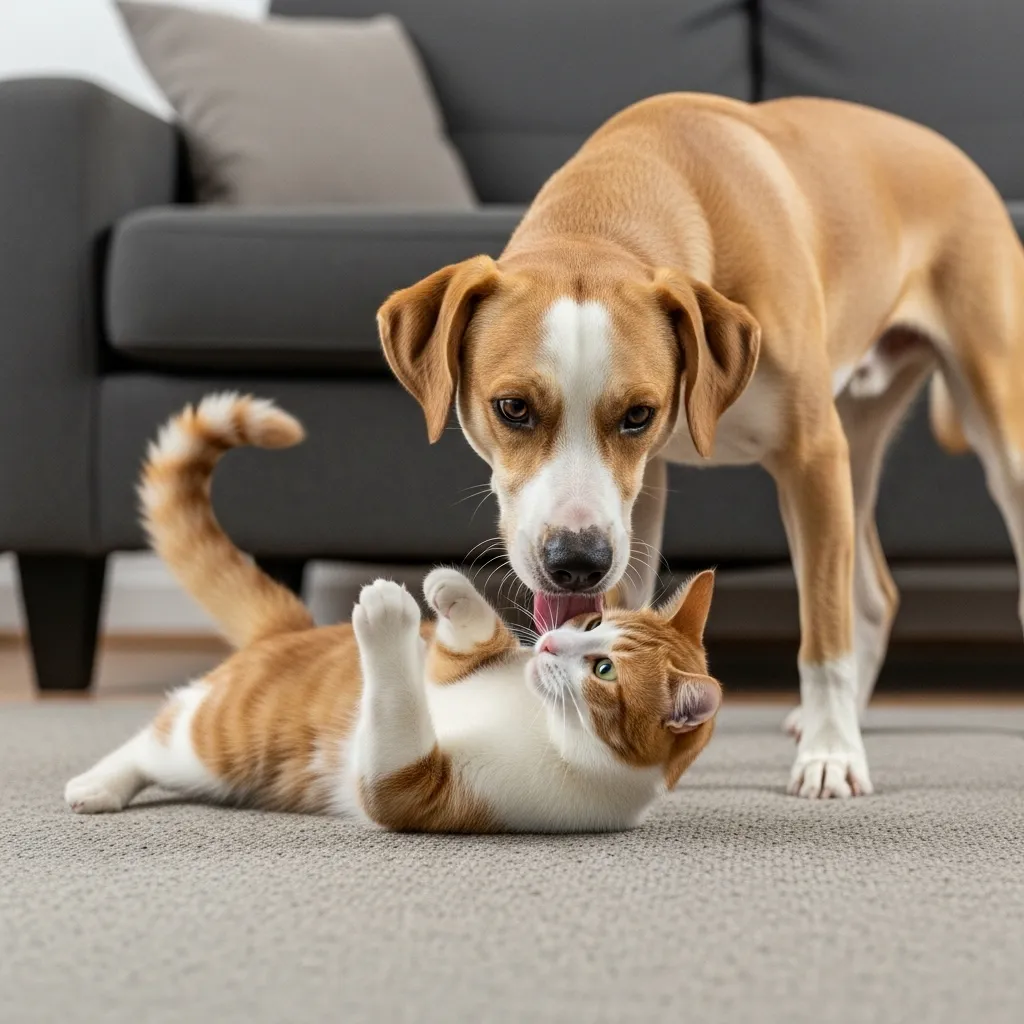
To ensure dog and cat friendship thrives, focus on creating a balanced environment where both pets feel safe and respected. Here are vet-approved tips for managing pet behavior:
- Gradual Introductions: Introduce pets slowly, using barriers like baby gates to allow sniffing without direct contact. See our Bengal cat introduction tips.
- Safe Spaces: Provide cats with high perches or hideaways where they can retreat from the dog’s attention.
- Training Commands: Teach your dog commands like “leave it” or “stay” to control licking impulses.
- Enrichment for Both: Engage dogs with puzzle toys and cats with interactive toys to reduce boredom-driven licking.
- Monitor Body Language: Regularly observe pet communication and body language to catch early signs of stress or discomfort.
For more on pet dynamics, explore our Munchkin cats and dogs coexistence guide.
The Science Behind Inter-Species Bonding
Inter-species pet bonding is a fascinating area of study. Research shows that dogs and cats can form deep emotional connections, often mirroring human-pet relationships. A 2023 study in Animal Behavior found that 68% of multi-pet households reported positive interactions like mutual grooming or play between dogs and cats.
- Why it works: Dogs and cats share social traits, like the need for companionship, making dog and cat interaction mutually beneficial.
- Role of oxytocin: Both species release oxytocin during positive interactions, reinforcing their bond.
- Social media buzz: The why dogs lick cats TikTok trend showcases heartwarming videos of dogs grooming cats, boosting engagement on platforms like Pinterest and Instagram.
Want to capture your pets’ cute moments? Check out our cat memes fun guide for inspiration.
Breed-Specific Tendencies
Certain dog breeds are more likely to lick cats due to their temperament or instincts. Similarly, cat breeds vary in their tolerance for canine affection.
Dog Breeds Prone to Licking
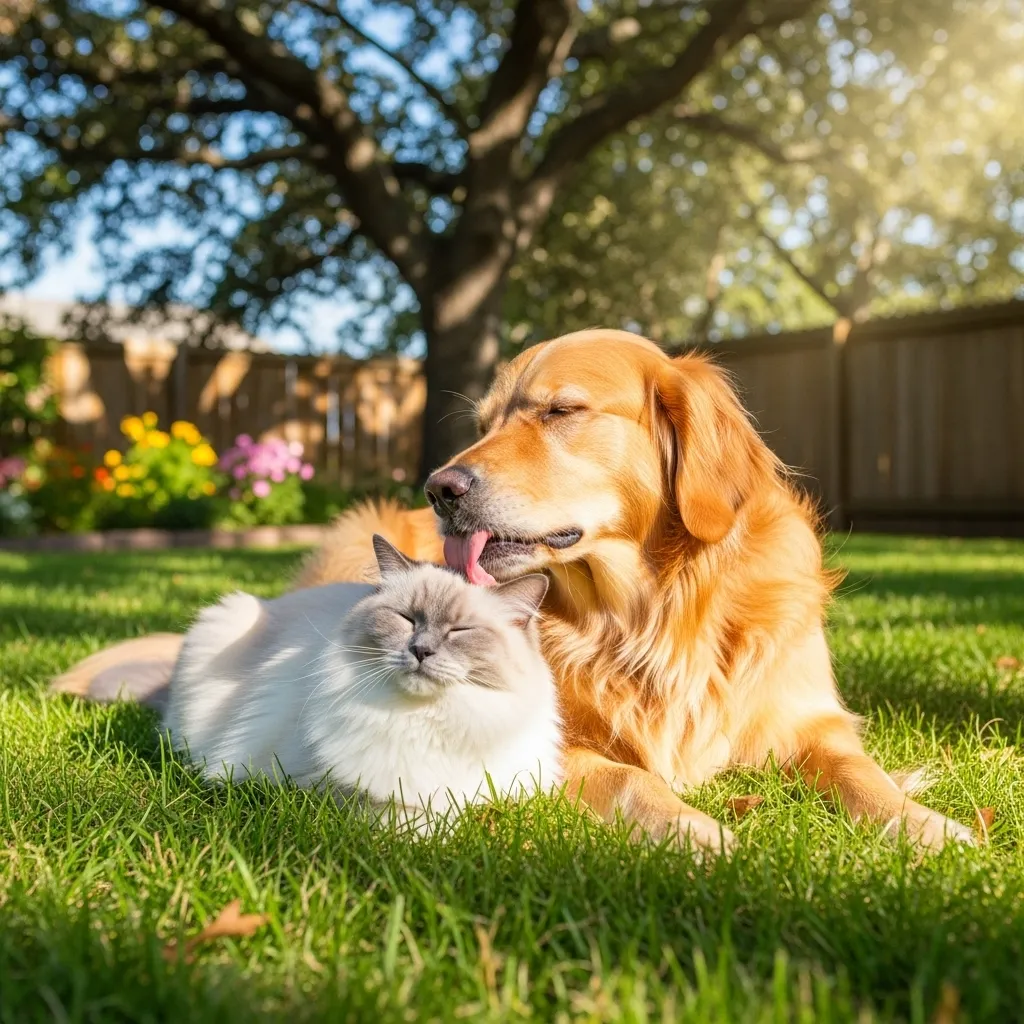
- Golden Retrievers: Known for their nurturing, affectionate nature.
- Labradors: Social and eager to bond with other pets.
- Border Collies: May lick as part of their caregiving instincts.
- Beagles: Curious and scent-driven, leading to exploratory licking.
Cat Breeds and Licking Tolerance
- Ragdolls: Often relaxed and tolerant of dog licking. See our Ragdoll cat care guide.
- Siamese: May be less patient and vocalize discomfort. Learn more in our Siamese cat hiding behavior guide.
- Maine Coons: Friendly and likely to reciprocate affection.
- Bengals: High-energy and may swat if licking feels intrusive. Check our Bengal cat personality guide.
Practical Tips for Pet Parents
To manage dog grooming cat behavior and promote pet mental health and bonding, try these actionable steps:
- Observe and Adapt: Watch both pets’ reactions during licking sessions. If the cat seems stressed, intervene gently.
- Provide Distractions: Offer chew toys for dogs or scratching posts for cats to redirect energy.
- Regular Health Checks: Ensure both pets are healthy, as licking can sometimes indicate skin issues or allergies. See our cat allergies guide.
- Positive Reinforcement: Reward calm, non-licking interactions with treats or praise.
- Consult a Behaviorist: For persistent issues, a pet behaviorist can assess your home dynamics.
For more training tips, explore our cat training behavior guide.
FAQ: Quick Answers to Common Questions
Why does my dog lick my cat frequently?
It’s often a sign of affection, grooming instincts, or curiosity. Monitor for excessive licking, which may indicate stress or health issues.
What does constant dog licking mean?
Constant licking can signal boredom, anxiety, or a medical condition. Check with a vet if it’s excessive.
How should I react to my dog licking my cat?
If the cat is comfortable, let them bond. If the cat seems stressed, redirect the dog’s attention with toys or commands.
Can dogs and cats bond through licking?
Yes, licking can strengthen inter-species pet bonding, especially if the cat reciprocates or tolerates it.
How can I tell if my cat is uncomfortable with licking?
Look for signs like hissing, swatting, flattened ears, or hiding. These indicate the cat needs space.
Is licking a stress-relief behavior for dogs?
Sometimes, yes. Licking can be a self-soothing mechanism for stressed or bored dogs.
When does dog licking become a concern?
It’s concerning if it’s obsessive, causes cat distress, or is paired with other behavioral changes. Consult a vet or behaviorist.
For more on pet health, check our cat health care guide.
Conclusion: Building a Happy Pet Household
Understanding why does my dog lick my cat unlocks the secret to a thriving dog and cat relationship. Whether it’s a display of affection, a grooming instinct, or a curious sniff, this behavior reflects the unique bond between your pets. By observing their pet communication and body language, addressing excessive licking, and fostering a positive environment, you can ensure both your dog and cat feel safe and loved.
At Cat Bloom Haven, we’re passionate about helping pet parents create harmonious homes. Explore more expert guides on pet bonding tips, cat training behavior, and dog and cat coexistence to keep your furry friends thriving. Have a story about your dog and cat’s quirky bond? Share it with us, and dive into our cat and dog relationship guide for more insights!