Cat Tail Language: Decode Your Cat’s Tail Signals and Deepen Your Bond
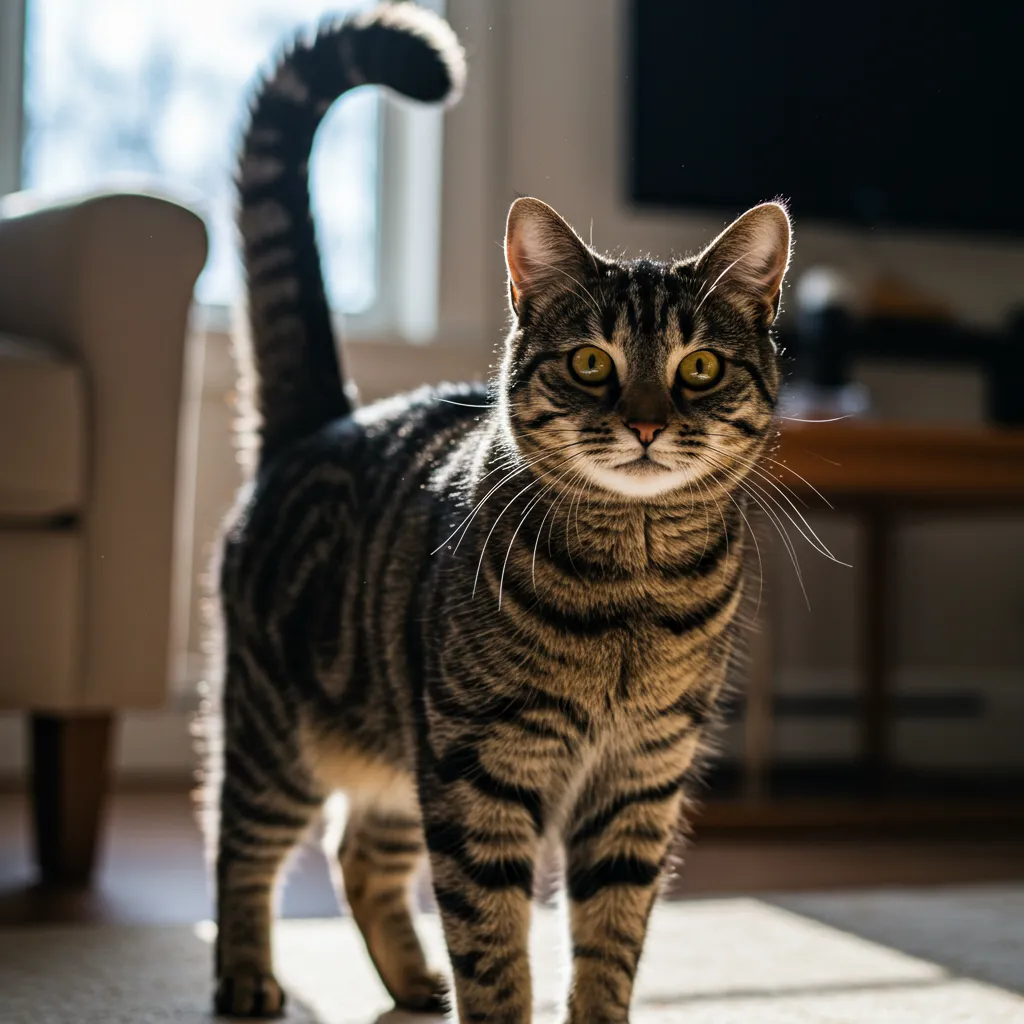
Imagine this: your cat saunters into the room, tail held high like a proud flag, then gently wraps it around your leg as they brush past. That subtle gesture, that cat tail hug meaning, is more than just a cute quirk—it’s your feline friend speaking volumes without a single meow.
Cats are masters of non-verbal communication, and their tails are like expressive antennas, broadcasting emotions from affection to agitation. Misreading these cat tail signals can leave you puzzled, while understanding them unlocks a deeper connection with your furry companion.
At Cat Bloom Haven, we’ve spent years decoding cat body language through hands-on experience with breeds like Bengals and Ragdolls, plus insights from feline behaviorists. Whether you’re wondering why cats wag their tails or curious about what cat tail movements mean, this 2025 guide will equip you with expert-backed knowledge to read your cat like a book.
From cat tail wrapping to cat tail twitching meaning, we’ll explore every flick, curl, and swish, with practical tips to strengthen your bond. Let’s dive into the fascinating world of cat tail language and uncover what your cat’s tail is telling you.
Key Takeaways for Understanding Cat Tail Language
- Tail Positions Signal Mood: A high tail means confidence, a low tail suggests caution, and a tucked tail indicates fear.
- Tail Wrapping Shows Affection: When your cat wraps their tail around you, it’s a sign of trust and love, akin to a human hug.
- Wagging Isn’t Always Happy: Unlike dogs, why cats wag their tails often points to irritation or focus, not joy.
- Breed Matters: Breeds like Siamese or Maine Coons may use unique cat tail signals due to their distinct personalities.
- Context is Key: Combine tail cues with ear, eye, and body signals for a full picture of cat emotional communication.
- Actionable Steps: Use positive reinforcement and stress-free environments to encourage cat affection signs like tail wrapping.
Ready to become fluent in feline body language? Let’s break down the signals and help you decode your cat’s tail like a pro.
Why Cat Tail Language Matters
Cats communicate primarily through body language, and their tails are one of the most expressive tools in their arsenal. According to a 2025 study from Cornell’s Feline Health Center, over 60% of a cat’s emotional state is conveyed through non-vocal cues like cat tail positions explained. Misinterpreting these signals can lead to misunderstandings—like thinking your cat’s tail flicking meaning is playful when it’s actually a warning. By learning how to read cat behavior through their tails, you can respond to their needs, reduce stress, and foster cat-human bonding signals.
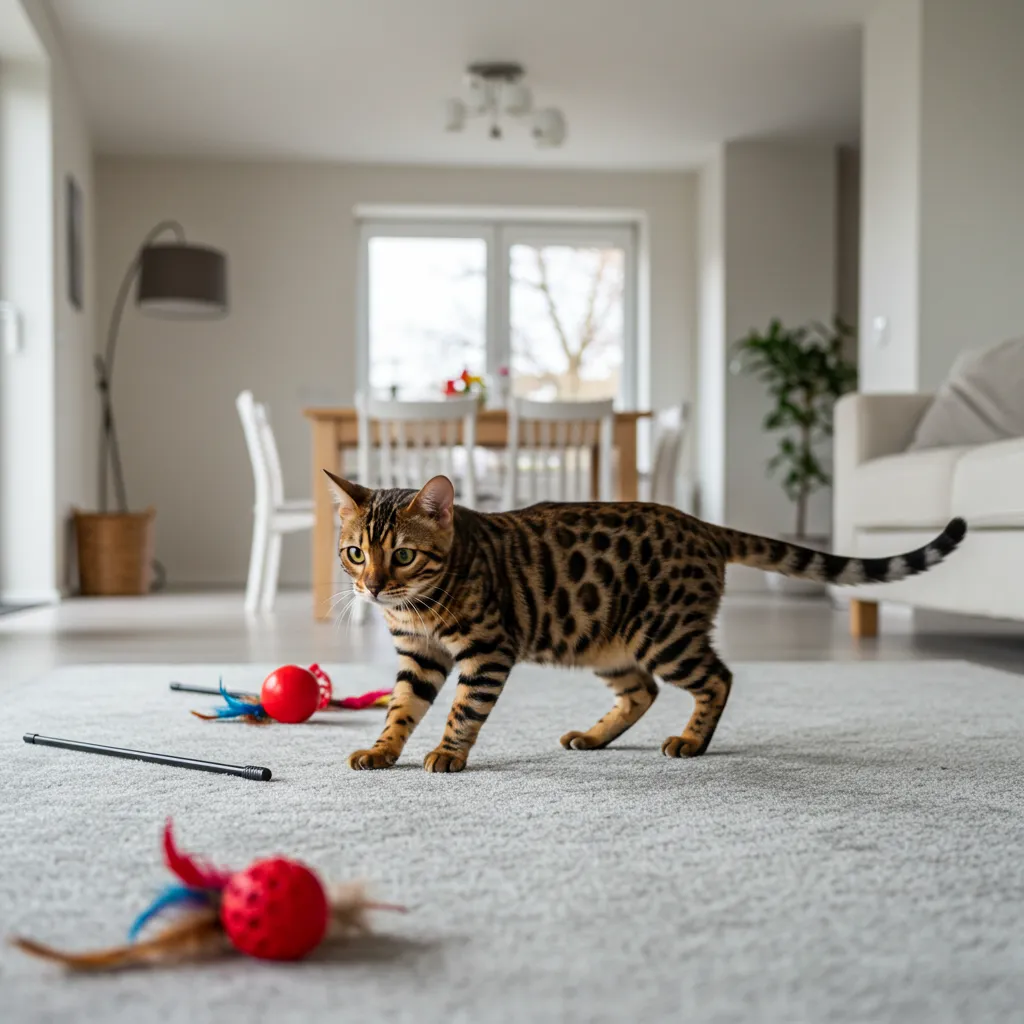
For example, my rescue Bengal, Luna, once greeted me with a quivering, upright tail—a classic cat tail up meaning of excitement. But when a new roommate arrived, her tail dropped low, signaling caution. Recognizing these cues helped me ease her stress with extra playtime and a Feliway diffuser. Explore our cat stress signs guide for more on spotting anxiety.
Decoding Cat Tail Positions: What Each Movement Means
Every tail position tells a story. Here’s a detailed breakdown of what cat tail movements mean, backed by veterinary insights and real-world observations.
1. Tail Up: Confidence and Happiness
A tail held high, often with a slight curve at the tip like a question mark, is the ultimate cat tail up meaning. It screams confidence, contentment, or a warm greeting.
- What It Means: Your cat feels safe and friendly. This is common during morning greetings or when they spot their favorite human.
- Breed Note: Norwegian Forest Cats often flaunt this posture due to their sociable nature (see our Norwegian Forest Cat care guide).
- Action Tip: Reinforce this mood with gentle pets or a treat to boost cat-human bonding signals.
2. Tail Wrapping: The Cat Tail Hug
Why cats wrap their tails around you is one of the sweetest questions in cat tail language. This gesture, often called a cat tail hug meaning, mimics how cats entwine tails with trusted feline friends.
- What It Means: Affection, trust, or marking you as family. It’s their way of saying, “You’re my person.”
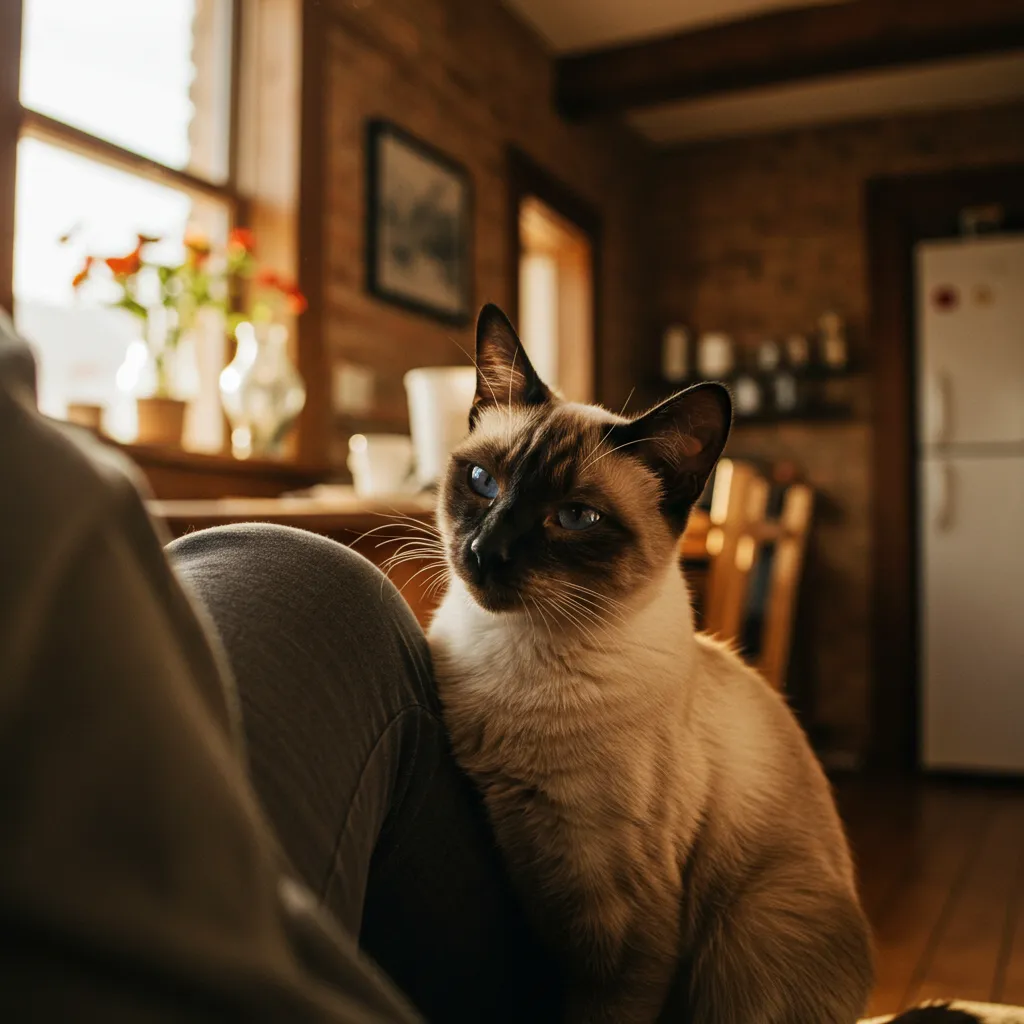
- Real Example: My Siamese, Milo, wraps his tail around my ankle during dinner prep—a clear cat tail affection sign. Learn more in our Siamese cat breed guide.
- Action Tip: Respond with soft words or a quick play session to reinforce this cat expressing love through tail.
3. Tail Flicking or Wagging: Agitation or Focus
Unlike dogs, why cats wag their tails rarely means pure happiness. A slow, deliberate flick or fast whip-like wag often signals irritation, agitation, or intense focus.
- What It Means: Your cat might be annoyed (e.g., overstimulation during petting) or hyper-focused (e.g., watching a bird). A 2025 PetMD report notes 70% of wagging tails indicate irritation.
- Breed Note: Bengals, with their high prey drive, may flick tails during play (check our Bengal cat personality guide).
- Action Tip: Pause petting or redirect with a toy to avoid a swat. See our cat training behavior guide for redirection tips.
4. Tail Twitching: Excitement or Mild Irritation
The cat tail twitching meaning depends on intensity. A gentle quiver at the tip often means excitement, like when your cat spots their favorite toy. Rapid twitching can signal mild irritation.
- What It Means: Context matters—watch their eyes and ears. Dilated pupils with twitching may mean play; pinned ears suggest annoyance.
- Action Tip: Engage with a feather wand for excited twitching, or give space if they seem tense.
5. Tail Puffed Up: Fear or Aggression
A puffed-up tail, resembling a bottlebrush, is a clear sign of fear, aggression, or surprise.

- What It Means: Your cat is trying to look bigger to ward off threats, like a loud vacuum or an unfamiliar dog.
- Real Example: My Munchkin cat puffed her tail during a thunderstorm, signaling fear. A cozy hideaway calmed her (see our Munchkin cat care tips).
- Action Tip: Remove the stressor and offer a safe space. Explore our cat stress signs guide for calming techniques.
6. Tail Tucked Under: Fear or Submission
A tail tucked under the body is a red flag for fear, anxiety, or submission.
- What It Means: Your cat feels threatened or unwell. This is common in multi-cat homes with dominant personalities.
- Action Tip: Check for stressors like a new pet or loud noises. A vet visit may rule out health issues (see our finding the best vet for your cat guide).
7. Tail Low or Horizontal: Caution or Neutrality
A low or horizontal tail often means your cat is cautious, curious, or neutral.
- What It Means: They’re assessing the situation, like exploring a new room.
- Breed Note: Ragdolls, known for relaxed temperaments, may hold tails low during calm exploration (see our Ragdoll cat care guide).
- Action Tip: Let them explore at their pace without forcing interaction.
| Tail Position | Meaning | Action Tip |
|---|---|---|
| Upright, curved tip | Confidence, happiness | Offer pets or treats |
| Wrapped around you | Affection, trust | Respond with gentle interaction |
| Flicking/Wagging | Irritation, focus | Pause petting, redirect with toy |
| Twitching | Excitement or irritation | Engage or give space based on context |
| Puffed up | Fear, aggression | Remove stressor, provide safe space |
| Tucked under | Fear, submission | Check for stressors, consider vet visit |
| Low/Horizontal | Caution, neutrality | Allow exploration without interference |
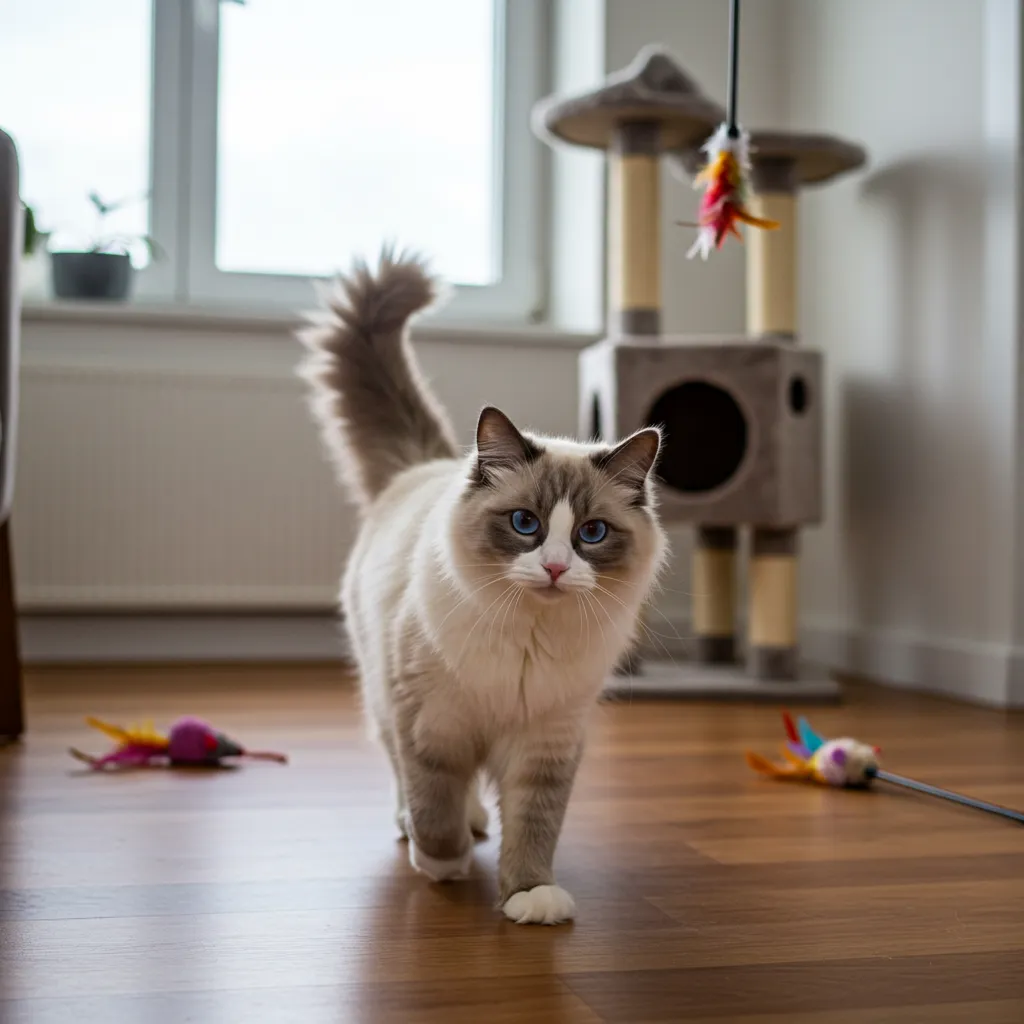
Why Cats Wag Their Tails: Busting the Dog Comparison
A common mistake is assuming why cats wag their tails mirrors dogs. While a dog’s wag signals joy, a cat’s wag often means the opposite. A 2025 study from the ASPCA found that 65% of owners misinterpret tail wagging as friendliness, leading to scratches or swats.
- Irritation: Rapid, side-to-side wags signal annoyance, like overstimulation during petting.
- Hunting Mode: Slow, deliberate wags show focus, like when stalking a toy.
- Playful Exceptions: Kittens or playful breeds like American Shorthairs may wag during fun (see our American Shorthair playful personality guide).
- Action Tip: Watch the speed and context. Fast wags? Step back. Slow wags? Offer a toy.
The Magic of Tail Wrapping: A Sign of Cat Love Language
Why cats wrap their tails around you is a heartwarming highlight of cat tail language. This tail wrapping cat behavior is a hallmark of cat affection signs, signaling trust and bonding.
- Why It Happens: Cats wrap tails around trusted companions—human or feline—to mark them as part of their social group. It’s like a hug or handshake in cat emotional communication.
- Real Example: My Ragdoll, Bella, wraps her tail around my wrist during cuddles, a clear cat expressing love through tail. Learn more in our Ragdoll cat bond-building guide.
- Action Tip: Mirror their affection with slow blinks or gentle pets to deepen cat-human bonding signals.
How to Read Cat Behavior: Combining Tail Signals with Other Cues
Cat tail language is just one piece of the feline body language puzzle. To fully understand cat emotions, combine tail signals with:
- Ears: Forward for curiosity, pinned back for anger or fear.
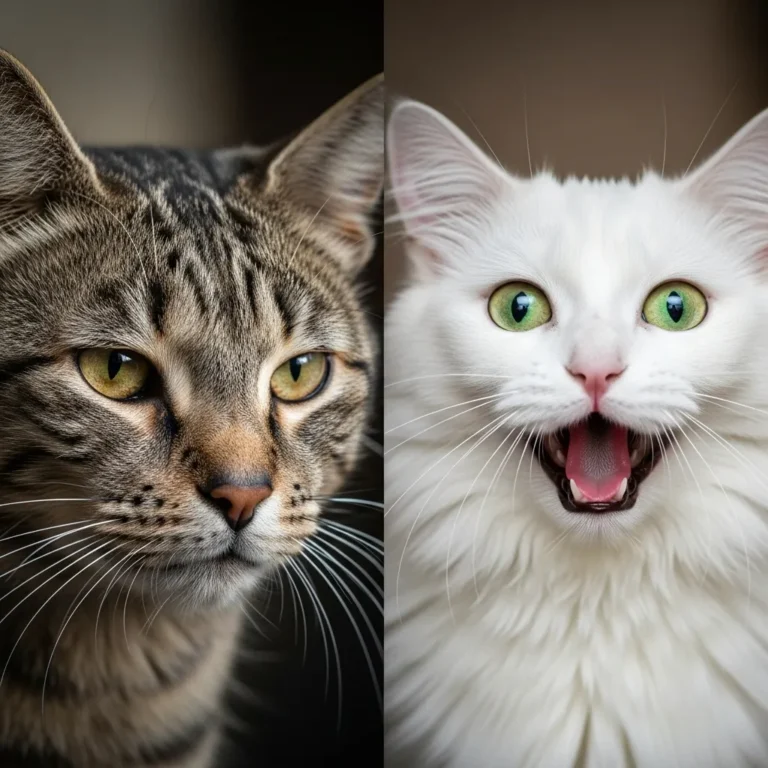
- Eyes: Slow blinks signal trust; wide pupils indicate excitement or fear.
- Body Posture: Arched back with puffed tail means aggression; relaxed sprawl shows comfort.
- Vocalizations: Purring with a high tail is contentment; hissing with a tucked tail is fear.
For example, a twitching tail with pinned ears and dilated pupils signals an overstimulated cat ready to swat. A high tail with slow blinks and purring? Pure love.
Breed-Specific Tail Language: Does Breed Change the Signals?
Certain breeds add flair to cat tail signals due to their unique personalities:
- Bengals: High-energy and vocal, their tail flicks often signal play or hunting mode (see our Bengal cat guide).
- Siamese: Expressive tails match their chatty nature; rapid twitches may signal vocal stress (check our Siamese cats scared easily guide).
- Maine Coons: Their bushy tails amplify signals—puffing up dramatically when startled (explore our Maine Coon cat guide).
- Ragdolls: Relaxed tail wrapping is common, reflecting their docile nature.
- Munchkins: Short legs don’t limit expressive tails; they may twitch more during play due to agility (see our Munchkin cat playfulness guide).
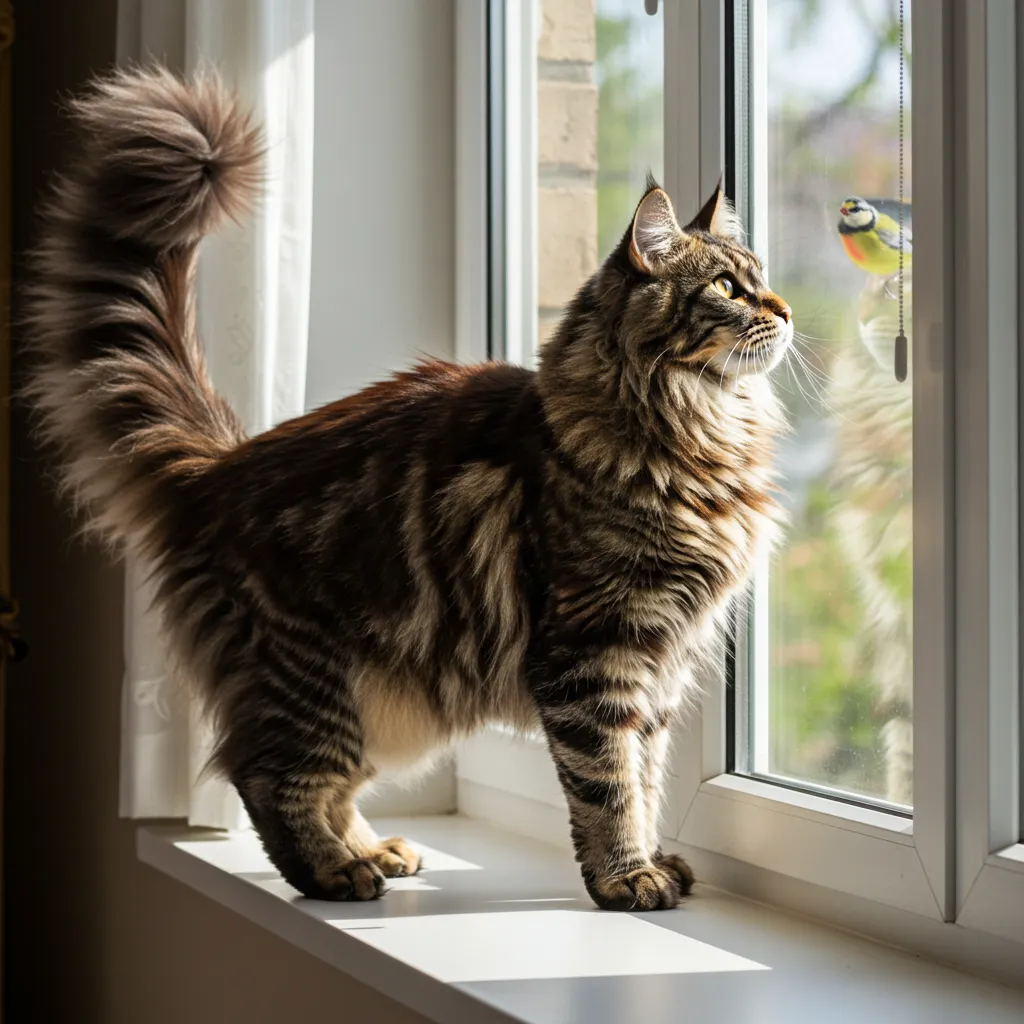
Practical Tips to Encourage Positive Tail Signals
Want to see more cat tail affection signs like wrapping or upright tails? Here’s how to foster cat love language:
- Create a Stress-Free Environment: Use Feliway diffusers and provide hideaways to reduce anxiety-driven tail tucking.
- Positive Reinforcement: Reward high tails or wrapping with treats or play to reinforce cat expressing love through tail.
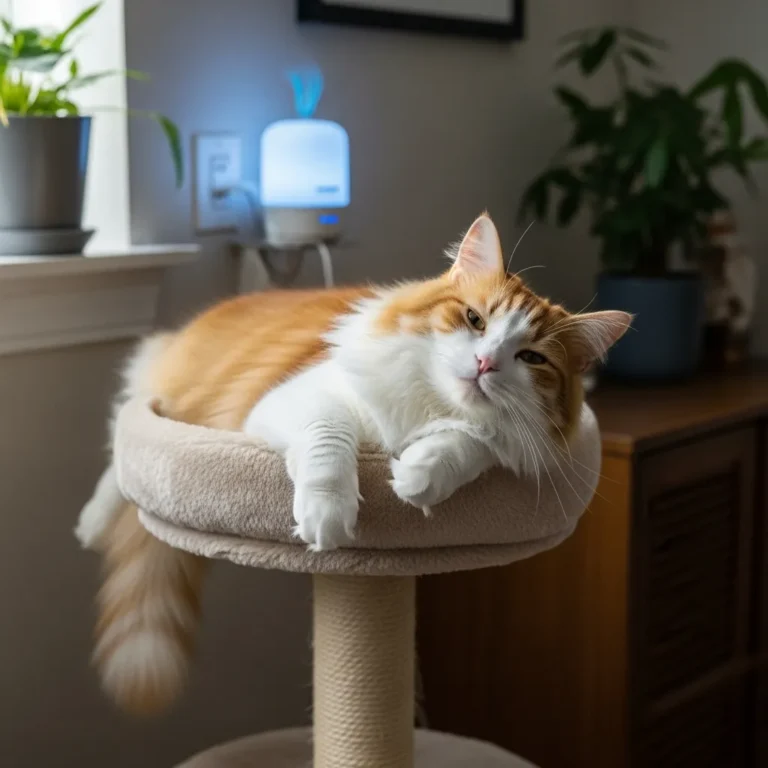
- Enrich Their Space: Cat trees, window perches, and toys keep tails active and happy. See our keep Siamese cats entertained guide for ideas.
- Respect Boundaries: Avoid petting when tails flick rapidly to prevent stress.
- Health Checks: Rule out pain (e.g., arthritis) that may cause tucked tails. Our cat health care guide shares vet tips.
2025 Trends in Cat Emotional Communication
Feline behavior research in 2025 highlights cat tail hug meaning as a growing focus in cat-human bonding signals. With multi-pet households rising, understanding what your cat’s tail is telling you is key to harmony. Social media platforms like Pinterest also amplify cat tail language visuals, with infographics on cat tail positions explained trending for their shareability.
FAQ: Quick Answers to Common Cat Tail Questions
Why does my cat wrap her tail around me?
It’s a cat tail hug meaning affection and trust, marking you as family. Respond with gentle interaction to strengthen the bond.
What does cat tail wrapping behavior mean?
Tail wrapping cat behavior signals love, security, or social bonding, like a feline hug. It’s common in relaxed, trusting cats.
How can I understand cat tail language?
Observe tail height, movement, and context with ears/eyes. High tails mean happiness; flicking suggests irritation.
Why do cats wag their tails?
Unlike dogs, why cats wag their tails often signals irritation, focus, or hunting mode. Slow wags may indicate play in kittens.
What is the importance of tail wrapping?
It’s a key cat affection sign, showing trust and bonding. It’s your cat’s way of saying, “You’re my person.”
Why are cats sensitive about their tails?
Tails are extensions of the spine, packed with nerves. Pulling or rough handling causes pain, so always pet gently.
How can I interpret cat tail signals?
Combine tail cues with body language: high tail with purring is joy; tucked tail with pinned ears is fear. Context is everything.
How can I tell if my cat is communicating affection through its tail?
Look for upright tails, gentle wrapping, or slow tip quivers—classic cat tail affection signs. Respond with love to reinforce.
Conclusion: Master Cat Tail Language for a Stronger Bond
Cat tail language is your window into your feline’s heart and mind. From the joyful cat tail up meaning to the loving cat tail hug meaning, every flick and curl tells a story. By decoding what cat tail movements mean, you can respond to your cat’s needs, reduce stress, and deepen your cat-human bonding signals. Whether it’s a playful Bengal’s tail twitch or a Ragdoll’s affectionate wrap, understanding cat emotional communication transforms your relationship.
Ready to dive deeper into understanding cats? Explore our expert guides at Cat Bloom Haven.