How to Talk to a Cat: The Complete Guide to Understanding and Speaking Their Language (So They Finally Stop Ignoring You)
If you’ve ever caught yourself asking, “Why won’t my cat leave me alone?” only to be met with a slow blink, a trill, or a full-body flop on your keyboard, congratulations your cat is talking to you. The problem is most of us never learned how to talk back properly.
Cats aren’t dogs. They don’t live to please us, but they do communicate constantly through meows, tail flicks, ear positions, slow blinks, and even the way they purr. Once you learn how to speak cat, that clingy, chatty, or mysteriously quiet feline suddenly makes perfect sense.
In this ultimate guide, we’ll break down every major form of cat communication, backed by feline behavior science and decades of hands-on experience with hundreds of cats. By the end, you’ll know exactly how to understand your cat, respond in ways that deepen your bond, and yes even teach them a few basic commands.
Key Takeaways (Read This First If You’re in a Hurry)
- Cats only meow at humans never at other cats after kittenhood. Every meow is for you.
- A slow blink = “I love and trust you” in cat language.
- Purring doesn’t always mean happiness; stressed or painful cats purr too.
- Tail up = friendly greeting. Tail twitching or thumping = irritation.
- You can absolutely train cats using the same positive-reinforcement methods as dogs they just choose when to listen.
Ready for the deep dive? Let’s go.
Why Your Cat Talks to You (and Only You)
Adult cats in the wild are mostly silent with each other. Kittens meow to their mothers, but once they grow up, feral cats switch to body language, hisses, and growls.
Domestic cats, however kept the kitten-like meow and turned it into a sophisticated language aimed exclusively at humans. Researchers at Cornell University recorded hundreds of cat meows and found that cats modify pitch, length, and tone depending on what they want food, attention, or to be let outside.
In short: your cat learned how to talk to you because it works.
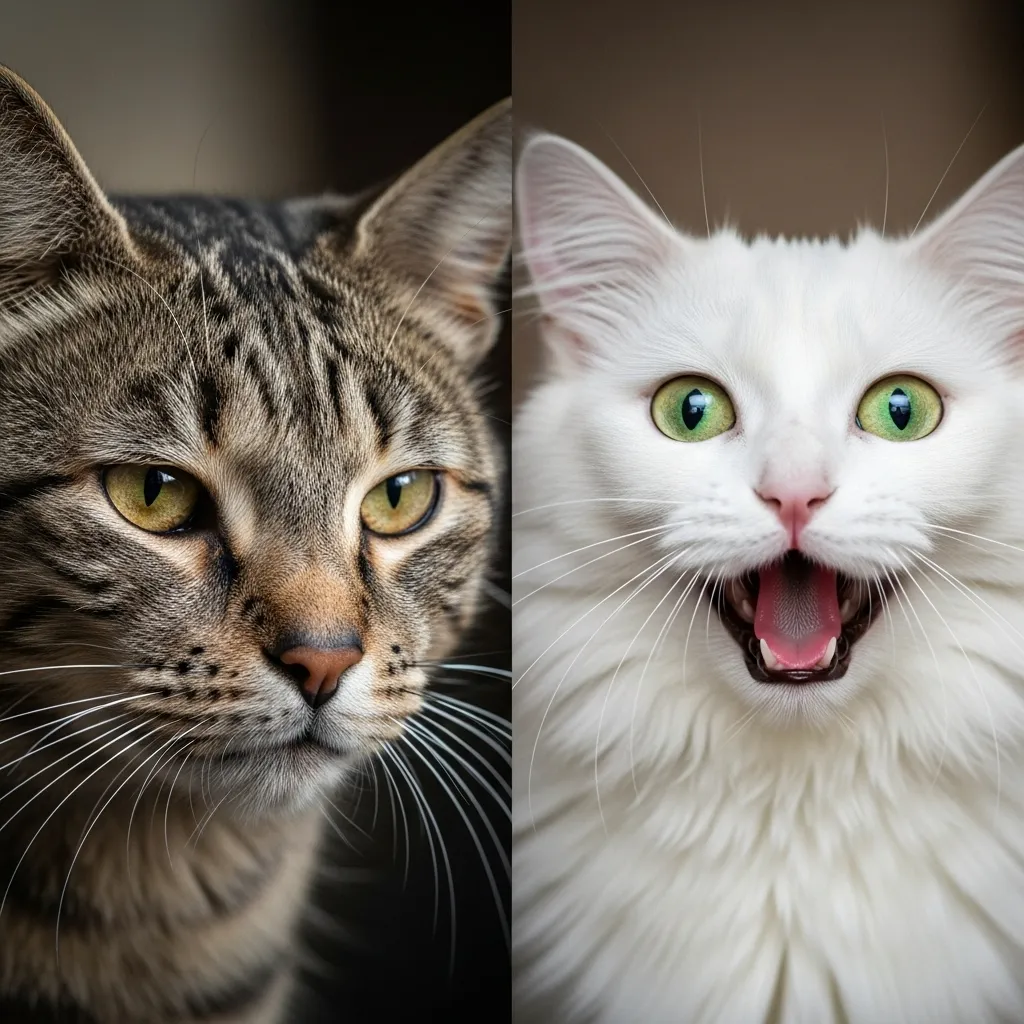
The 7 Main Types of Cat Meows (and What They Actually Mean)
Every cat has their own “dictionary,” but these are the universal patterns:
- Short, high-pitched mew – Standard greeting (“Hi!”)
- Long, drawn-out “mrrroooow” – Demand or complaint (“Feed me now” or “Why is the door closed?”)
- Rapid-fire meows – Excitement or frustration
- Low-pitched “mow-mow” – Annoyance or warning (“Back off”)
- Chirrup/trill – Friendly check-in, often used by mother cats with kittens
- Chattering at birds – Frustration/excitement (prey drive overload)
- Yowl or howl – Distress, pain, mating call (unspayed/unneutered), or cognitive dysfunction in seniors
Pro tip: Record your cat’s different meows on your phone. Play them back a week later you’ll be shocked how quickly you learn their personal vocabulary.
Cat Body Language 101: The Ultimate Visual Guide
Words are only half the conversation. Here’s what your cat’s posture is really saying.
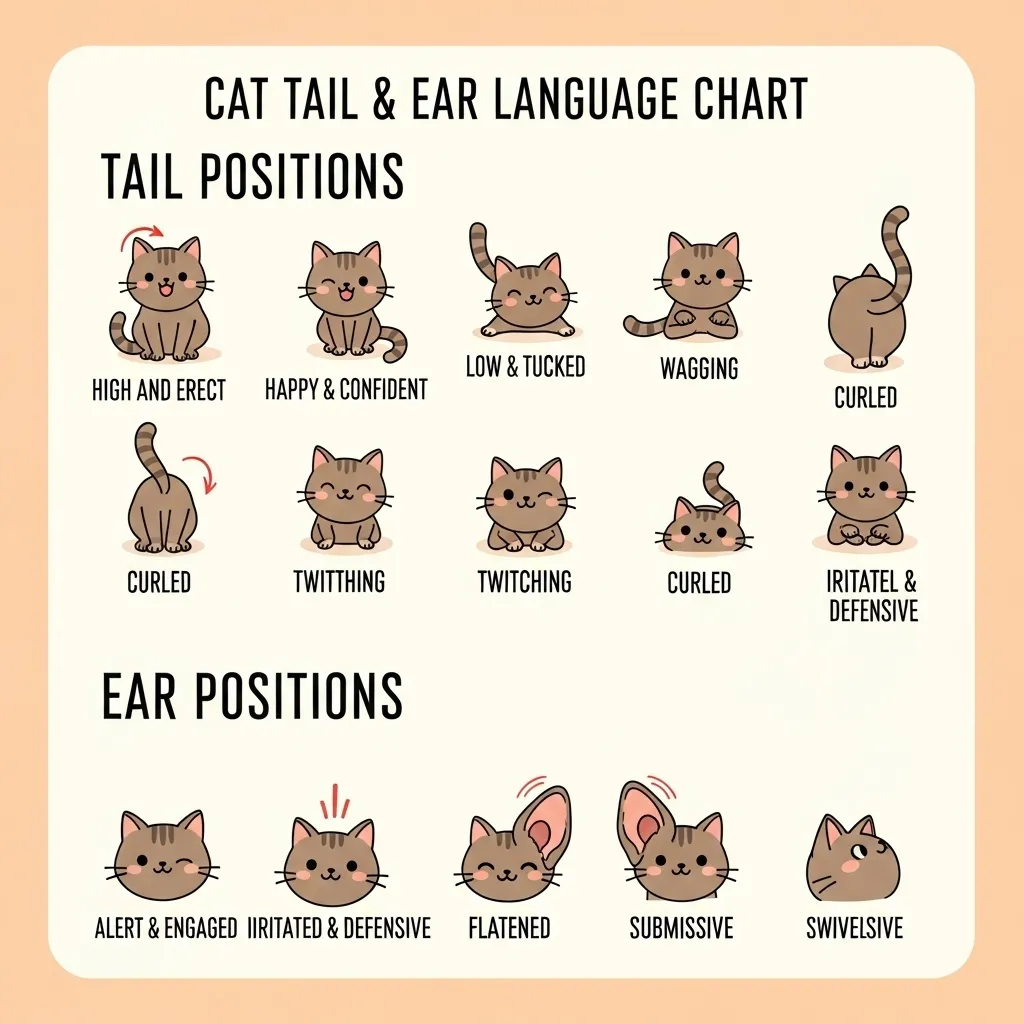
Tail Language Cheat Sheet
- Tail straight up with a little curl at the tip → “Hello friend!” (the cat equivalent of a handshake)
- Slow swishing → Thinking or mildly annoyed
- Fast thrashing → Angry, stop whatever you’re doing
- Puffed-up bottle-brush tail → Terrified or aggressive
- Tail wrapped around body → Nervous or cold
- Tail flicking while lying down → Watching something interesting
Ear Positions
- Forward and relaxed → Curious and happy
- Turned sideways or back → Irritated or fearful
- Flat against head → Ready to fight or flee
Eye Contact and Slow Blinking
Direct staring feels threatening to cats. Instead, try the “slow blink”:
- Look at your cat softly (half-closed eyes)
- Slowly close your eyes for 1–2 seconds
- Open them again
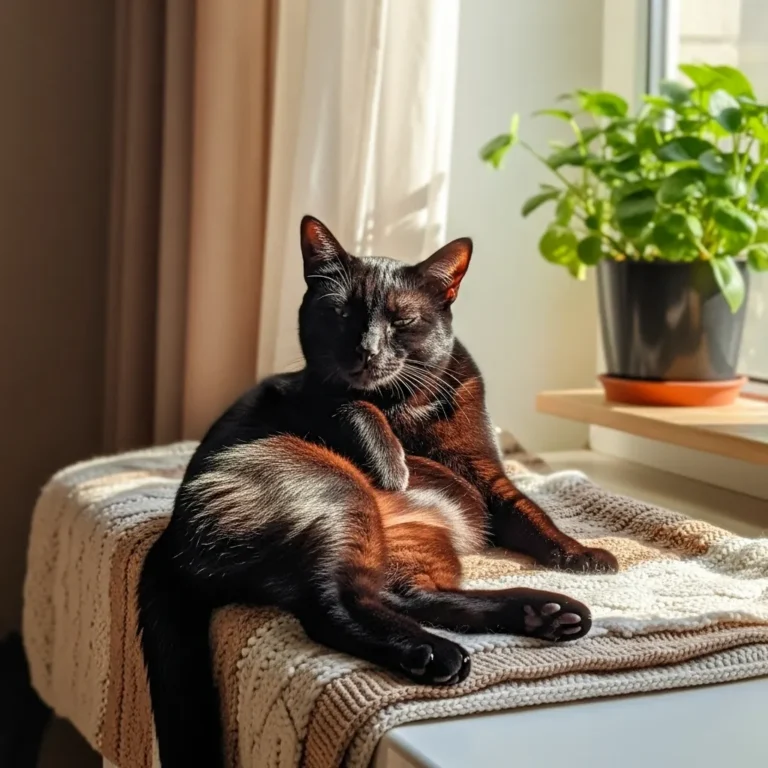
If they slow-blink back, you just said “I love you” in fluent cat.
Why Do Cats Purr? It’s More Complicated Than You Think
Most people assume purring = happy. Not quite.
Cats purr in these situations:
- Contentment (the classic lap purr)
- Self-soothing when stressed or in pain (vets hear purring from injured cats all the time)
- Healing cats purr at a frequency (25–150 Hz) that promotes bone and tissue repair
- Kitten-mother bonding
- Soliciting food (the famous “solicitation purr” has a higher-frequency cry embedded that triggers nurturing instincts in humans)
So if your cat is purring loudly while hiding or at the vet, it might be trying to calm itself, not saying it’s happy.
How to Talk Back to Your Cat (They’re Listening)
1. Use Their Name + a Rising Tone for Positive Things
Cats recognize their own name (University of Tokyo study, 2019). Pair it with a gentle, higher-pitched voice for greetings and treats. Use a lower, calmer tone for “no” or when they’re overstimulated.
2. Mimic Their Sounds (Yes, you can meow back just don’t overdo it.
A short “mrrp?” in response to their trill is often met with delighted conversation.
3. Respect the Slow Blink
It’s the single most powerful trust-building tool we have.
4. Nose-to-Finger Greeting
Instead of reaching over their head (threatening), offer a finger at nose level. Let them come to you and rub their cheeks they’re marking you as safe.
5. Never Punish Vocalization
Yelling “shut up” at a talkative cat only teaches them that you’re unpredictable. Ignore unwanted meowing and reward silence or alternative behavior.
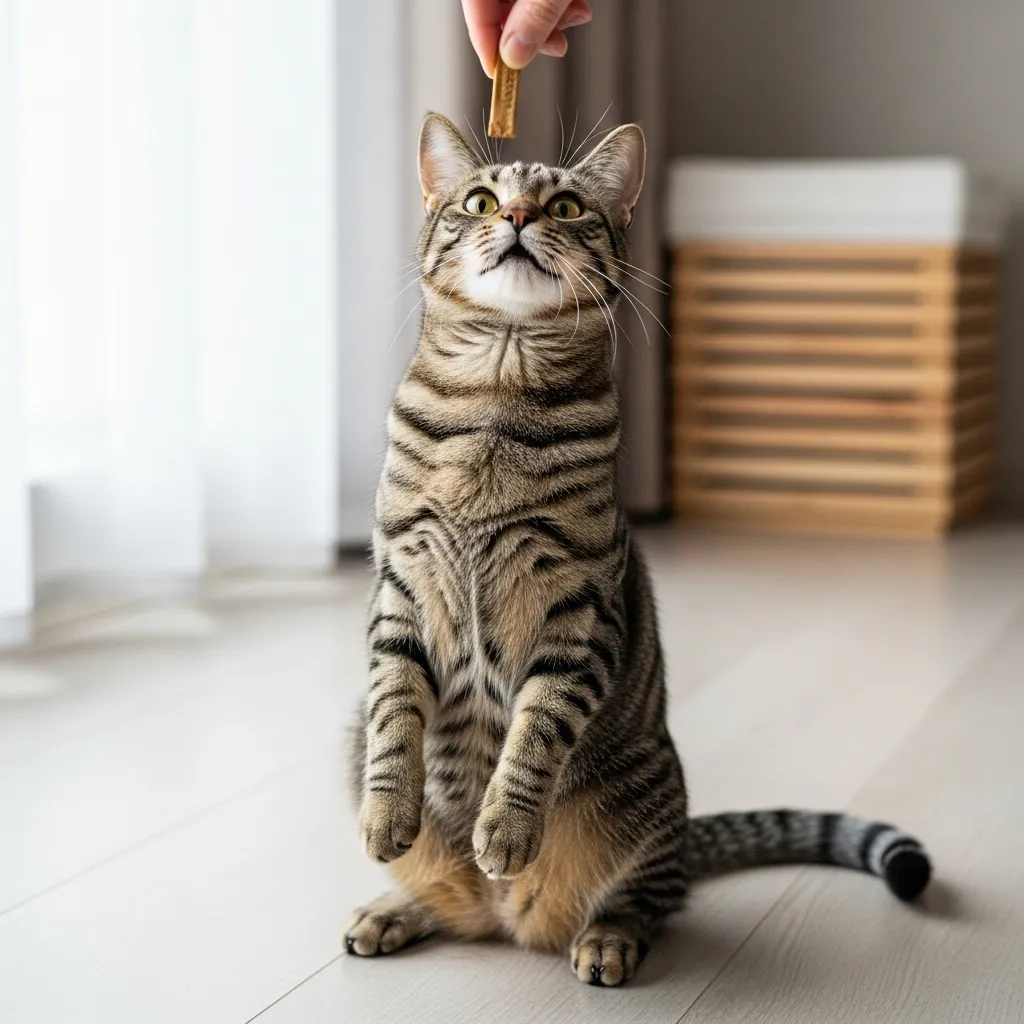
Teaching Cats Basic Commands (Yes, It’s Possible)
Cats are highly trainable with clicker training or simple positive reinforcement. Common commands owners successfully teach:
- Sit
- Come
- High-five
- Spin
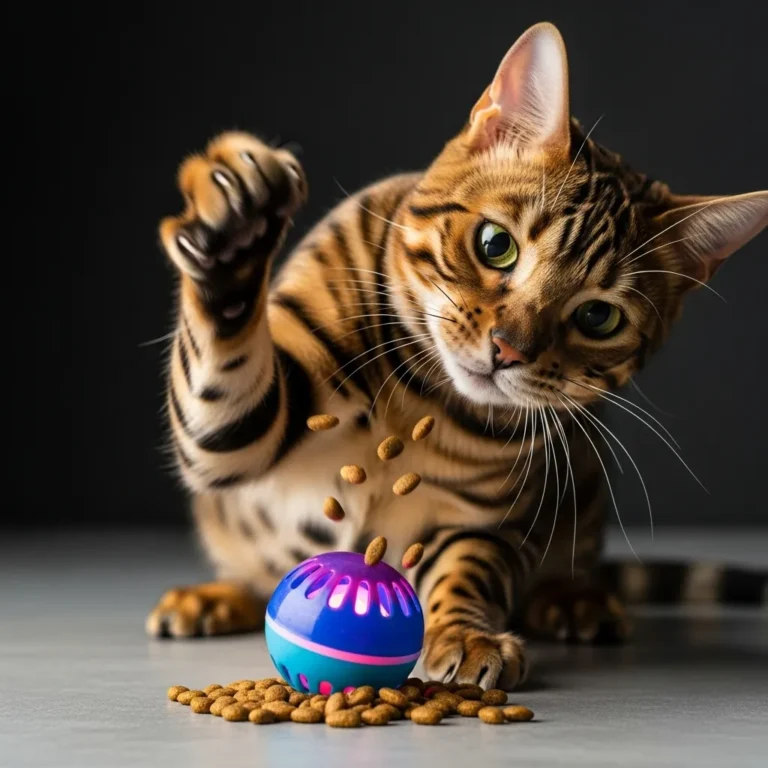
- Fetch (especially Bengals, Siamese, and American Shorthairs see our guide on playful American Shorthair personalities)
- Go to mat/place
Step-by-step for “sit”:
- Hold a treat slightly above their nose
- Move it slowly back over their head their butt naturally drops
- The second they sit, mark with “yes!” or clicker + treat
- Add the word “sit” after 5–10 successes
- Fade the lure, keep the word + reward
Most cats learn “sit” in one 5-minute session.
Male vs Female Cat Communication: Are There Real Differences?
In general:
- Unneutered males more vocal when looking for mates, deeper voices
- Unspayed females dramatic yowling in heat
- Neutered/spayed differences mostly disappear, but some studies suggest females use higher-pitched meows and are slightly more talkative with humans
Personality and breed matter far more than sex. A chatty Siamese queen will out-talk a quiet male Ragdoll any day.
How to Introduce a New Cat Without Destroying Your Bond
Scent swapping and slow visual introduction are key, but communication starts earlier:
- Let the resident cat hear the new cat’s meows through a door gets them used to the voice
- Use the same slow-blink + calm voice with both cats so neither feels favored
- Never force interaction let them set the pace
Full step-by-step protocol in our article: American Shorthair introductions (works for any breed)
Frequently Asked Questions About Cat Communication
Q: Do cats understand when I talk to them?
A: They don’t understand sentences, but they recognize tone, specific words (their name, “treat,” “no”) and emotional tone extremely well.
Q: Why does my cat meow at the wall?
A: Could be shadows, insects, high-frequency sounds we can’t hear, or cognitive dysfunction in seniors.
Q: Is it okay to meow back at my cat?
A: Yes! Short chirps and trills in response strengthen your bond. Just keep it natural.
Q: How do I tell my cat I love her?
A: Slow blink, let her head-butt you, respect her boundaries, and offer cheek scratches on her terms.
Q: Why does my cat bite me after purring?
A: Overstimulation. Learn her “petting threshold” most cats prefer 3–10 seconds of stroking before needing a break.
Q: Can I teach an older cat new commands?
A: Absolutely. Cats remain trainable throughout life; it just might take a few extra sessions.
Final Thoughts: Your Cat Has Been Talking This Whole Time
Once you learn to read their tail, ears, eyes, and meows, the question stops being “Why won’t my cat leave me alone?” and becomes “How did I miss all the conversations we were already having?”
Start with one thing today try the slow blink next time your cat stares at you. Nine times out of ten, they’ll blink back, and you’ll feel the exact moment your relationship levels up.
Want to go deeper into cat behavior, training, or breed-specific quirks? Explore more expert guides on Cat Bloom Haven:
→ Cat tail language complete guide
→ Teach your cat to fetch in 7 days
Your cat is waiting for you to finally answer back in their language.
Slow blink from us to you and your furry overlord. 🐾