Why Does My Cat Meow After Eating? Unpacking Post-Meal Meowing in Cats and How to Respond
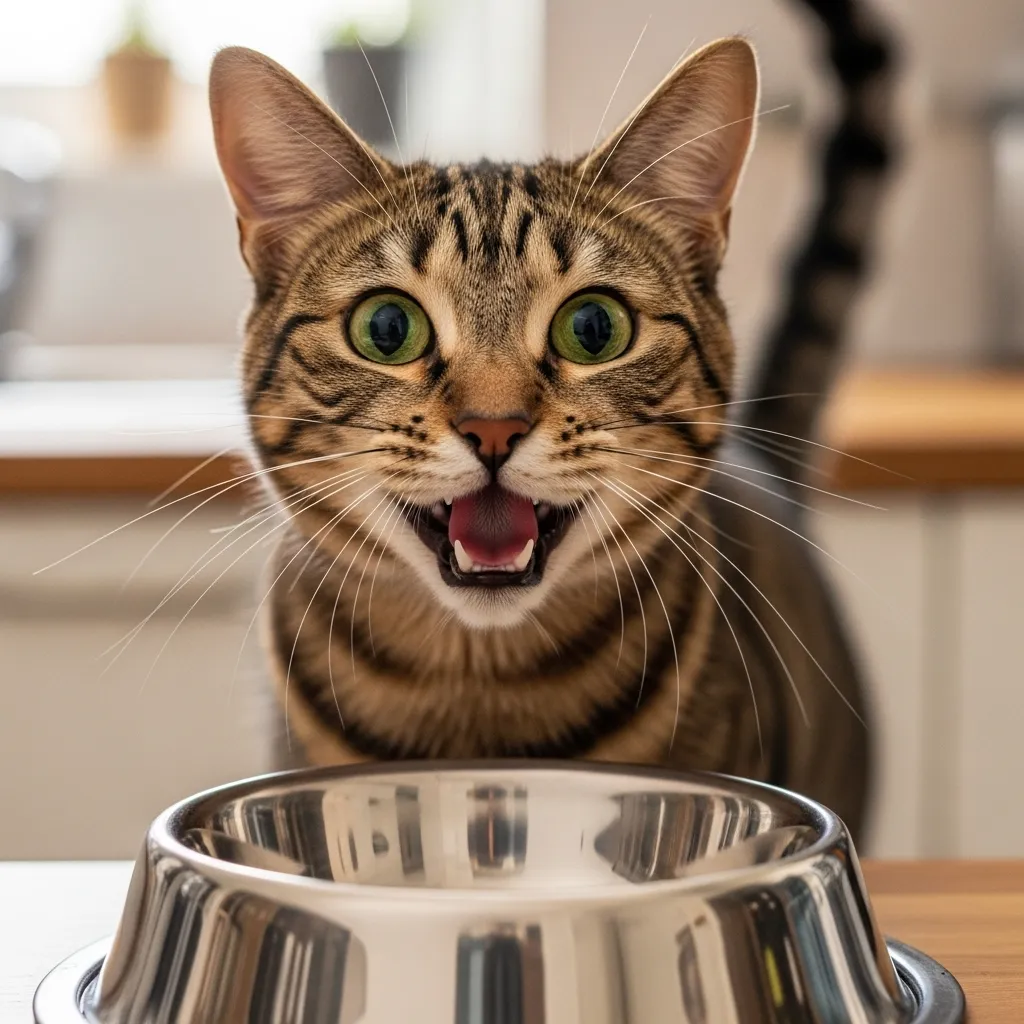
Picture this: You scoop the last kibble into the bowl, your cat dives in with gusto, and the second that tongue swipes the empty dish clean, the concert begins. Meow. Meow. MEEEOOOW. If you’ve ever stood there, spoon still in hand, wondering why does my cat meow after eating, you’re not alone. That post-meal serenade is one of the most common and confusing behaviors cat parents report.
As a feline behavior consultant who’s helped hundreds of owners decode their cat’s vocal playbook (and fostered vocal divas from Siamese to American Shorthairs), I can tell you: those meows aren’t random. They’re your cat’s way of saying something. The good news? Once you learn the language, you can stop guessing and start responding—like turning a frustrating ritual into a bonding moment.
In this 360° guide, we’ll break down every reason behind cat meowing after meals, from pure joy to hidden health red flags. You’ll get vet-approved checklists, breed-specific insights, and a step-by-step action plan to either quiet the chorus or know when to call the clinic. By the end, you’ll understand your cat’s post-meal meowing in cats better than most veterinarians and keep your sanity (and eardrums) intact.
Key Takeaways: What Your Cat’s After-Dinner Meow Really Means
- 80% of post-meal meows are normal—contentment, attention, or habit.
- 20% signal a problem—hunger, discomfort, anxiety, or medical issues.
- Vocal breeds (Siamese, Bengal) meow 3–5× more after eating than quiet ones (British Shorthair, Ragdoll).
- Never punish meowing—it increases stress and vocalization.
- Track patterns for 3 days to spot the trigger (free printable log below).
Save this page—your vet will thank you.
The Science of Cat Vocalization After Eating: Why Sound Comes Post-Swallow
Cats have 19 distinct vocalizations—more than dogs—and meowing is almost exclusively reserved for human communication. Kittens mew to moms; adult ferals rarely meow to each other. So when your cat targets you with cat vocalization after eating, they’re not talking to the empty bowl—they’re talking to you.
“Meowing is a learned behavior,” says Dr. Sarah Wooten, DVM. “The cats that get a response—food, play, pets—keep doing it. It’s classical conditioning with whiskers.”
But context is everything. A cat contentment sound (soft trill) is worlds apart from a cat discomfort sign after eating (sharp, insistent yowls). Let’s decode the top 7 reasons.
7 Proven Reasons Cats Meow After Eating (With Real Owner Stories)
1. The “That Was Delicious!” Gratitude Meow
Most common in food-motivated cats
Your cat isn’t being dramatic—they’re genuinely ecstatic. The meal hit every taste receptor (umami from protein, fat for energy), and they’re vocalizing joy.
Signs it’s contentment:
- Soft, high-pitched trills or chirps
- Tail up, ears forward, relaxed body
- Rubbing against your legs
Breed spotlight: Siamese cats are the best at this—expect a full aria.
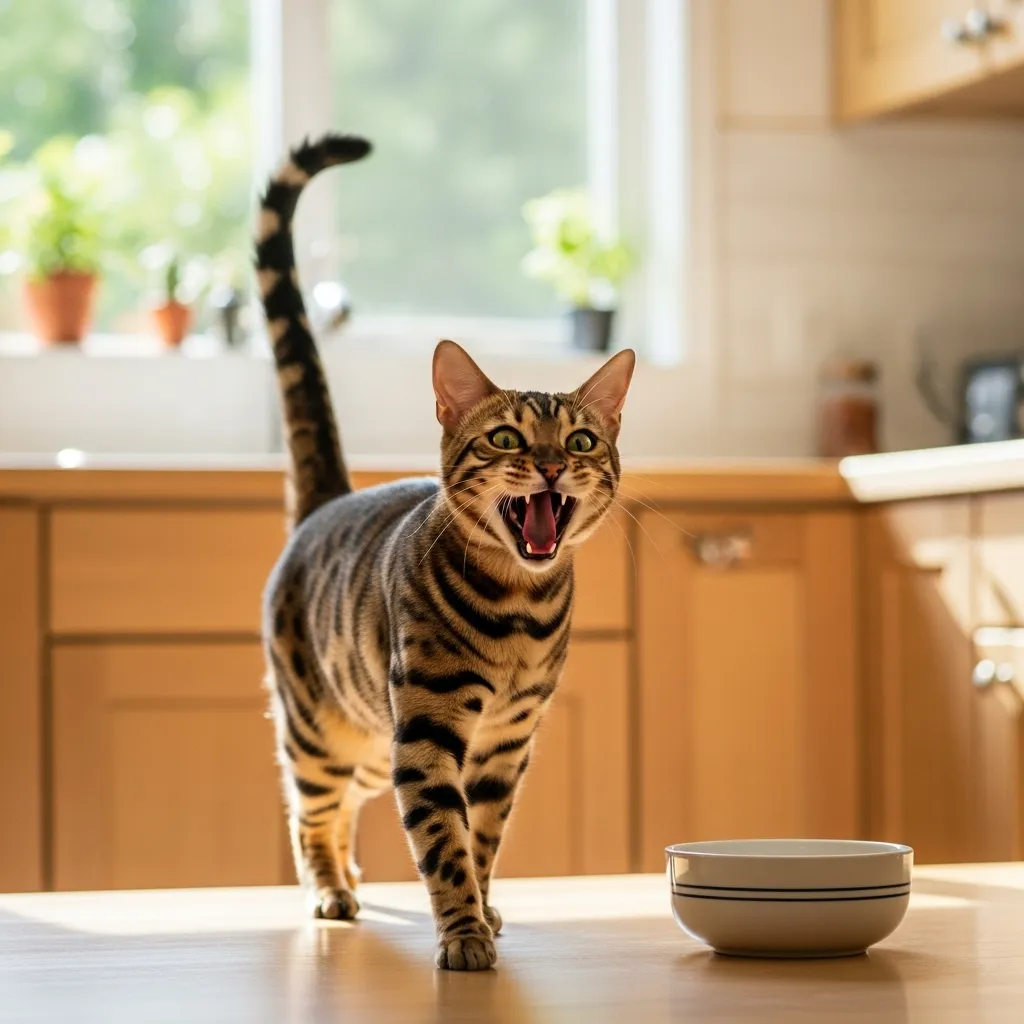
Real story: “My Bengal, Luna, does a victory lap meowing after every meal. I started saying ‘Thank you, chef!’—now it’s our ritual.” – Tara, Cat Bloom Haven reader
Action: Respond with a cheerful “Good job!” and a chin scratch. Reinforces bond, no extra food needed.
2. The “I’m Still Hungry” Hunger Cue
Top cause of excessive cat meowing after meals
Portion size, feeding schedule, or medical hunger (hyperthyroidism, diabetes) can leave them begging.
Red flags:
- Bowl licked spotless in under 60 seconds
- Weight loss despite normal intake
- Meowing starts 5–10 min after eating
Quick test: Offer 1 tsp of their regular food. If they inhale it and keep meowing → hunger. If they sniff and walk away → attention.
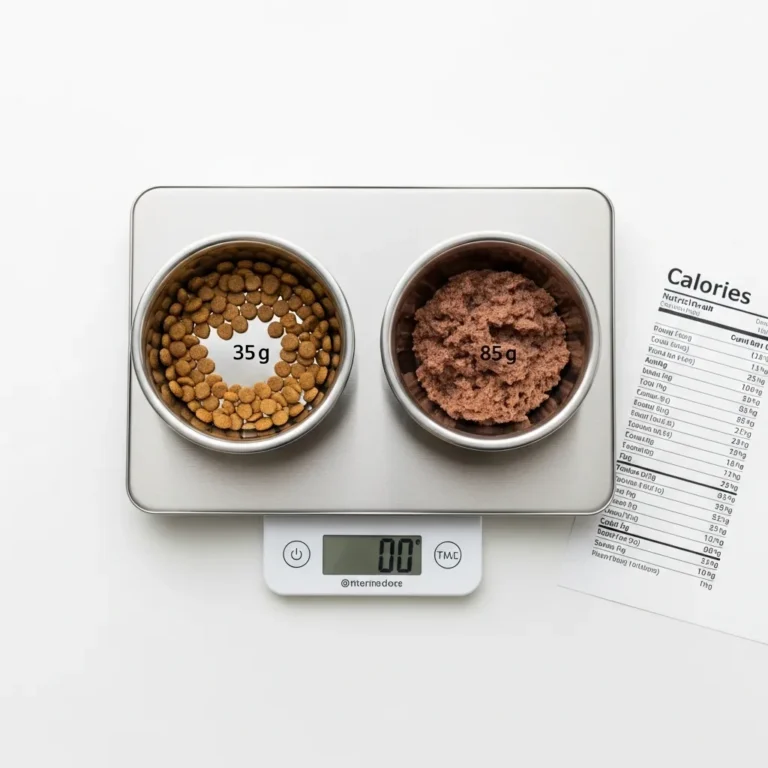
Pro tip: Use a cat food nutrition calculator to confirm calories match activity level.
Explore our guide on choosing cat food for portion perfection.
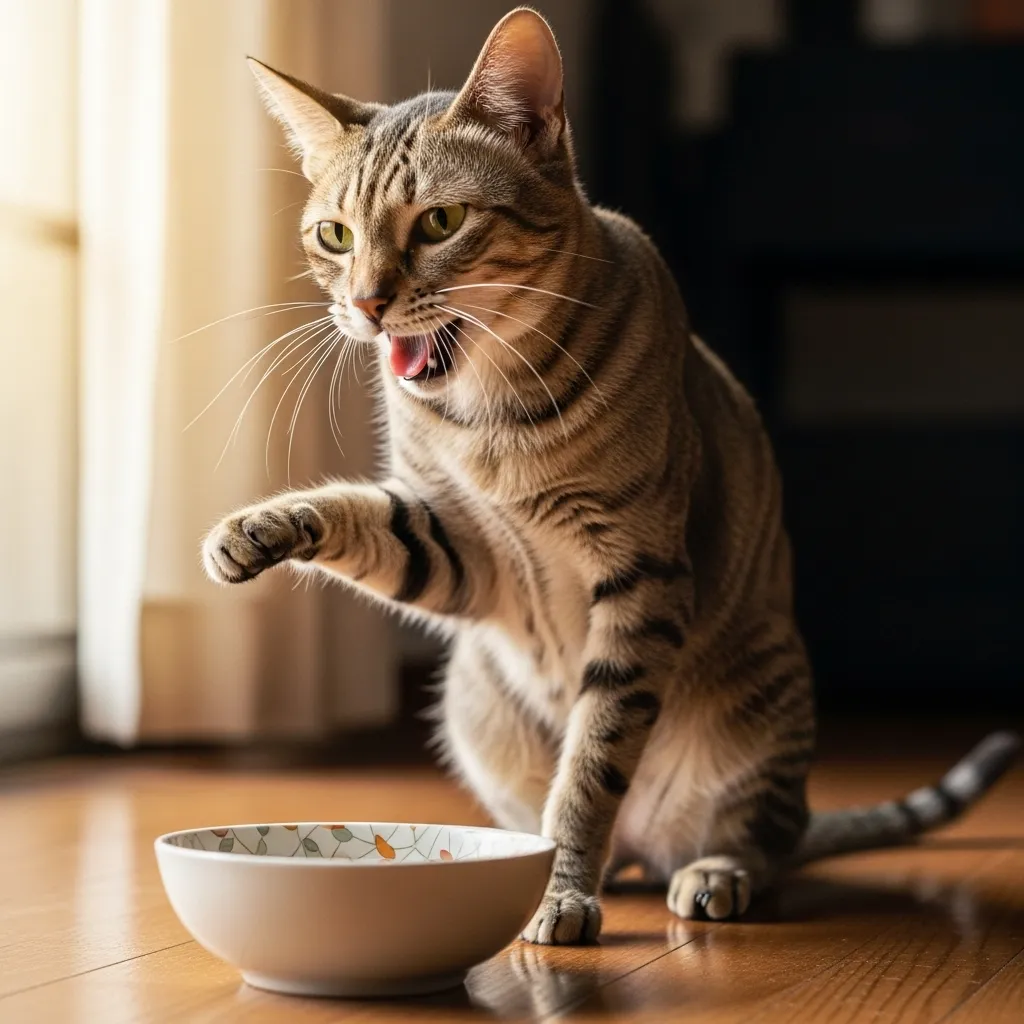
3. The Attention-Seeking “Pet Me Now” Demand
Classic cat meows for attention after food
Your cat associates you + bowl = good things. Post-meal meowing becomes a learned cue: “Human, your job isn’t done.”
Signs:
- Meowing stops the second you pet/play
- Follows you room-to-room
- No interest in extra food
Fix in 3 days:
- Ignore meows completely (hard but works).
- Initiate play 5 min AFTER meowing stops—teach patience.
- Use puzzle feeders to extend mental stimulation.
Try our teach cat to fetch guide for post-meal energy burn.
4. Discomfort or Pain: The Silent SOS
Critical—don’t ignore
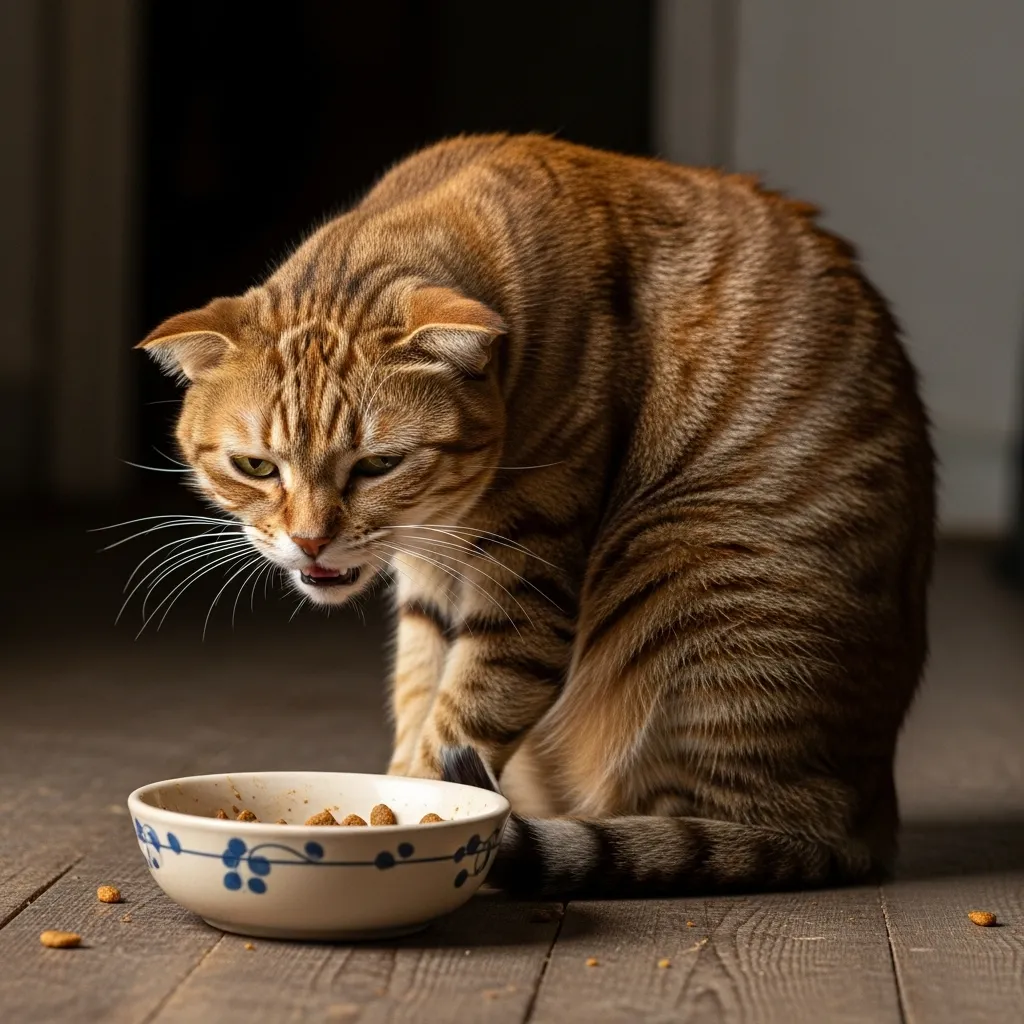
Cat discomfort signs after eating include meowing with:
- Lip licking, drooling
- Hiding post-meal
- Vomiting within 30 min
Top medical causes:
| Issue | Symptoms | Urgency |
|---|---|---|
| Dental disease | Bad breath, red gums | Vet ASAP |
| GI upset | Soft stool, gas | 24–48 hrs |
| Hairballs | Gagging, ribbon-like vomit | Weekly brushing |
| Overeating | Bloated belly, lethargy | Reduce portions |
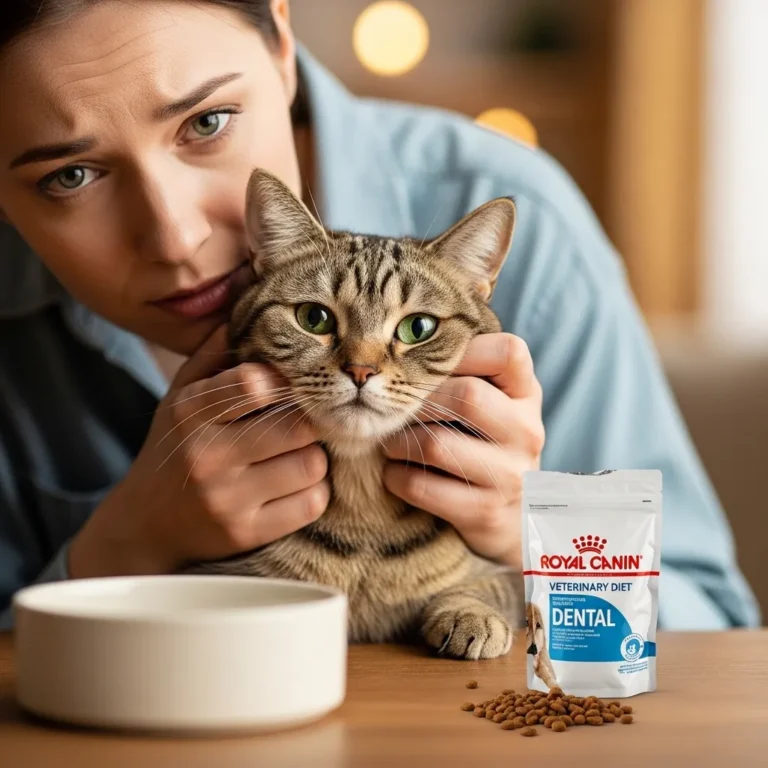
Action: Schedule a dental check—80% of cats over 3 have gum disease. Read our cat dental care guide.
5. Anxiety or Stress: The Emotional Meow
Rising in multi-cat or changed homes
New baby? Moved furniture? Cat anxiety after eating spikes when routines shift. Food = comfort; meowing = reassurance.
Calming toolkit:
- Feliway Classic diffuser near feeding area
- Consistent schedule (same time, same spot)
- Safe zone with best beds for American Shorthair cats
Multi-cat tension? Try Bengal cats dogs compatibility strategies.
6. Habit or Ritual: The Mealtime Opera
Your cat trained you
If meowing started after a treat or cuddle, it’s now a cat mealtime ritual.
Break the cycle:
- Feed in a different room for 1 week.
- Use an automatic cat feeder to remove human cue.
- Reward silence with play 10 min later.
7. Breed Personality: Some Cats Are Just Chatty
Genetics play a huge role
| Breed | Vocal Level | Typical Post-Meal Sound |
|---|---|---|
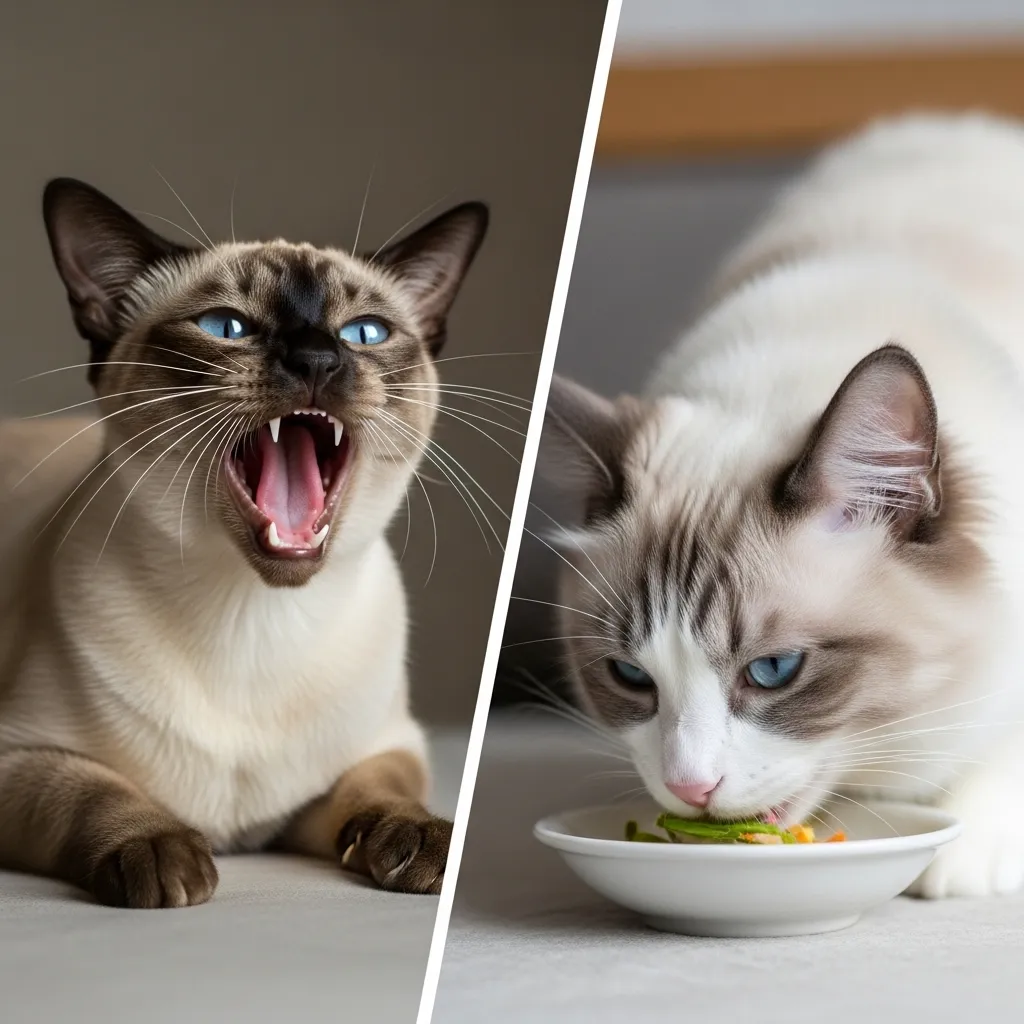
| Siamese | ★★★★★ | Full conversations |
| Bengal | ★★★★☆ | Excited chirps |
| Maine Coon | ★★★☆☆ | Soft trills |
| Ragdoll | ★☆☆☆☆ | Rare, quiet |
Dive into cat breeds personalities for your cat’s blueprint.
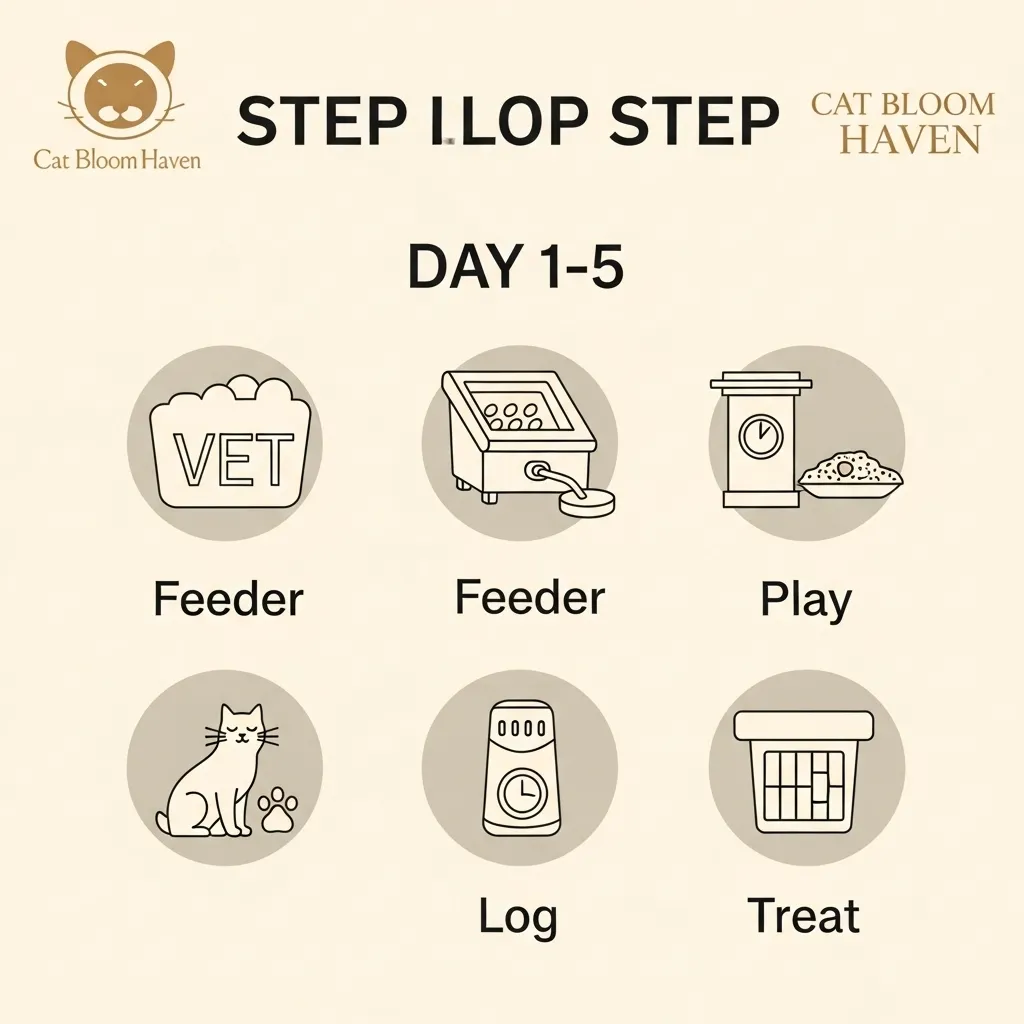
How to Stop Cat from Meowing After Eating: Your 5-Day Action Plan
Day 1: Rule Out Medical
- ✅ Vet exam + dental check
- ✅ Weigh cat (sudden loss = red flag)
Day 2: Optimize Feeding
- ✅ Switch to puzzle feeder (extends meal 10–15 min)
- ✅ Measure food with kitchen scale
- ✅ Split into 3–4 small meals
Day 3: Enrich Environment
- ✅ 10-min play session after silence
- ✅ Vertical space (cat tree near window)
- ✅ Feliway or calming collar
Day 4: Track Patterns
Download our Post-Meal Meow Log (free):
- Time of meow
- Duration
- What stops it
Day 5: Reinforce Quiet
- ✅ Clicker train “quiet” cue
- ✅ Treat only after 30 sec silence
Struggling? Book a virtual consult via finding the best vet for your cat.
When to Worry: Red-Flag Meows After Eating
Call your vet SAME DAY if meowing includes:
- Vomiting >1x/week
- Blood in stool/urine
- Lethargy or hiding
- Sudden weight change
- Meowing with open mouth (pain)
See our cat vomiting brown liquid guide for urgent steps.
Breed-Specific Meowing Quirks: What’s Normal?
| Breed | Post-Meal Meow Style | Management Tip |
|---|---|---|
| Siamese | Opera-level demands | Scheduled “talk time” |
| Bengal | Excited squeaks | Post-meal zoomies play |
| Munchkin | Soft begging | Elevated slow feeder |
| Norwegian Forest | Deep chirps | Extra protein meals |
Explore Norwegian Forest Cat care for big-cat energy.
FAQ: Your Top Cat Meowing After Meals Questions Answered
Why does my cat meow after eating?
Most often contentment, attention, or habit. Track for 3 days to confirm.
Is post-meal meowing in cats normal?
Yes—80% of cats do it occasionally. Excessive or sudden onset needs investigation.
How to stop cat from meowing after eating?
Ignore demands, use puzzle feeders, reward silence. Never punish.
Why is my cat so vocal after eating?
Breeds (Siamese), learned behavior, or hunger. Adjust portions and routine.
Can cat anxiety after eating cause meowing?
Absolutely—stress lowers digestion comfort. Use calming aids.
When should I worry about cat meowing after meals?
With vomiting, diarrhea, weight loss, or pain signs—vet ASAP.
Final Thoughts: Turn Meows into Moments
Your cat’s cat meowing after meals isn’t a flaw—it’s a window into their world. Whether it’s a Siamese diva demanding an encore or a senior Ragdoll signaling tummy trouble, every meow has meaning.
Start with the 5-day plan. Celebrate small wins. And remember: the goal isn’t silence—it’s understanding.
Ready for more feline wisdom? Explore our full library of cat behavior and health guides at Cat Bloom Haven. From why cats knead to cat zoomies, we’ve got every whisker covered.
Share your cat’s post-meal soundtrack in the comments we read every one!