Why Life With Cats Is Never Boring
Key Takeaways
- Cats transform ordinary moments into unexpected adventures daily
- Their unpredictable behavior creates genuine comedy no script could write
- Living with cats teaches flexibility, patience, and finding joy in small things
- Every cat has a distinct personality that evolves throughout their life
- The boredom-proof nature of cat companionship stems from their refusal to follow rules
Introduction
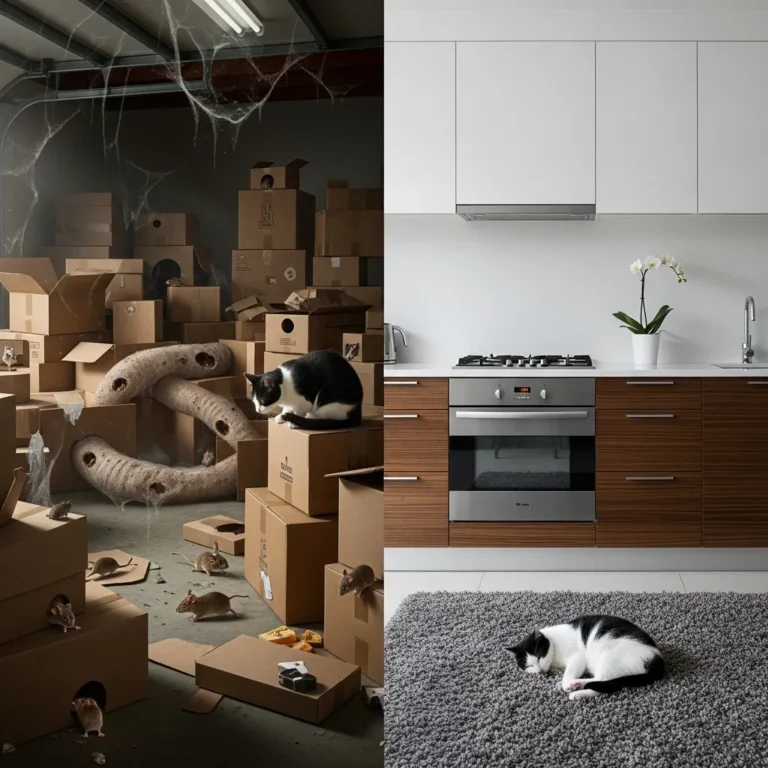
The cardboard box arrived three hours ago. It was meant to hold a new printer. Instead, it has become a fortress, a spaceship, and a nap pod. My American Shorthair, Olive, has spent the entire afternoon defending it from imaginary intruders, falling asleep inside it, and periodically emerging with that expression cats wear when they know they’ve won something.
This is why life with cats is never boring.
I have written hundreds of articles about cat behavior, health, and the delightful chaos they bring into our homes. After a decade of observing felines and the humans who serve them, one truth remains undeniable: cats are the only roommates who can make a cardboard box more entertaining than a streaming service.
Why Life With Cats Is Never Boring isn’t just a cheerful sentiment. It is a biological fact, a psychological reality, and the reason cat owners spend approximately 30 percent of their day just watching their cats be cats.
Let me show you what I mean.
The Unpredictability Principle: Why Cats Refuse to Be Dull
Cats operate on a logic system that resembles nothing else in the animal kingdom. Dogs are predictable. Hamsters are consistent. Even humans follow patterns. Cats? Cats wake up every morning and decide who they want to be.
Some days your cat is a sophisticated creature who sits gracefully on the windowsill, observing the neighborhood with quiet dignity. The next day, that same cat hears a cucumber being sliced and launches herself vertically into the air, lands on the highest bookshelf, and refuses to come down for forty-five minutes.

This unpredictability is not accidental. Cats are simultaneously predator and prey in their genetic memory. They remain hyper-vigilant while also being supremely confident. This contradiction creates behavior that genuinely surprises us, even after years together.
Veterinary behaviorists call this environmental responsiveness. Cat owners call it Tuesday.
What makes this consistently entertaining is that cats never apologize for their unpredictability. A dog who knocks over a water bowl looks ashamed. A cat who deliberately pushes your coffee mug off the desk will maintain eye contact while doing it, then walk away as though gravity is the one at fault.
This refusal to be embarrassed, to explain themselves, or to conform to our expectations means cats generate spontaneous comedy every single day. You cannot script a creature who believes their dignity remains intact even when they misjudge a jump and faceplant into a houseplant.
The Daily Comedy: Ordinary Objects, Extraordinary Behavior
Cat owners know that no toy, no matter how expensive, can compete with:
The cardboard box. A thirty-dollar cat bed sits untouched. The shipping box it arrived in has become a five-star resort. Cats prefer boxes because they provide security, warmth, and the satisfaction of squeezing into spaces that appear too small. Watching a twelve-pound cat fold himself into a six-inch cube is physics-defying entertainment.
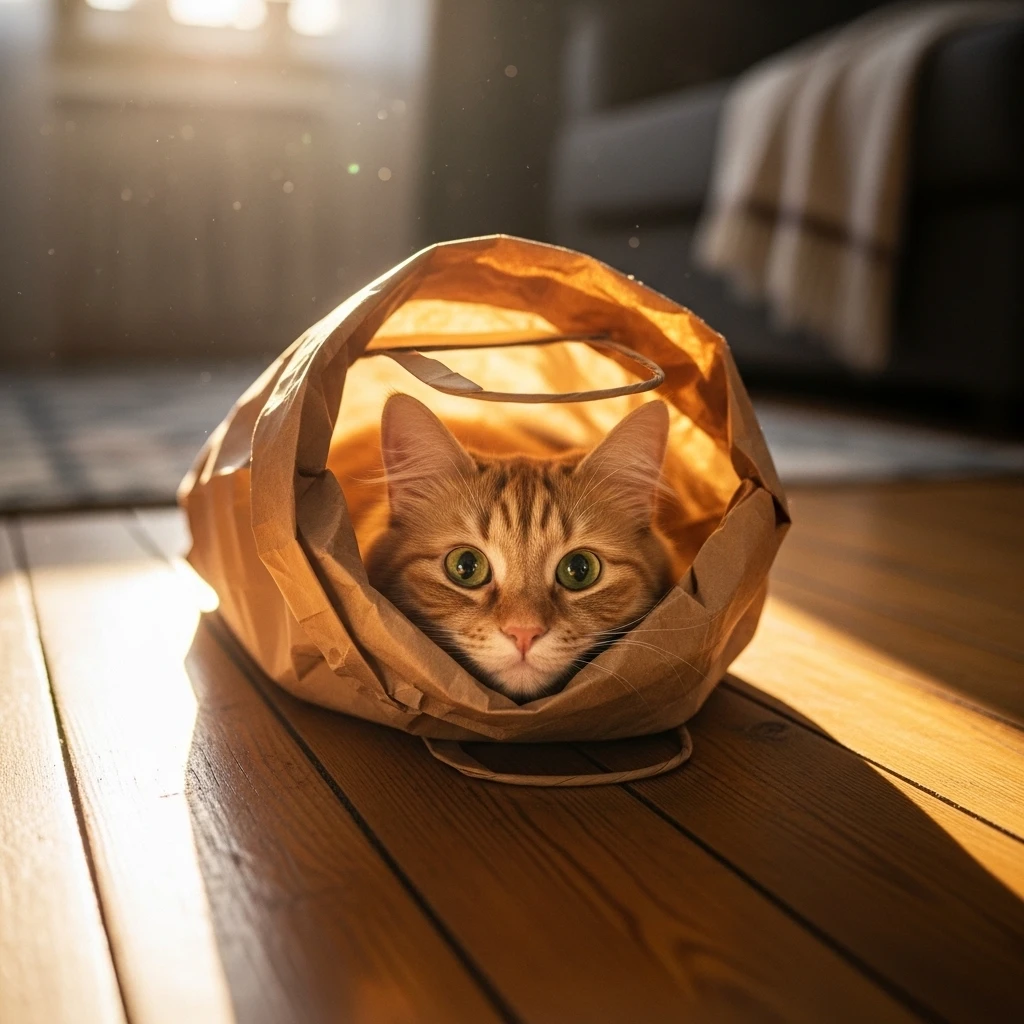
The paper bag. Leave a paper bag on the floor and prepare for thirty minutes of crinkling, pouncing, hiding, and the occasional bag-wearing episode when your cat emerges with the handle around their neck and no apparent concern about it.
The red dot. Laser pointers reveal something profound about feline cognition. Cats know the dot is not real. They know you are controlling it. They do not care. The compulsion to chase is stronger than their considerable pride.
The sink. Why do cats sit in sinks? Theories include the curved shape being comforting, the porcelain staying cool, or simply because sinks are where humans spend time and cats must be where humans are. Whatever the reason, a cat in a sink never stops being funny.
The laptop. Your cat does not understand your work. Your cat understands that your attention is elsewhere. Sitting directly on the keyboard solves both problems simultaneously. This behavior has ended countless Zoom careers and generated millions of memes. For good reason.
The invisible threat. Every cat owner has witnessed their cat suddenly stare at a corner, fur raised, pupils dilated, tracking something only they can see. Is it a ghost? A bug? A dust mote? The cat will never tell. You will check that corner for weeks.
These are not isolated incidents. They are daily occurrences. Multiply each moment by fifteen years of cat companionship and you begin to understand why cat owners rarely describe their lives as dull.
Discover more everyday cat comedy in our collection of relatable cat memes.
The Timing of Chaos: Cats Operate on Their Own Clock
Life with cats requires accepting that 3:00 AM is a perfectly reasonable hour for intense activity.
The phenomenon known colloquially as the zoomies, or scientifically as frenetic random activity periods, typically occurs when humans prefer to be unconscious. Your cat, who has slept approximately eighteen hours, wakes at midnight feeling fresh. She has energy. She has ideas. She has decided the hallway is a racetrack.

This timing is not malicious. Cats are crepuscular, meaning they are most active at dawn and dusk. Your domestic cat retains this programming even if she has not hunted for generations. When she sprints through the apartment at 5:00 AM, she is simulating the hunting schedule of her wild ancestors.
Understanding this does not make it less startling. It does, however, make it more interesting.
The zoomies follow patterns. Your cat may sprint, slide on rugs, pounce on invisible prey, climb curtains, and then stop abruptly to groom her paw as though nothing happened. The entire episode lasts perhaps ninety seconds. In that time, you have experienced confusion, amusement, concern, and the realization that you will never truly control this creature.
Cats also time their affectionate moments with precision. A cat who ignores you for hours will appear exactly when you are on an important call. She will sit on the paperwork you need to sign. She will purr loudly during your telehealth appointment. She knows. We cannot prove she knows, but we know she knows.
Training the Trainer: Who Really Teaches Whom?
We believe we train our cats. We buy scratching posts and hope they will be used. We purchase specific food and expect it to be eaten. We establish rules and anticipate compliance.
Cats have a different understanding of this arrangement.
The reality is that cats train us far more effectively than we train them. Consider the morning routine. Your cat meows at 6:00 AM. You feed her. She learns that meowing at 6:00 AM produces food. Tomorrow, she meows at 5:55 AM. You feed her earlier. The behavior is reinforced. Within two weeks, your cat has successfully moved breakfast back by forty-five minutes.

This is operant conditioning, and cats are masters of it. They learn exactly which behaviors produce which responses from their specific humans. One cat learns that sitting quietly by the food bowl works. Another discovers that knocking objects off tables guarantees immediate attention. A third realizes that headbutting phones out of human hands is the most efficient method.
What makes this endlessly engaging is that each cat develops individualized strategies. Your cat knows you. She has studied your patterns, your weaknesses, your schedule. She has adapted her behavior to achieve her goals while maintaining plausible deniability about her intelligence.
This dynamic creates a relationship that evolves constantly. You think you have solved the counter-surfing problem. Your cat waits two weeks and develops a new technique. You install a cat door. Your cat uses it twice, then demands you open the regular door because the cat door requires slightly more effort.
Cats do not accept inefficiency. They also do not accept solutions they did not request.
Learn more about this dynamic in why most cat training fails and how to fix it.
Personality Revealed: No Two Cats Are the Same
If you have lived with one cat, you have lived with one cat. The next cat will be completely different.
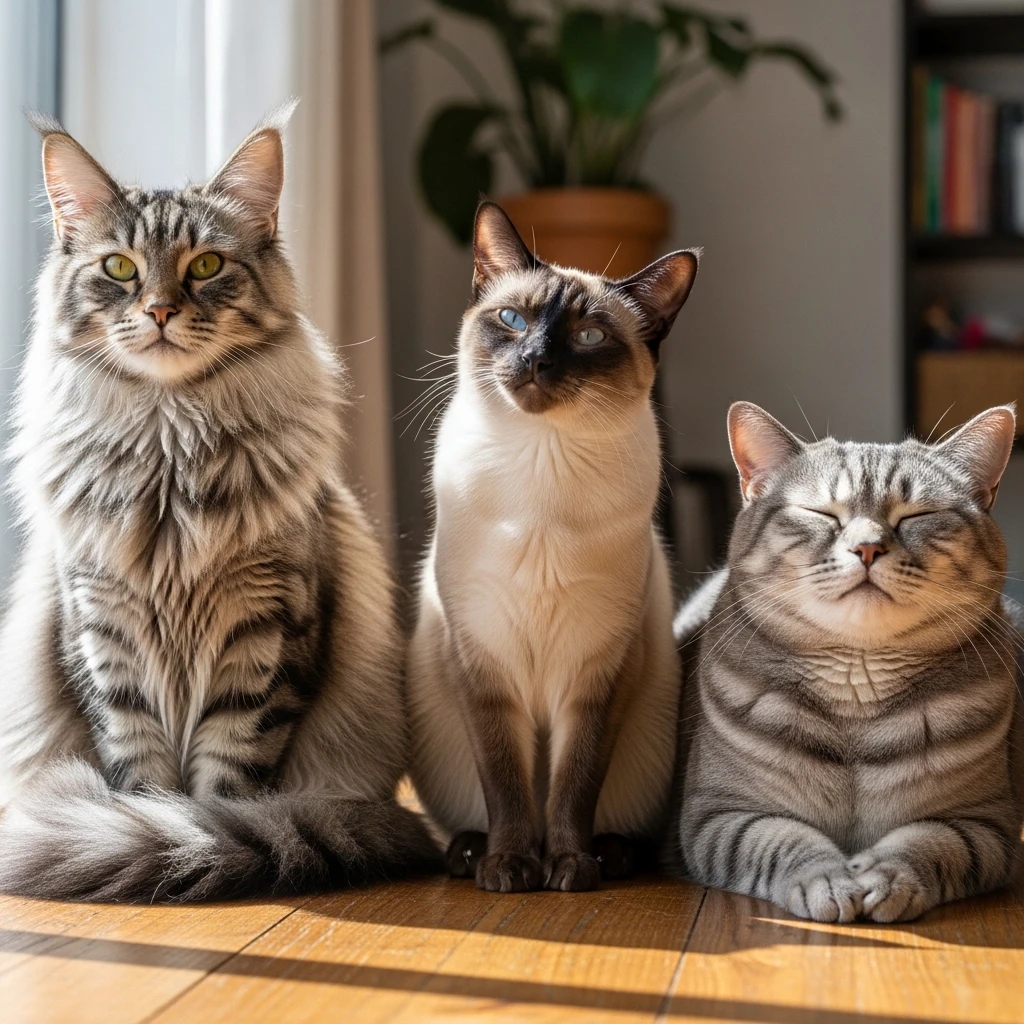
Cat personalities vary as widely as human personalities. Some cats are extroverts who greet visitors at the door. Others hide for hours when the doorbell rings. Some cats fetch. Some cats judge fetch. Some cats demand belly rubs. Some cats will end a friendship if you touch their stomach.
The Bengal cat is athletic, vocal, and requires significant engagement. She will open cabinets, turn on faucets, and evaluate your puzzle toys with critical eyes. Learn more in our complete Bengal cat breed guide.
The Persian cat prefers quiet observation. She will sit on the back of the sofa and monitor household activity with the dignified patience of a retired librarian. Movement is calculated. Drama is avoided. Our Persian cat breed profile explores this gentle temperament.
The Siamese cat has opinions. She shares them frequently. Conversations with Siamese cats are not monologues; they are dialogues, and the cat expects responses. Many Siamese owners report their cats answer questions. We explore this in why Siamese cats are the best.
The Maine Coon is large, friendly, and often dog-like in behavior. He may follow you from room to room, supervise your activities, and attempt to drink from your glass. Our Maine Coon guide details this gentle giant.
The Munchkin cat, with short legs and unlimited confidence, approaches life with determined enthusiasm. Stairs are challenges to be conquered. Our Munchkin cat care tips address their unique needs.
The Norwegian Forest Cat is independent yet affectionate, built for harsh climates and warm laps. She decides when cuddling occurs and negotiates terms. See our Norwegian Forest Cat care guide for more.
The Ragdoll goes limp when held, trusting humans completely. This vulnerability makes their occasional stubbornness even more endearing. Our Ragdoll cat care guide explains their gentle nature.
Each breed carries tendencies, but individual cats read the breed description and make their own decisions. Your American Shorthair may be athletic or sedentary. Your rescue cat may embody traits from multiple breeds or none at all.
This individuality ensures life with cats never becomes routine. You are not living with a category. You are living with a specific creature who has specific preferences, many of which she will change without notice.
The Gift Economy: Dead Mice and Living Room Socks
Few cat behaviors generate stronger human reactions than gift-giving.
Your indoor cat, who has never known hunger, who eats premium kibble from an elevated bowl, who has never needed to hunt, brings you a gift. Sometimes the gift is a dead mouse. Sometimes it is a live mouse, which adds excitement. Sometimes it is a sock, a hair tie, or a toy that has been carried in the mouth and deposited on your pillow.
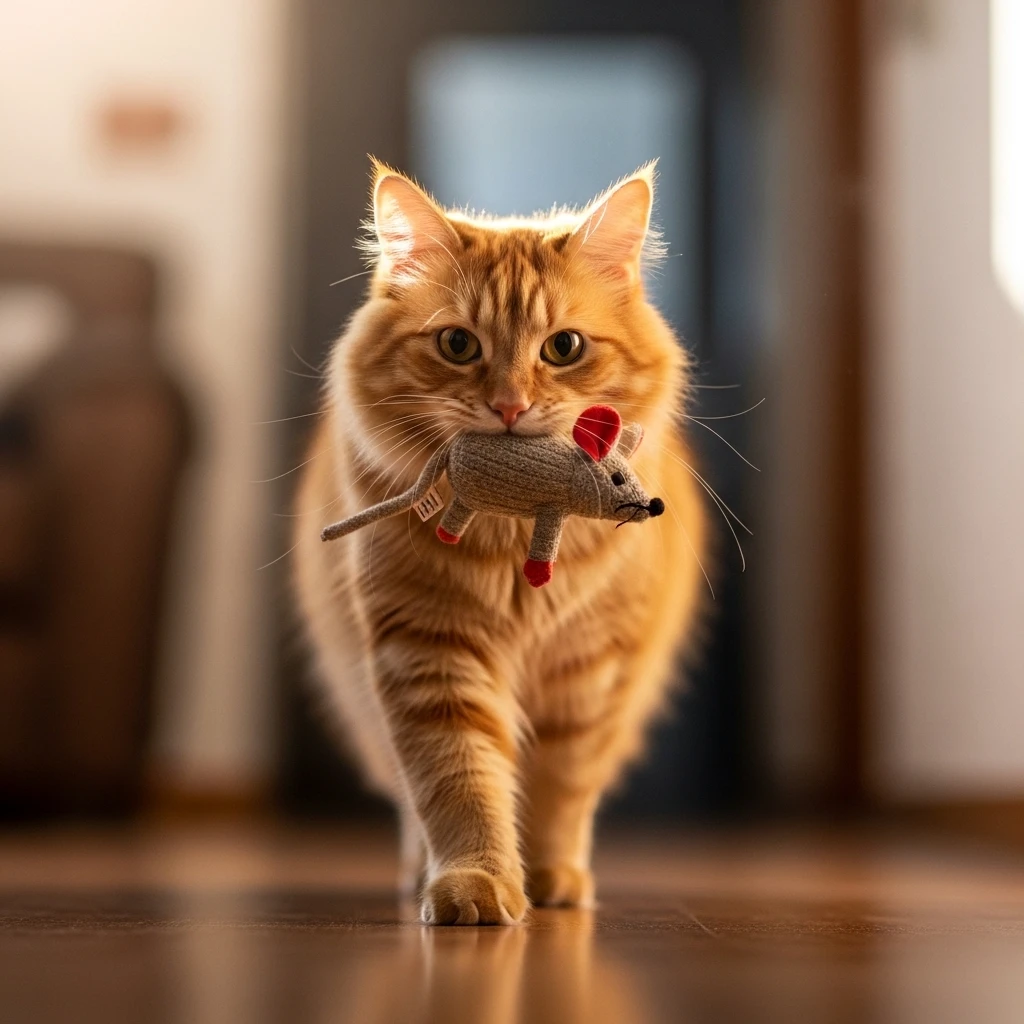
Humans interpret this behavior through our emotional framework. We see affection. We see generosity. We see our cat sharing resources with family members.
The behavioral explanation is both simpler and more complex. Mother cats bring disabled prey to kittens to teach hunting skills. Your cat may view you as a permanently underskilled kitten who requires instruction. She is not giving you a gift. She is providing continuing education.
This explanation does not diminish the behavior. If anything, it enhances it. Your cat believes you cannot feed yourself. She has observed your hunting technique, which appears to involve opening cans, and has concluded that you need remedial training. Her patience with your incompetence is touching.
The socks and hair ties represent approximation. Your cat knows you like these objects. She does not understand why you prefer them to rodents, but she accepts your unusual taste. She brings you what you value.
This is why you cannot be bored while living with a cat. You are being evaluated, trained, and educated by a creature who weighs less than your laptop and maintains complete confidence in her superiority.
The Silent Conversation: Understanding Cat Communication
Cats communicate constantly. Most humans simply miss the messages.
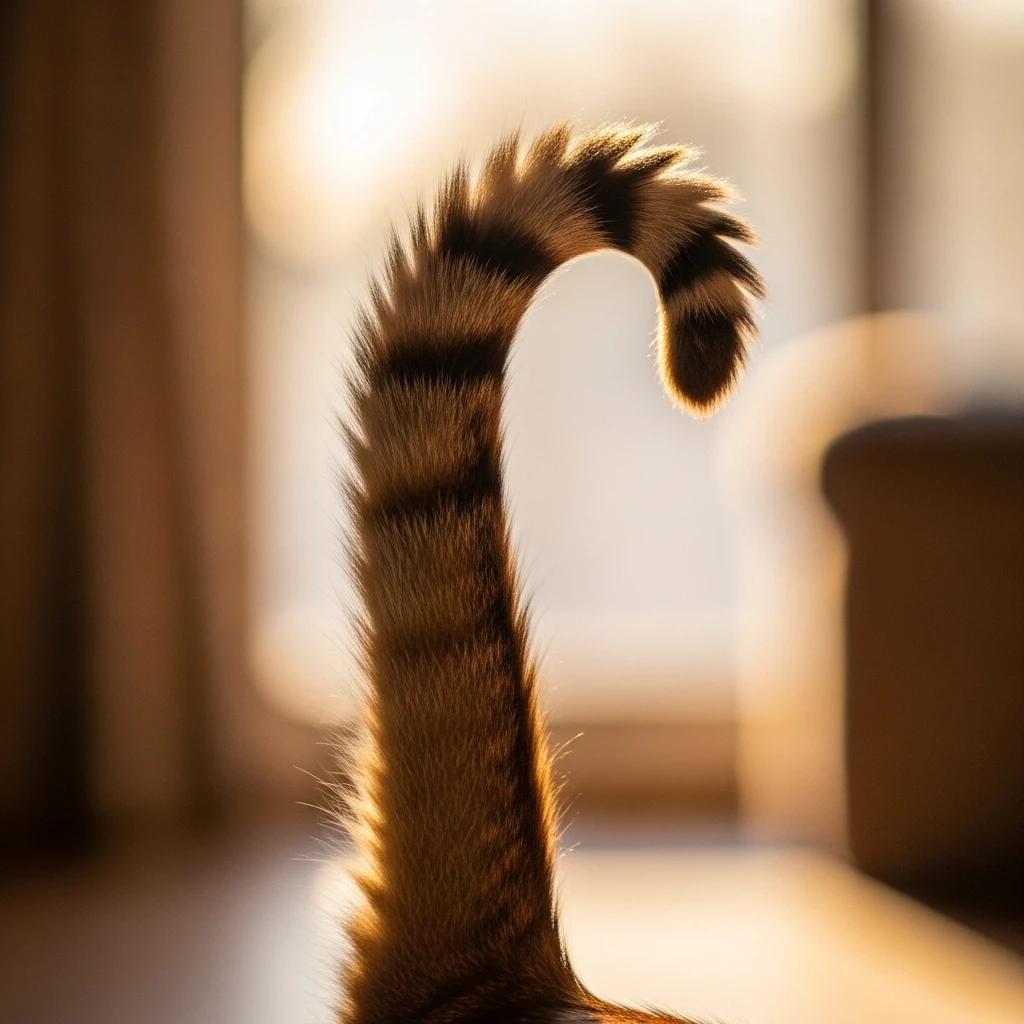
A cat’s tail speaks eloquently. The upright position with a curved tip signals happiness. The thrashing tail warns of overstimulation. The puffed tail announces fear, though the cat will deny this if questioned.
Ear positions reveal emotional states. Forward-facing ears indicate interest. Flattened ears signal irritation. One ear forward and one back suggests confusion, often during laser pointer play when the cat cannot reconcile what she sees with what she knows.
Eye contact carries specific meaning. Slow blinking is the cat equivalent of a smile. When your cat looks at you and closes her eyes slowly, she is signaling trust and contentment. Returning this gesture strengthens your bond.
Vocalizations vary by individual and context. The short meow is a greeting. Multiple meows indicate excitement. The long, drawn-out meow expresses demand, usually for food. The chirp or trill occurs when watching birds or when greeting favored humans.
Understanding this language transforms the relationship. You stop wondering what your cat wants and start recognizing that she has already told you. You were just not listening.
This ongoing translation project occupies your attention in ways you never anticipated. You find yourself interpreting tail positions for houseguests. You explain the difference between hunger meows and attention meows. You become fluent in a language no textbook teaches.
Deepen your understanding with our guide on what is my cat thinking.
The Home Renovation Project: Cats as Interior Designers
Cats have strong opinions about furniture placement, window access, and surface textures. They express these opinions through direct action.
The scratching post you purchased in a neutral beige has been rejected. Your cat prefers the corner of your sofa, which offers superior resistance and better visibility. She is not destroying your furniture. She is providing constructive feedback about your purchasing decisions.
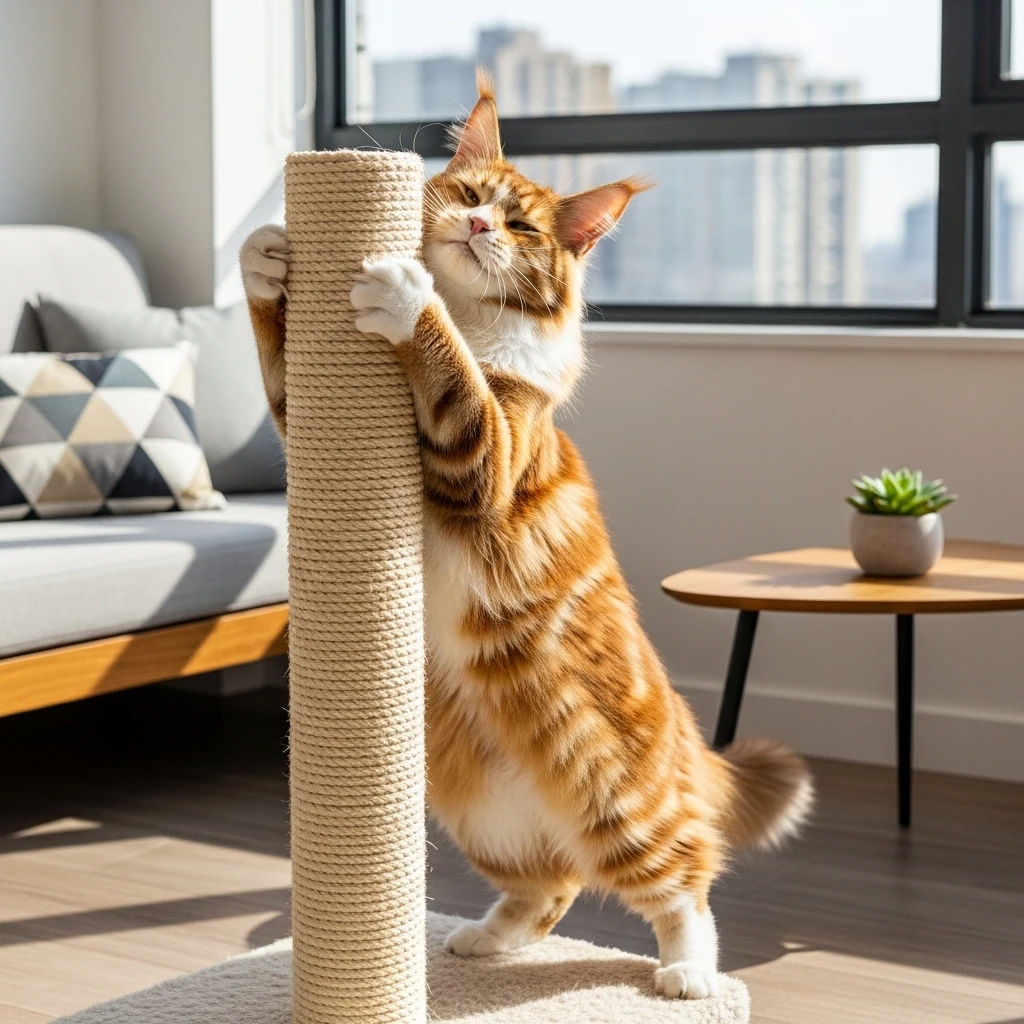
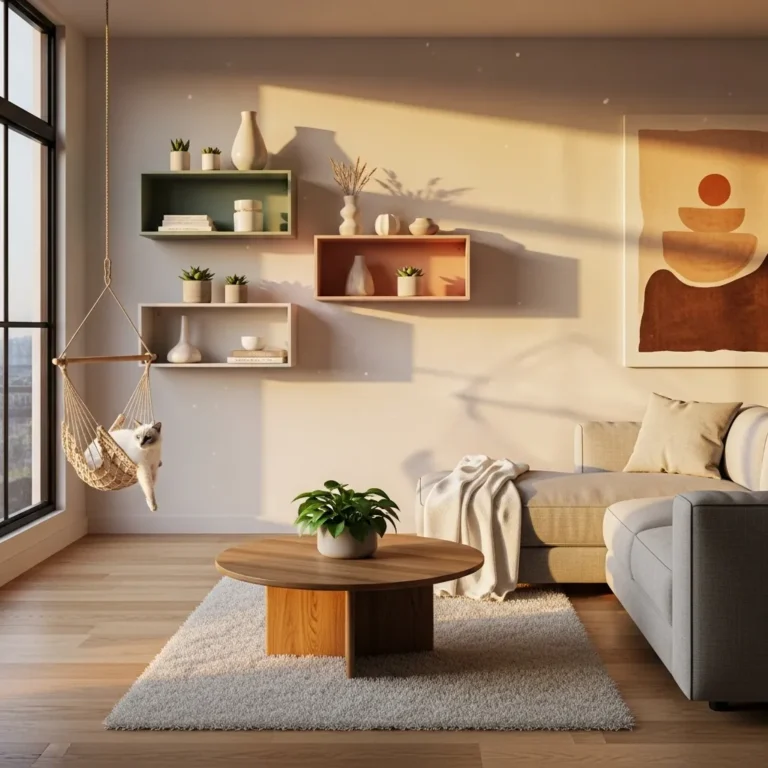
Vertical space matters enormously to cats. Height provides security and observation opportunities. Your cat wants to be elevated. If you do not provide appropriate cat trees or shelving, she will use your bookshelves, refrigerator, and the top of your door frames.
Window access ranks equally high. Cats need outdoor observation points. Bird watching is not recreation; it is essential environmental enrichment. Your cat will sit in the window for hours, tracking movement, making chirping sounds, and occasionally becoming frustrated by glass.
Cat owners adapt. We install shelves at varying heights. We clear window ledges. We accept that certain chairs now belong to the cat. We learn to appreciate the aesthetic of cat furniture integrated into human spaces.
This adaptation process never ends. Just when you believe your home is fully cat-proofed, your cat discovers the top of the refrigerator or learns to open cabinet doors. You respond with childproof locks. Your cat responds by learning how childproof locks work.
The result is a living space that evolves continuously. Your home reflects not only your taste but your cat’s preferences, and the negotiation between human and feline aesthetics produces genuinely interesting environments.
See how other cat owners balance style and function in our minimalist cat homes feature.
The Health and Wellness Partnership
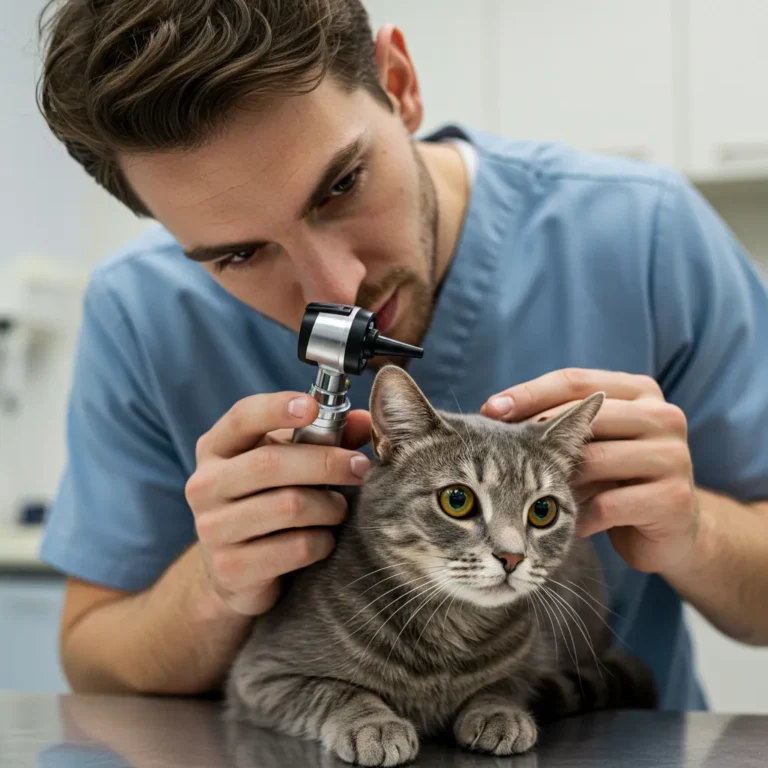
Cats hide illness. This instinct protected their wild ancestors from appearing vulnerable to predators. Your domestic cat retains this programming, which means you must become skilled at noticing subtle changes.
A cat who stops jumping to counters may have arthritis. A cat who drinks excessive water may develop kidney disease. A cat who avoids the litter box may have urinary issues. These signals are easy to miss if you are not paying consistent attention.
Living with cats sharpens your observation skills. You learn your cat’s normal breathing rate, typical appetite, and preferred sleeping positions. You notice when she grooms less frequently or sits in unusual locations. You become attuned to the small differences that indicate larger problems.
This vigilance is not stressful. It is connective. You are not just living alongside your cat; you are actively maintaining her wellbeing. The daily check-ins, the food monitoring, the litter box observations, these are not chores. They are conversations.
Veterinary visits become more productive when you can describe specific behavior changes. The vet asks when symptoms began and you know exactly, because you remember Tuesday evening when your cat declined her favorite treat. This information improves diagnosis and treatment outcomes.
Preventive care extends lifespan and quality of life. Regular wellness examinations catch problems early. Dental health prevents systemic disease. Weight management reduces diabetes risk. Appropriate nutrition supports organ function.
These responsibilities could feel burdensome. Instead, they create purpose. You are essential to your cat’s health. Your attention literally keeps her alive. That significance transforms routine care into meaningful connection.
Review our complete cat health care resource for preventive strategies.
The Comfort Economy: Why Cats Choose Us
After the zoomies subside, after the gifts are received, after the furniture has been scratched and the windowsill observed and the dinner demanded, cats sleep.
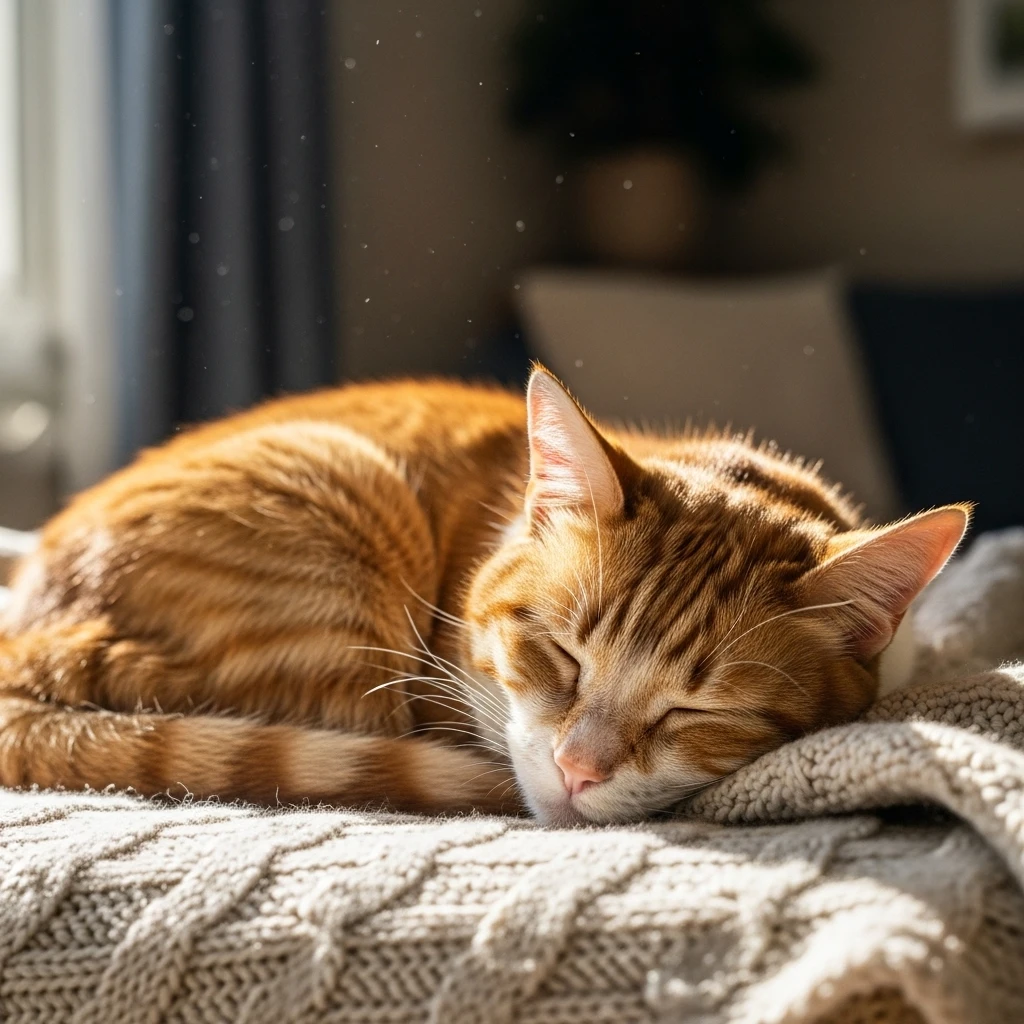
They sleep in sunbeams that move across the floor. They sleep curled against your legs. They sleep with their faces tucked into their own fur, paws covering eyes, tails wrapped around bodies. They sleep so deeply and so trustingly that you reduce your own movement to avoid disturbing them.
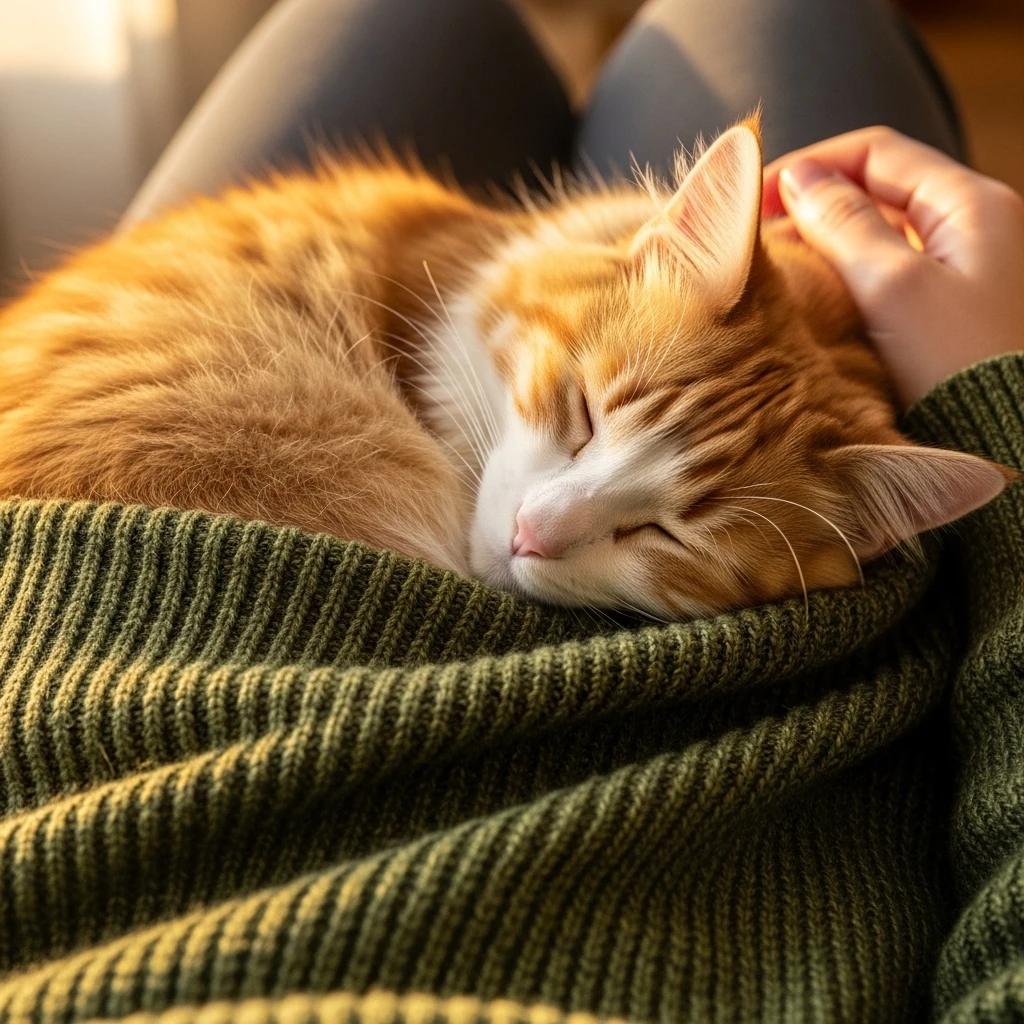
This is the other side of chaos. The same creature who attacked your feet at 3:00 AM now purrs against your chest, her heartbeat steady beneath your hand. The same cat who judged your furniture choices now kneads your sweater, eyes half-closed, completely content.
Cats do not give trust easily. They evaluate carefully. They maintain boundaries. When a cat chooses to sleep on you, not near you but on you, she has decided you are safe. She has concluded that you will not harm her while she is most vulnerable. She has selected you as her comfort.
This selection means something. In a world of endless stimulation and digital connection, being chosen as a warm body worthy of trust matters. Your cat could sleep anywhere. She sleeps with you.
These moments balance the disrupted sleep and scratched furniture. They provide the emotional return on your investment of food, veterinary care, and patience. When your cat purrs against your shoulder at the end of a difficult day, you understand exactly why life with cats is never boring.
It is not boring because it is consistently interesting. It is not boring because it challenges you, surprises you, and occasionally frustrates you. It is not boring because you are engaged in a genuine relationship with another creature who has her own personality, preferences, and perspective.
Life with cats is never boring because it is never passive. You are not observing your cat’s life. You are living together, adapting together, aging together. Every day brings new information about this specific creature who chose to share your home.
That is not boring. That is extraordinary.
Frequently Asked Questions
Why is life with cats never boring?
Cats combine unpredictability, distinct personalities, and consistent engagement with their environment. Their behavior varies daily, their communication requires interpretation, and their relationship with humans evolves continuously. No two days with a cat are identical.
Do all cats have unique personalities?
Yes. While breed tendencies exist, individual cats develop specific preferences, communication styles, and behavioral patterns. Cats raised in identical environments often display completely different temperaments.
Why do cats do random things?
What appears random to humans often follows internal logic for cats. Their hunting instincts, environmental responses, and social communication create behavior patterns that make sense within feline cognition even when humans cannot immediately identify the trigger.
How do I understand what my cat needs?
Observe your cat’s vocalizations, body language, and routines. Consistent patterns emerge around feeding, attention, and environmental needs. Most cats communicate clearly; humans simply need to learn their specific vocabulary.
Can cats get bored?
Yes. Indoor cats particularly benefit from environmental enrichment including vertical space, window access, interactive toys, and varied activities. Bored cats may develop behavioral issues or excessive sleeping patterns.
Why does my cat attack my feet?
Moving feet trigger hunting instincts. This behavior is common in cats who lack appropriate outlet for predatory behavior. Interactive play sessions before bedtime often reduce nighttime foot attacks.
How do I know if my cat is happy?
Content cats display relaxed body posture, normal appetite, appropriate grooming, and social engagement with trusted humans. Slow blinking, kneading, and purring indicate positive emotional states.
Why does my cat bring me dead animals?
This represents either teaching behavior, as mother cats demonstrate hunting skills to kittens, or resource sharing within social groups. Your cat views you as family requiring either instruction or provision.
How long do indoor cats typically live?
Indoor cats generally live 12 to 18 years, with many reaching early 20s. Quality veterinary care, appropriate nutrition, and safe environment significantly impact longevity.
Is it normal for my cat’s personality to change?
Yes. Cats mature, adapt to new environments, and may change behavior in response to health conditions or life experiences. Gradual personality evolution is typical; sudden dramatic changes warrant veterinary attention.
Conclusion
The box remains on my office floor. Olive has abandoned it temporarily, having discovered that the afternoon sun now hits the armchair in my study. She is curled there, one paw draped over her face, dreaming whatever cats dream about.
Tomorrow she will wake and decide who to be. Maybe she will be the hunter, stalking dust bunnies beneath the sofa. Maybe she will be the diplomat, winding between my ankles while I make coffee. Maybe she will be the demolition expert, testing the structural integrity of my new plant arrangement.
I do not know which cat will wake up tomorrow. Neither does she. That uncertainty, that refusal to commit to a single identity, that daily reinvention, that is the gift.
Life with cats is never boring because cats themselves are never finished. They are always becoming, always deciding, always keeping their options open. They offer no guarantees and make no promises. They simply arrive each morning and see what the day brings.
We are lucky to witness it.
Explore more expert cat care and behavior guides on Cat Bloom Haven. From breed profiles to health resources to the delightful chaos of cat memes, we help you understand and celebrate the felines who share your life.