Minimalist Homes Designed for Cats: The Art of Feline-Centric Living
Key Takeaways at a Glance
- Minimalist homes designed for cats prioritize hidden, integrated cat amenities over clutter, creating a serene space for both pet and owner.
- Successful feline minimalism is based on understanding The Core Feline Trinity: Territory, Enrichment, and Sanctuary – the three non-negotiable needs every design must address.
- Strategic vertical real estate (cat walls, shelves) and multi-functional furniture (hidden litter boxes, built-in beds) are key to a seamless aesthetic.
- A minimalist cat home requires a thoughtful curation of essentials, focusing on quality, discreet design, and quiet operation for automatic items.
- The ultimate goal is a calm, harmonious environment that reduces feline stress and aligns with clean, intentional human living.
Introduction: The Harmony of Pared-Down Purring
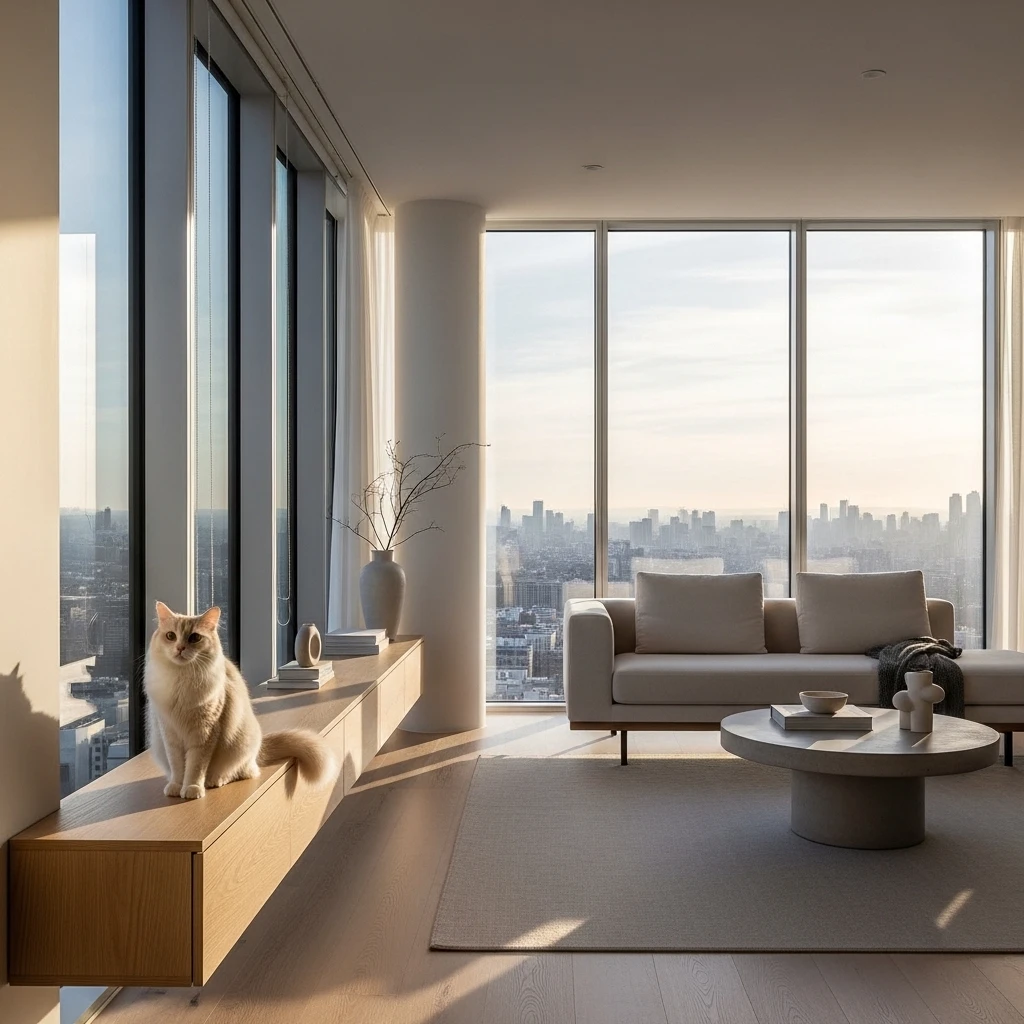
Imagine a space of calm, clean lines and uncluttered surfaces. Sunlight streams across a bare floor, and the only sound is the soft hum of contentment. Then, from a nearly invisible alcove in the wall, a cat emerges stretching gracefully before leaping soundlessly to a floating shelf that doubles as art. This is the reality of a minimalist home designed for cats, a living philosophy that proves our desire for serene aesthetics and our cats’ innate needs are not at odds, but in fact, beautifully aligned.
For too long, “cat-friendly” home décor meant brightly colored plastic towers, obtrusive litter boxes, and a scattering of toys that sabotage any cohesive design. The result? Compromise. Owners either sacrificed their style for their cat’s happiness or, worse, neglected their cat’s environmental needs for the sake of a picture-perfect room. This creates underlying stress for both species.
This guide dismantles that false dilemma. We’re moving beyond simply adding cat stuff to a minimalist space. Instead, we’re architecting the environment from the feline perspective and then skillfully integrating those requirements into a human-centric design of simplicity and peace. The outcome is a home that doesn’t just look good in photos, but feels good a low-stress sanctuary that caters to your cat’s instinctual behaviors while nourishing your own need for order and beauty. Welcome to the future of co-living, where minimalist homes designed for cats become the ultimate expression of mutual well-being.
Chapter 1: The Feline Blueprint – Understanding What Cats Really Need
Before we sketch a single line or choose a paint sample, we must become fluent in feline fundamentals. A truly successful minimalist home designed for cats isn’t about imposing human design dogma on an animal; it’s about interpreting their primal needs through a minimalist lens. It all rests on fulfilling The Core Feline Trinity.
The Core Feline Trinity: Territory, Enrichment, Sanctuary
Every design decision you make should service one, if not all, of these three pillars.
1. Territory: The Vertical Kingdom
Cats are not floor-dwelling creatures by preference; they are climbers and observers. Territory is three-dimensional. In the wild, height equals safety and strategic advantage. In our homes, denying vertical space leads to territorial stress, especially in multi-cat households, and can manifest in unwanted behaviors like spraying or aggression.
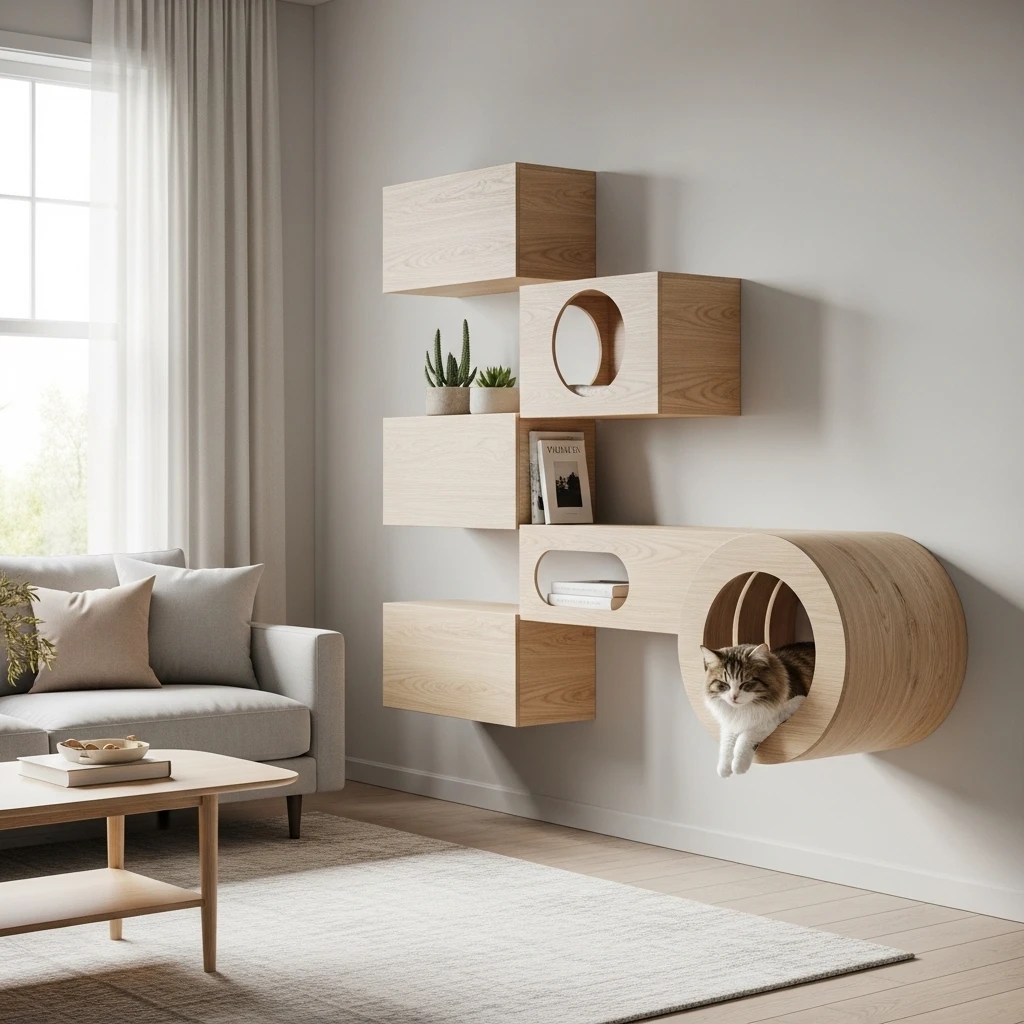
- Minimalist Translation: We replace bulky, space-hogging cat trees with integrated cat wall shelves, climbing pathways, and high lookout perches that function as living sculpture. The territory is preserved and enhanced, but visually, it becomes part of the architecture.
2. Enrichment: The Need for “The Hunt”
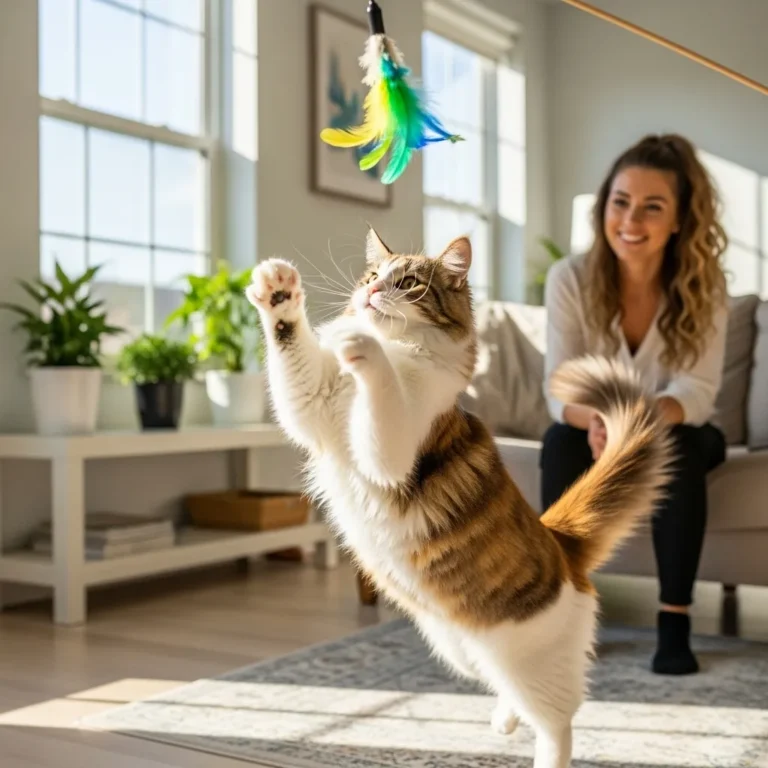
A cat’s mind is wired for the sequence of hunt, catch, kill, eat, groom, sleep. Indoor cats, deprived of this cycle, can become bored, obese, or depressed. Enrichment isn’t just toys; it’s about creating opportunities for this natural behavioral chain.
- Minimalist Translation: We incorporate puzzle feeders instead of open bowls. We design window perches with prime bird-watching views. We use motorized, quiet toys that activate on a schedule, and we prioritize interactive play sessions with owners. The clutter of a dozen unused toys is replaced with a few, high-engagement rotating items stored discreetly.
3. Sanctuary: Safe Havens for Recharge
Cats are both predator and prey. Their need for utterly secure, enclosed, and quiet places to retreat is non-negotiable. This is where they decompress and feel safe.
- Minimalist Translation: Sanctuaries are designed as intentional nooks, not an afterthought under a chair. Think: a dedicated, ventilated cabinet with a soft bed, a covered wall-mounted pod, or a built-in cubby under a window seat. These are calm, dim, and always accessible retreats.
How Minimalism Reduces Feline Stress (It’s Not Just for Humans)
The chaotic, overstimulating environment is a significant source of anxiety for cats. Constant visual clutter, noisy appliances, and unpredictable foot traffic keep them in a low state of alert. A minimalist approach, by definition, reduces this sensory overload.
- Predictability: A clean, orderly space is a predictable one. Cats thrive on routine and clear sightlines.
- Cleanliness: Minimalism emphasizes easy cleaning, which directly reduces odor, dust, and allergens—benefiting both cat respiratory health and litter box habits.
- Defined Spaces: When resources (food, water, litter, sleep) are placed in calm, dedicated, and separate zones (as minimalist planning encourages), it reduces resource-guarding anxiety.
In essence, by creating a calm home for yourself, you are inadvertently creating a less stressful, more confident environment for your cat. For a deeper dive into recognizing and alleviating cat stress, our guide on cat stress signs offers essential insights.
Chapter 2: The Minimalist Cat Design Toolkit
With the feline blueprint in mind, we now select our tools. This is where philosophy meets function. The goal is to choose and place elements that serve your cat lavishly while appearing invisible or intentional to the human eye.
Vertical Real Estate: The Art of the Cat Wall
Forget the carpeted monstrosities. The modern cat wall is a customizable landscape of floating shelves, ramps, bridges, and hammocks. It’s functional art.
- Design Principles: Use materials that complement your home (light wood, matte black metal, cork). Vary the path include perches, tunnels, and scratching surfaces. Ensure shelves are deep enough (at least 10-12 inches) and securely anchored into studs.
- Strategic Placement: Create a “highway” that leads to a prime viewing spot, like a window. This encourages use and provides a satisfying journey.
Furniture That Does Double (or Triple) Duty
This is the heart of stealthy cat-centric design.
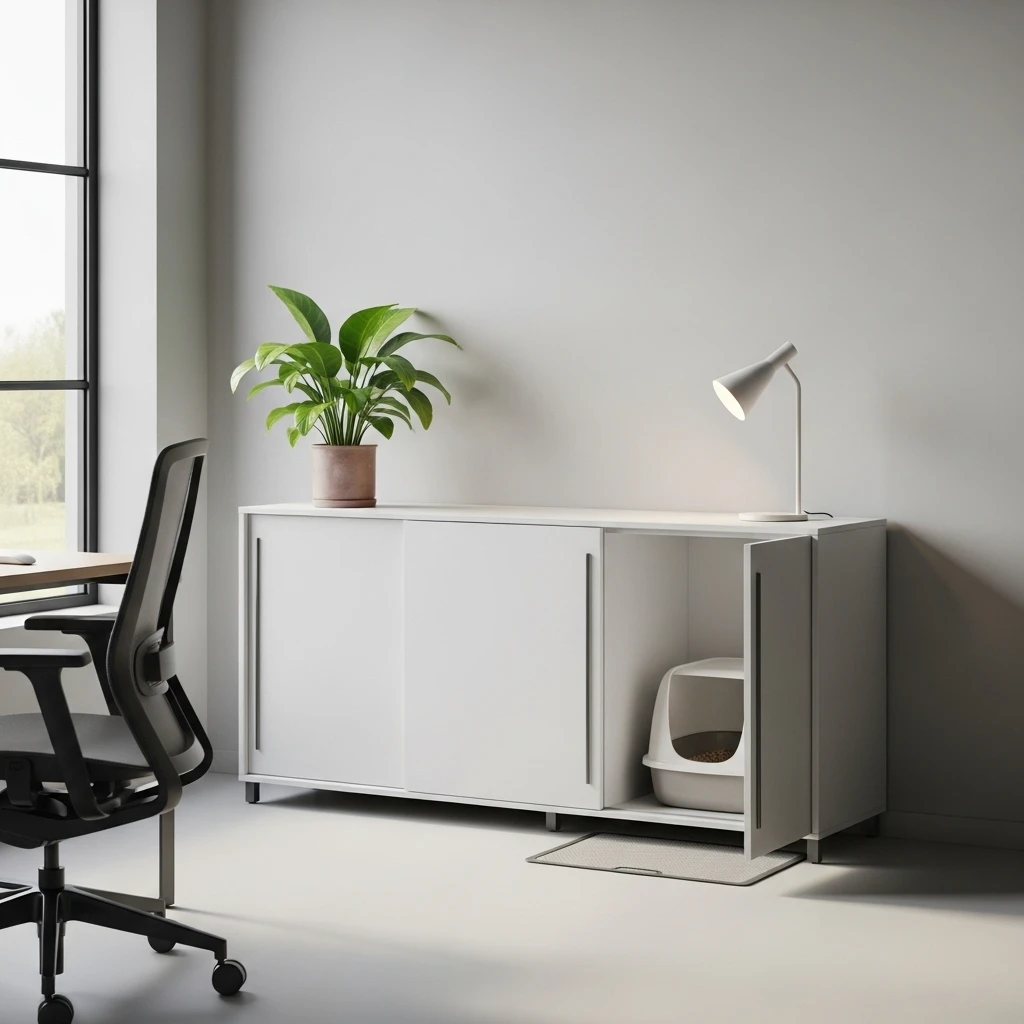
- The Hidden Litter Box Enclosure: A sideboard, a custom cabinet, or a modified bench with a discreet entry point. It contains odor, contains litter scatter, and gives your cat privacy. Ventilation is key incorporate a quiet, filtered fan system.
- Built-in Resting Nooks: Integrate cubby holes into bookshelves, under stairs, or within base cabinets. Line them with a soft, washable pad.
- Scratching as Architecture: Replace standalone posts with wrapped sisal or jute panels on the side of a staircase, a section of a wall, or a sturdy leg of a modern sofa.
The Essential Curation: Less But Better
A minimalist approach demands that every item earn its place. Apply this to your cat’s possessions.
- Food & Water Stations: Choose silent, ceramic or stainless steel fountains and automatic feeders with sleek designs. Elevate bowls for better ergonomics and to keep the area tidy.
- Toy Edit: Keep a small, curated basket of 3-4 current favorite toys. Store the rest out of sight and rotate weekly to maintain novelty. Focus on interactive wand toys and a couple of independent puzzle toys.
- Bedding: Select one or two high-quality, easy-to-clean beds in neutral colors that complement your palette. Place them in the sanctuary spots you’ve designed.
For recommendations on specific, well-designed products, explore our review of the best beds for American Shorthair cats, which highlights options with clean aesthetics.
The Sensory Layer: Texture, Light, and Sound
Minimalism isn’t sterile. It’s about intentional sensation.
- Texture: Incorporate cat-approved textures where they belong. A woven wool rug for digging claws, a soft velvet throw on the sofa, a cool tile windowsill. This provides acceptable scratching and lounging options.
- Light: Maximize access to sunlight for basking. Consider warm, indirect lighting in their rest areas. Avoid harsh, overhead lights.
- Sound: Prioritize quiet appliances. The low hum of a HEPA air filter can be soothing and help with dander, but the whir of a loud water fountain may not be.
Chapter 3: Room-by-Room Implementation Guide
Let’s apply these principles to specific spaces, transforming potential problem areas into paradigms of peaceful coexistence.
The Living Room: Shared Social Space
This is the main stage for your cat’s vertical territory and your relaxation.
- Primary Action: Install a cat wall highway leading to a cat window perch with the best view.
- Hidden Elements: Use a large, stylish planter to conceal a scratching post. Choose a media console with enclosed space that can house a cozy bed cubby.
- Material Choices: Select durable, easy-to-clean fabrics like leather, tight-weave canvas, or performance microfibers for upholstery. Avoid loose weaves that snag claws.
The Kitchen & Dining Area: Managing Food and Odor
The goal here is hygiene and separating feline resources from human food prep.
- Feeding Station: Dedicate a low-traffic corner or a bottom cabinet (with the door removed or modified) for food and water. This contains spills and creates a calm eating environment.
- Litter Solution: If space forces the litter box here, the hidden cabinet enclosure is non-negotiable. A litter box disguised as a planter can also work.
The Bedroom: A Shared Sanctuary
This room must promote rest for all.
- Dedicated Cat Bed: Provide an attractive cat bed or perch at equal or greater height than your bed. This gives them a satisfying alternative to sleeping on your head.
- Nighttime Enrichment: A quiet, automated motion-sensor toy in the living area can help expend energy before bed, reducing the likelihood of cat hyperactivity at night.
- Clothing Storage: Keep drawers and closets firmly closed. Cats love to burrow in clothes, as noted in our article on why cats burrow under blankets, but it creates fur and clutter.
The Home Office: Co-Working with Your Feline Colleague
Distraction management is key.
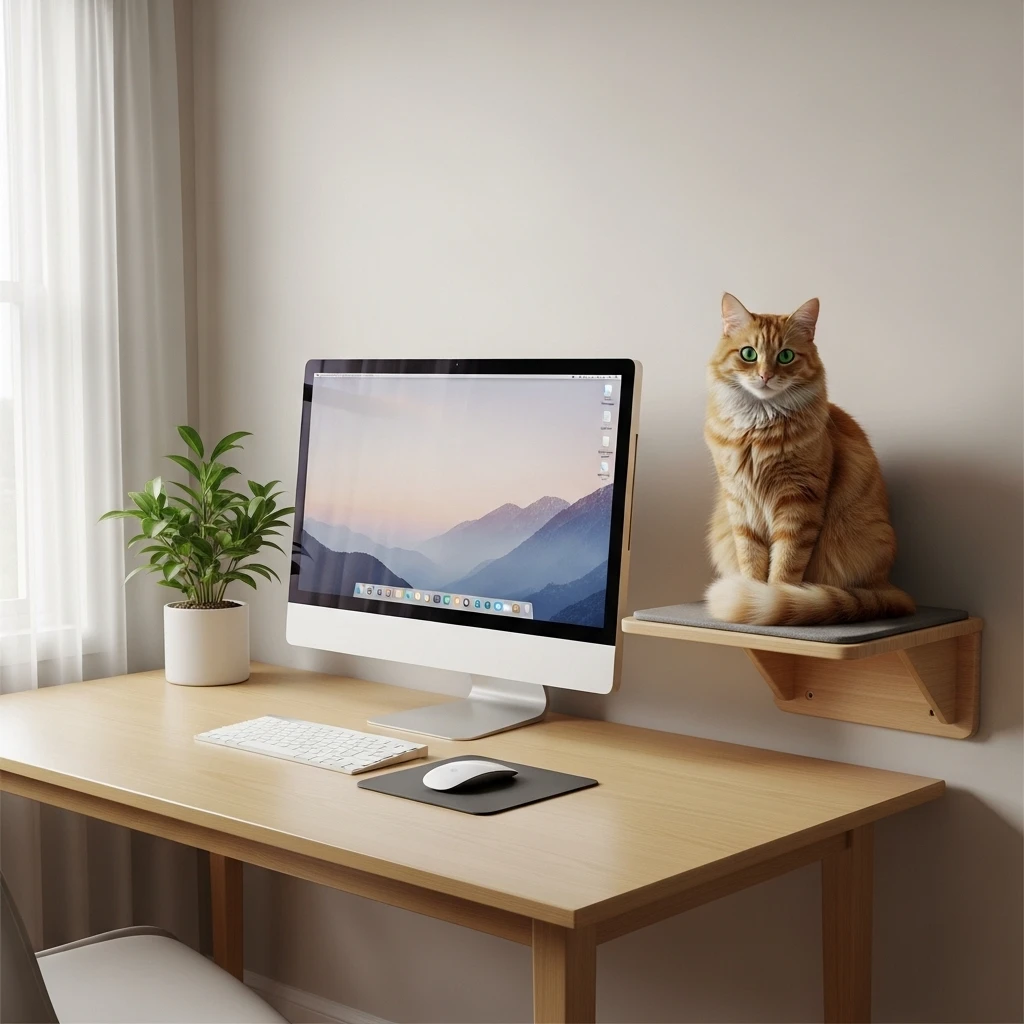
- Designated “Your Spot”: Create a warm, appealing bed or perch right next to your desk. Often, the demand for laptop space, as explored in why does my cat sit on my laptop, is simply a demand for proximity and warmth.
- Quick-Play Access: Keep a drawer with a wand toy for 5-minute play breaks to redirect attention from keyboards and papers.
Chapter 4: Maintaining the Minimalist Cat Home
The system only works with thoughtful upkeep. This is the rhythm of your new, simpler life with your cat.
The Daily & Weekly Rhythm
- Daily: A 10-15 minute interactive play session (fulfilling “the hunt”). Quick wipe-down of surfaces and fountain. Litter scooping (non-negotiable for odor control).
- Weekly: Full litter change. Washing of all cat beds and blankets. Vacuuming of cat walls, shelves, and any textured rugs. Toy rotation from the hidden stash.
Managing Shedding and Odor – Proactively
A clean home shouldn’t smell like a pet.
- Grooming: Regular brushing is the most effective minimalist tool. It captures fur at the source. For breeds with specific needs, like the Norwegian Forest Cat, a consistent grooming routine is essential.
- Air Purification: A high-quality HEPA air purifier with a carbon filter is a silent workhorse, removing dander, dust, and odors.
- Litter Choice: Opt for low-tracking, dust-free litter. Consider a top-entry or high-sided box inside your enclosure to minimize scatter.
Evolving with Your Cat’s Life Stages
A kitten’s needs differ from a senior’s. Your design should be adaptable.
- Kittens & Adults: Focus on robust, secure climbing structures and ample play enrichment.
- Seniors: Prioritize ease of access. Add ramps to favorite perches, ensure litter boxes have low entries, and provide orthopedic bedding in warm, draft-free sanctuaries. Our guide on senior cat care offers comprehensive advice for this life stage.
Frequently Asked Questions (FAQ)
Q: Isn’t a minimalist home boring for a cat?
A: Quite the opposite. When done correctly, it provides better enrichment. It reduces overstimulation and creates clear, intentional zones for climbing, playing, hiding, and observing. The focus is on quality and purpose of space, not quantity of cheap toys.
Q: My cat ignores the beautiful wall shelves and sleeps on the couch. What did I do wrong?
A: Cats need to be introduced to new elements. Use catnip, treats, and gentle encouragement to help them explore. Ensure the shelves are in a logical pathway and lead to a highly desirable location (e.g., a window). Patience and positive association are key. Learn more about cat behavior changes to understand their adaptations.
Q: How do I manage a multi-cat household with this style?
A: The principles become even more critical. You must provide multiple resources (litter boxes, water stations, sanctuary spots) and ensure vertical pathways aren’t dead-ends, allowing cats to avoid each other peacefully. The calm enriching cat home environment guide delves into strategies for harmonious multi-cat living.
Q: Can I really have houseplants in a minimalist cat home?
A: Absolutely, but you must be strategic. Research extensively to choose non-toxic varieties (like spider plants, certain palms, orchids). Use hanging planters, wall-mounted terrariums, or placed high on inaccessible shelves. Always check the ASPCA’s toxic plant list first.
Q: Is this design approach more expensive?
A: Initially, investing in integrated, quality furniture and built-ins can have a higher cost than buying a cheap cat tree. However, you are investing in your permanent home furnishings and your cat’s long-term well-being. Many solutions, like building simple wall shelves or repurposing furniture, can be very cost-effective DIY projects.
Conclusion: The Quiet Joy of Co-Existence
Designing a minimalist home for cats is not a final destination, but a mindful, ongoing practice. It is the quiet negotiation between instinct and intention, between paw-print and blueprint. It asks us to see our space through a different set of eyes eyes that measure distance in leaps, value safety in height, and find contentment in a warm square of sunlight on a bare floor.
The reward is a profound sense of harmony. The anxiety of clutter and the guilt of unmet feline needs dissolve. What remains is a home that is truly shared: a place where your cat can express its full, glorious cattitude climbing, chasing, napping, watching within a framework of serene beauty that also brings you peace. It’s the proof that living with animals doesn’t require surrendering our sense of style; it can, in fact, deepen it, adding layers of life, movement, and quiet companionship to a minimalist canvas.
Ready to explore more thoughtful approaches to cat care and behavior? Discover a wealth of insights, from breed-specific guides to behavioral deep dives, in our full library of expert articles on Cat Bloom Haven.