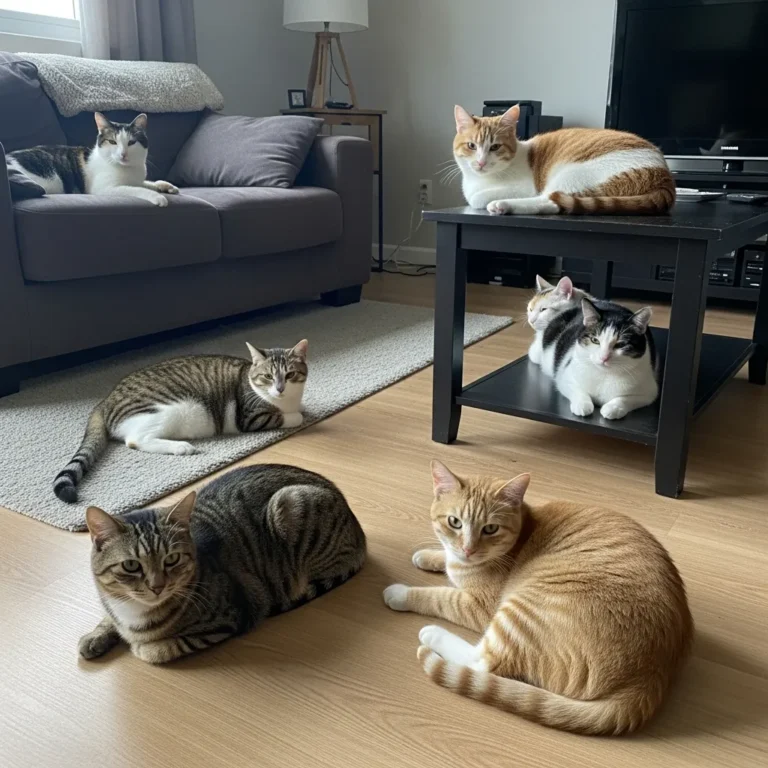
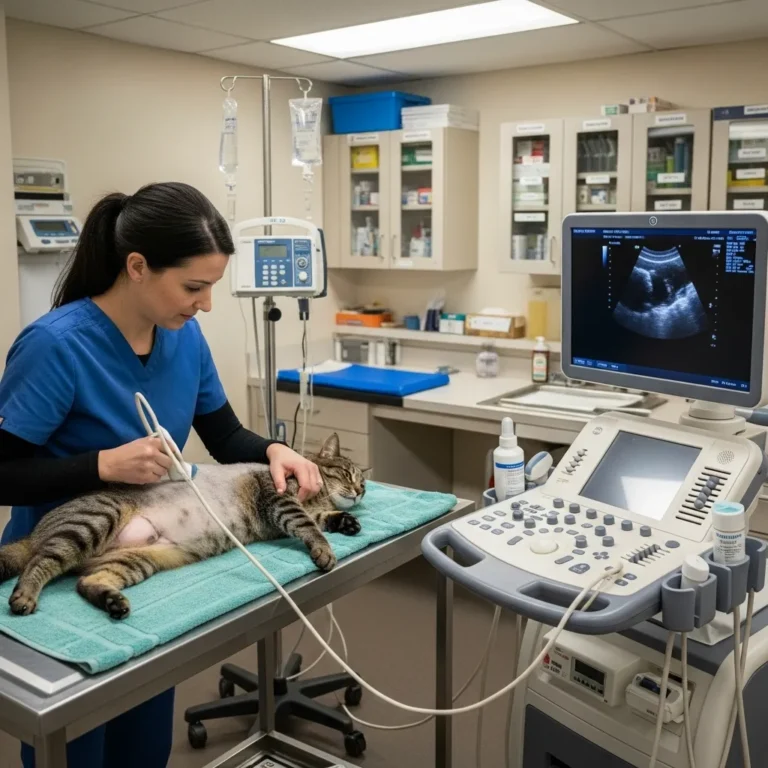
Calm Cat Moments That Feel Therapeutic
Why Your Cat’s Quiet Presence Might Be the Best Medicine You Didn’t Know You Needed
Key Takeaways
- Calm cat moments activate similar neurological pathways as formal meditation practices, reducing cortisol and blood pressure
- Cats don’t need to be actively interacting with you to provide therapeutic benefits; passive presence is equally powerful
- Different cat breeds express calmness in unique ways; understanding your cat’s personality helps you recognize and nurture these moments
- Creating the right environment increases the frequency and depth of peaceful interactions with your cat
- These moments work best when you meet your cat on their terms, not yours
Introduction
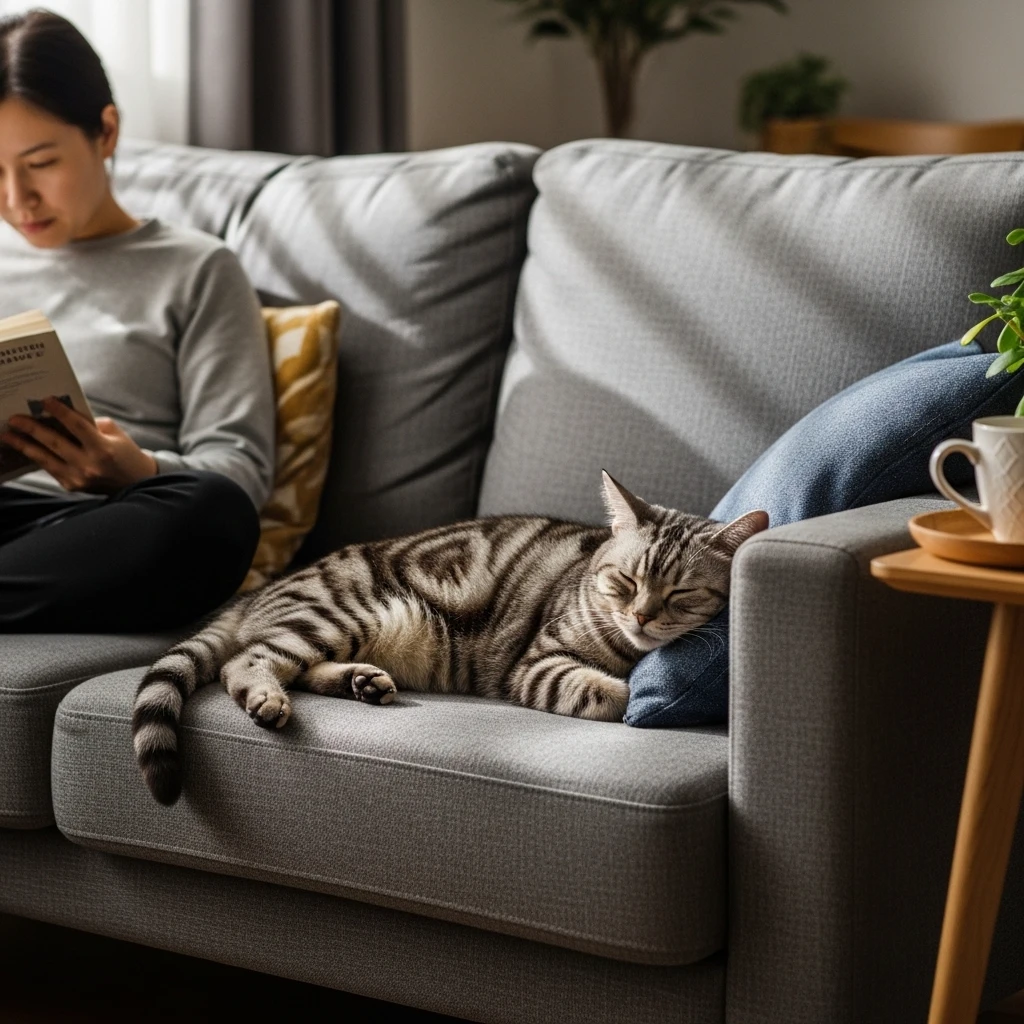
The house is quiet. You’re settled into the couch, and your cat walks slowly across the room. She doesn’t meow. She doesn’t demand food or attention. She simply arranges herself on the arm of the sofa, tucks her paws beneath her chest, and closes her eyes.
You exhale. Something in your shoulders releases.
If you’ve ever experienced this, you already know: calm cat moments that feel therapeutic aren’t just pleasant. They’re genuinely restorative. These small, quiet exchanges with our feline companions have a physiological effect that science is only beginning to understand fully.
I’ve spent years observing cat behavior and working with owners who initially believed their cats were too aloof or independent to form meaningful connections. Almost without exception, these same owners later describe a moment often unexpected when their cat’s quiet presence brought them a sense of peace they couldn’t explain.
This article explores why these moments matter, how to recognize them, and how to create conditions where they happen more often. More importantly, it validates something you probably already sense: those quiet seconds with your cat aren’t insignificant. They’re the entire point.
Why Silence with a Cat Speaks Louder Than Words
We tend to measure our relationships with pets in big gestures. The excited greeting at the door. The playful chase with a wand toy. The purring cat sprawled across our chest.
But calm cat moments that feel therapeutic rarely arrive during peak activity. They emerge in the in-between spaces. When nothing is happening. When the cat chooses to simply exist in your vicinity without agenda.
The Science of Shared Stillness
Research on human-animal interaction has shifted focus in recent years. Early studies emphasized active engagement petting, playing, training. But newer data suggests passive coexistence triggers many of the same benefits.
When you sit quietly with a relaxed cat:
- Your heart rate gradually syncs with their slower rhythm
- Blood pressure drops within two to three minutes
- Cortisol levels decrease measurably
- Oxytocin increases even without direct physical contact
These aren’t subjective impressions. They’re measurable physiological responses. Your body recognizes safety and responds accordingly.
Recognizing Authentic Calm Versus Tolerated Presence
Not every quiet cat is a calm cat. This distinction matters because calm cat moments that feel therapeutic require mutual relaxation, not one-sided tolerance.
Signs Your Cat Is Genuinely Relaxed
A truly calm cat displays specific physical cues:
Eyes: Slow blinking or completely closed. Pupils normal, not dilated. No hard stare.
Ears: Facing forward or slightly to the side in a neutral position. Not flattened or swiveling nervously.
Whiskers: Relaxed, pointing sideways rather than forward or pinned back.
Body: Weight fully supported by the surface beneath them. No tension in the shoulders or haunches.
Tail: Still or gently curved. No twitching at the tip.
When you see these signs together, your cat isn’t just tolerating your presence. They’re actively enjoying it.

The Difference Between Tolerant and Content
Many cats tolerate handling they don’t enjoy. They’ve learned escape isn’t possible or that resistance triggers prolonged restraint. This isn’t calm. It’s learned helplessness.
Tolerant cats often show:
- Stiff posture while being held
- Tail tucked or wrapped tightly around their body
- Avoidance of eye contact
- Immediate departure when released
Content cats, by contrast, remain in place when given freedom to leave. They choose proximity. That choice is the foundation of genuinely therapeutic moments.
Breed Personalities and Their Unique Expressions of Calm
Understanding your cat’s breed tendencies helps you recognize how they naturally express relaxation. This isn’t about stereotyping individual cats. Every cat has a unique personality. But breed characteristics provide useful context.
American Shorthair: The Steady Presence
American Shorthairs rarely demand attention, but they consistently offer quiet companionship. Their calm manifests as dependable proximity. They’re the cat who settles near your workspace for hours, not seeking interaction but providing steady, unobtrusive company.
Explore our detailed guide on American Shorthair Cats Guide to understand their easygoing temperament better.
Persian: Stillness as Art
Persian cats elevate stillness to a refined practice. Their calm is visual. A Persian arranged on a cushion creates a tableau of tranquility. They don’t need to move to communicate contentment. Their relaxation is complete and contagious.
Maine Coon: Gentle Giant Energy
Maine Coons often express calm through deliberate, unhurried movement. Even their play has measured quality. When a Maine Coon settles beside you, the weight of their presence is both literal and metaphorical. You feel accompanied rather than occupied.
Discover more tips in Maine Coon Cat breed guide for insights on their gentle nature.
Siamese: Vocal Minimalism
Siamese cats are famously communicative. But their quiet moments carry particular weight. When a Siamese stops talking and simply watches you with those blue eyes, the silence feels chosen rather than accidental. Their calm moments are pauses in an otherwise vocal existence.
Learn more in Siamese Cat Breed profile about their expressive personality.
Norwegian Forest Cat: Contained Wildness
These cats carry their ancestry visibly. Their calm moments feel like temporary truces with their wild instincts. When a Norwegian Forest Cat curls up by the fire, you’re witnessing deliberate domestication. They choose comfort over prowling. That choice feels significant.
Ragdoll: Relaxation as Default
Ragdolls earned their name honestly. Their tendency to go limp when held isn’t just a party trick. It reflects genuine physical relaxation. For Ragdoll owners, calm cat moments that feel therapeutic are practically guaranteed. These cats don’t know how to be tense.
Read our comprehensive Ragdoll Cat Care Guide for more on their famously relaxed disposition.
Bengal: The Gift of Stillness
Bengals present an interesting paradox. High-energy, athletic, perpetually curious. Their calm moments feel earned. When a Bengal pauses mid-exploration to rest beside you, it’s not exhaustion. It’s a conscious decision to share space. This makes their quiet interludes especially meaningful.
Check out Bengal Cat Personality to understand their complex temperament.
Munchkin: Joyful Contentment
Munchkins approach life with noticeable enthusiasm. Their calm moments carry undertones of satisfaction. A Munchkin curled in a sunbeam looks genuinely pleased with their circumstances. Their contentment is readable and infectious.
Creating Conditions for Therapeutic Calm
You cannot force a cat to be calm. You can only create environments where relaxation feels natural and safe.
Spatial Considerations
Cats evaluate spaces through multiple sensory lenses. A location that feels secure to a cat often shares these features:
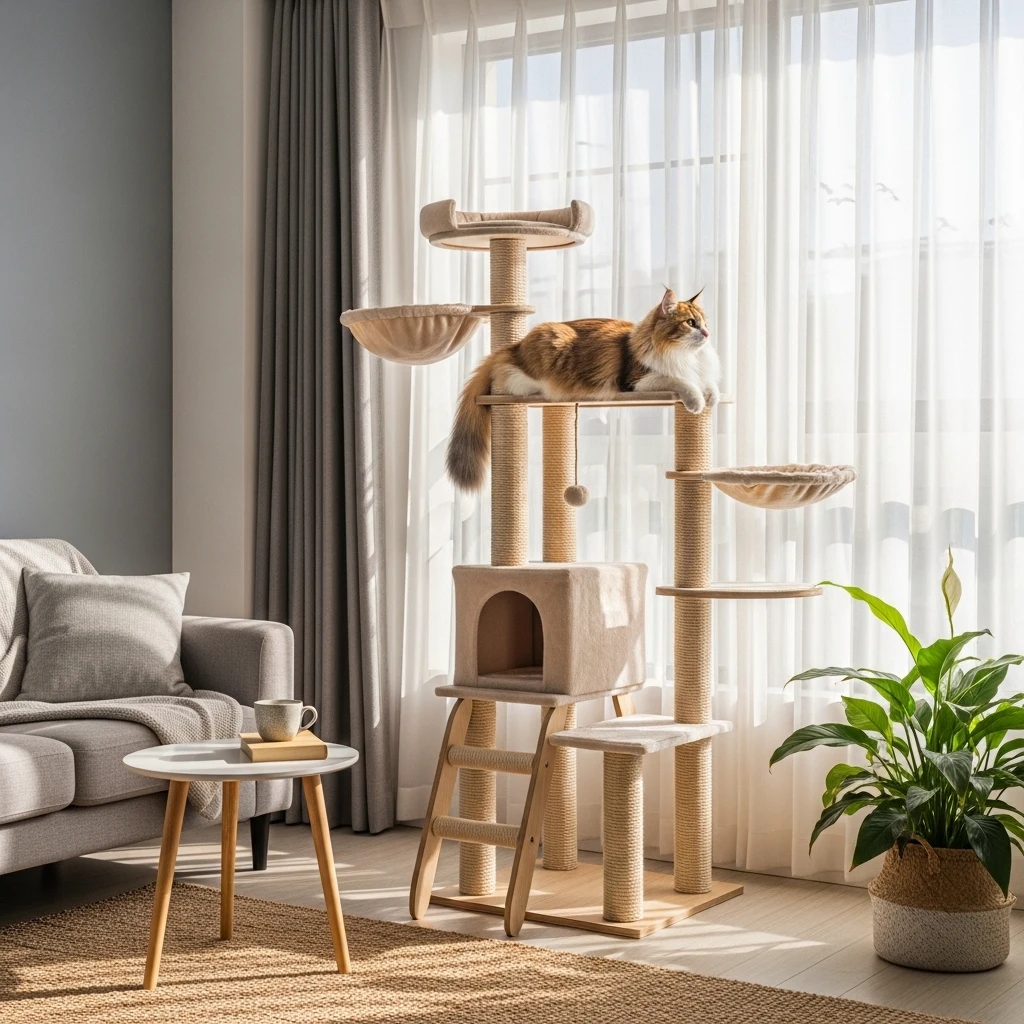
Elevation with visibility. Cats prefer resting spots that offer sightlines to room exits. A cat tree positioned against the wall, facing the door, provides both height and strategic overview.
Warmth without confinement. Heated beds appeal to cats, but only if positioned where escape routes remain accessible. Corner placement creates trapped feelings. Open placement near walls works better.
Texture variety. Different cats prefer different surfaces. Some want soft plush. Others prefer firm, cool fabric. Observe where your cat lingers and provide more of that surface.
Scent familiarity. Cats relax more quickly in spaces that smell like them. Rub a clean cloth along your cat’s cheeks, then wipe it across their preferred resting spots. This deposits familiar pheromones.
Timing and Rhythm
Cats operate on different temporal cycles than humans. Their periods of highest activity typically occur at dawn and dusk. Mid-morning and early afternoon often bring natural rest.
Working with your cat’s biological rhythms produces better results than trying to override them. Attempting connection during active hunting periods frustrates both parties. Waiting for the natural lull invites spontaneous closeness.
Human Readiness
This component receives insufficient attention. Calm cat moments that feel therapeutic require your participation. You must also be calm.
Cats read human emotional states with remarkable accuracy. Your racing heart, shallow breathing, and muscle tension transmit clearly through your lap, your hands, your voice. A stressed human repels rather than attracts feline relaxation.
Before seeking connection, pause. Take three slow breaths. Soften your shoulders. Release your jaw. Your cat notices these adjustments.
The Quiet Language of Therapeutic Moments
Once you recognize calm cat moments that feel therapeutic, you begin noticing their vocabulary. Cats communicate relaxation through specific behaviors that invite shared stillness.
The Slow Blink
When your cat looks at you and deliberately closes their eyes for a sustained moment, they’re signaling trust. In feline communication, prolonged eye contact signals challenge. Breaking eye contact signals peace.
You can respond in kind. Slow blink at your cat. Most will reciprocate. This exchange creates a closed feedback loop of mutual relaxation.
Kneading with Purpose
Kittens knead their mother’s belly to stimulate milk flow. Adult cats retain this behavior as a comfort expression. When a cat kneads your lap, chest, or adjacent blanket, they’re recreating infant security.
Kneading accompanied by purring and relaxed facial muscles indicates genuine contentment. The cat isn’t requesting anything. They’re expressing satisfaction with current circumstances.
Purring Variations
Not all purrs indicate happiness. Cats also purr when injured, frightened, or in labor. Context matters.
Therapeutic purrs share identifiable qualities:
- Consistent rhythm without interruption
- Initiated during rest rather than stress
- Accompanied by relaxed posture
- Continues without additional solicitation
Purring frequency falls between 25 and 150 Hertz. Research suggests this vibration range promotes bone density and tissue healing. Your cat’s purr might literally be therapeutic for both of you.
Learn more about feline communication in What Is My Cat Thinking, our guide to decoding cat behavior.
The Head Rest
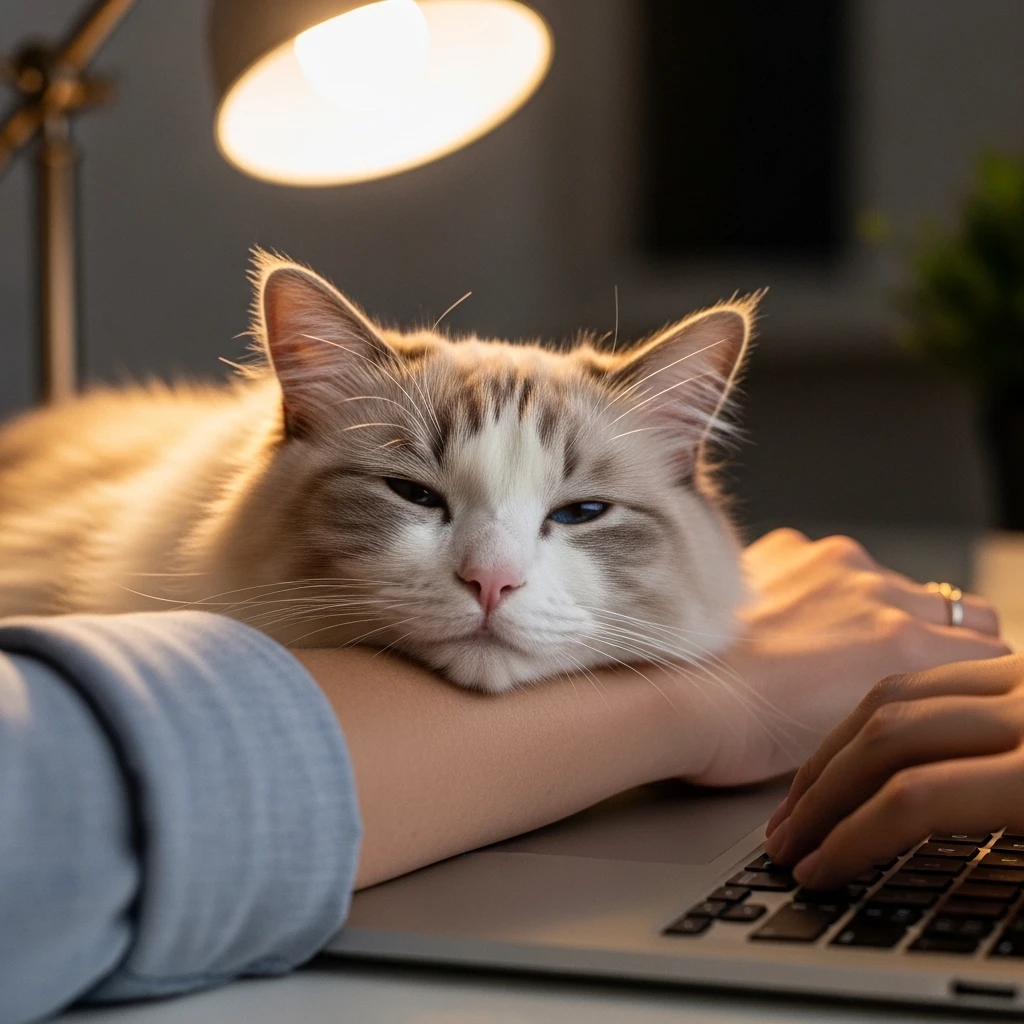
When a cat rests their chin on a surface your arm, your leg, the edge of your laptop they’re conserving energy while maintaining connection. This position requires trust. The cat cannot see threats approaching from behind. They’ve decided monitoring threats isn’t necessary because you’re present.
When Calm Moments Don’t Come Naturally
Some cats struggle to achieve genuine relaxation. Previous trauma, inadequate early socialization, or simply high-strung temperament can prevent therapeutic stillness.
Respecting Boundaries
The fastest way to prevent calm moments is pursuing them too aggressively. Cats who feel pursued develop vigilance rather than relaxation.
If your cat typically avoids quiet proximity:
- Stop initiating contact entirely for several days
- Let your cat approach you first, every time
- Reward approach with soft speech, not touch
- Gradually introduce brief, gentle strokes if the cat remains relaxed
This process may take weeks or months. The timeline doesn’t matter. Only the outcome.
Enrichment for Anxious Cats
Some cats cannot relax because their environment doesn’t meet their needs. Unmet predatory drives, insufficient vertical space, or unpredictable routines create baseline anxiety.
Addressing these foundations often enables relaxation where direct comfort attempts failed:
- Scheduled play sessions before natural rest periods
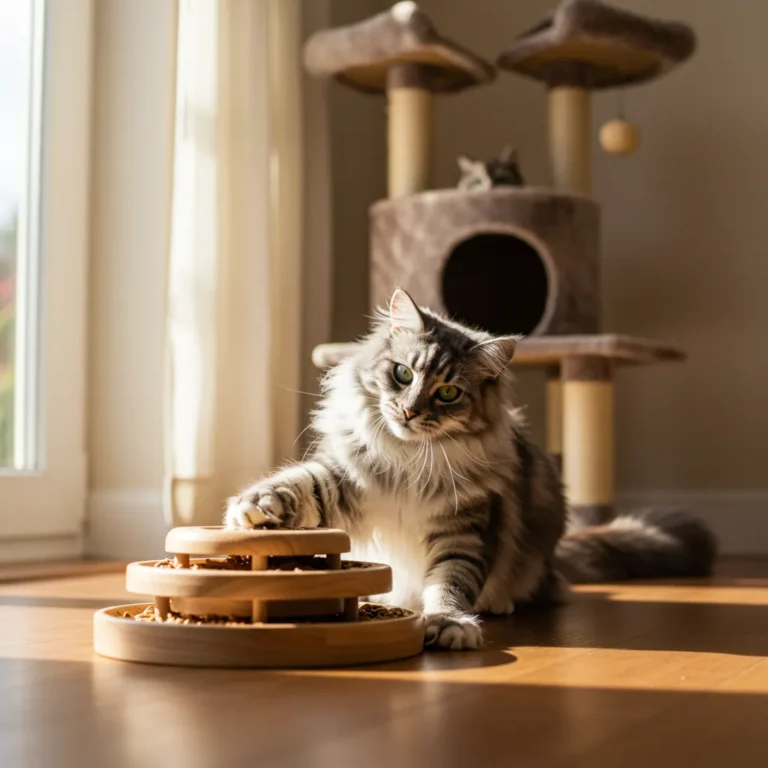
- Puzzle feeders that engage hunting instincts
- Multiple litter stations in quiet, accessible locations
- Consistent daily routines for meals and interaction
Our guide on Cat Stress Signs helps identify when your cat needs environmental adjustments.
Medical Considerations
Sudden inability to relax sometimes indicates physical discomfort. Arthritis makes certain positions painful. Dental disease creates generalized unease. Hyperthyroidism prevents stillness entirely.
If your previously calm cat becomes persistently restless, schedule a veterinary examination. Pain relief often restores the capacity for peaceful presence.
The Mutual Nature of Therapeutic Moments
We tend to frame these interactions as something cats give us. This framing misses half the equation.
When you sit quietly with a relaxed cat, you’re also giving something. Your presence functions as emotional regulation support. Your steady breathing anchors their relaxation. Your warmth provides physical comfort.
Calm cat moments that feel therapeutic aren’t transactions where one party gives and the other receives. They’re co-created experiences. Both participants benefit. Both participants contribute.
This mutuality explains why these moments feel different from other stress-reduction techniques. Meditation works through internal focus. Exercise works through physiological activation. But sharing stillness with a cat works through genuine connection with another sentient being who chooses to share your space.
There’s nothing else quite like it.
Capturing and Extending Calm Moments
Once you recognize these moments, you’ll want them to last longer. Several approaches extend therapeutic stillness without disrupting it.
The Art of Non-Interruption
The most common mistake owners make is celebrating the moment while it’s happening. You glance at your relaxed cat and think, “This is perfect.” You reach for your phone to capture it. You shift position for a better angle. You speak softly to your partner: “Look how peaceful she is.”
The cat hears you, feels your movement, registers the shift in energy. The moment breaks.
Resist this impulse. Let perfect moments exist without documentation. Your memory serves adequately. The cat’s continued relaxation matters more than your photograph.
Gradual Departure
When you need to end a shared stillness session, do so gradually. Sudden movement startles cats and conditions them to remain vigilant during future proximity.
Before standing, shift your weight incrementally. Pause. Breathe. If the cat remains relaxed, shift again. Stand slowly. Move away without looking directly at the cat.
Your cat learns that proximity to you doesn’t predict abrupt disruption. This knowledge makes future calm moments more accessible.
Common Obstacles and Practical Solutions
Even with ideal conditions, certain barriers repeatedly interrupt therapeutic calm. Anticipating these obstacles helps you work around them.
Obstacle: Multi-Cat Household Dynamics
Cats who don’t get along create ambient tension that prevents relaxation. Even cats who tolerate each other may avoid vulnerability when the other is present.
Solution: Create multiple calm zones distributed throughout your home. Ensure each cat has at least one resting location inaccessible to other cats. Rotate access to preferred spaces if necessary.
Our guide on Multi-Cat Homes Guide offers strategies for reducing inter-cat tension.
Obstacle: Children and Unpredictable Movement
Young children move suddenly and speak loudly. Cats understandably maintain vigilance around unpredictable companions.
Solution: Teach children to approach cats sideways rather than head-on. Demonstrate slow blinking. Establish clear rules about not disturbing resting cats. Create cat-only zones behind baby gates or in rooms children don’t frequently access.
Obstacle: Small Living Spaces
Limited square footage means cats cannot establish comfortable distance when they need solitude. Constant proximity prevents genuine relaxation.
Solution: Maximize vertical space. Wall-mounted shelves, tall cat trees, and window perches multiply available territory without increasing floor space. Ceiling-mounted walkways transform blank walls into cat highways.
Explore Cozy Spaces Cats Love for small-space cat enrichment ideas.
Obstacle: Owner Impatience
We want calm moments now. We want them on our schedule. We want them to last precisely as long as we prefer.
Cats don’t work this way.
Solution: Adjust expectations rather than attempting to adjust your cat. View calm moments as gifts rather than entitlements. Their unpredictability makes them more precious, not less.
Beyond the Moment: Long-Term Benefits
Regular exposure to calm cat moments that feel therapeutic produces cumulative effects. One session lowers blood pressure temporarily. Hundreds of sessions retrain your nervous system’s baseline.
Emotional Regulation
People who share homes with relaxed cats often describe improved ability to self-soothe. The cat’s presence provides an external regulation aid. Over time, you internalize this capacity.
Relationship Depth
Repeated shared stillness builds trust between species. Your cat learns you’re safe during vulnerable states. You learn your cat’s subtle communication cues. This mutual knowledge deepens all interactions, including active play and affection.
Perspective Shift
Cats exist entirely in present awareness. They don’t ruminate on yesterday’s incomplete hunt or tomorrow’s scheduled meal. Extended exposure to feline mindfulness influences human consciousness. You begin noticing how much mental energy you spend outside the current moment. Sometimes that awareness alone initiates change.
When Therapeutic Moments Find You
The most profound calm cat moments that feel therapeutic often arrive uninvited. You’re working against a deadline, stress pressing behind your eyes. Your cat jumps onto the desk and settles across your forearms, forcing your hands away from the keyboard.
This isn’t convenient. But it might be necessary.
Cats seem to seek us during our most disregulated moments. Perhaps they register our elevated cortisol through scent or behavior. Perhaps they simply prefer warmth, and stressed humans run slightly hotter.
Whatever the mechanism, these unsolicited interventions carry particular weight. Your cat didn’t wait for ideal conditions. They came anyway. They offered their presence precisely when you needed it most.
These moments remind us that therapeutic calm isn’t achieved through perfect environmental design or flawless technique. It’s achieved through relationship. And relationships, by definition, involve two participants showing up for each other.
Sometimes imperfectly. Sometimes inconveniently. But genuinely.
Key Takeaways Summary
Calm cat moments that feel therapeutic share identifiable characteristics:
- Mutual relaxation rather than one-sided tolerance
- Physical cues including soft eyes, neutral ears, and still tails
- The cat’s freedom to leave and choice to remain
- Your own calm state as prerequisite
- Regular practice produces cumulative emotional benefits
Creating conditions for these moments involves:
- Appropriate resting locations with visibility and security
- Working with your cat’s natural activity rhythms
- Respecting boundaries and never pursuing connection
- Addressing underlying anxiety or medical issues
- Resisting the urge to capture or extend moments artificially
Different breeds express calm differently. Understanding your cat’s temperament helps you recognize their unique relaxation language.
Frequently Asked Questions
How do I know if my cat is relaxed or just tolerating me?
Look for choice. A tolerant cat leaves at the first opportunity. A relaxed cat remains in place when given freedom to depart. Physical cues also differ: relaxed cats show soft eyes, neutral ear position, and still tails. Tolerant cats appear stiff and avoid eye contact.
Can cats sense when I’m stressed?
Yes. Cats detect changes in human scent, voice pitch, and body tension. Research suggests cats modify their behavior in response to owner stress levels. Some cats increase proximity-seeking during human distress. Others withdraw. Both responses indicate awareness.
Why does my cat only want calm contact at certain times?
Cats follow predictable activity cycles. Most are most active at dawn and dusk. Mid-morning and early afternoon typically bring rest periods. Your cat’s availability for calm connection likely follows these natural rhythms.
How long should therapeutic calm moments last?
There’s no ideal duration. Even thirty seconds of shared stillness produces measurable physiological benefits. Longer sessions aren’t necessarily better. Quality matters more than quantity.
My cat rarely sits still. Is something wrong?
Not necessarily. Some cats maintain higher baseline activity than others. Breeds including Bengals, Abyssinians, and Siamese typically require more movement. If your cat never rests in your presence but shows relaxed body language during independent rest, they may simply prefer solitude during vulnerable states.
Can I train my cat to be calmer?
Training addresses behavior, not emotional state. You can teach a cat to lie down on cue. This isn’t the same as the cat experiencing genuine relaxation. Environmental modifications and respecting your cat’s boundaries typically produce authentic calm more effectively than formal training.
Do older cats provide more therapeutic moments?
Generally, yes. Senior cats sleep more and move less. Their reduced energy levels create more opportunities for shared stillness. Additionally, years of cohabitation build familiarity and trust. Older cats often seek human proximity more consistently than younger cats.
Find more answers in our comprehensive Cat Training Behavior section.
Conclusion
We acquire cats for various reasons. Companionship. Pest control. Because a kitten appeared in our yard and refused to leave. Because our child begged and we eventually surrendered.
But we keep cats for quieter reasons. We keep them because of how we feel when they settle beside us without agenda. We keep them because calm cat moments that feel therapeutic accumulate over years into something resembling emotional infrastructure. These moments support us during difficult periods and enrich us during good ones.
Your cat doesn’t know about cortisol or oxytocin or blood pressure. They don’t understand that their slow blinks trigger ancient mammalian bonding pathways in your brain. They only know that sitting with you feels safe. That your presence predicts warmth and comfort. That your particular scent, voice, and rhythm have become familiar enough to relax into.
That’s enough. That’s everything.
The next time your cat arranges themselves on the adjacent cushion and simply exists in your orbit, resist the urge to photograph, narrate, or analyze. Just receive the moment. Your body knows what to do with it.
Explore more expert cat care and behavior guides on Cat Bloom Haven. Whether you’re raising a playful Bengal, nurturing a senior Persian, or simply trying to understand your rescue cat’s mysterious preferences, our library of breed profiles, health resources, and behavior insights helps you build a deeper relationship with the cat who shares your home.