Understanding Multi-Cat Dynamics in Shared Spaces
Living with more than one cat can bring double the joy, from playful chases to cozy group naps. But it also means navigating complex relationships. Cats are territorial by nature, and sharing a home requires careful management to keep everyone content. Understanding multi-cat dynamics in shared spaces helps prevent stress, reduce conflicts, and foster harmony.
Many cat owners face challenges like hissing, blocking access to resources, or subtle avoidance. These issues often stem from competition over territory or essentials like food and litter boxes. With the right setup, most cats learn to coexist peacefully, even forming close bonds.
In this guide, you’ll learn practical strategies backed by feline behavior insights. We’ll cover signs of tension, resource setup, introductions, and long-term tips. By the end, you’ll have tools to create a calmer home for your cats.
Key Takeaways
- Provide one resource per cat plus one extra (e.g., litter boxes, feeding stations) to minimize competition.
- Use vertical space and separate areas to give each cat personal territory.
- Introduce new cats slowly with scent swapping and supervised meetings.
- Watch for subtle stress signs like hiding or over-grooming, not just obvious fights.
- Pheromone diffusers and enrichment reduce tension effectively.
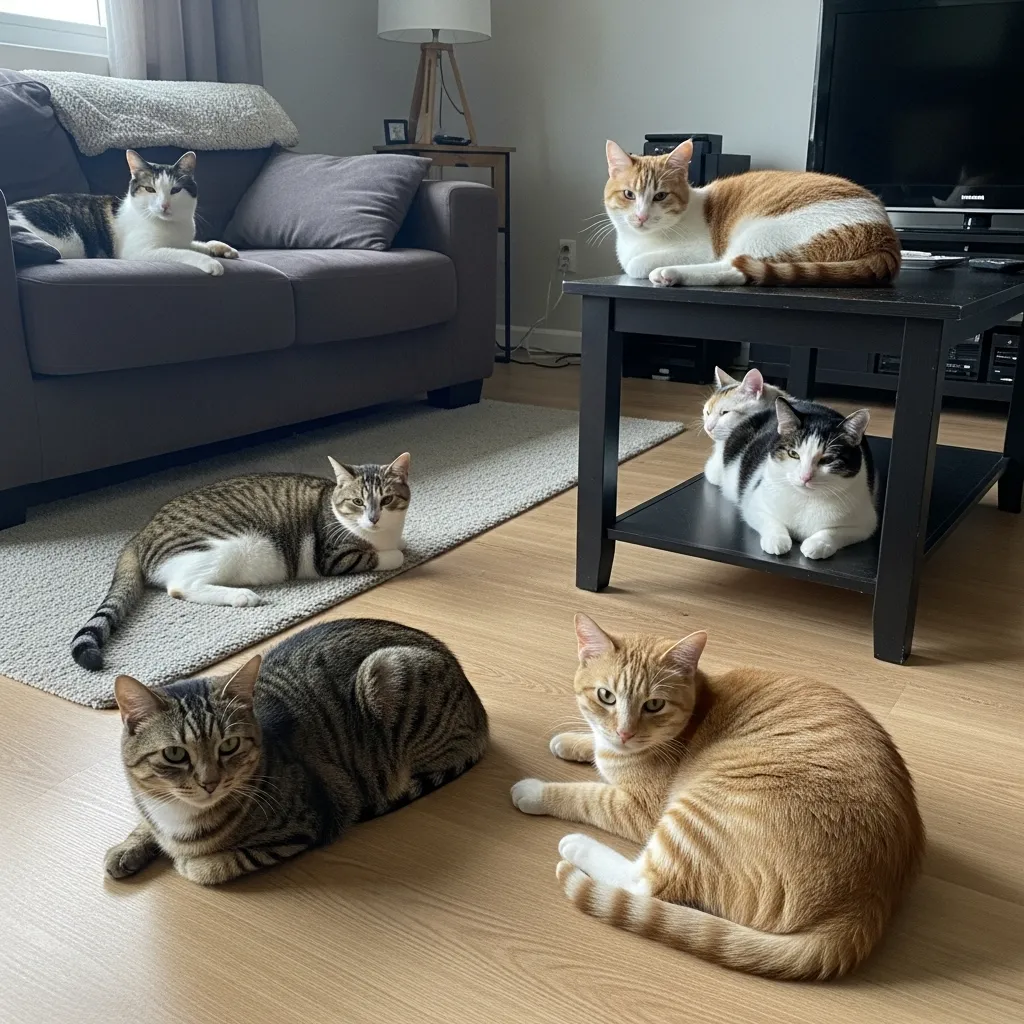
Additional Images: Use the four from the first search for variety – cats lying in sun, groups on furniture, etc.
Why Multi-Cat Dynamics Matter
Cats descend from solitary hunters. In the wild, they maintain large territories with separate spots for eating, resting, and eliminating. Domestic cats adapt to group living, but forced sharing can cause stress.
In multi-cat homes, dynamics vary. Some cats form bonded pairs or groups, grooming each other and sleeping together. Others prefer tolerance, avoiding direct conflict through time-sharing spaces. Problems arise when resources feel scarce or one cat bullies another.
Research shows stress in multi-cat homes links to issues like inappropriate elimination, over-grooming, or aggression. Addressing dynamics early prevents escalation.
Common triggers include:
- New cat introductions without proper steps.
- Limited resources leading to guarding.
- Changes like moves or renovations disrupting routines.
- Personality mismatches, such as a playful kitten overwhelming a senior cat.
Understanding these helps you intervene effectively.
Recognizing Signs of Tension in Multi-Cat Homes
Not all conflict involves dramatic fights. Cats often show subtle signs.
Obvious signs:
- Hissing, growling, swatting, or chasing.
- Blocked access to rooms or resources.
- Physical fights with fur flying or scratches.
Subtle signs:
- One cat hiding more or eating less.
- Staring contests or tense body language (flattened ears, thrashing tail).
- Urine spraying or marking outside the box.
- Over-grooming leading to bald patches.
- Avoidance, where one cat leaves when another enters.
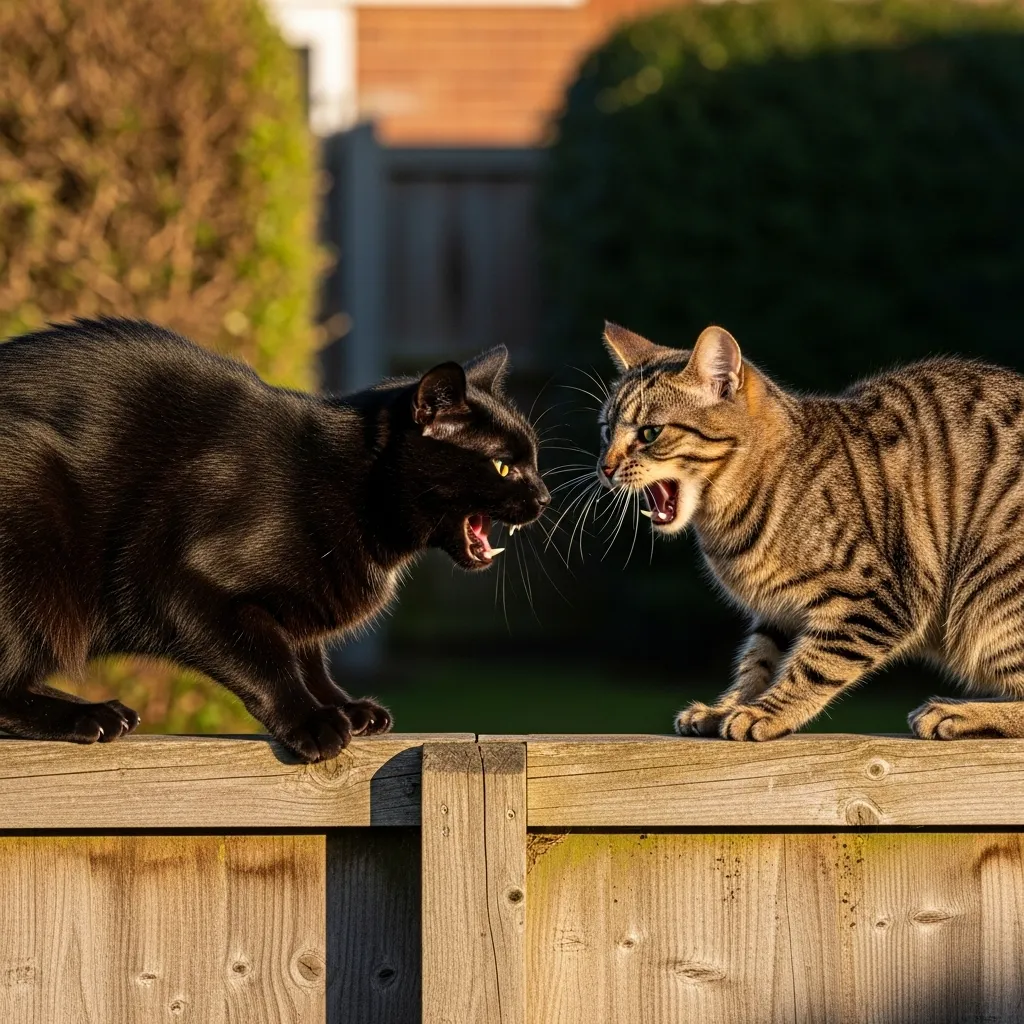
If you notice these, separate cats temporarily and reassess resources.
Setting Up Resources to Reduce Competition
The golden rule: one per cat plus one extra, spread out.
Litter Boxes
Aim for number of cats +1, in quiet, separate locations. One dominant cat can block access, causing accidents.
Feeding Stations
Separate bowls in different areas. Feed simultaneously to prevent guarding.

Water Sources
Multiple fountains or bowls encourage hydration and prevent monopolizing.
Resting Spots and Vertical Space
Cats love height for security. Install shelves, trees, or perches.
[Suggested Image Placement: Here.]
Image Prompt: Multi-level cat tree occupied by several cats.
Alt Text: Cats using a tall cat tree with multiple platforms, creating vertical territory in shared spaces.
Scratching Posts
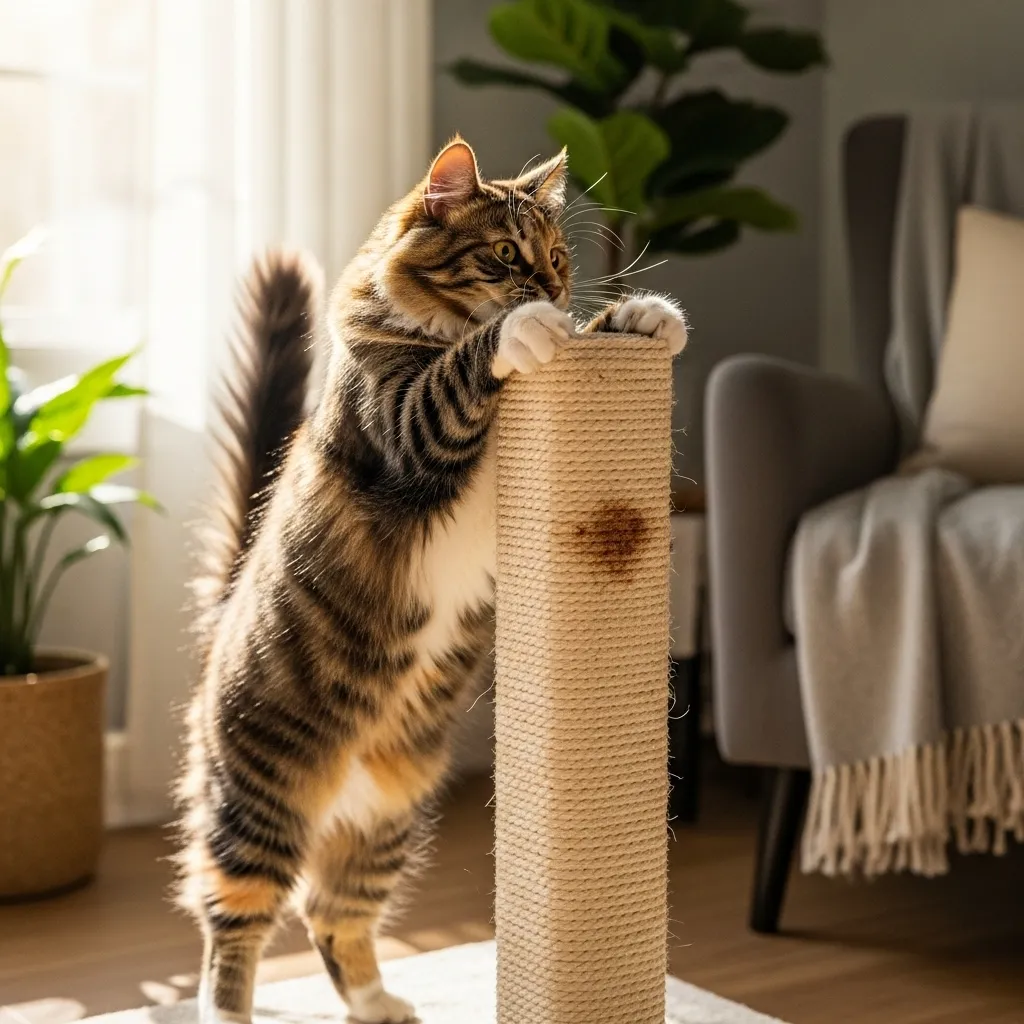
Several posts allow territory marking without furniture damage.
Extra hiding spots like boxes or tunnels provide retreats.
Introducing a New Cat: Step-by-Step
Rushing introductions causes lasting tension. Take weeks if needed.
- Base Camp: Confine the new cat to one room with all resources.
- Scent Swapping: Exchange bedding or use a shared brush.
- Site Swapping: Let each explore the other’s area separately.
- Feeding Ritual: Feed on opposite sides of a closed door, then cracked open.
- Visual Contact: Use a gate for supervised views.
- Supervised Meetings: Short sessions, ending positively.
Reward calm behavior. If tension rises, step back.
For related tips, explore our guide on cat adoption.
Managing Ongoing Dynamics
Even established groups need maintenance.
- Play and Enrichment: Daily sessions release energy and bond cats.
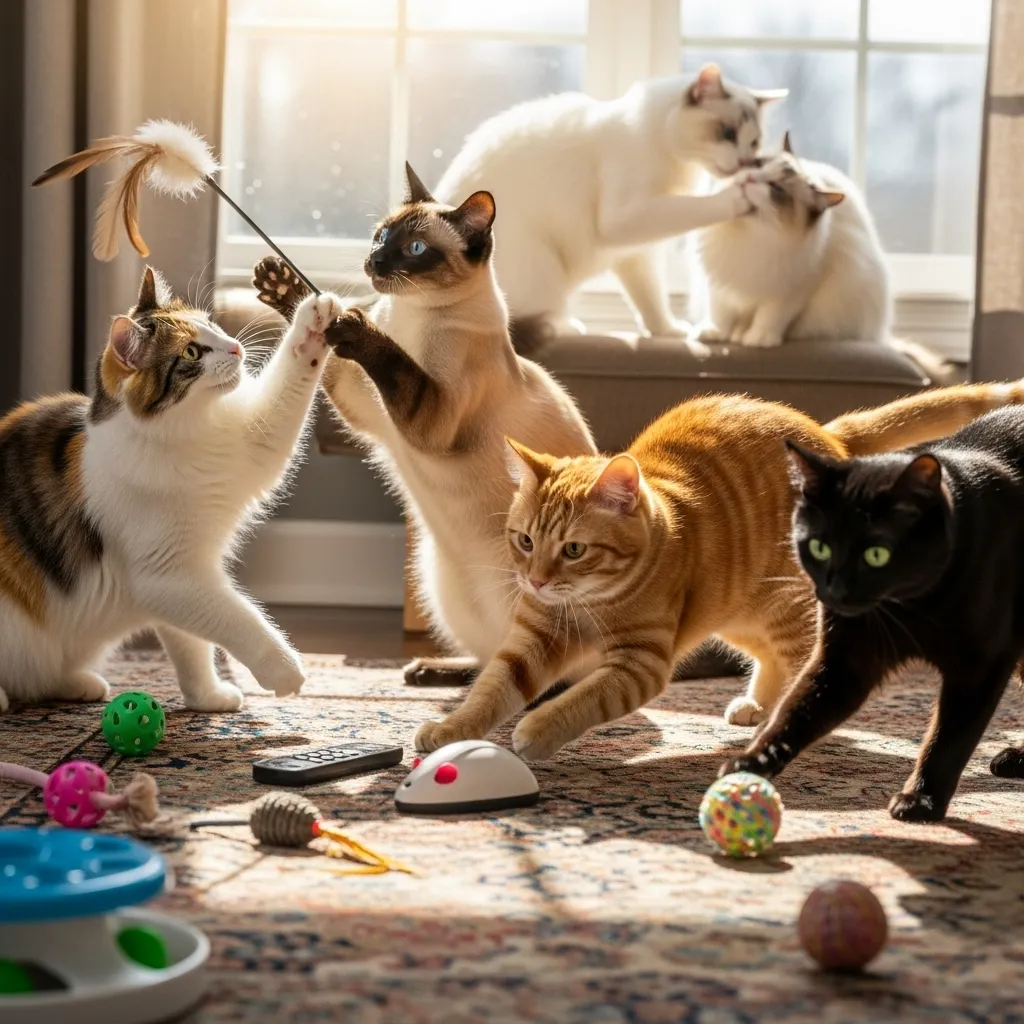
- Pheromones: Diffusers like Feliway MultiCat calm groups.
- Routine: Consistent feeding and play reduce anxiety.
- Health Checks: Pain or illness can spark aggression; vet visits rule these out.
If one cat guards resources, separate during meals initially.
Discover more in our article on dominant cat behaviors.
When to Seek Professional Help
Persistent fighting, injuries, or elimination issues warrant a vet or behaviorist. Underlying medical problems sometimes fuel tension.
Conclusion
Understanding multi-cat dynamics in shared spaces turns potential chaos into companionship. Focus on abundant resources, gradual changes, and observation to help cats thrive together.
Your efforts create a home where tails stay high and purrs flow freely.
Explore more expert cat care and behavior guides on Cat Bloom Haven, like our Bengal cat personality or Siamese cat breed insights.
FAQ
How many litter boxes do I need for multiple cats?
One per cat plus one extra, in different locations.
Are some cat breeds better for multi-cat homes?
Social breeds like Ragdolls or Bengals often adapt well, but personality matters more. Check our Ragdoll cat breed guide.
What if my cats suddenly start fighting?
Check for stressors or health issues. Separate and reintroduce gradually.
Can pheromones really help multi-cat tension?
Yes, products mimicking calming pheromones reduce conflicts.
Is it normal for cats in the same home to avoid each other?
Yes, many prefer tolerance over close friendship if resources abound.