The Rise of Multi-Cat Homes: A Comprehensive Guide to Harmonious Feline Cohabitation
Key Takeaways
- The number of multi-cat households is surging, driven by adoption trends, urban living, and a deeper understanding of feline social needs.
- Success hinges on meticulous planning: adequate resources (litter boxes, food stations, vertical space), proper introductions, and recognizing each cat as an individual.
- Behavioral issues like inappropriate elimination or inter-cat aggression are not inevitable; they are often solvable through environmental adjustments and stress reduction.
- The benefits increased feline companionship, shared play, and enriched lives far outweigh the challenges when managed with knowledge and empathy.
- This guide provides a step-by-step, vet-backed framework for building a peaceful and thriving multi-cat home.
Introduction: Welcome to the Feline Flock
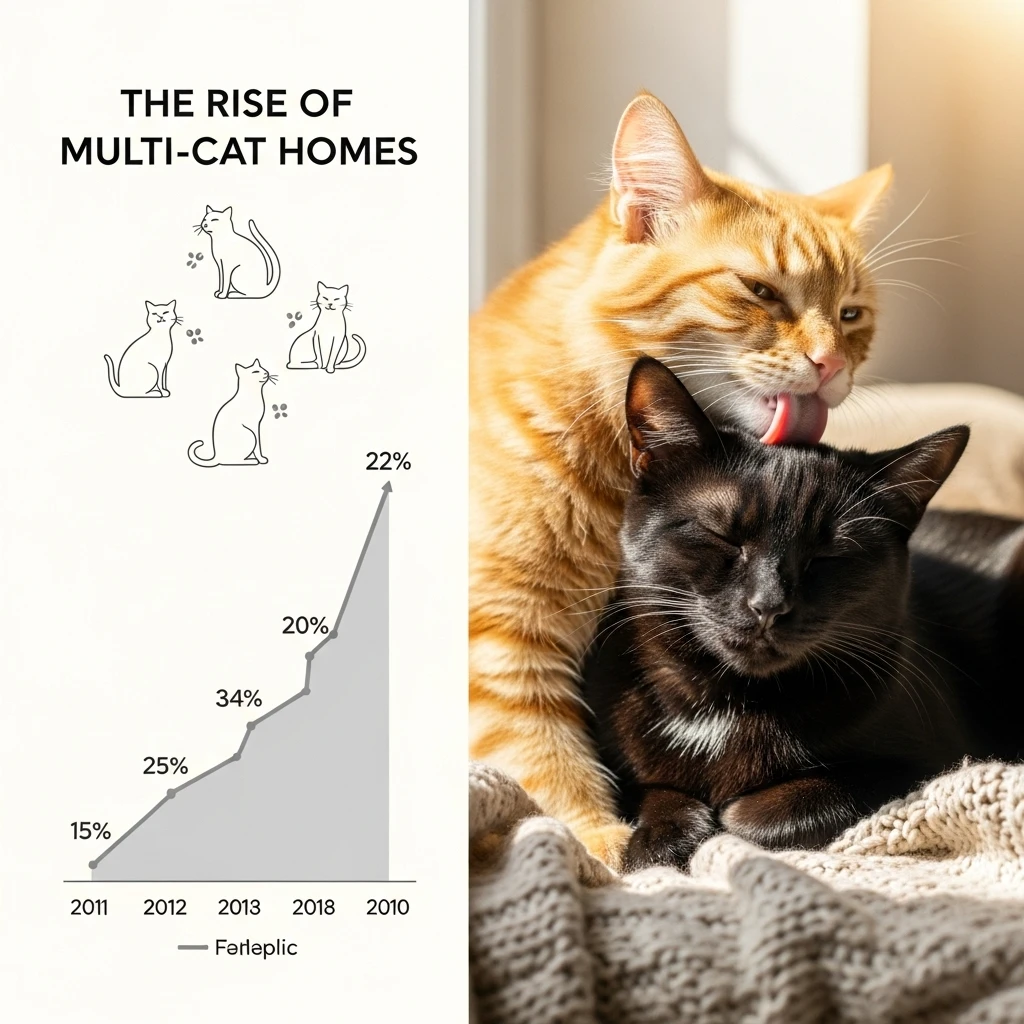
Gone is the era of the lone, aloof cat napping in solitary glory. A quiet revolution is unfolding in living rooms and apartments worldwide: the rise of multi-cat homes. What was once considered a niche choice for dedicated “cat people” has blossomed into a mainstream lifestyle. Shelters champion “bonded pair” adoptions, social media feeds brim with tales of feline siblinghood, and more people than ever are discovering that the joy of one cat can indeed be multiplied.
But why this shift? The reasons are as varied as cat personalities themselves. For some, it’s a compassionate response to the overwhelming number of cats in shelters. For others, it’s a practical solution for busy lives, believing cats can keep each other company. Often, it starts simply: one charming feline leads to another. However, the transition from a single-cat sanctuary to a multi-cat dynasty is not merely additive. It’s a fundamental change in your home’s social ecosystem.
This comprehensive guide is your roadmap. We will move beyond simplistic tips and delve into the why behind feline behavior in groups. You’ll learn how to architect your home for peace, execute introductions that build friendship, not feud, and troubleshoot common challenges with the insight of a behaviorist. Whether you’re contemplating a second cat or managing a magnificent clowder, this article will equip you with the expertise to foster a home where every purr resonates with contentment.
Understanding the “Why”: The Forces Fueling Multi-Cat Living
The trend toward multi-cat homes isn’t random; it’s the result of evolving societal attitudes, scientific understanding, and practical realities.
- The Shelter and Rescue Influence: Modern adoption advocacy strongly emphasizes keeping bonded pairs together and adopting two kittens for mutual socialization. The “Adopt Don’t Shop” movement often leads to welcoming more than one rescue cat into a family.
- Shifting Perspectives on Feline Sociality: We’ve debunked the myth that cats are strictly solitary. Science shows they are facultative social creatures they can form complex, affectionate relationships with chosen companions when resources are plentiful. Learn more about feline social structures in our guide on how cats choose their favorite person.
- Urban Lifestyle and Companion Needs: In smaller living spaces or with longer work hours, owners seek to provide enrichment for their pets. A compatible feline friend can offer play, grooming, and companionship that humans cannot replicate.
- The Simple Joy of Multiples: Many find that different cat personalities complement each other and enrich the household dynamic. The sight of cats cuddled together or engaged in playful chase is a unique reward.
The Foundational Pillar: It’s All About Resources
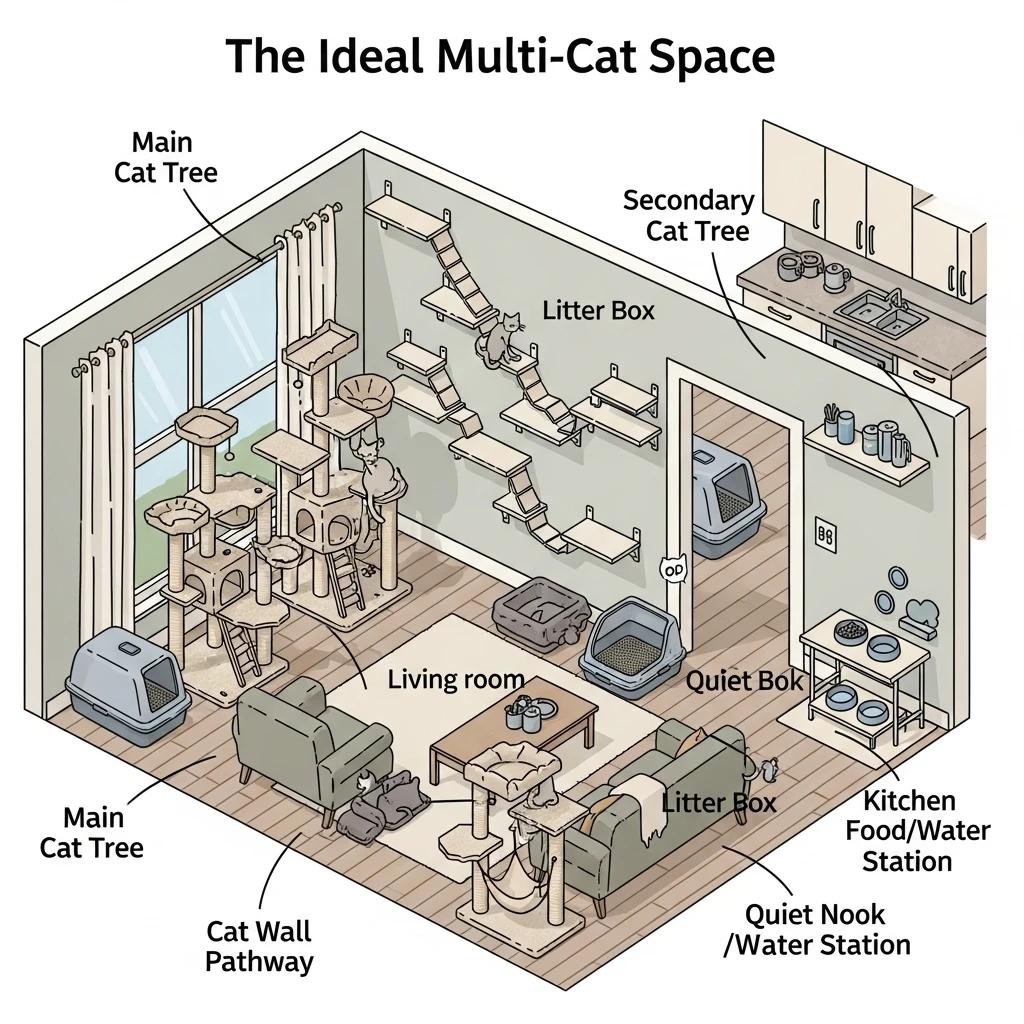
The single greatest predictor of harmony in a multi-cat home is not breed or gender, but the abundance and strategic placement of key resources. Cats in the wild avoid conflict by having ample space and separate access to necessities. Your home must replicate this security.
The Golden Rules:
- Litter Boxes: The rule is one per cat, plus one extra. Place them in quiet, low-traffic, separated locations—never all in a single row. A cat blocked from a box by another cat will find another place to go. For setup help, see our cat litter training guide.
- Food and Water Stations: Never bowl-to-bowl. Separate feeding stations by several feet, or better yet, in different rooms. This prevents food guarding and allows stressed cats to eat in peace. Consider timed feeders for regulated access.
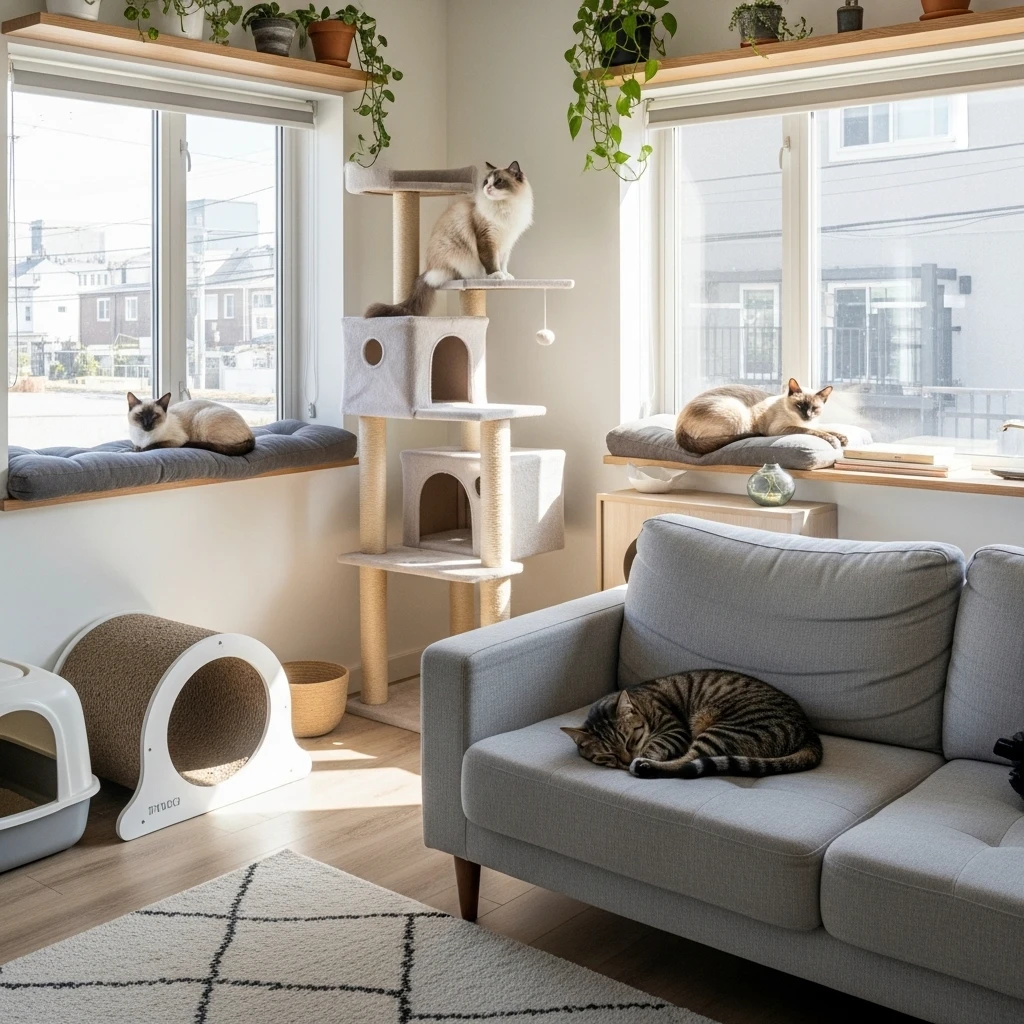
- Vertical Territory: Cats are climbers. Cat trees, wall shelves, window perches, and even the tops of cabinets provide crucial escape routes, observation points, and personal “rooms.” This is non-negotiable for stress reduction. Explore ideas for cat wall climbing setups to maximize vertical space.
- Horizontal Space and Hides: Ensure there are multiple cozy beds, cardboard boxes, and hiding spots (like under-bed storage with an entrance cut out) so a cat can retreat and feel safe.
The Make-or-Break Process: Scientifically Introducing Cats
Rushing introductions is the most common, and costliest, mistake. Patience here pays a lifetime of dividends. The goal is positive association, not forced interaction.
Phase 1: Complete Separation (3-7 days)
The new cat starts in a “base camp” a spare room or bathroom with all its resources. This allows both cats to acclimate to each other’s scent and presence without threat. Switch bedding daily to mingle scents.
Phase 2: Site Swapping and Scent Play
Allow the resident cat to explore the empty base camp while the new cat explores the main house (under supervision). Continue scent exchange via cloths rubbed on cheeks (where friendly pheromones are released).
Phase 3: Controlled Visual Access
Use a baby gate, screen door, or cracked door with a barrier. Feed both cats delicious, high-value treats on either side of the barrier. If they eat calmly, progress. If they hiss or stare, increase the distance. The aim: “I see you, and good things happen.”
Phase 4: Supervised, Leashed/Controlled Face-to-Face
Keep initial sessions short (minutes) and always end on a positive note with treats or play. Have interactive toys like feather wands ready to redirect attention. Never punish hissing or growling; it’s normal communication. For more on this critical stage, our guide on introducing a kitten to a cat offers detailed protocols.
Phase 5: Gradual Integration
Slowly increase unsupervised time together as calm behavior prevails. Always provide escape routes back to safe zones. This process can take weeks. Let the cats set the pace.
Navigating Personalities: The Feline Social Spectrum
Not all cats want a best friend, and that’s okay. Success is peaceful coexistence, not obligatory cuddling. Understand these common dynamics:
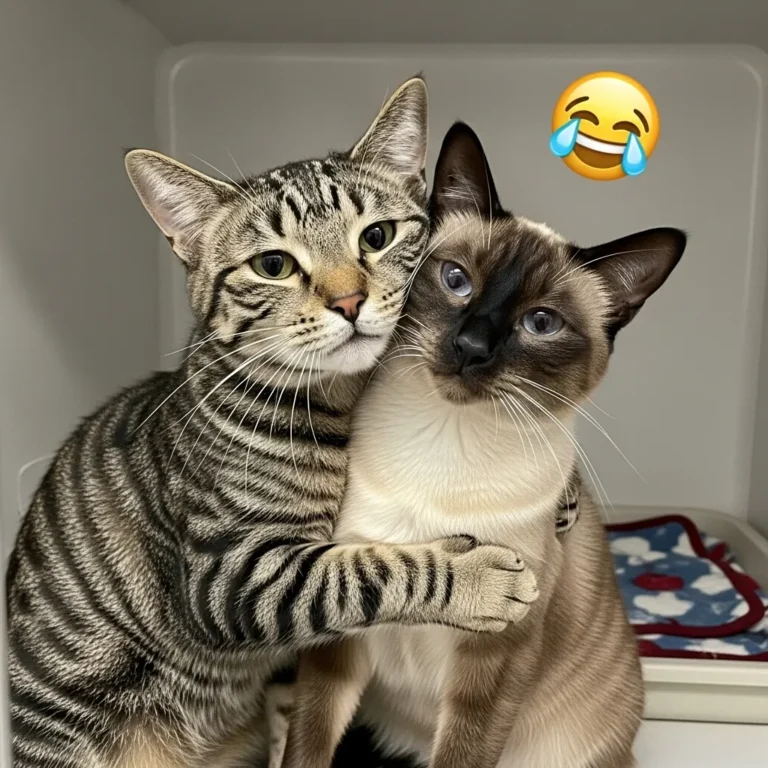
- The Bonded Pair: Often siblings or long-time companions who sleep, play, and groom together. They are a self-contained unit.
- The Tolerant Roommates: They may share space and pass each other peacefully but engage in minimal social interaction. They respect each other’s boundaries.
- The “Only Child” Who Adapts: Some cats, once solitary, can learn to accept a calm, non-intrusive companion with proper introduction.
- The Incompatible Pair: Sometimes, despite best efforts, two cats have deeply conflicting personalities (e.g., a hyperactive kitten and a timid senior). Permanent separation of spaces or rehoming may be the kindest option.
Recognize and respect these relationships. Forcing interaction between cats who prefer distance will only increase stress. Learn to read cat tail language and other subtle signs to understand their rapport.
Solving Common Multi-Cat Challenges
Even in well-managed homes, issues can arise. Here’s how to address them proactively.
1. Inappropriate Elimination (Peeing Outside the Box)
This is the #1 behavioral issue and is almost always stress-related or medical.
- First: Rule out a cat urinary tract infection or other illness with a vet.
- Second: Audit your resources. Add more boxes, try different litter, ensure absolute cleanliness, and relocate boxes away from noisy appliances or cat pathways.
- Third: Identify the source of stress. Is one cat blocking access? Use enzyme cleaner to remove odors completely.
2. Inter-Cat Aggression
This ranges from playful chasing to serious fights.
- Identify the Type: Is it mutual play (silent, with relaxed bodies), redirected aggression (after seeing an outdoor cat), or true conflict (hissing, yowling, puffed fur)?
- Immediate Solution: Separate the cats and restart the introduction process from Phase 1 or 2.
- Long-Term Solution: Increase resources, especially vertical space and hides. Use synthetic pheromone diffusers (Feliway MultiCat) to promote calm. In severe cases, consult a veterinary behaviorist.
3. Food Guarding and Theft
- Solution: Feed in completely separate rooms. Use microchip-activated feeders if one cat is prone to stealing. For cats who need to gain weight, this ensures they get their full portion.
4. Bullying and Resource Blocking
One cat may monopolize the prime sleeping spot, litter box, or human attention.
- Solution: Duplicate the prized resource in another location. Actively engage the bullied cat in play and bonding in a “safe” room. Ensure the bully cat also gets plenty of solo play to burn energy.

The Unseen Benefits: Why Multi-Cat Homes Thrive
When the puzzle pieces fit, the rewards are profound:
- Built-in Enrichment: Cats entertain each other with chase, play, and mock hunting, preventing boredom-related behaviors.
- Companionship in Your Absence: They provide social interaction, reducing potential separation anxiety.
- Social Learning: Kittens learn appropriate play and social cues from adult cats.
- Double (or Triple) the Love: Each cat offers a unique relationship, enriching your own life with diverse purrs, cuddles, and personalities.
FAQ: Your Multi-Cat Questions, Answered
Q: What is the ideal number of cats to have?
A: There is no universal ideal. The correct number is the one you can provide for excellently financially, spatially, and emotionally without compromising any cat’s well-being. For most homes, 2-3 well-matched cats is a sustainable social group.
Q: Are certain cat breeds better for multi-cat homes?
A: Some breeds, like Siberians, Ragdolls, and Abyssinians, are often noted for their social tolerance. However, individual personality and early socialization matter far more than breed. A well-socialized American Shorthair or Siamese can be just as adaptable.
Q: How much more does it cost to have multiple cats?
A: Costs are more than linear. Expect double for food, litter, and routine vet care. However, some costs (like pet insurance premiums) may have discounts. Budget for unexpected medical issues for each cat independently. Plan ahead with our cat food cost guide.
Q: My cats sometimes fight. Is this normal?
A: Occasional play-fighting, chasing, and even brief hissing can be normal, especially during high-energy periods like the “zoomies.” True aggression involves fearful body language, yowling, and intent to harm. Learn the difference between cat play and aggression.
Q: How do I know if my home is ready for another cat?
A: Ask yourself: Can I afford another lifetime of vet bills? Do I have the physical space for essential separate resources? Does my current cat have a confident, secure personality? Am I prepared for a months-long adjustment period? If yes, you may be ready.
Conclusion: Cultivating Your Feline Haven
The rise of multi-cat homes is a testament to our growing desire to provide rich, social lives for our feline family members. It is a commitment that demands more than extra food bowls it requires an investment in understanding, space, and patience. By viewing your home through a feline lens, providing abundant resources, and honoring the unique bond (or respectful distance) between each cat, you lay the foundation for a truly harmonious haven.
The journey may have its hurdles, but the destination a home humming with the quiet contentment of multiple purring beings is unparalleled. It is a living tapestry of individual personalities woven together by care and respect.
Ready to deepen your expertise? Explore our library of detailed behavior and care guides, from managing specific cat health issues to designing the perfect cat-friendly home, right here on Cat Bloom Haven.