How Cats Improve Emotional Well-Being: The Science Behind Feline Therapy
Key Takeaways
- Cats reduce stress hormones like cortisol while increasing feel-good hormones like oxytocin and serotonin
- The frequency of a cat’s purr (25-150 Hz) has therapeutic healing properties for humans
- Cat ownership is linked to lower blood pressure, decreased anxiety, and reduced risk of heart attack
- Emotional support cats provide non-judgmental companionship that combats loneliness and depression
- Establishing routines with cats creates structure and purpose that benefits mental health
Introduction: The Silent Healers in Our Homes
Imagine coming home after a demanding day to a creature who demands nothing more than your presence no judgment, no agenda, just quiet companionship. This is the unique emotional medicine cats provide, a subtle yet powerful form of therapy that science is only beginning to fully understand. While dogs receive accolades for their exuberant affection, cats offer something different: a quiet, consistent presence that soothes our nervous systems in ways we’re only starting to measure.
The connection between humans and cats spans millennia, but our understanding of how these creatures improve emotional well-being has evolved dramatically. Today, research reveals that living with a cat isn’t just pleasant it’s physiologically transformative. From lowering blood pressure to reducing anxiety, the humble house cat serves as an unexpected but effective emotional support system for millions.
This comprehensive guide explores the multifaceted ways cats improve emotional well-being, backed by scientific research, psychological principles, and countless personal testimonials. Whether you’re a lifelong cat guardian or considering welcoming a feline into your home, understanding this profound relationship can help you harness its full therapeutic potential.
The Biochemistry of Bliss: How Cats Physically Alter Our Brain Chemistry
The bond between humans and cats isn’t just emotional it’s biochemical. When we interact with cats, our bodies undergo measurable changes that directly combat stress and promote emotional balance.
The Cortisol Connection
Cortisol, commonly known as the stress hormone, decreases significantly during positive interactions with cats. A landmark study published in the journal Anthrozoös found that simply petting a cat for 10-15 minutes lowered cortisol levels in participants by an average of 30%. This reduction occurs because tactile interaction with animals triggers the parasympathetic nervous system the body’s “rest and digest” mode counteracting the fight-or-flight response that elevates cortisol.
The Oxytocin Effect
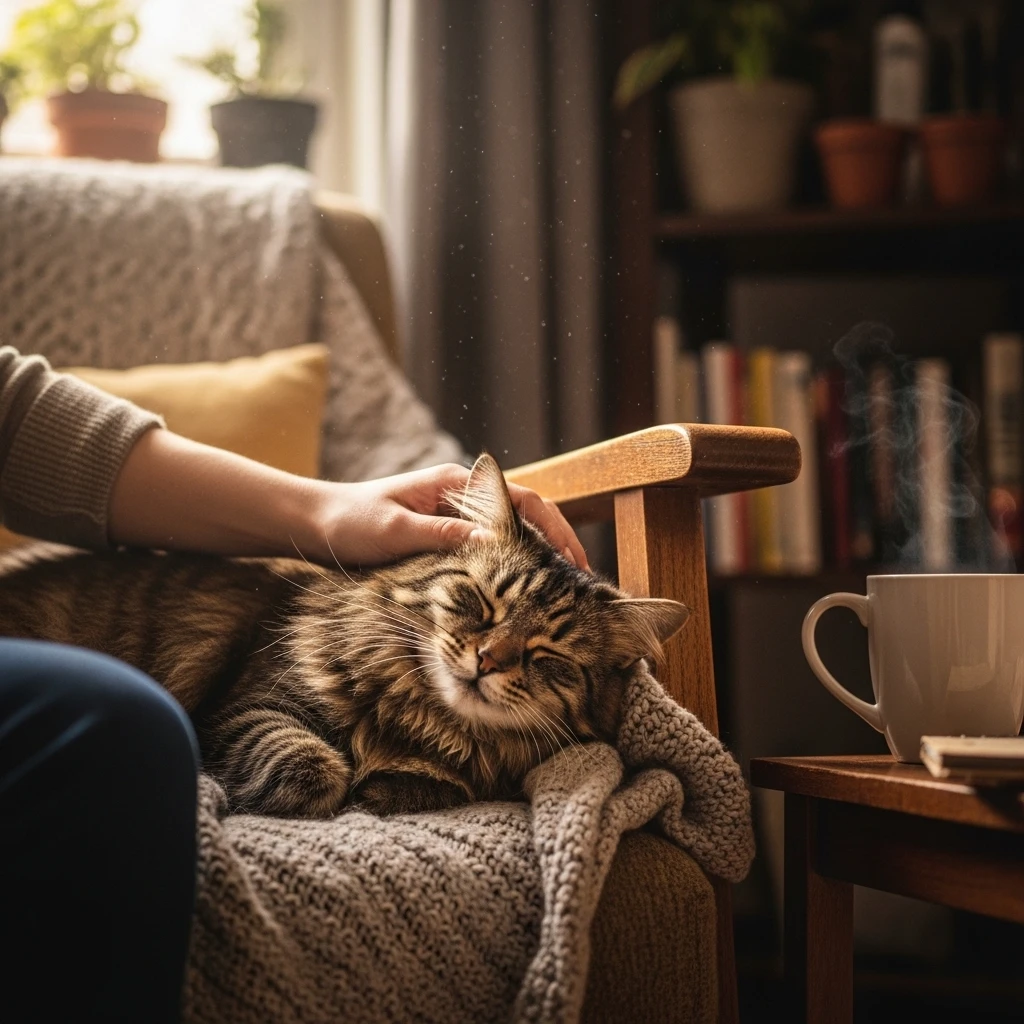
Often called the “love hormone” or “cuddle chemical,” oxytocin surges during positive human-cat interactions. This neuropeptide promotes bonding, trust, and feelings of contentment. When your cat rubs against you or purrs contentedly in your lap, your brain releases oxytocin, creating a feedback loop of mutual affection. This biochemical exchange explains why many people describe their relationship with their cat as profoundly calming.
Serotonin and Dopamine Boost
Interacting with cats increases production of serotonin and dopamine neurotransmitters crucial for mood regulation. Low levels of these chemicals are associated with depression and anxiety disorders. The routine care of a cat (feeding, grooming, playing) provides small, consistent dopamine rewards throughout the day, creating natural mood stabilization that pharmaceutical interventions often attempt to replicate.
Practical Application: Schedule intentional bonding time with your cat each day, focusing on gentle petting sessions when you feel stressed. The biochemical benefits are most pronounced during calm, focused interactions rather than distracted multitasking.
The Healing Frequency: The Therapeutic Power of the Purr
One of the most remarkable ways cats improve emotional well-being lies in a sound we often take for granted: the purr. This seemingly simple vibration holds complex therapeutic properties.
Frequency as Medicine
Research has revealed that domestic cats purr at frequencies between 25 and 150 Hertz. Remarkably, frequencies in the 25-50 Hz range correspond to established healing frequencies in vibrational medicine. These specific frequencies have been shown to:
- Promote bone growth and fracture healing
- Reduce pain and inflammation
- Improve muscle and tendon repair
- Lower blood pressure naturally
When a cat purrs on or near you, your body is essentially receiving low-frequency vibration therapy. This explains the almost magnetic pull many feel toward a purring cat when they’re unwell or in pain.
The Emotional Resonance of Purring
Beyond physical healing, the purr serves as an auditory anchor for emotional regulation. The consistent, rhythmic sound provides:
- A focusing mechanism that redirects attention from anxious thoughts
- White noise benefits that mask stressful environmental sounds
- Rhythmic entrainment that can synchronize with and slow a racing heartbeat
- Conditioned relaxation response through repeated positive associations
Many therapy cat programs specifically utilize purring during sessions with anxiety patients, finding it more effective than guided meditation for some individuals.
Explore our detailed guide on cat sounds and their meanings to better understand your feline’s vocal communications.
Routine and Purpose: How Cats Structure Our Emotional Lives
In an increasingly unstructured world, cats provide gentle but non-negotiable routines that benefit mental health in surprising ways.
The Gift of External Structure
Cats are creatures of habit who thrive on predictable schedules. Their demands for feeding, play, and attention create daily anchor points that:
- Combat the aimlessness associated with depression
- Provide reasons to maintain regular waking and sleeping hours
- Create small, achievable tasks that build momentum for larger responsibilities
- Establish consistent touchpoints throughout otherwise isolating days
For individuals working from home or managing mental health conditions, these feline-imposed routines can prevent the day from dissolving into unstructured time, which research links to increased anxiety and depressive symptoms.
The Psychology of Caretaking
Caring for another living being fulfills fundamental psychological needs for competence, autonomy, and relatedness three pillars of Self-Determination Theory. When we successfully meet our cat’s needs, we reinforce our own sense of efficacy. This is particularly valuable during periods of self-doubt or life transitions when other sources of validation may be scarce.
Discover more tips in our article on establishing healthy cat routines.
Non-Judgmental Companionship: The Anti-Loneliness Prescription
Loneliness has reached epidemic proportions, with significant consequences for both mental and physical health. Cats offer a unique form of companionship that addresses this crisis without the social complexities of human relationships.
Unconditional Without Demands
Unlike human relationships (and even some dog relationships), cats offer affection without expectation. They don’t require conversation, don’t judge our life choices, and accept us in our most unpolished states. This creates a psychological safe space where we can be authentically ourselves without performance anxiety.
Research from the Human-Animal Bond Research Institute shows that cat owners report significantly lower levels of loneliness than non-pet owners, even when controlling for human social networks. The presence of a living being who notices your absence and greets your return satisfies fundamental social needs at a basic but profound level.
Mindfulness Masters
Cats live almost entirely in the present moment a state humans struggle to achieve despite countless mindfulness apps and meditation retreats. Observing a cat’s complete absorption in a sunbeam, a passing shadow, or the texture of a blanket teaches by example how to temporarily suspend worries about past or future.
This modeling of present-focused awareness is particularly valuable for individuals with anxiety disorders, who often struggle with catastrophic future thinking. Simply watching a cat can serve as a gentle reminder to ground oneself in the current moment.
Learn more in our exploration of what we can learn from cat behavior.
Sensory Regulation: How Cats Ground Our Nervous Systems
For individuals with sensory processing differences, anxiety disorders, or trauma histories, cats provide multi-sensory input that promotes regulation in gentle, non-overwhelming ways.
Tactile Grounding
The texture of cat fur, their warmth, and their weight on one’s lap or chest provide deep pressure stimulation similar to weighted blankets. This tactile input:
- Stimulates the release of serotonin
- Lowers physiological arousal
- Provides a grounding focal point during emotional dysregulation
- Creates a physical boundary that feels protective
Many individuals with PTSD or anxiety disorders report that petting their cat during moments of distress helps prevent or shorten panic episodes more effectively than some coping skills taught in therapy.
Visual Calming
The graceful, flowing movements of cats have a visually soothing quality that contrasts with the jarring, abrupt motions common in human environments. Watching a cat move or sleep engages the brain’s default mode network the system active during restful states promoting mental relaxation.

Social Catalyst and Conversation Bridge
While cats themselves aren’t social creatures in the way dogs are, they significantly enhance human social connections an important component of emotional well-being.
The Common Ground of Cat Lovers
Cat ownership creates instant common ground with approximately 42.7 million other U.S. households. This shared interest facilitates:
- Easier social initiation (“Tell me about your cat!”)
- Reduced social anxiety through structured conversation topics
- Community connections through local cat groups, veterinary offices, and pet stores
- Online communities that provide support beyond geographical limitations
For individuals who struggle with social anxiety, conversations about cats provide a safe, structured way to practice social interaction without the pressure of more personal topics.
Family Bonding Agent
In multi-person households, cats often serve as neutral territory where family members can connect without conflict. Shared caregiving responsibilities teach cooperation, while observing the cat’s behavior provides lighthearted conversation material that diffuses tension.
Discover how cats affect family dynamics in our guide to multi-cat households.
Grief, Loss, and Life Transitions: Feline Support Through Difficult Times
During periods of loss or major life changes, cats provide consistent emotional support that adapts to our changing needs.
Non-Verbal Mourning Companions
After the loss of a loved one, human condolences often feel inadequate or intrusive. Cats offer silent companionship that respects the complexity of grief. Their continued presence provides:
- Living continuity when other aspects of life feel shattered
- Physical comfort when human touch feels overwhelming
- Routine maintenance when self-care seems impossible
- A reason to continue basic functioning
Numerous bereavement studies have found that pet owners navigate grief with better psychological outcomes than non-pet owners, particularly in the first critical year after loss.
Transitional Objects with Agency
Unlike inanimate comfort objects, cats are responsive beings who initiate interaction when they sense distress. Many cat owners report their feline seeming to “know” when they’re upset, offering unusual affection during these moments. This responsive care though instinctual on the cat’s part feels profoundly validating to grieving humans.
Specialized Emotional Support: Cats for Specific Mental Health Conditions
Beyond general emotional benefits, cats show particular effectiveness for specific psychological conditions.
Depression Management
The routine, purpose, and biochemical benefits of cat companionship directly counter depressive symptoms:
- Anhedonia relief: The pleasure response triggered by cat interaction can temporarily bypass emotional numbness
- Energy mobilization: Care requirements create low-pressure reasons to move and engage
- Negative thought interruption: Cat behavior often surprises and amuses, disrupting rumination cycles
- Sleep regulation: Cats who sleep with owners often regulate human sleep patterns through their presence
Anxiety Reduction
Cats help anxiety through multiple mechanisms:
- Physiological regulation through purring and petting
- Worry distraction through their entertaining behaviors
- Safety signaling their relaxed state indicates environmental safety to our vigilant brains
- Breath regulation as we unconsciously sync our breathing with their sleeping rhythms
Autism Spectrum Support
For individuals on the autism spectrum, cats offer:
- Predictable, rule-based social interaction
- Consistent responses to specific behaviors
- Non-demanding companionship
- Sensory regulation through controlled touch
- Social bridging with other cat enthusiasts
Explore our article on how cats choose their favorite person to understand feline bonding patterns.
The Responsibility Balance: How Caretaking Benefits Without Overwhelming
Unlike some pets that require constant attention, cats offer what psychologists call the “Goldilocks principle” of responsibility: enough to create purpose but not so much that it becomes burdensome.
Achievable Care Standards
Cat care typically involves:
- Twice-daily feeding (automatic feeders can modify this)
- Regular litter maintenance
- Occasional grooming (frequency varies by breed)
- Interactive play sessions
- Veterinary visits 1-2 times annually
This level of responsibility proves therapeutic for most people while remaining manageable during low-functioning periods. The flexibility of cat care (unlike dog walking that requires specific timing) makes it particularly suitable for individuals with chronic illnesses or fluctuating energy levels.
Learn more about balanced cat care in our modern cat wellness guide.
Potential Challenges and Considerations
While cats significantly improve emotional well-being for most people, realistic expectations ensure the relationship remains beneficial.
Individual Variations in Cat Personality
Just as humans vary, cats possess distinct personalities that affect their therapeutic potential. Some cats are naturally more affectionate, while others are more independent. Understanding feline behavior helps align expectations with reality.
Discover different cat breed personalities to find your ideal match.
Allergies and Practical Limitations
For individuals with severe allergies, the stress of symptoms may outweigh emotional benefits. However, many allergy sufferers successfully live with cats through:
- Regular grooming and bathing protocols
- Air purification systems
- Allergy medications or immunotherapy
- Selecting lower-dander breeds
The Grief of Pet Loss
The inevitable loss of a feline companion constitutes genuine bereavement. While the relationship provides years of benefit, preparing for this eventual outcome is part of responsible pet guardianship.
Our guide to coping with cat loss offers support for this difficult transition.
Maximizing the Emotional Benefits: Evidence-Based Strategies
Intentional practices can amplify how cats improve emotional well-being in your daily life.
Structured Bonding Time
Create daily rituals that reinforce your connection:
- Morning greeting with gentle petting before checking your phone
- Scheduled play sessions using interactive toys
- Evening wind-down with your cat in a designated relaxing space
- Training sessions that build communication and mutual understanding
Environmental Enrichment
A stimulated, happy cat is more likely to engage in bonding behaviors. Provide:
- Vertical space for climbing and observation
- Puzzle feeders that engage natural hunting instincts
- Window perches with outdoor views
- Regular rotation of toys to maintain novelty
Find DIY enrichment ideas in our cat environmental design guide.
Mindful Observation Practice
Set aside time simply to observe your cat without distraction. Notice:
- Their breathing patterns and how they affect your own
- The precise way they move through space
- Their responses to subtle environmental changes
- Moments of complete relaxation and contentment
This practice cultivates present-moment awareness while deepening your appreciation of your feline companion.
Physiological Synchronization
During cuddling sessions, consciously align your breathing with your cat’s purring or sleeping rhythms. This deliberate synchronization enhances the biochemical benefits of your interaction.
The Future of Feline-Assisted Therapy
Scientific understanding of how cats improve emotional well-being continues to evolve, with promising developments in formal therapeutic applications.
Teletherapy Companions
As online therapy becomes standard, cats increasingly participate in sessions, providing:
- Non-verbal emotional regulation for clients
- Conversation bridges during difficult topics
- Grounding presence for trauma processing
- Relationship modeling for attachment issues
Specialized Emotional Support Cats
While formal emotional support animal (ESA) designations have specific legal definitions, many cats naturally fulfill this role. Future developments may include:
- Breed-specific selection for therapeutic traits
- Early socialization protocols for therapy work
- Handler training for maximizing therapeutic benefits
- Research into feline responses to human emotional states
Technological Integration
Emerging technologies enhance our ability to benefit from feline companionship:
- Wearables that track human-cat interaction and correlate with mood metrics
- Interactive toys that facilitate bonding during physical separation
- Monitoring systems that alert owners to behavioral changes in both parties
Explore how technology is changing cat care in our dedicated article.
Conclusion: Your Personal Wellness Companion
The ways cats improve emotional well-being are as diverse as cats themselves from biochemical changes we can measure in laboratories to subtle emotional shifts we feel in quiet moments at home. These creatures offer a unique form of companionship that respects our autonomy while providing consistent emotional support.
Unlike many wellness interventions that require money, time, or special skills, feline therapy is available to anyone willing to engage authentically with these remarkable animals. The benefits compound over years, creating a relationship that supports mental health through life’s inevitable ups and downs.
Whether you share your home with a cat already or are considering welcoming one, understanding this profound connection allows you to cultivate it intentionally. The quiet presence purring on your lap isn’t just a pet it’s a partner in emotional resilience, a teacher of presence, and a living reminder that sometimes the simplest connections are the most healing.
Explore more expert guides on cat behavior, care, and the human-feline bond at Cat Bloom Haven. Discover how to deepen your relationship with your feline companion through our comprehensive resources on cat psychology, health, and enrichment.
Frequently Asked Questions
How quickly can a cat improve my mood?
Immediate biochemical changes occur within minutes of positive cat interaction, with cortisol dropping and oxytocin rising rapidly. Long-term emotional benefits typically manifest within weeks as routines establish and bonding deepens.
Are some cat breeds better for emotional support?
While individual personality matters most, breeds like Ragdolls, Siamese, and Maine Coons are often noted for their affectionate natures. However, mixed-breed cats from shelters frequently show exceptional emotional intelligence and adaptability.
Can cats sense human emotions?
Research indicates cats recognize human emotional cues through voice tone, facial expressions, and body language. Many cats alter their behavior in response to human distress, though responses vary individually.
How much time with my cat is needed for emotional benefits?
Quality matters more than quantity. Even 15-20 minutes of focused interaction daily provides measurable benefits. Integration into daily routines (mealtimes, relaxing together) often works better than scheduled “therapy sessions.”
What if my cat isn’t affectionate?
Respect your cat’s personality while gently encouraging bonding through positive associations like treat-dispensing toys, clicker training, and environmental enrichment. Often, less affectionate cats show care through proximity rather than cuddling.
Are there situations where a cat might not improve emotional well-being?
In rare cases where allergies are severe, financial stress is significant, or the individual has extreme fear of cats, benefits may not outweigh challenges. Additionally, those expecting dog-like responsiveness may need to adjust expectations to appreciate feline companionship.
How do I know if my cat is benefiting from our relationship?
Signs of a content cat include slow blinking, kneading, purring in your presence, greeting you at the door, and seeking proximity. A healthy cat-human relationship benefits both parties through mutual affection and respect.