Leaving Cats Alone with Automatic Feeder: Your Ultimate Guide to Safe, Stress-Free Absences
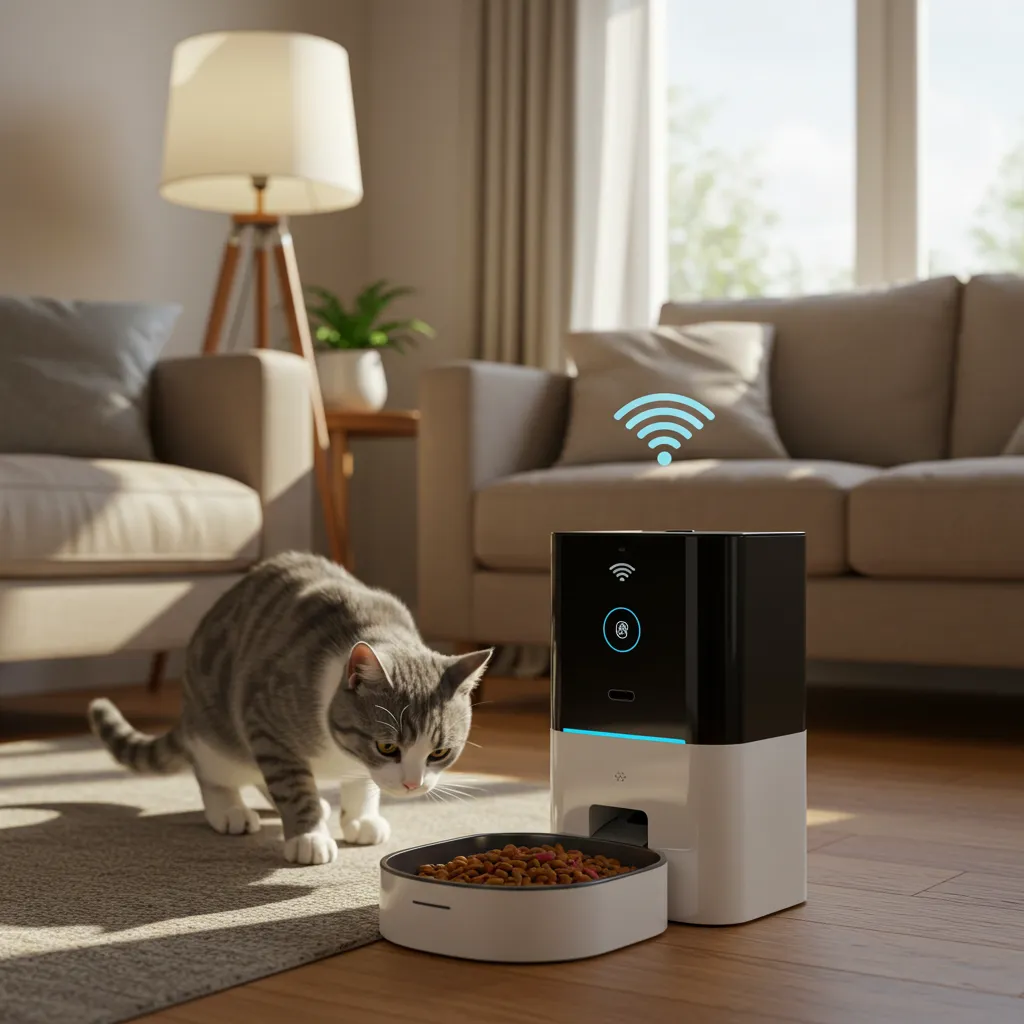
Imagine this: You’re packing for a much-needed weekend getaway, but guilt creeps in as you glance at your cat lounging on the windowsill. Will Whiskers be okay without you? Can an automatic cat feeder handle the job, or will it leave your feline friend hungry and heartbroken? As a cat parent juggling work deadlines and spontaneous trips, I’ve been there—staring at the clock, wondering if technology can truly bridge the gap when life pulls you away.
The good news? Yes, you can leave cats alone with an automatic feeder, but only if you get it right. The key lies in understanding the automatic cat feeder duration that matches your cat’s needs, ensuring a seamless cat feeding schedule automatic feeder setup, and prioritizing cat well-being when left alone. In this comprehensive guide, we’ll unpack everything from how long can a cat be left alone with an auto feeder to tips on cat nutrition and auto feeders. By the end, you’ll have a foolproof plan to keep your cat thriving—nutritionally, emotionally, and safely—while you recharge.
Whether you’re eyeing automatic cat feeder for multiple days or just need daily reliability for your indoor cat feeding schedule, this article arms you with expert-backed strategies. Drawn from veterinary insights, real-world testing, and years of feline companionship, we’ll cover portion control for cats, dry vs wet food automatic feeding, and even the latest pet tech for cats 2025. Let’s turn that travel anxiety into tail-wagging confidence.
Key Takeaways: Quick Wins for Leaving Cats Alone Safely
Before we dive deep, here’s a snapshot of the essentials—optimized for quick scans and AI overviews:
- Maximum Safe Duration: Most healthy adult cats can handle 24-48 hours alone with a reliable automatic feeder and water fountain; extend to 3-4 days max with check-ins, but never a full week without human oversight.
- Feeding Frequency: Aim for 2-4 meals daily via your cat feeding schedule; kittens need 4-6, seniors 2-3 smaller ones to support cat nutrition guide basics.
- Top Feeder Features: Look for WiFi-enabled cat feeders with portion control, desiccant bags for auto feeder food storage safety, and cameras for cat monitoring cameras with feeder integration.
- Age Matters: Tailor to cat’s age and nutritional needs—kittens feeding routine automatic feeder differs from senior cat feeding with auto feeder.
- Pro Tip: Combine with remote feeding apps for cats and puzzle toys to boost cat well-being when left alone; always test setups beforehand.
These nuggets ensure your cat’s health and feeding while away, but stick around for the full blueprint.
Understanding the Automatic Cat Feeder Duration: How Long Is Too Long?
When it comes to leaving cats alone, the automatic cat feeder duration isn’t a one-size-fits-all number—it’s a delicate balance of tech reliability, your cat’s personality, and backup plans. Most vets agree: A healthy adult cat can manage 24-48 hours solo with a solid setup, but pushing beyond that risks stress, health slips, or feeder glitches. For longer stretches, like automatic cat feeder for multiple days, factor in daily check-ins from a trusted neighbor or pet sitter.
Think about it: Cats are independent hunters at heart, but they’re also creatures of routine. A sudden 72-hour silence can trigger anxiety, leading to overeating (if they hack the feeder) or hiding in distress. From my experience fostering a shy rescue, even tech-savvy setups falter without human reassurance. Start small—test a 12-hour workday absence to gauge your cat’s vibe.
Factors Influencing Safe Duration
Several variables dictate how long your cat can thrive unattended:
| Factor | Impact on Duration | Tips for Success |
|---|---|---|
| Cat’s Age & Health | Kittens or seniors cap at 12-24 hours; healthy adults stretch to 48. | Consult your vet; monitor for issues like urinary problems. |
| Feeder Capacity | 5L hoppers last 10-20 days for one cat; wet food models max 3 days. | Stock extra dry kibble; use desiccant for freshness. |
| Water & Litter | Stagnant water sours in 48 hours; unclean litter invites accidents. | Pair with a circulating fountain and self-cleaning box. |
| Environmental Enrichment | Boredom shortens tolerance; toys extend it by 24 hours. | Scatter puzzle feeders and window perches. |
Real talk: One X user shared a hilarious (yet cautionary) tale of their cat “hacking” an automatic feeder by pawing it early, devouring the day’s rations at dawn. Moral? Secure that unit!
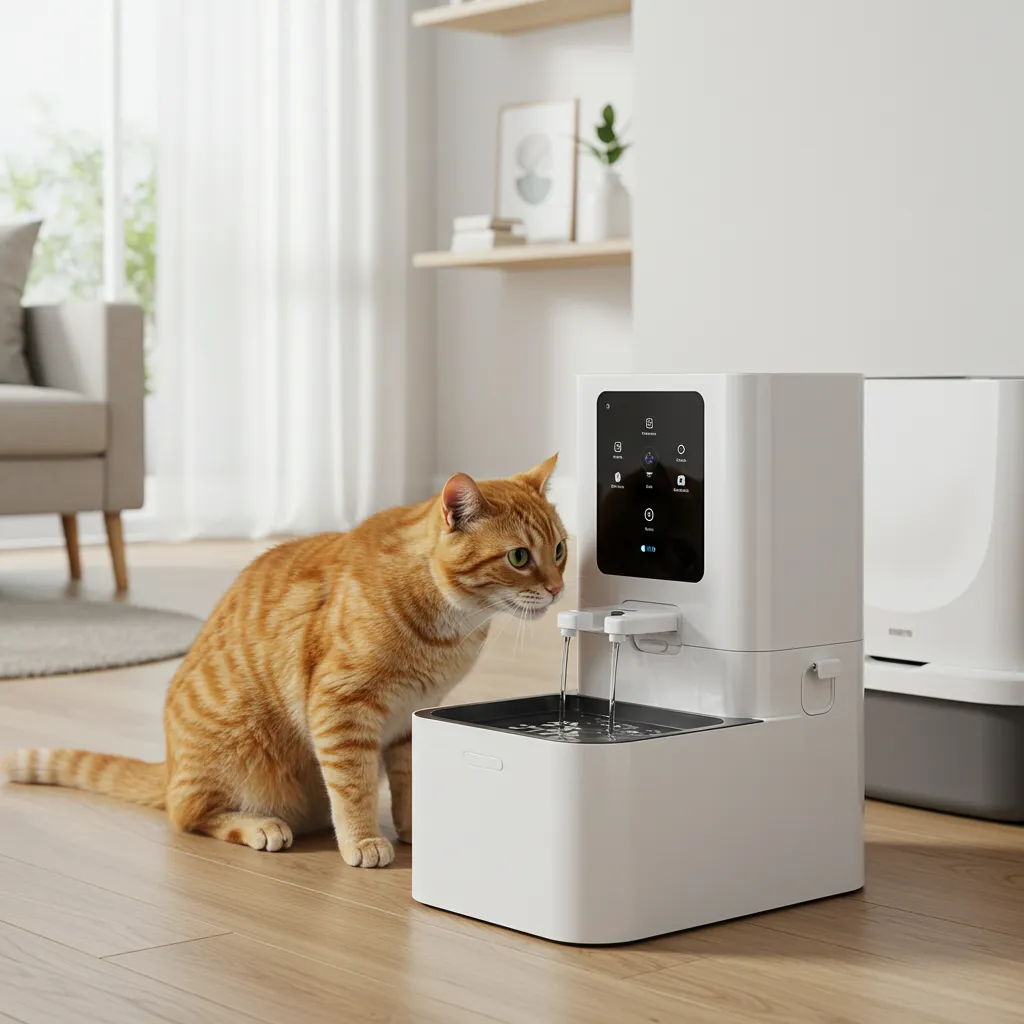
For long weekend cat care solutions, aim for 2-3 days with a WiFi-enabled cat feeder sending alerts if meals miss. Beyond that? Enlist help to avoid the emotional toll—cats bond deeply, and prolonged isolation can mimic depression symptoms.
Tailoring to Your Cat’s Age and Nutritional Needs
No two cats are alike, and neither are their plates. The cat’s age and nutritional needs dictate everything from meal frequency to food type in your automatic cat feeder setup. A one-year-old firecracker demands calorie-dense fuel for zoomies, while a 12-year-old lounger needs joint-supportive, easy-to-digest bites. Ignoring this? You risk obesity, malnutrition, or picky eating that derails your cat feeding schedule automatic feeder.
Veterinarians emphasize: Nutrition evolves with life stages. Kittens burn hot; adults maintain; seniors preserve. Align your auto feeder with this for optimal cat health and feeding.
Kittens: Building Blocks for Growth
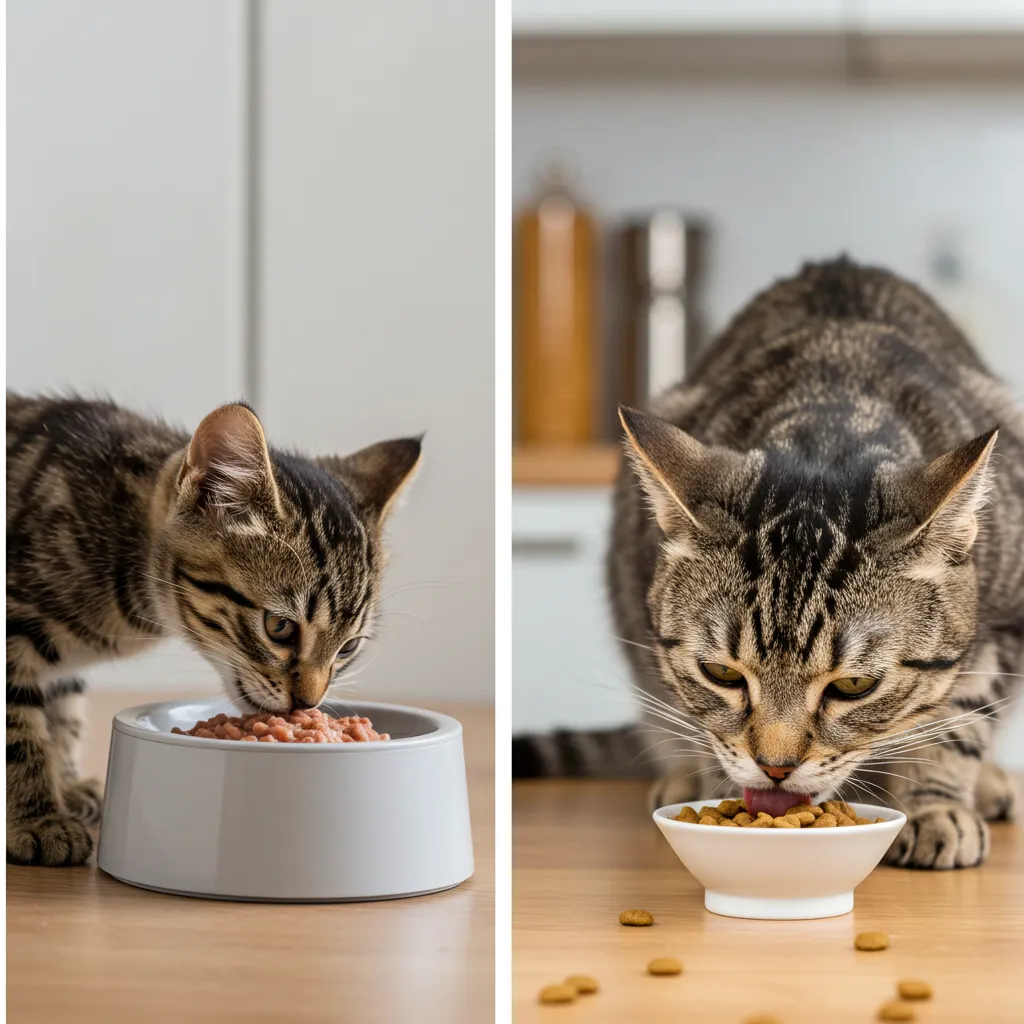
Kittens feeding routine automatic feeder is all about frequency and fuel. From 8-12 weeks, they need 4-6 meals daily—tiny portions of high-protein kitten formula to support rapid growth (up to 1 lb/month). Wet food shines here for hydration, but dry kibble works in timed dispensers.
- Daily Calories: 200-250 kcal for a 2-lb kitten.
- Feeder Hack: Program micro-meals (10-15g) every 4 hours; add a warming mat for appeal.
- Watch For: Overfeeding leads to pudgy pups—use portion control for cats religiously.
Explore our detailed guide on cat food nutrition for breed-specific tweaks, like extra taurine for Bengals.
Adults: Peak Performance Fuel
For 1-7-year-olds, 2-3 meals suit most, totaling 200-300 kcal/day based on weight (20 kcal/lb ideal). Indoor cat feeding schedule? Lean toward measured dry for dental perks, mixed with wet for moisture.
Example: A 10-lb tabby gets 1/2 cup dry split into two servings via feeder, plus a wet topper. This prevents cat feeding mistakes to avoid, like free-feeding that balloons waistlines.
Seniors: Gentle, Targeted Nourishment
Senior cat feeding with auto feeder prioritizes digestibility—smaller, frequent meals (2-3/day) with omega-3s for joints and antioxidants for cognition. At 7+, metabolism slows; aim for 15-20 kcal/lb to fend off obesity.
- Pro Tip: Softened kibble or wet-focused feeders ease chewing.
- Health Tie-In: Links to cat health and feeding; low-protein formulas help kidneys if advised.
Discover more tips in our cat health care series, including senior-specific nutrition.
Crafting the Perfect Cat Feeding Schedule Automatic Feeder
A rock-solid cat feeding schedule is the heartbeat of any automatic setup. Mimic their wild roots: Small, frequent hunts over grazing. For adults, 2-4 meals prevent begging and stabilize blood sugar; adjust for activity—couch potatoes get less than climbers.
Sample Schedules by Lifestyle
Here’s a customizable table for your indoor cat feeding schedule:
| Cat Profile | Meals/Day | Portion Size (Dry Kibble) | Timing Example | Notes |
|---|---|---|---|---|
| Active Adult (8-12 lbs) | 3 | 1/4 cup/meal | 7AM, 12PM, 6PM | Add play post-meal for digestion. |
| Laid-Back Indoor | 2 | 1/3 cup/meal | 8AM, 8PM | Wet mix-in for hydration. |
| Kitten (3-6 months) | 4 | 1-2 Tbsp/meal | 6AM, 10AM, 2PM, 6PM | Frequent to fuel growth spurts. |
| Senior (10+ lbs) | 2-3 | 1/4 cup/meal | 7AM, 1PM, 7PM | Smaller bites; monitor weight. |
Program your smart automatic cat feeders accordingly—most apps like Petlibro’s allow voice commands for tweaks. One X post cracked me up: A cat synced its nap to the 9AM chime, paw-ready like clockwork.
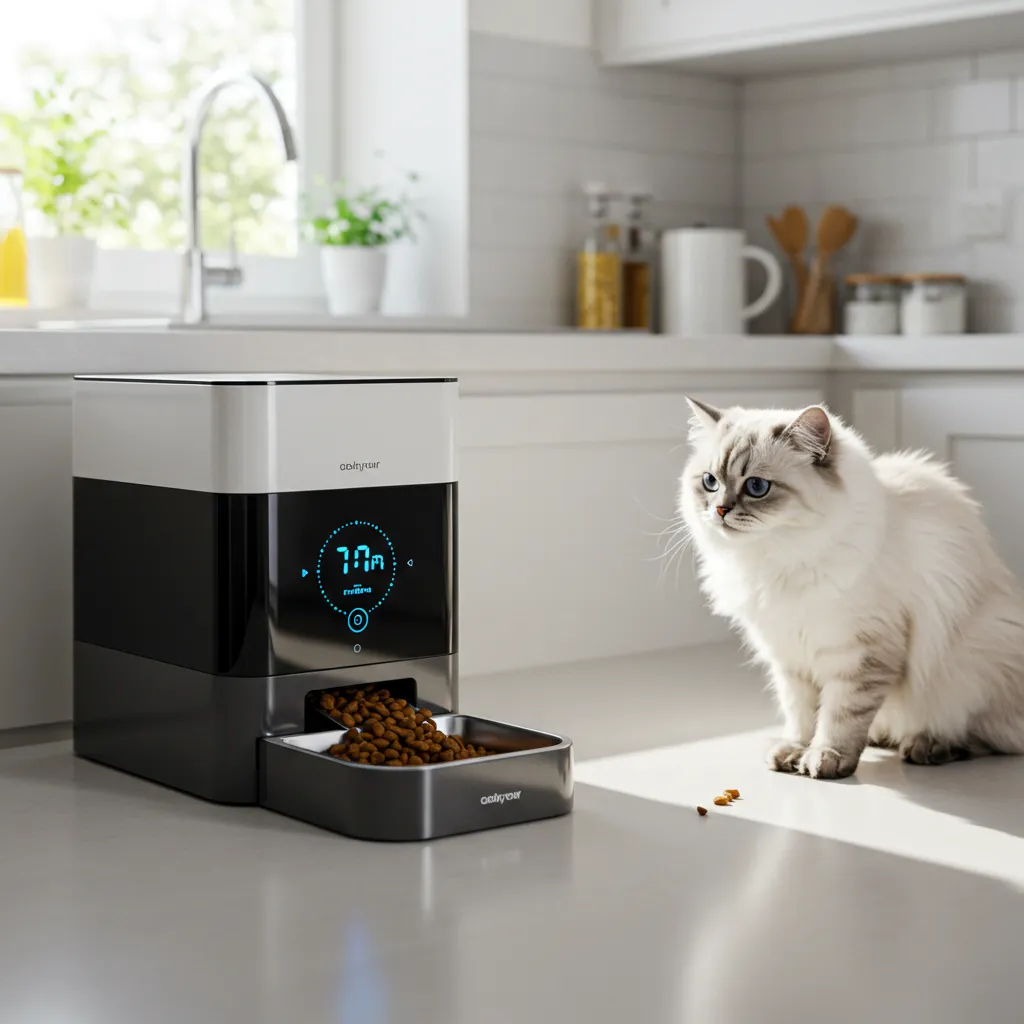
Tie in cat care tips for working owners: Sync feeds with your routine for gradual independence training.
Choosing the Right Food Type for Automatic Feeding
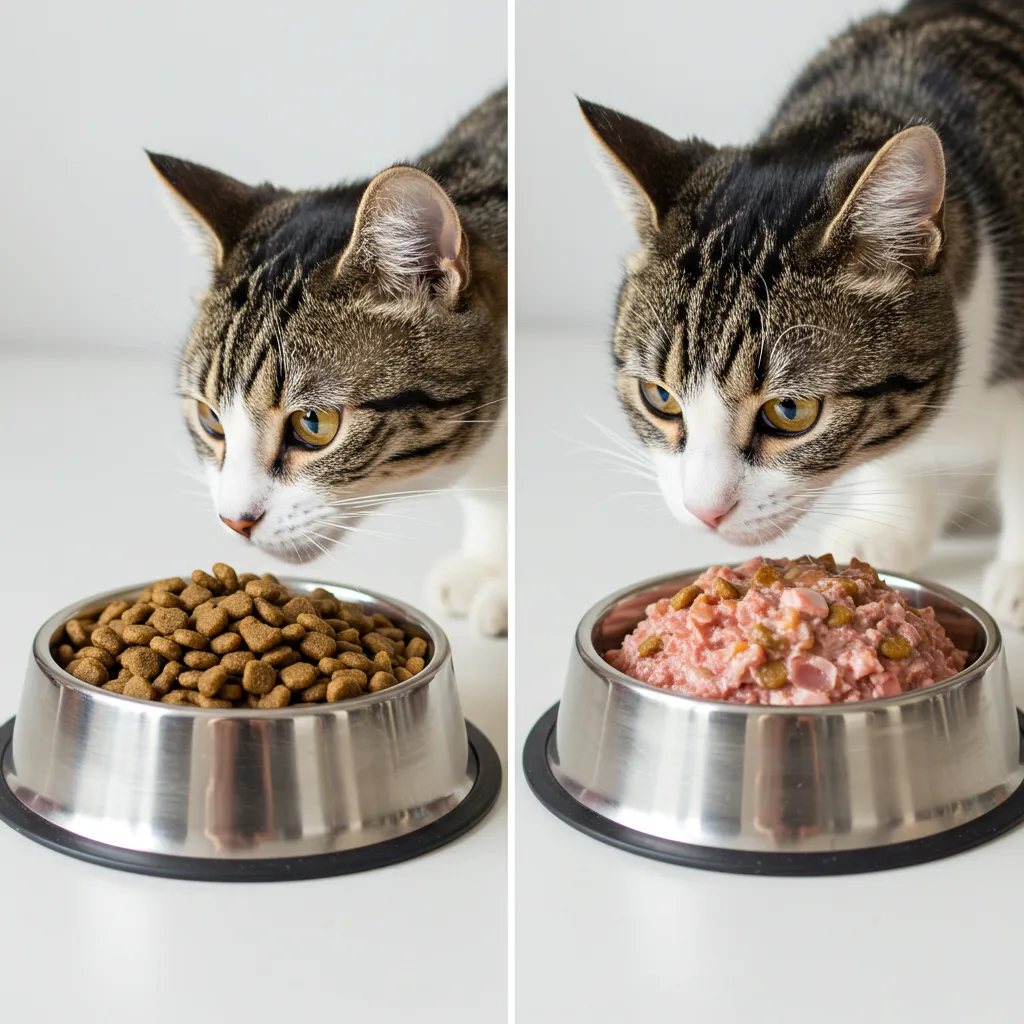
Food compatibility automatic feeder is non-negotiable—mismatch it, and your setup flops. Dry vs wet food automatic feeding boils down to freshness, convenience, and nutrition.
Dry Kibble: The Reliability Champ
Benefits: Shelf-stable for weeks in auto feeder food storage safety; promotes dental health via crunch. Ideal for automatic cat feeder duration up to 10 days.
- Pros: Easy portion control for cats; budget-friendly.
- Cons: Dehydration risk—pair with a fountain.
- Best For: Multi-day trips; holds in 5L hoppers.
Wet Food: Hydration Hero, But Tricky
Wet shines for urinary health and palatability, but spoils fast—limit to 1-3 days without cooling. Enter innovators like Petlibro Polar, refrigerating for 72 hours.
- Pros: Moisture boost (78% water); senior-friendly.
- Cons: Messier cleanup; pricier for long hauls.
- Hack: Freeze portions in ice packs for short absences.
Our best wet cat food roundup pairs perfectly with these feeders.
How Long Can a Cat Be Left Alone with an Auto Feeder? Real Limits and Risks
Circling back: How long can a cat be left alone with an auto feeder? Short answer: 24-72 hours for most, with caveats. Beyond? Emotional fallout looms—cats aren’t loners; isolation spikes cortisol, mimicking stress in our cat stress signs guide.
Risks include:
- Malfunctions: Jams hit 10-20% of units; test weekly.
- Health Emergencies: Subtle signs (lethargy) go unseen.
- Boredom Blues: Destructive behaviors emerge.
For automatic cat feeder for multiple days (e.g., 4-5), mandate check-ins. A Reddit thread echoed this: One owner returned from 3 days to a flipped feeder and frantic cat—lesson learned.
Cat Nutrition and Auto Feeders: Beyond the Bowl
Cat nutrition guide basics in an auto feeder? Focus on balance: 40-50% protein, fats for energy, fibers for digestion. Avoid fillers; opt for AAFCO-labeled foods.
Portion control for cats prevents 90% of obesity cases—use scales in feeders like Pawsync for gram-precise drops. Track via apps to spot undereating early.
Alternative Care for Cats When Away: Beyond Solo Mode
For extended leaves, alternative care for cats when away trumps tech alone. Options:
- Pet Sitters: Daily visits for $20-30; ideal for affection.
- Boarding: Catio-style facilities mimic home.
- Multi-Cat Homes: Buddies halve loneliness.
Learn more in our cat adoption guide for fostering playmates.
The Best Automatic Cat Feeder: 2025 Buying Guide
Navigating the automatic cat feeder buying guide? Prioritize WiFi for remote tweaks, anti-jam tech, and capacity. From pet tech for cats 2025 trends like AI-based cat feeders, here’s our vetted lineup—tested for reliability.
Top Picks Table
| Feeder | Best For | Key Features | Capacity | Price Range | Drawbacks |
|---|---|---|---|---|---|
| Whisker Feeder-Robot | Overall Reliability | App control, anti-jam, 5G WiFi | 32 cups dry | $200-250 | Bulky for small spaces. |
| Petlibro Granary | Smart Features | Camera, 10 meals/day, desiccant | 21 cups dry | $100-150 | App glitches rare. |
| Petlibro Polar Wet | Wet Food Lovers | Refrigeration for 3 days, app scheduling | 3 compartments (11oz each) | $120-140 | Wet-only; needs power. |
| Pawsync Smart | Precision Portions | Built-in scale, voice recorder | 6L dry | $80-100 | No camera. |
| Catit Pixi | Budget Wet/Dry | Ice packs, 6 meals | 6 compartments | $50-70 | Manual-heavy. |
These shine in 2025 reviews for pet care automation—Whisker aced long-term tests, dispensing flawlessly over months. For multi-cats, dual-bowl models like Petkit YumShare rule.
Bonus: X users rave about cats “guarding” feeders like sentinels, turning mealtime into a ritual.
Selecting the Right Automatic Feeder: Must-Have Features
Beyond basics, scout for:
- Portion Control: Gram-accurate to curb overeating.
- Schedule Flexibility: Up to 10 slots; remote overrides via apps.
- Food Compatibility: Dry/wet versatility; avoid jams with varied kibble.
- Extras: Cameras for cat monitoring cameras with feeder; batteries for outages.
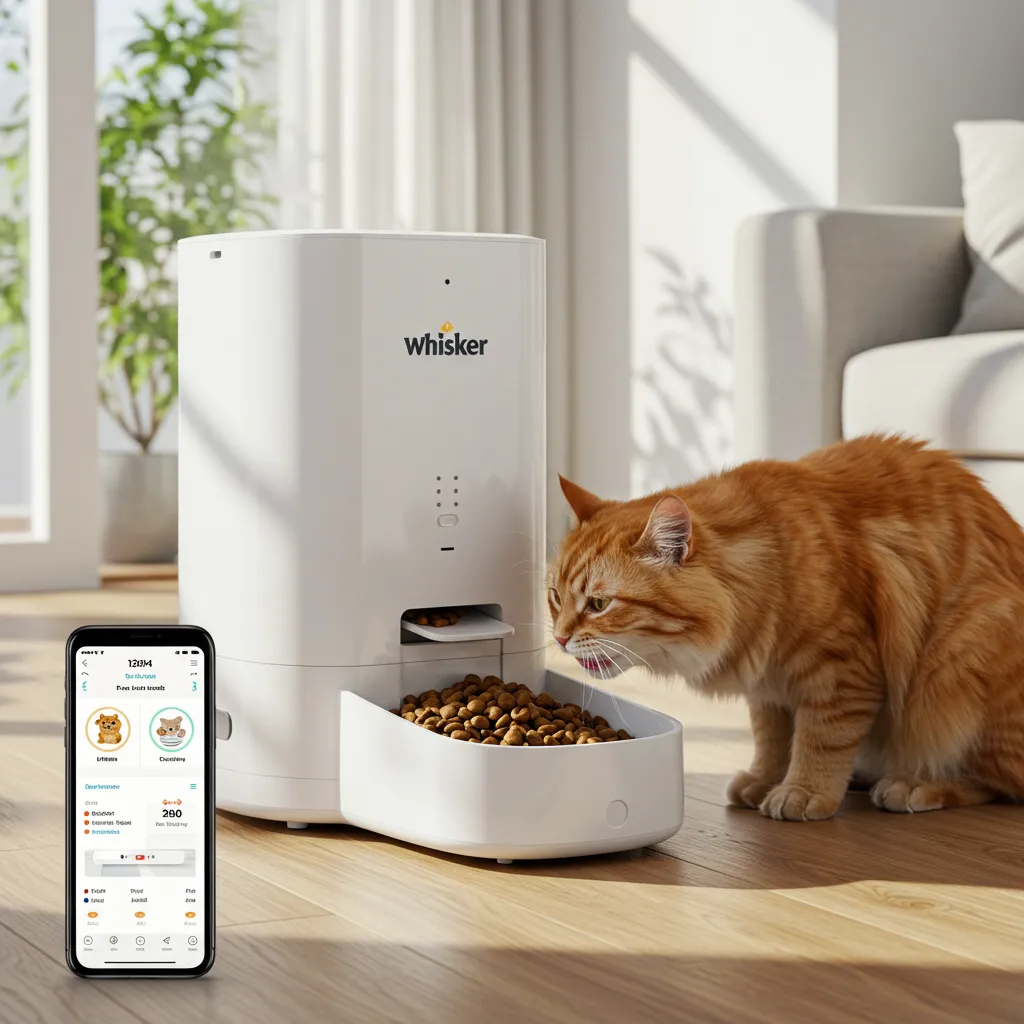
Research via user forums—avoid models with frequent disconnects. For leaving cats alone safely, battery backups are non-negotiable.
Ensuring Your Cat’s Well-Being When Left Alone
Cat well-being when left alone hinges on holistic prep. Beyond feeds:
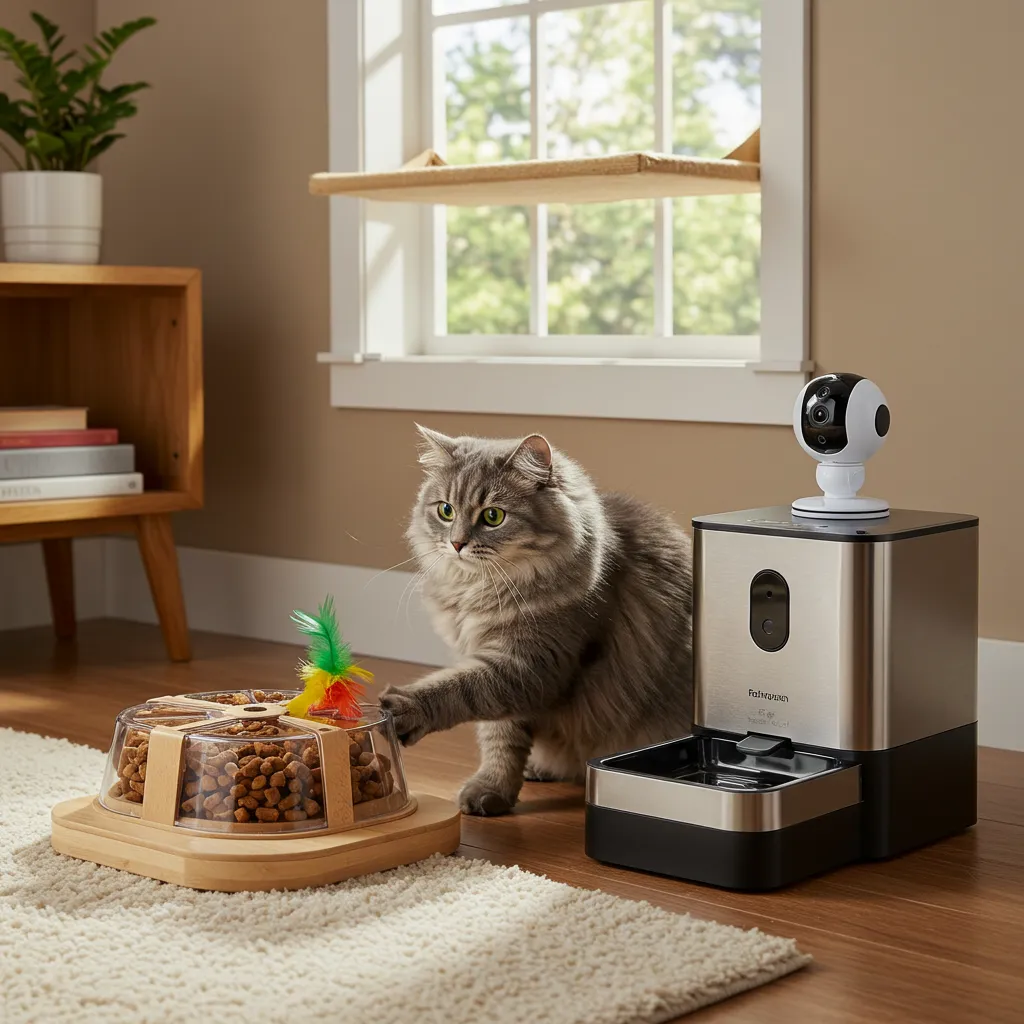
- Enrichment: Rotate toys; add cat grass for nibbles (see our cat grass care guide).
- Monitoring: Smart cams catch zoomies or sulks.
- Litter & Hygiene: Self-scoopers prevent aversions.
A vet quote sums it: “Tech feeds the body; connection nourishes the soul.” Schedule pre-trip cuddles.
Cat Feeding Mistakes to Avoid with Auto Feeders
Steer clear of:
- Skipping Tests: Run a 24-hour dry run—catch jams early.
- Ignoring Transitions: Gradual feeder intros prevent strikes.
- Over-Reliance on Tech: Always have a Plan B sitter.
- Neglecting Variety: Rotate flavors to dodge boredom.
These pitfalls tank even the best setups; heed our cat training behavior insights at cat training behavior.
Embracing Pet Tech for Cats 2025: The Future of Feline Care
2025’s pet tech for cats explodes with AI-based cat feeders predicting hunger via habit tracking and remote feeding apps for cats integrating voice commands. WiFi-enabled cat feeders like Oneisall’s cordless model offer outage-proof battery life, perfect for urban dwellers.
Trend alert: Hybrid feeders with built-in scales adjust portions dynamically—game-changers for weight management.
FAQ: Your Burning Questions on Automatic Cat Feeders Answered
How Long Can You Leave a Cat Alone with an Automatic Feeder?
Up to 48 hours for adults with backups; 24 max for kittens/seniors. Always check-ins for longer.
How Does the Cat’s Age Influence Their Nutritional Needs with an Automatic Feeder?
Kittens: Frequent, high-cal; adults: Balanced portions; seniors: Digestible, joint-focused. Adjust schedules accordingly.
Does the Cat’s Activity Level Affect the Feeding Schedule with an Automatic Feeder?
Yes—active cats need 20% more calories; program extras via app for climbers vs. loungers.
What Type of Food Is Best Suited for Automatic Feeding?
Dry for longevity; wet with cooling for hydration. Mix for optimal cat nutrition guide adherence.
How Do I Choose the Right Automatic Feeder for My Cat?
Match to food type, capacity, and smarts—prioritize WiFi and portions for multi-day reliability.
How Can I Ensure My Cat’s Well-Being When Leaving Them Alone with an Automatic Feeder?
Enrich environment, monitor remotely, and limit to 2-3 days. Toys + check-ins seal the deal.
Can I Leave My Cat Alone with an Automatic Feeder for an Extended Period of Time?
3-4 days with visits; beyond risks stress. Opt for sitters over solo marathons.
Can Auto Feeders Be Used to Store and Dispense Wet Cat Food for Extended Periods?
Yes, up to 3 days with refrigerated models like Polar; ice packs for shorter stints.
Wrapping Up: Feed Smart, Leave with Peace
Leaving cats alone doesn’t have to mean compromise—armed with the right automatic cat feeder duration, a tailored cat feeding schedule, and a dash of prep, your feline thrives while you wander. Remember: It’s about quality over quantity in those absences. Test, monitor, and love fiercely.
Ready for more? Explore our expert cat health guides on Cat Bloom Haven, from spaying a cat guide to breed spotlights like the American Shorthair cats guide. What’s your next adventure—solo trip or feeder upgrade? Drop a comment; let’s chat cat care!