Moments When Cats Forget They’re Supposed to Be Graceful: A Celebration of Clumsy, Adorable Chaos
Key Takeaways:
- Cats are physically designed for elegance, but daily life offers countless opportunities for comedic mishaps.
- These “grace fails” are usually harmless, rooted in natural instincts, over-excitement, distraction, or simple miscalculation.
- Understanding the why behind the flop transforms these moments from pure comedy into insights into your cat’s unique personality and sensory world.
- While most clumsy episodes are normal, certain patterns can indicate underlying health or environmental issues worth discussing with your vet.
We’ve all seen the reels, the compilations, the viral clips: the cat who leaps confidently for a windowsill and slides pathetically down the glass. The poised feline who, mid-stride, forgets how legs work and face-plants off the couch. The acrobat who misjudges a jump and ends up clinging desperately to the curtains like a furry, distressed pinata.
These are the moments when cats forget they’re supposed to be graceful. They are glorious, humanizing, and endlessly shareable. They remind us that beneath the sleek exterior and the reputation for liquid elegance lies a creature capable of spectacular, adorable failure. But what’s really going on in these hilarious hiccups? Are our cats just having an off day, or is there a fascinating interplay of instinct, physics, and personality at work?
This article isn’t just a list of funny fails. It’s a deep dive into the science and soul of feline clumsiness. We’ll explore the precise mechanisms that usually make cats so graceful, pinpoint the exact moments those systems glitch, and decode what your cat’s specific brand of awkwardness says about them. More importantly, we’ll help you discern the line between harmless comedy and a potential sign something is amiss.
The Anatomy of Grace: How Cats Are Built to Be Acrobats
To truly appreciate the fail, we must first understand the engineering masterpiece that is a cat. Their reputation for grace isn’t an accident; it’s written into their very blueprint.
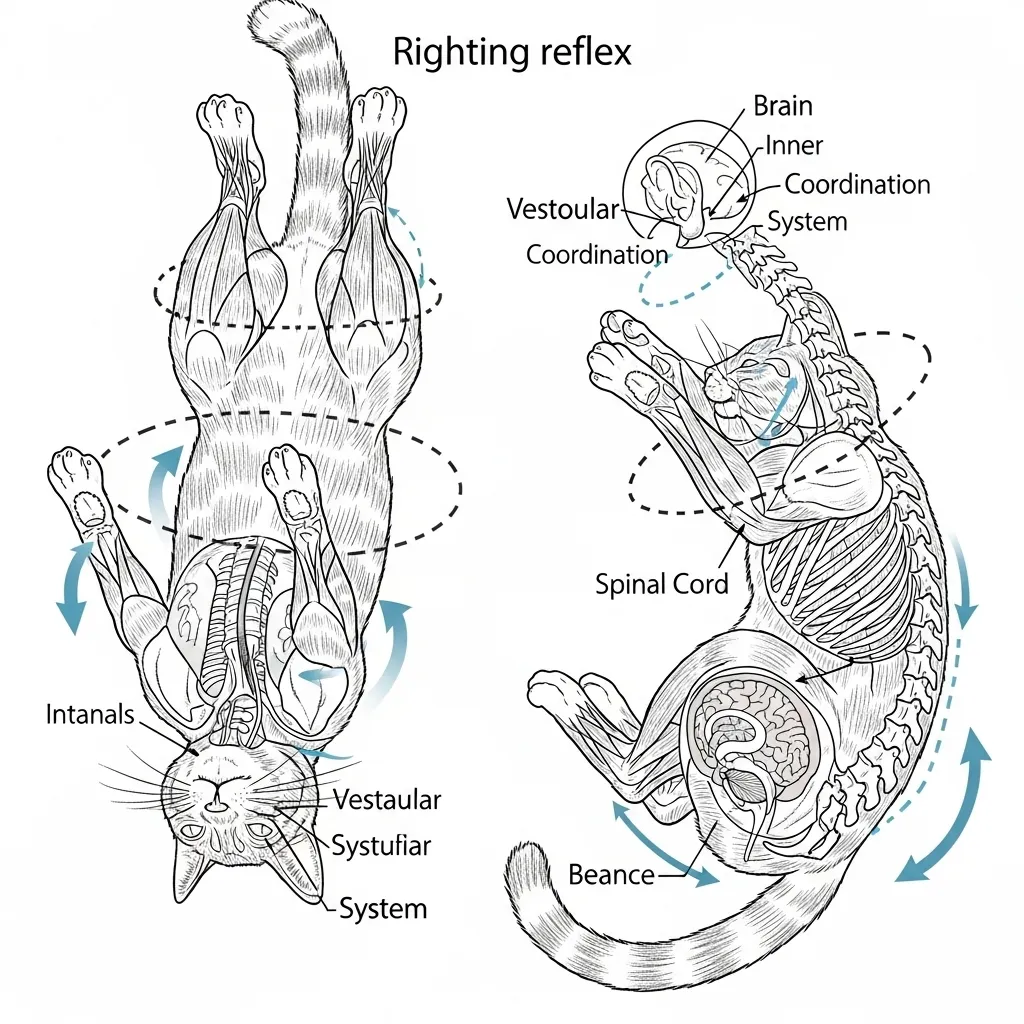
A Built-In Gyroscope: The feline vestibular system, located in the inner ear, is supremely sensitive. It’s their internal balance and spatial orientation tracker, telling them which way is up even when they’re upside down in mid-air.
The Righting Reflex: This is the star of the show. When a cat falls, its head rights itself first. Then, the flexible spine allows the front and then the back body to twist, all while “parachuting” with its legs spread to increase drag. They can often land on their feet from surprisingly low heights. Learn more about fascinating feline reflexes in our guide to What is My Cat Thinking?.
Shock Absorbers and Springs: Their hind legs are powerful coils for explosive jumping. Their forelegs are designed to absorb impact, and their lack of a rigid collarbone allows them to squeeze through any space their head can fit. Their paw pads provide cushioning and silent traction.
So, with this incredible hardware and software, how do things go so comically wrong? The failures usually happen not because the system is broken, but because the input is flawed, or the cat simply overrides it with sheer personality.
The Great Grace Glitches: 7 Classic Moments of Feline Failure (And Why They Happen)
Here are the most common scenarios where grace goes out the window, broken down with behavioral science and a healthy dose of empathy.
1. The Overzealous Pounce & Miss
The Scene: Laser-focused on a toy, insect, or sunbeam, your cat wiggles its haunches, gathers all its predatory might… and launches directly over or past the target, skidding into a wall or under a cabinet.
The Why: This is pure predator override. The adrenaline and focus of the hunt can lead to a miscalculation in distance or force. Their brain is so locked on “CAPTURE” that the fine-tuning of “TRAJECTORY” gets a little fuzzy. It’s a sign of a truly engaged, passionate hunter just one who might need to work on its aim. If your cat’s play seems constantly frantic, discover How to Calm a Hyper Cat at Night.
2. The Slippery Surface Slide
The Scene: A confident strut across a laminate floor, kitchen counter, or bathtub ledge turns into a frantic, leg-spinning scramble worthy of a cartoon character before a gentle thud against the baseboard.
The Why: This is a physics problem. Cat claws are designed for gripping textured surfaces like bark and carpet. On perfectly smooth, hard surfaces, they have no purchase. Their paw pads provide some grip, but at high speed or with a sharp turn, it’s like trying to run on ice. It’s a humble reminder that our modern environments aren’t always built for feline physics.
3. The Mid-Grooming Topple
The Scene: Serenely contorted into a perfect yogic pose for a thorough belly lick, your cat loses its balance. It rolls slowly, almost poetically, off the couch cushion or bed edge, landing with a soft, bewildered thump.
The Why: This is a failure of proprioception the body’s awareness of where it is in space. In the zen-like state of grooming, that awareness can momentarily lapse. They’re so deeply invested in the task that they forget they’re on the edge of an abyss (or a 2-foot drop). It’s the feline equivalent of dozing off in a chair and startling awake.
4. The “I Meant to Do That” Bailout
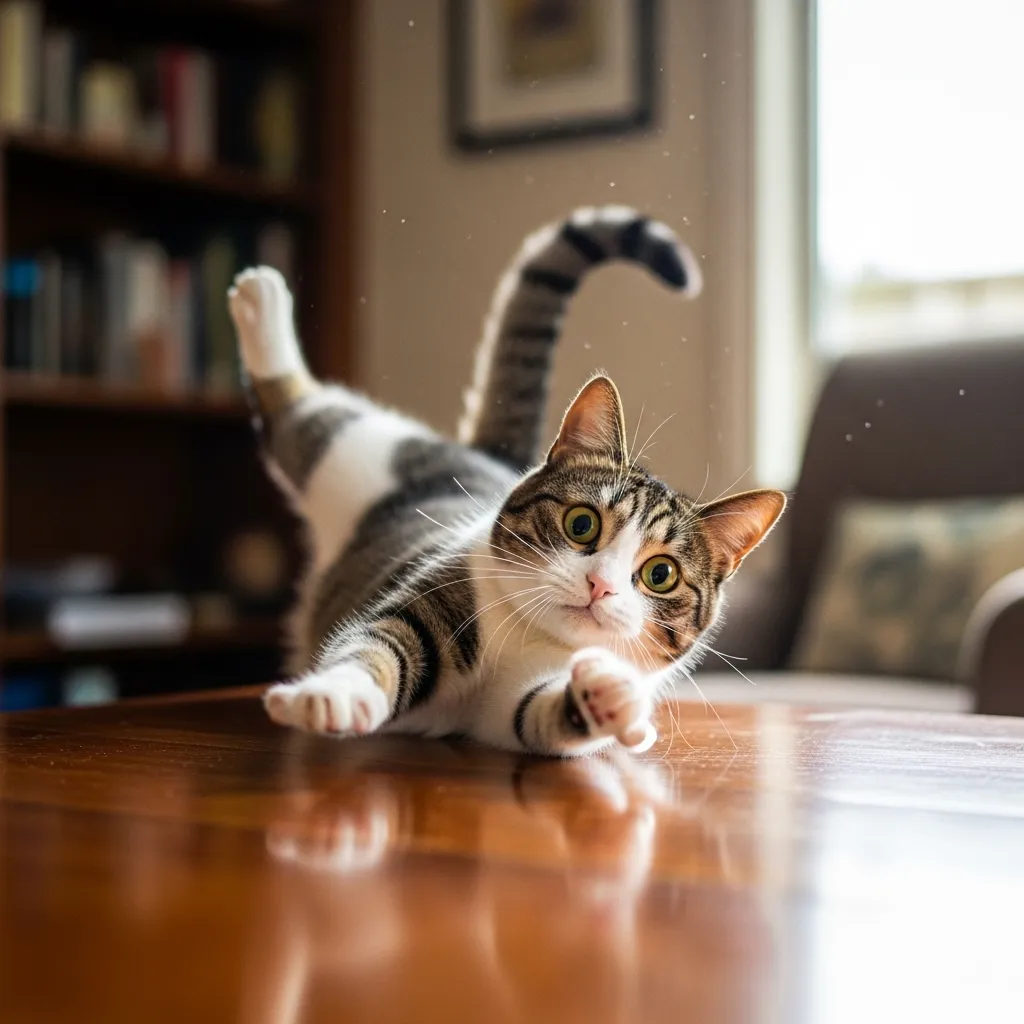
The Scene: A misjudged jump results in your cat hanging by its front claws from a shelf, drapes, or your leg. There’s a pause a moment of suspended disbelief before they either haul themselves up or drop down, immediately followed by intense, nonchalant grooming as if to say, “I planned this entire sequence.”
The Why: This is an error in load-bearing calculation. The cat accurately judged the distance to the surface but misjudged its stability or their own ability to stick the landing. The post-fail grooming is a classic displacement behavior a way to relieve the mild stress of the mishap and regain composure. Understanding these calming signals is key to Building Trust with Your Cat.
5. The Sleepy Stumble
The Scene: Waking abruptly from a deep sleep, your cat stands up to walk away and its legs seem to forget their agreement, resulting in a wobbly, cross-stepping stumble.
The Why: Literally, their nerves are still asleep. Just like humans can be groggy, a cat’s neural pathways from brain to muscles need a moment to fully boot up after a deep sleep cycle. It’s a vulnerable and endearing glimpse into their private state of being.
6. The Braincell Disconnect (Common in Orange Tabbies, but Universal)
The Scene: Running full-tilt through the house for no apparent reason the infamous “zoomies” your cat takes a corner too fast, fails to account for a rug, and slides into a doorframe. Momentum continues, but the body does not.
The Why: This is the pinnacle of exuberance overruling coordination. During frenetic random activity periods (FRAPs), the “zoomies” are a release of pent-up energy. The thinking, calculating part of the brain is playing second fiddle to the pure “GO” signal. The result is often a glorious wipeout. Learn how to harness this energy positively with Cat Enrichment Ideas That Look Expensive.
7. The Distracted Demise
The Scene: A bird outside the window, a sudden noise, or the sound of a can opening causes your cat to whip its head around while in a precarious position, leading to an immediate and unplanned descent.
The Why: Hyperfocus is a double-edged sword. A cat’s senses are incredibly tuned, and a novel stimulus can trigger a full-system interrupt. The head turn shifts their center of gravity, and if they were on the edge, physics takes over. It’s a reminder of how powerfully driven they are by their senses.
When Is It More Than Just Clumsy? Signs to Watch For
While most grace fails are benign, a sudden or dramatic increase in clumsiness can be a red flag. Here’s when to consider a deeper look:
- Consistent Misjudging: Frequently missing jumps they used to make easily.
- Wobbly Gait: Stumbling, swaying, or seeming “drunk” during normal walking.
- Reluctance to Jump: Suddenly choosing to avoid heights they previously enjoyed.
- Head Tilting or Nystagmus: A persistent head tilt or unusual, jerky eye movements.
- Visible Discomfort: Crying out, limping, or showing signs of pain after a fall.
These symptoms could point to several issues, from ear infections disrupting their vestibular system, to arthritis causing pain and stiffness, to more serious neurological conditions. If you notice persistent issues with balance or mobility, especially in senior cats, our Senior Cat Care Guide is an essential resource, but a vet visit is crucial.
Embracing the Flop: How to Love Your Cat’s Clumsy Side (Safely)
- Laugh With Them, Not At Them: Your reaction matters. A gentle, affectionate chuckle is fine; loud, pointing laughter can shame or stress them. Follow up with a calming pet or a quiet, “Silly kitty.”
- Make Your Home a Safe Crash Pad: Provide soft landing zones near favorite perches. Use area rugs on slippery floors. Ensure climbing trees and shelves are stable and have grippy surfaces. Get inspiration for a safe, stylish space from our Minimalist Home Inspiration for Cat-Friendly Design.
- Keep Them Agile: Encourage controlled, mindful play with wand toys that promote leaping and pouncing with accuracy. This helps maintain their muscle tone and coordination.
- Check Their Hardware: Regular vet check-ups can catch early signs of arthritis or vision loss. Keep claws appropriately trimmed (not declawed) so they can get proper grip. Learn the gentle approach in How to Groom a Cat That Hates It.
- Celebrate the Imperfection: These moments are a gift. They break the aloof, perfect predator stereotype and reveal a relatable, vulnerable, and utterly authentic creature. Record them, share them, and cherish them as part of your cat’s unique story.
Frequently Asked Questions (FAQ)
Q: Is my cat embarrassed when they have a graceful fail?
A: Cats don’t experience complex social emotions like human embarrassment. They may feel a brief moment of stress or surprise, which is why they often immediately groom or act aloof these are coping mechanisms to regain control and composure.
Q: Do certain cat breeds have more ‘grace fails’ than others?
A: Yes, to an extent. Large, heavy breeds like Maine Coons or Norwegian Forest Cats can be more prone to audible landings or cautious jumps. Conversely, extremely agile breeds like Bengals may attempt riskier maneuvers, leading to more dramatic fails. Explore the personality of one notoriously bold breed in our Bengal Cat Personality guide. Breeds with physical traits like the short legs of Munchkins or the flat faces of Persians may also have different relationships with balance and spatial awareness.
Q: My kitten is incredibly clumsy. Is this normal?
A: Absolutely. Kittens are learning to use their bodies! Their coordination, proprioception, and judgment are all under construction. This clumsy phase is essential for learning limits and is typically outgrown with time and practice.
Q: Should I help my cat if they fall or get stuck?
A: Unless they are in immediate danger (e.g., hanging from a high place they can’t get down from), pause for a moment. Often, they will self-correct. Rushing in can startle them and make the situation worse. If help is needed, move calmly and quietly.
Conclusion: The Beauty of the Blunder
The moments when cats forget they’re supposed to be graceful are not flaws in their design; they are highlights of their character. They are reminders that these majestic, efficient predators are also goofy, distracted, over-enthusiastic, and imperfect beings sharing our homes. They teach us to find joy in the stumble, laughter in the misstep, and love in the authentic, unscripted blunder.
By understanding the science behind the slip and the personality behind the pounce-fail, we deepen our bond with them. We learn to curate a home that allows for safe failure and to recognize when a stumble might be a whisper for help. So, the next time your feline friend executes a flawless belly-flop off the sofa, take a moment. Appreciate the complexity of the creature, the comedy of the moment, and the unique, wonderful story you are witnessing together.
For more insights into feline behavior, from the hilarious to the perplexing, and to ensure your cat’s health and happiness at every stage, explore our library of expert guides at Cat Bloom Haven. Discover everything from Cat Sleeping Positions and Their Meanings to How to Train Your Cat Without Punishment.