Cats With Surprisingly Expressive Faces: Decoding Their Silent Conversations
Key Takeaways:
- Cat facial expressions involve complex muscle groups comparable to human expressions
- Breed-specific features significantly influence expressive capabilities
- Micro-expressions last only fractions of seconds but convey specific emotional states
- Environmental enrichment enhances natural expressiveness
- Understanding feline expressions improves bonding and early health problem detection
Introduction: The Unspoken Language of Feline Faces
For centuries, cats have been misunderstood as aloof and inscrutable creatures, their emotions hidden behind enigmatic stares. Yet those of us who share our lives with these fascinating animals know better. Behind those luminous eyes and twitching whiskers lies a rich vocabulary of expression that rivals our own. Cats with surprisingly expressive faces aren’t just showing random muscle movements they’re engaging in sophisticated nonverbal communication that we’re only beginning to fully appreciate.
The truth is, feline facial expressions represent one of the most complex communication systems in the animal kingdom. From the subtle twitch of an ear to the slow blink that signals trust, cats speak volumes without uttering a single meow. This comprehensive guide will help you decode this silent language, exploring why some cats seem more expressive than others, how breed characteristics influence their “face talk,” and practical ways to enhance your connection through understanding these subtle signals.
The Science Behind Feline Expressions: More Than Just a “Poker Face”
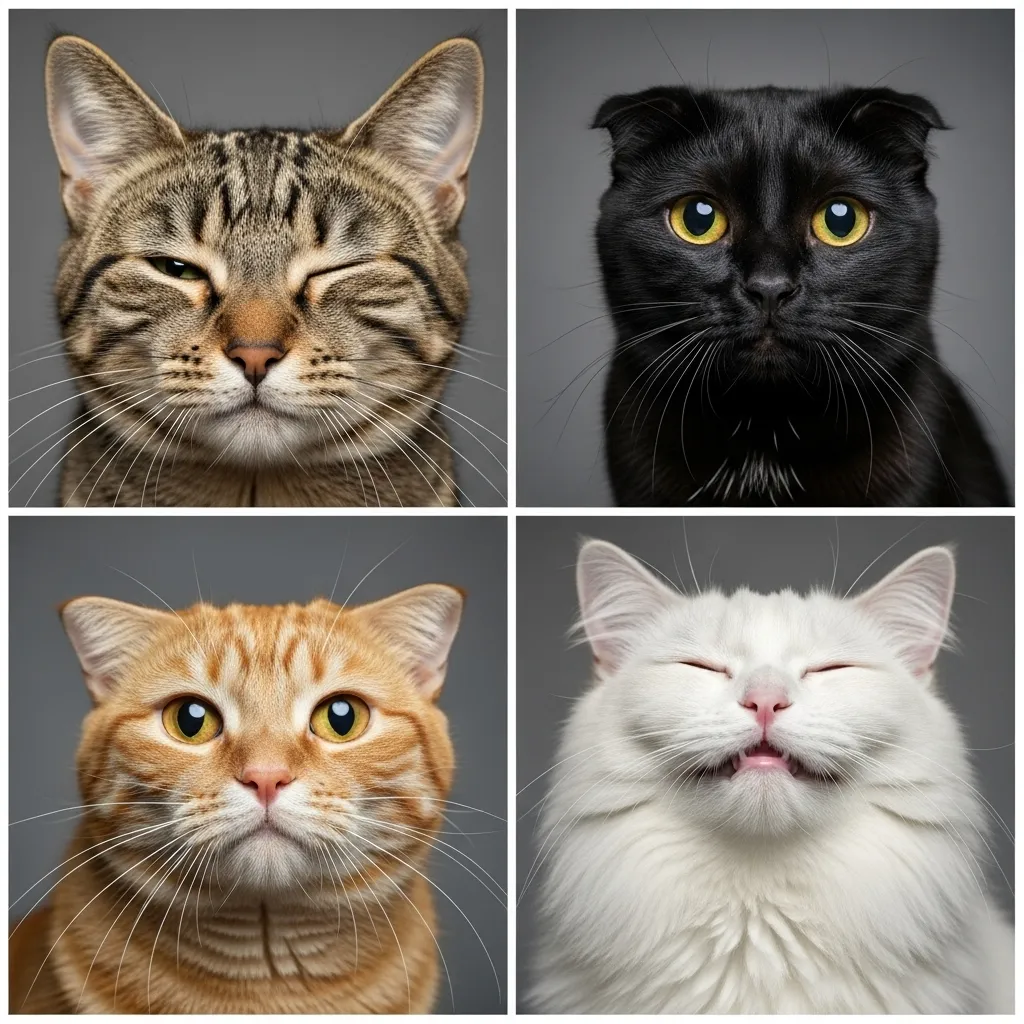
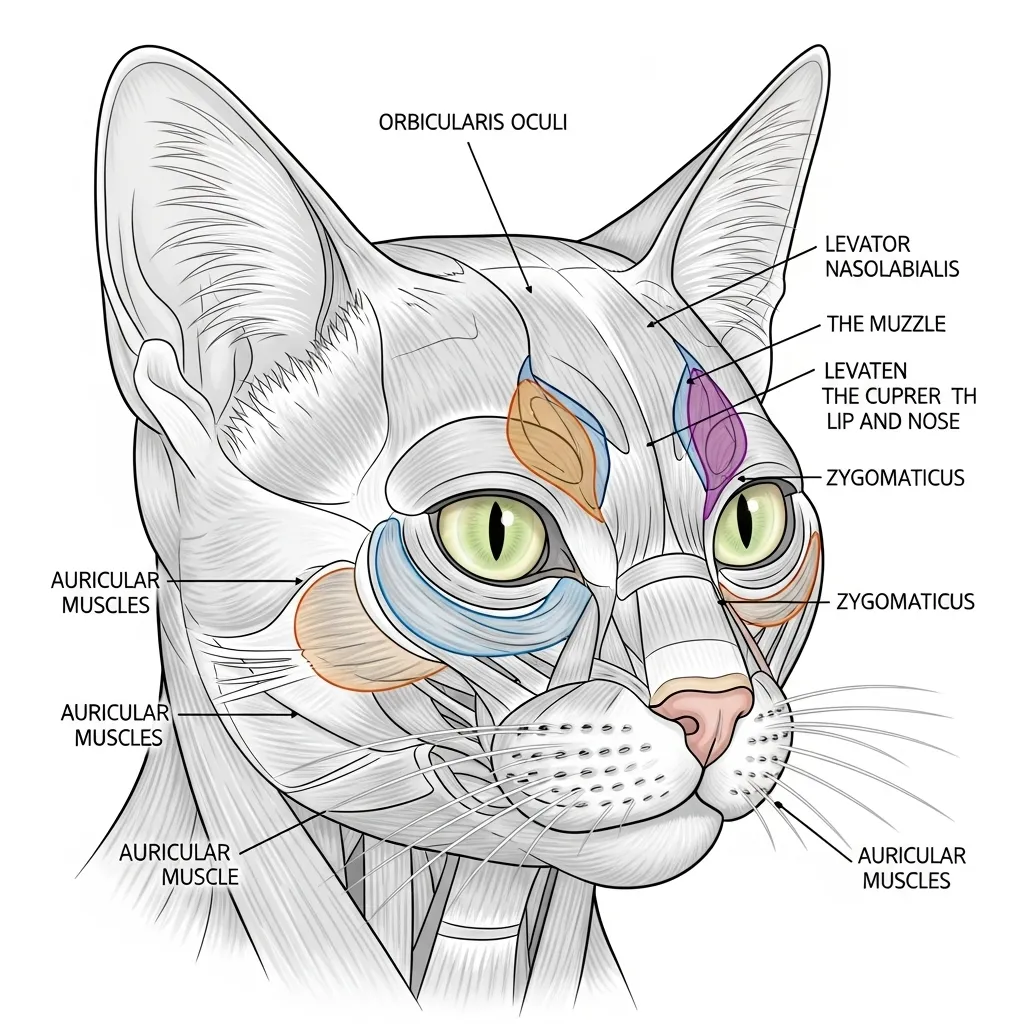
Recent scientific studies have revolutionized our understanding of feline expressiveness. Research published in Animal Cognition reveals that cats possess approximately 27 facial muscle movements, compared to humans’ 44 a significant number considering their smaller facial structure. More importantly, these muscles are controlled by similar neural pathways to those governing human emotional expressions.
The Feline Facial Action Coding System (CatFACS)
Behavioral scientists have developed a specialized system called CatFACS to analyze and categorize cat facial movements. This system identifies specific “action units” corresponding to muscle movements that combine to create recognizable expressions:
- Orbital tightening: Narrowing of the eye opening indicates discomfort or potential aggression
- Whisker positioning: Forward indicates curiosity/engagement, backward signals fear/defensiveness
- Ear orientation: The most mobile feature, capable of nearly 180-degree rotation
- Lip and nose movements: Subtle but telling indicators of emotional state
What makes this system particularly fascinating is that many of these expressions occur in fractions of seconds what researchers call “micro-expressions” that are easily missed by the untrained eye but convey specific emotional information to other cats and observant humans.
Breed Spotlight: Cats With Naturally Expressive Features
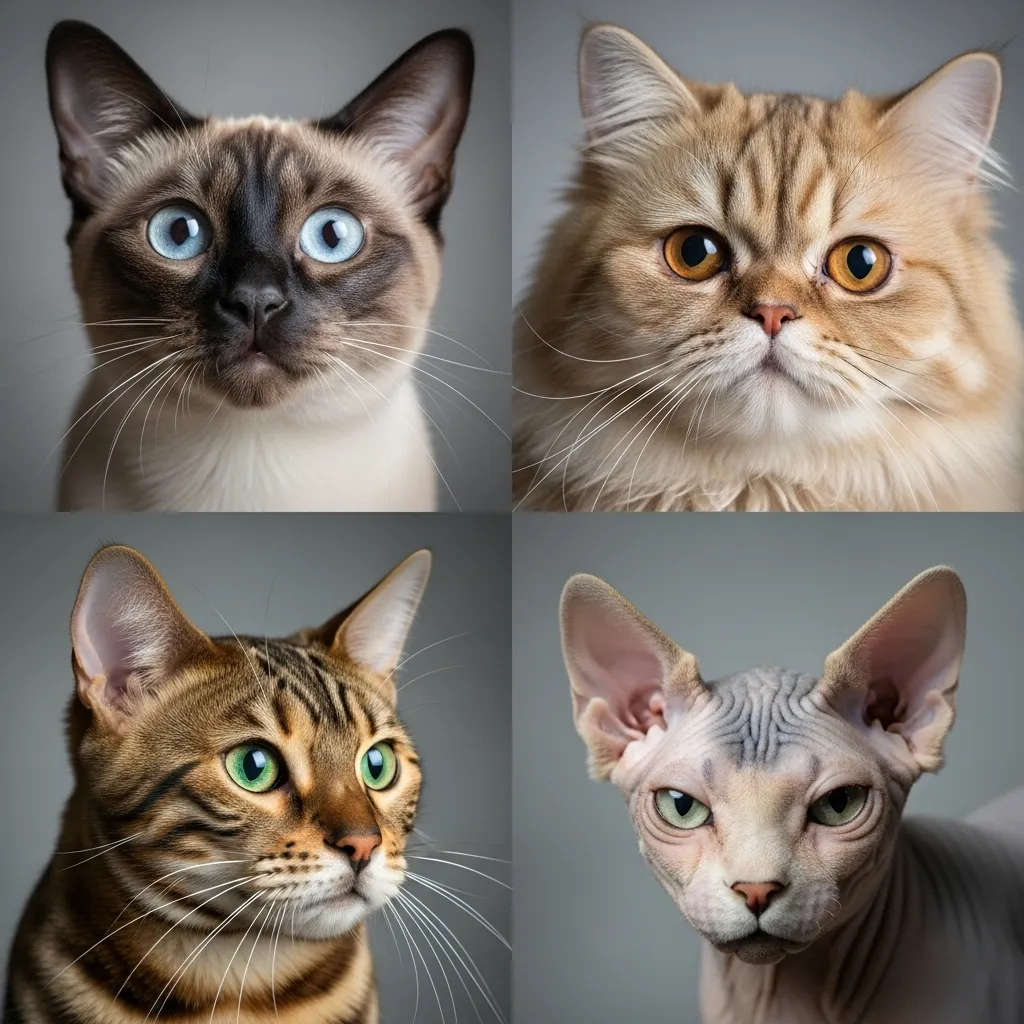
While all cats are capable of facial expression, certain breeds possess physical characteristics that make their emotions particularly readable. Understanding these breed-specific traits helps us appreciate why some cats wear their hearts on their furry sleeves.
Oriental Breeds: The Drama Queens
Siamese and Oriental Shorthairs possess wedge-shaped heads, large ears, and almond-shaped eyes that create a naturally dramatic canvas for expression. Their vocal nature extends to their faces, with exaggerated eye widening and ear positioning that makes their moods unmistakable. As our guide on Siamese cat personality explains, these cats form intense bonds and use their expressive capabilities to maintain constant communication with their favorite humans.
Round-Faced Breeds: The Open Books
Persians, Exotic Shorthairs, and British Shorthairs have brachycephalic (flat) faces with large, round eyes that naturally appear somewhat surprised or contemplative. This facial structure limits some muscle movements but enhances the expressiveness of their eyes, which seem to visibly soften when content or widen when concerned. Their relatively immobile faces make subtle changes particularly meaningful.
“Wild-Type” Breeds: The Subtle Communicators
Bengals, Abyssinians, and Egyptian Maus retain more of their wild ancestor facial structures, with pronounced muzzle definition and alert ear placement. Their expressions tend to be more subtle but incredibly precise—a slight narrowing of eyes or twitch of whiskers conveys specific information. These cats often use what researchers call “reduced expressions” that require careful observation to interpret correctly.
Large-Eared Breeds: The Emotion Amplifiers
Devon Rex, Cornish Rex, and Sphynx cats have disproportionately large ears relative to their heads, creating an almost caricature-like expressiveness. Their ear movements are particularly pronounced and readable, acting as emotional amplifiers. The lack of fur on Sphynx cats further exposes subtle skin movements and muscle twitches that would be hidden in other breeds.
Decoding Common Feline Expressions: A Practical Guide
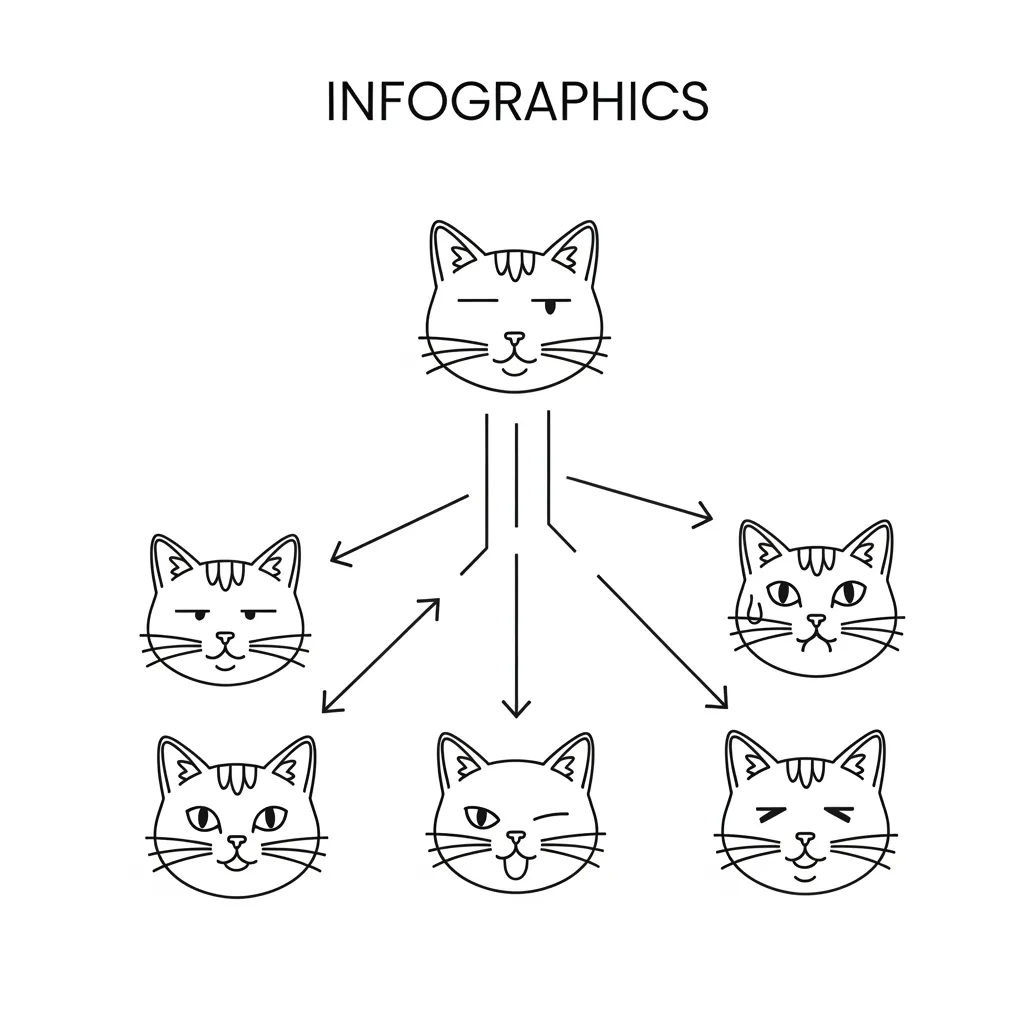
Understanding what specific expressions mean requires context, but certain configurations reliably indicate particular emotional states or intentions. Here’s your practical field guide to reading your cat’s face.
The Contentment Spectrum
Soft-Eyed Bliss: Eyes half-closed or slowly blinking, ears in neutral forward position, whiskers relaxed and slightly forward. This is the feline equivalent of a smile. When your cat gives you this look, they’re signaling trust and comfort. You can reciprocate with a slow blink of your own a communication technique proven to strengthen human-cat bonds.
The “Love Gaze”: Similar to soft-eyed bliss but with more focused attention on a specific person or object. Research shows that when cats maintain this gaze with their humans, oxytocin levels increase in both species—the same “bonding hormone” that strengthens human relationships.
The Alertness Continuum
Curious Engagement: Eyes fully open but not overly wide, ears rotated forward like satellite dishes, whiskers fanned forward. Your cat is gathering information about something interesting but non-threatening. The mouth may be slightly open to facilitate flehmen response (analyzing scents through the vomeronasal organ).
High Alert: Eyes wide with dilated pupils (even in good light), ears fully forward and possibly twitching, whiskers stiff and maximally forward. This indicates heightened interest that could quickly tip into either playful pouncing or defensive posture depending on the stimulus.
The Discomfort Scale
Mild Annoyance: Ears rotated slightly sideways or back (sometimes called “airplane ears”), eyes narrowing intermittently, whiskers pulled back against face. This is your cat’s way of saying “I’m tolerating this but I’m not happy about it.” Often seen during unwanted petting or when their personal space is invaded.
Defensive Posturing: Ears fully flattened against head (“hellcat ears”), eyes narrowed to slits, whiskers pressed back, lips possibly drawn back to show teeth. This is a clear “back off” signal that usually precedes aggression if the perceived threat doesn’t retreat.
Fearful Anxiety: Eyes wide with dilated pupils, ears rotated back but not fully flattened, whiskers stiff and angled backward. This expression often accompanies a crouched body posture and indicates the cat feels threatened but is evaluating whether to flee or fight.
The “Cat Thoughts” Indicators
Problem-Solving Face: A slight head tilt, ears alternately twitching, eyes focused but occasionally blinking. You’re witnessing cognitive processing. This expression often precedes a clever solution to a puzzle toy or an innovative method of reaching that tempting treat.
Dreaming Expressions: During REM sleep, you might see whisker twitches, ear movements, and even subtle lip and eye movements. Research suggests cats dream about their daily experiences, and these micro-expressions might reflect their dream content.
Environmental Factors That Enhance Expressiveness
A cat’s environment significantly impacts how expressive they become. Just as humans in supportive environments feel safe showing emotions, cats need certain conditions to feel comfortable expressing themselves fully.
Safety as Foundation
Cats only show their full range of expressions when they feel completely secure. A constantly anxious or stressed cat will either maintain a neutral “poker face” as a protective measure or remain stuck in fearful expressions. Creating a predictable environment with consistent routines, safe hiding places, and no sudden threats allows their natural expressiveness to flourish.
Our guide on creating a calm and enriching cat home environment offers practical strategies for building this essential foundation of security.
Socialization Windows
Kittens have a critical socialization period between 2-7 weeks when exposure to various people, gentle handling, and positive experiences shapes their future comfort with expression. Well-socialized cats maintain more readable faces throughout their lives because they learned early that communication leads to positive outcomes.
The Human-Cat Bond Quality
Studies show that cats with secure attachments to their humans exhibit more frequent and varied facial expressions. They’ve learned that their human responds appropriately to their communications, creating a reinforcing feedback loop. This is particularly evident in the increased frequency of slow blinking—a behavior cats primarily direct toward trusted humans.
Health and Comfort
A cat in pain or discomfort often shows reduced facial expression or displays subtle “pain faces” that many owners miss. These include partially closed eyes even when awake, flattened whiskers, and ears held slightly back and lowered. Regular wellness checks help ensure physical comfort that allows natural expressiveness.
Training Yourself to See More: Building Observation Skills
Many cat expressions are subtle and fleeting. Training yourself to notice them requires developing specific observation skills. Here’s a practical exercise regimen for becoming fluent in “cat face.”
The Daily Five-Minute Focus Session
Set aside five minutes daily to simply observe your cat without interacting. Watch for:
- Ear micro-movements in response to distant sounds
- Whisker position changes as they investigate objects
- Eye shape variations in different lighting conditions
- Nostril flaring frequency (indicates scent investigation)
- Subtle skin movements around eyes and mouth
Video Analysis Technique
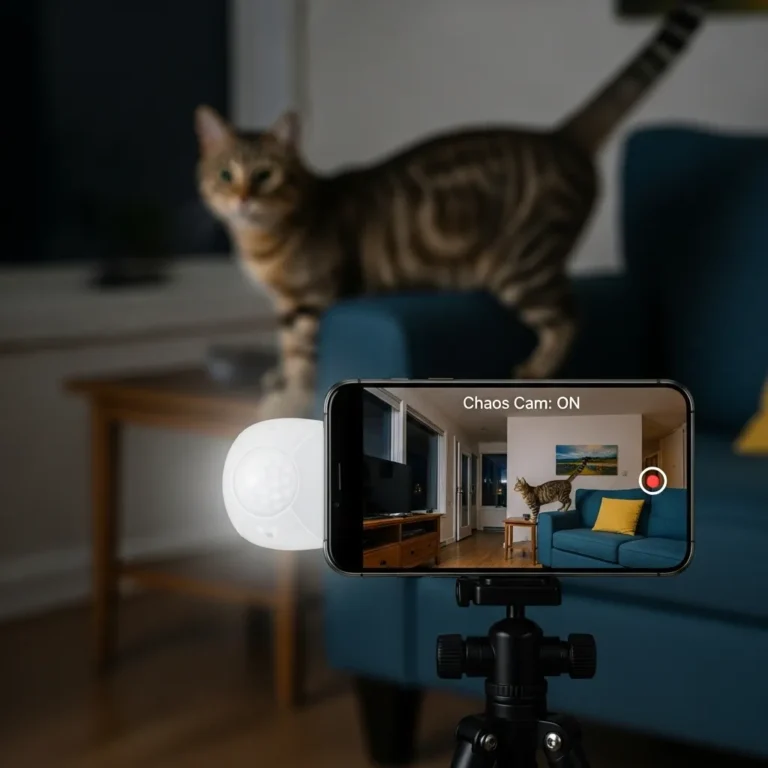
Record short videos of your cat in different situations, then review in slow motion. You’ll be amazed at the brief expressions you missed in real time. This is particularly useful for identifying those fleeting micro-expressions that convey specific information.
Context Journaling
Keep a simple log noting:
- Time of day
- What preceded the expression
- The exact facial configuration
- What followed the expression
Over time, patterns emerge that reveal your individual cat’s unique “dialect” of facial communication.
Comparison Across Multiple Cats
If you have multiple cats or can observe cats in shelters, notice how expressions differ between individuals facing similar situations. This builds your general understanding while appreciating individual variation.
When Expressiveness Signals Problems: Health and Behavioral Red Flags
While expressive faces are generally positive, certain patterns can indicate underlying issues requiring attention.
Sudden Reduction in Expressiveness
A typically expressive cat who suddenly becomes “flat-faced” or maintains a single expression (often neutral or slightly tense) may be experiencing:
- Chronic pain (dental issues, arthritis, internal discomfort)
- Depression or chronic stress
- Neurological issues affecting facial muscles
- Vision or hearing decline changing their interaction with environment
Asymmetrical Expressions
One side of the face showing different muscle tone or mobility than the other can indicate:
- Neurological conditions
- Dental pain on one side
- Ear infections affecting facial nerves
- Previous injury with nerve damage
“Frozen” Expressions Maintained Too Long
Cats typically shift expressions frequently in response to changing stimuli. A face locked in one configuration (especially if it’s a tense, fearful, or pained expression) for extended periods signals significant distress requiring investigation.
Excessive “Startle” Expressions
If your cat frequently displays wide-eyed, fearful expressions to normal household stimuli they previously ignored, they may be experiencing:
- Generalized anxiety disorder
- Hyperthyroidism (can cause increased startle response)
- Cognitive decline causing confusion
- Vision/hearing changes making familiar things seem strange
Our resource on cat behavior changes that signal illness provides deeper insight into when to seek veterinary guidance.
Enhancing Your Cat’s Natural Expressiveness: Practical Strategies
You can create an environment that encourages your cat to express themselves more fully and frequently.
Response Reinforcement
When you notice an expression, respond appropriately:
- Return slow blinks when your cat gives them
- Respect “back off” signals by giving space
- Engage with curious expressions by investigating what caught their interest
- Comfort fearful expressions by removing stressors when possible
This teaches your cat that their expressions effectively communicate their needs and feelings.
Environmental Enrichment
A stimulating environment gives cats more to react to, exercising their expressive “vocabulary.” Include:
- Puzzle feeders that create problem-solving expressions
- Window perches with bird feeders outside to stimulate curious/alert faces
- Variety of textures and smells to investigate
- Interactive toys that elicit playful expressions
Discover more cat enrichment ideas that look expensive but aren’t for budget-friendly stimulation.
Positive Social Experiences
Gentle, respectful handling and play sessions strengthen trust, making cats more willing to express themselves. Pay particular attention to your cat’s preferences regarding petting locations, pressure, and duration—respecting these preferences builds communication confidence.
Mirroring Exercises
Subtly mirror your cat’s relaxed expressions. When they show soft-eyed contentment, relax your own face and body. This nonverbal “conversation” deepens bonds and encourages further expression.
The Photography of Expression: Capturing Those Elusive Moments
Cat expressions are often fleeting, but with some technique, you can capture these magical moments.
Equipment and Settings
- Use continuous shooting mode to capture expression sequences
- Maintain fast shutter speed (1/250s or faster) to freeze subtle movements
- Get at eye level for the most engaging perspective
- Use natural light when possible to avoid startling flashes
The “Expression Bait” Technique
Certain stimuli reliably elicit specific expressions:
- Rustling bags often produce curious/alert faces
- Gentle chin scratches frequently yield blissful expressions
- Novel objects (placed safely) stimulate investigative faces
- Catnip (for responders) creates amusingly goofy expressions
Reading Before Shooting
Watch for the subtle “pre-expression” cues that signal a more pronounced expression is coming:
- Ear rotation often precedes full facial changes
- Whisker positioning shifts before eye changes
- Body stilling often concentrates before focused expressions
Cross-Species Communication: Bridging the Facial Expression Gap
Humans and cats have different natural expressions, but we can learn to “translate” between species.
Human Expressions Cats Misinterpret
- Direct prolonged eye contact (threatening in cat language)
- Smiling with teeth showing (can resemble aggressive facial display)
- Leaning forward with face (invasion of personal space)
Cat Expressions Humans Commonly Misread
- Slow blinking (often missed or misinterpreted as sleepiness)
- Slight ear flattening (missed until it becomes pronounced)
- Flehmen response (sometimes mistaken for “disgust” face)
Building a Shared Vocabulary
Through consistent interaction, you and your cat can develop unique shared signals:
- Your particular head tilt that means “come here”
- Their specific face when asking for play versus food
- Mutual understanding of “enough” signals
This process mirrors how cats choose their favorite person through consistent, positive communication.
Breed-Specific Expression Guides: What to Expect
Understanding breed tendencies helps set realistic expectations for your cat’s expressive style.
Highly Expressive Breeds
Siamese: Expect dramatic, almost theatrical expressions that clearly communicate every mood shift. Their vocalizations often accompany facial changes.
Oriental Shorthairs: Similar to Siamese but with even larger ears that amplify emotional expression through dramatic positioning.
Devon/Cornish Rex: Their large ears and prominent cheekbones create exaggerated expressions that are particularly readable.
Sphynx: Without fur to obscure muscle movements, every subtle expression is visible. They tend toward comically dramatic faces.
Subtle but Precise Expressers
Bengals: Expressions are precise and meaningful but not exaggerated. Learn to read slight whisker movements and ear micro-positions.
Russian Blues: Known for their “smiling” expression created by unique mouth structure. Their emotions show primarily through eye softening or widening.
British Shorthairs: Their round faces limit mobility, so focus on eye expression changes and slight ear rotations.
The “Strong and Silent” Types
Maine Coons: Their large size and lion-like facial furnishings can make expressions seem more subdued. Look for gentle eye changes and ear twitches.
Norwegian Forest Cats: Similar to Maine Coons, with expressions that are majestic rather than dramatic. Focus on whisker positioning.
Ragdolls: Their relaxed nature extends to their faces. Expressions are soft and subtle learn to recognize their particular “contentment face.”
For more on specific breeds, explore our complete guide to cat breeds and personalities.
FAQ: Answering Common Questions About Cat Expressions
Q: Why does my cat sometimes stare at me with a blank expression?
A: This “neutral face” is actually a sign of comfort. In cat social dynamics, maintaining a neutral expression around someone indicates trust they don’t feel the need to display defensive or threatening expressions. It’s the feline equivalent of relaxed companionship.
Q: Do cats actually smile?
A: Not in the human sense of smiling to express happiness. However, what we interpret as a “cat smile” slightly squinted eyes, relaxed mouth, ears in neutral position does indicate contentment. Some breeds, like Russian Blues, have natural facial structures that create a permanent smiling appearance.
Q: Why does my cat make a weird face with mouth open after smelling something?
A: This is the flehmen response. Your cat is transferring scents to their vomeronasal organ (in the roof of the mouth) for detailed analysis. It’s not a “disgust” face but rather an intense investigative expression, often seen when encountering new scents or pheromones.
Q: Can I make my cat more expressive?
A: You can create conditions where your cat feels safe expressing themselves fully. This includes providing security, responding appropriately to their expressions, offering enrichment, and building trust through positive interactions. However, individual personality and breed characteristics will always influence their natural expressiveness.
Q: Why does my cat blink slowly at me?
A: Slow blinking is a cat’s way of showing they feel safe and comfortable with you. In cat language, closing their eyes in your presence demonstrates trust (since they’re making themselves vulnerable). Returning the slow blink strengthens your bond.
Q: Should I be concerned if my cat’s expressions suddenly change?
A: Any sudden, dramatic change in expressive patterns warrants attention. Reduced expressiveness, asymmetrical expressions, or persistent tense/fearful expressions can indicate health issues, pain, or significant stress. Consult with your veterinarian if you notice abrupt changes.
Q: Do cats understand human facial expressions?
A: Research indicates cats can distinguish between human smiles and frowns, and they often respond differently to these expressions. They’re particularly attuned to their primary human’s facial expressions and may adjust their behavior accordingly, though their understanding is likely simpler than human-to-human recognition.
Conclusion: The Joy of the Feline Face
The world of cats with surprisingly expressive faces is a rich landscape of silent communication waiting to be understood. From the dramatic expressions of Siamese to the subtle whispers of British Shorthairs, each cat offers a unique window into their emotional world through their facial vocabulary.
Learning this language does more than satisfy our curiosity it fundamentally transforms our relationships with these fascinating creatures. When we understand that a slight ear twitch means curiosity, that slow blinking signals trust, or that narrowed eyes request space, we move from being mere caretakers to becoming true companions in a cross-species dialogue.
The most beautiful aspect of this discovery journey is its reciprocity. As we become better at reading our cats’ faces, they often become more expressive with us. They learn that their subtle communications are received and respected, creating a positive feedback loop of understanding that deepens bonds in ways words never could.
Start your observation today. Set aside those five minutes of focused attention. Watch for the micro-expressions. Learn your individual cat’s unique dialect. The silent conversation you’ll discover may be one of the most rewarding relationships of your life.
Ready to dive deeper into understanding your feline friend? Explore our complete library of cat behavior and care guides at Cat Bloom Haven. From decoding tail language to creating the perfect enrichment environment, we’re here to help you build the most rewarding relationship possible with your expressive companion.