Cats vs Cardboard Boxes: An Ongoing Mystery
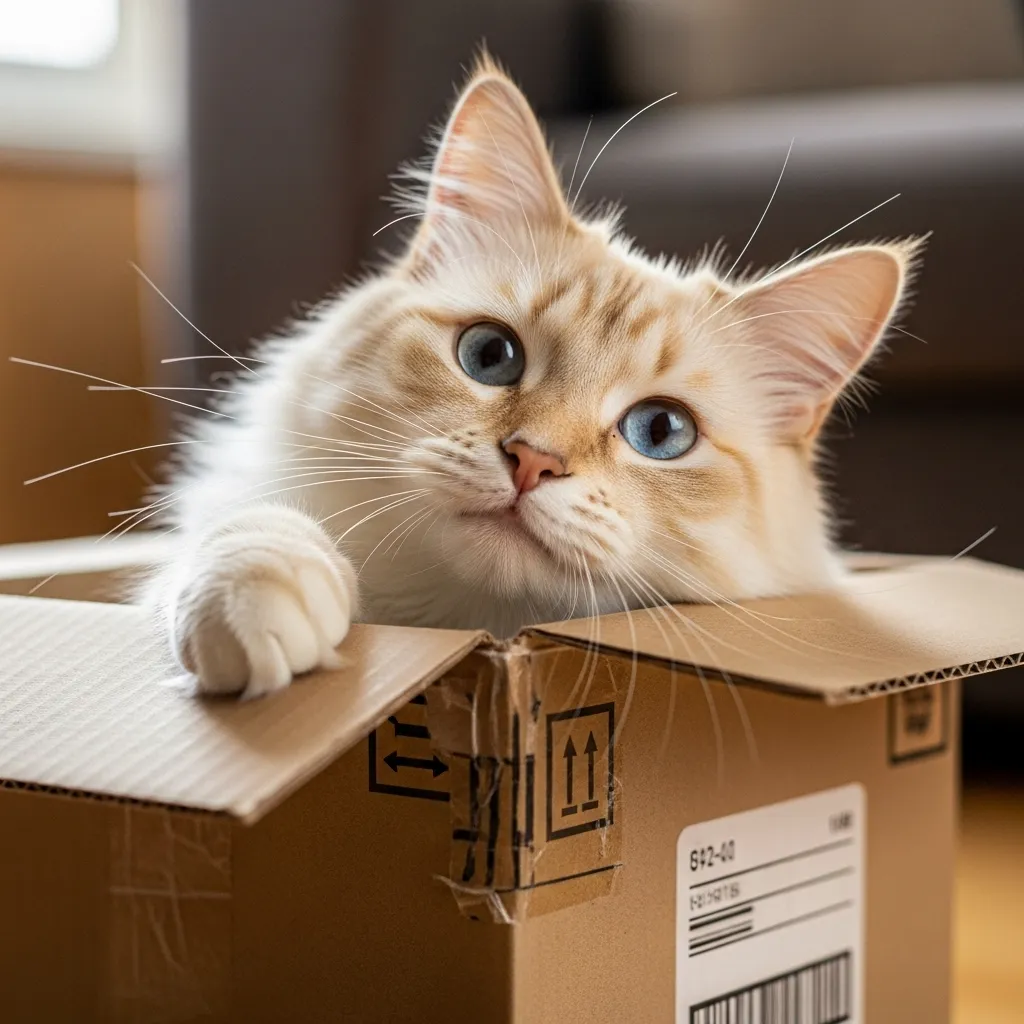
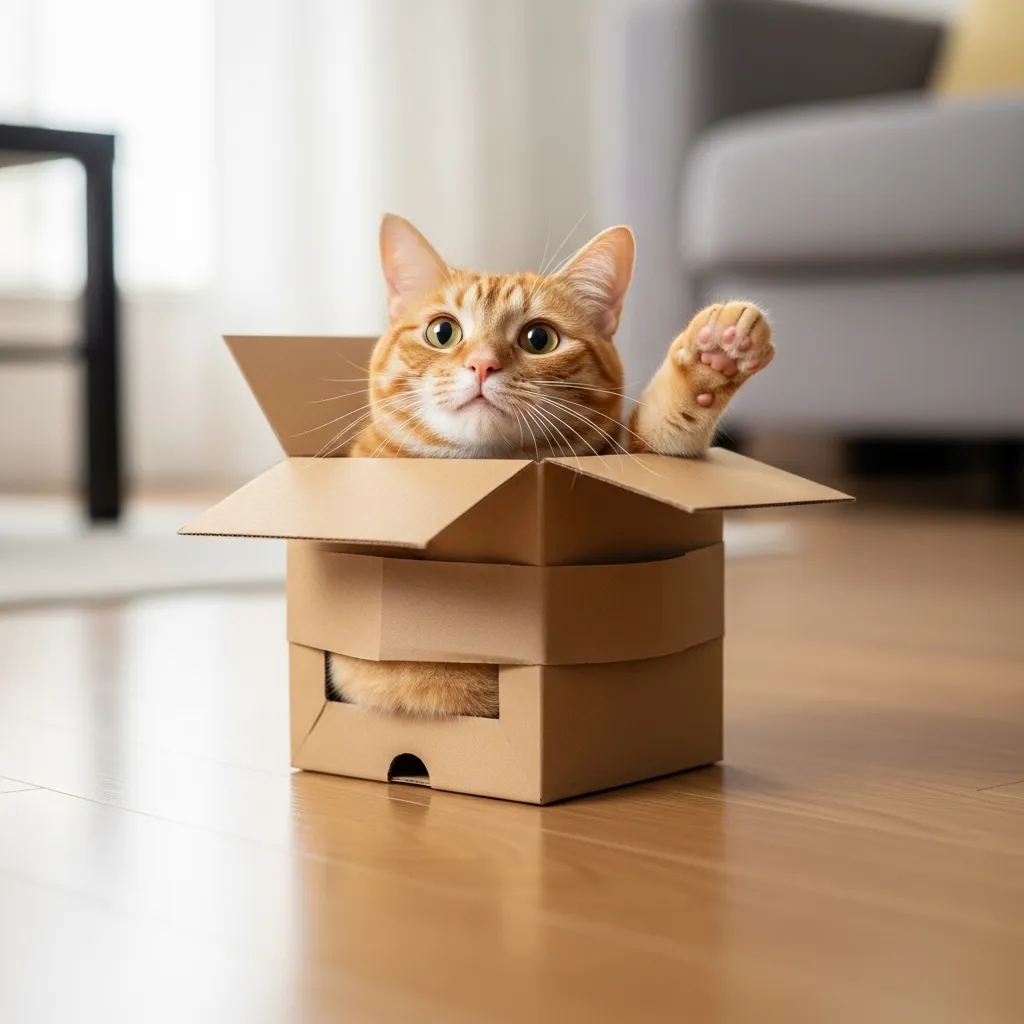
You unpack a new purchase, set aside the item, and turn around to find your cat already curled up inside the empty cardboard box. It happens in almost every cat-owning household. No matter how plush the cat bed or how elaborate the toy, a simple cardboard box often wins. This fascination with cats vs cardboard boxes has puzzled owners for years, and it turns out there are solid reasons rooted in feline instincts, biology, and behavior.
In this guide, we’ll explore why cats are drawn to these humble containers. We’ll look at scientific insights, evolutionary explanations, and practical tips for using this quirk to enrich your cat’s life. Whether you have a playful kitten or a senior feline, understanding this behavior can help you provide better comfort and stimulation.
Key Takeaways
- Cardboard boxes offer security by creating enclosed spaces where cats feel protected from threats.
- They provide insulation, helping cats stay warm in environments cooler than their preferred temperature range.
- Boxes reduce stress, as shown in shelter studies where cats with access to hiding spots adapted faster.
- The texture satisfies scratching and chewing urges while serving as ambush points for play.
- Even big cats like lions and tigers show similar interest, proving it’s a deep feline trait.
The Instinctive Appeal: Security and Safety
Cats are both predators and potential prey in the wild. Their ancestors relied on hidden spots to observe surroundings without being seen. A cardboard box replicates this perfectly. It shields the back and sides, leaving only the front open for monitoring.
Veterinarians and behaviorists note that enclosed spaces give cats a sense of control. In multi-cat homes or busy environments, boxes become safe retreats. Cats can retreat there during loud noises or unfamiliar visitors.
One revealing study from the University of Utrecht involved shelter cats. Those given hiding boxes showed lower stress scores and adapted quicker than those without. Researchers concluded that boxes help cats cope with change by offering emotional protection.
This explains why new cats often head straight for a box upon arriving home. It provides an immediate sense of security in unfamiliar territory.
Warmth and Comfort: Why Boxes Feel Cozy
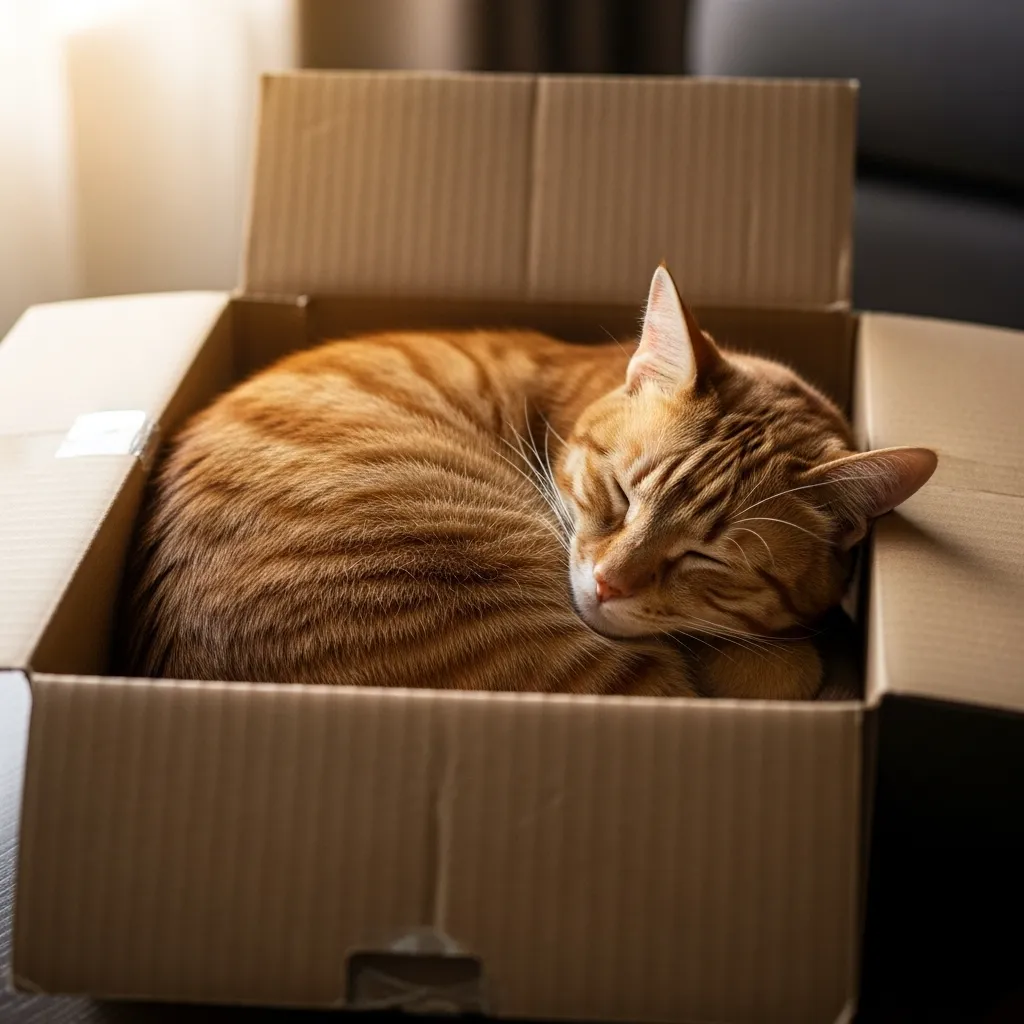
Cats prefer temperatures between 86 and 97 degrees Fahrenheit, warmer than most homes at 72 degrees. Cardboard acts as an excellent insulator, trapping body heat and creating a warm microclimate inside.
The snug fit forces cats to curl up, further conserving warmth. This mimics huddling with littermates as kittens. Many owners notice cats seeking boxes more in cooler months.
Cardboard’s texture adds appeal. It’s soft yet firm, molding slightly to the cat’s shape for comfort that plush beds sometimes lack.
Play and Enrichment: The Perfect Ambush Spot
Boxes aren’t just for hiding; they’re playgrounds. Cats use them as launch pads for pounces, satisfying hunting instincts.
From inside, a cat can watch “prey” like a passing toy or your feet, then burst out in surprise attacks. This engages their ambush predator nature.
Cardboard’s corrugated edges are ideal for scratching, helping maintain claws and mark territory with scent glands in paws.
Owners often see cats chewing edges too. As long as it’s supervised and not excessive, this explores texture safely.
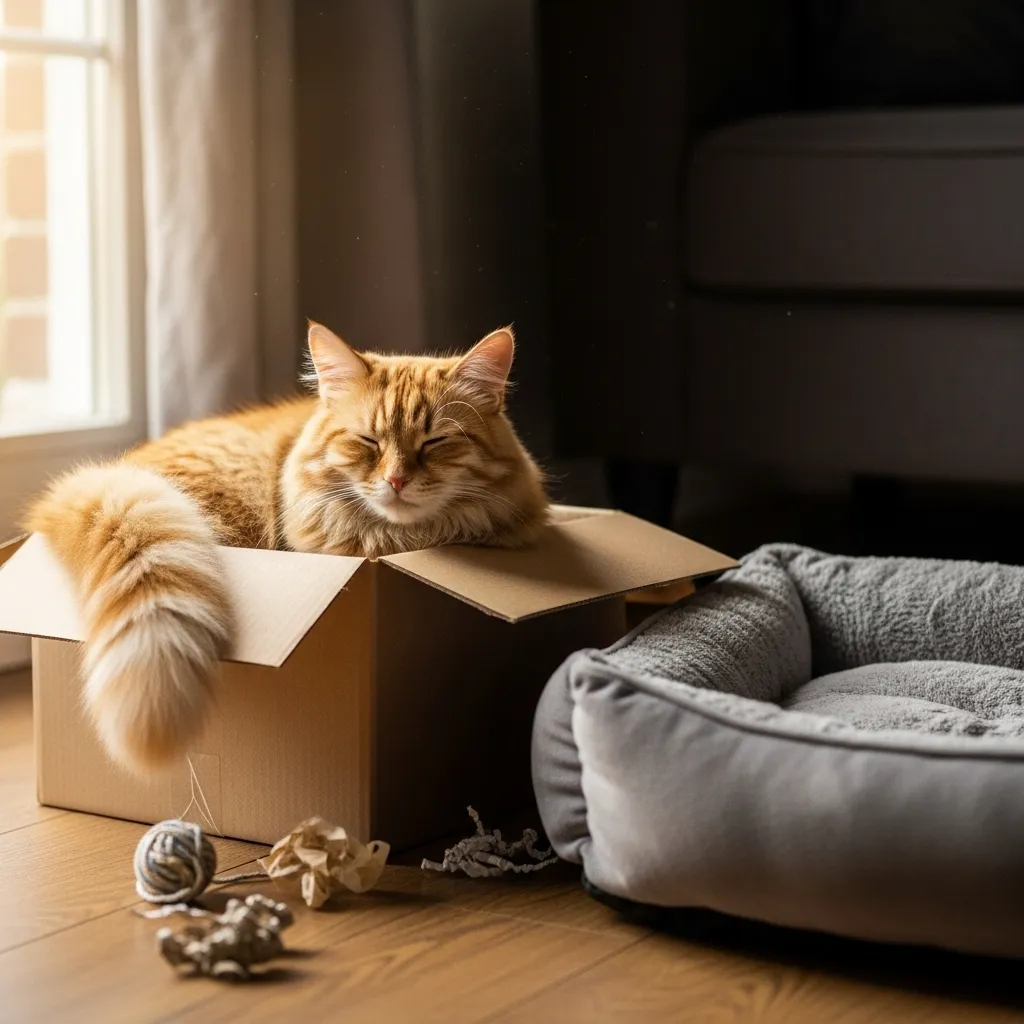
In multi-cat households, multiple boxes prevent tension by offering individual territories.
Why Boxes Often Beat Expensive Beds
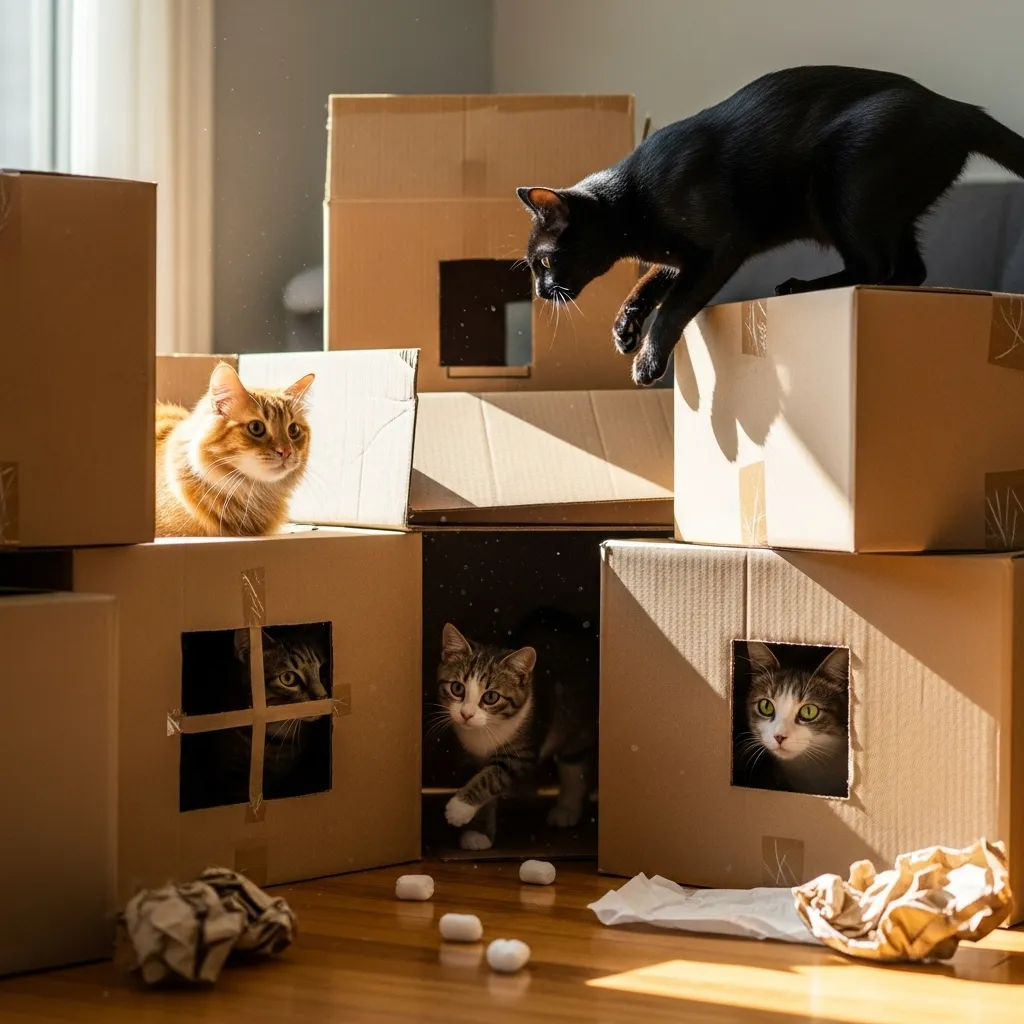
You’ve likely experienced this: Spend on a fancy cat bed, only for your feline to choose the delivery box instead.
Boxes win because they meet multiple needs at once: security, warmth, play, and stress relief. Designer beds might be soft but lack enclosure or insulation.
Cats also love novelty. A new box brings fresh smells and textures, sparking curiosity.
This preference isn’t ingratitude; it’s instinct overriding luxury.
Fun Facts and Memes: The Lighter Side
The internet thrives on cats in boxes. From tiny boxes barely fitting to “if I fits, I sits” challenges, these moments capture pure joy.
Even big cats in sanctuaries adore boxes, showing it’s a species-wide trait.
How to Use Boxes for Your Cat’s Well-Being
Embrace this love. Keep a few clean boxes around, rotating them for novelty.
- Cut extra holes for multi-entry play.
- Place in quiet areas for retreats or elevated spots for observation.
- Add blankets for extra coziness, though many prefer plain cardboard.
For enrichment, create tunnels or multi-level setups. Check our DIY ideas in DIY Cat Toys and Cardboard Castles.
If your cat chews excessively, consult a vet to rule out issues like pica.
In new situations like moving or vet visits, provide a familiar box for comfort. Explore more in Cat Travel Tips or breed guides like Bengal Cat Personality.
FAQ
Why do cats sit in boxes even when they’re too small?
The snug fit provides maximum security and warmth. Cats contort easily due to flexible spines, and pressure feels comforting, like swaddling.
Do all cats love cardboard boxes?
Most do, but personalities vary. Shy cats use them more for hiding; bold ones for play. Kittens and seniors often seek warmth.
Is it safe for cats to play in boxes?
Yes, if supervised. Remove tape or staples. Discard if damaged to avoid ingestion.
Why do cats scratch and chew cardboard?
It satisfies claw maintenance and scent marking. Cardboard texture mimics tree bark.
Can boxes help with cat stress or anxiety?
Absolutely. Studies show they lower stress in shelters and homes. Ideal during changes like new pets. See Cat Stress Signs.
Do wild or big cats like boxes too?
Yes. Zoos provide boxes to lions and tigers for enrichment, triggering similar instincts.
Final Thoughts
The battle of cats vs cardboard boxes isn’t a mystery anymore. It’s a blend of evolution, comfort, and instinct making these containers irresistible.
Next time your cat claims a box, know you’re witnessing natural behavior that keeps them happy and healthy.
Explore more expert cat care and behavior guides on Cat Bloom Haven, from breed personalities like American Shorthair Playful Personality to fun memes in Hilarious Cat Memes. Your feline friend will thank you.