Why Does My Cat Bite the Blanket and Hump? The Real Reasons Behind This Odd (But Totally Normal) Behavior
You’re half-asleep, cozy under the covers, when suddenly your cat jumps on the bed, starts kneading the blanket like dough, bites it with tiny growls, and then… starts humping it.
If this scene sounds familiar, you’re not alone. Thousands of cat parents search “why does my cat bite the blanket and hump” every month, and the behavior shows up in homes with kittens, adults, neutered males, and even senior cats.
The good news? In almost every case, it’s harmless. The slightly awkward news? It usually means your cat is feeling a very specific mix of comfort, instinct, and sometimes leftover hormones.
Here’s exactly what’s going on in your cat’s head (and body) when they turn your favorite fleece into their personal love object.
Key Takeaways (Read This First)
- Blanket biting + humping is usually a comforting, self-soothing habit that starts in kittenhood.
- Kneading, sucking, and biting blankets often mimic nursing on mom.
- Humping is most common in unneutered males but happens in neutered cats and females too.
- Stress, boredom, early weaning, and even breed can make the behavior stronger.
- You can gently redirect it without punishing your cat – more on that later.
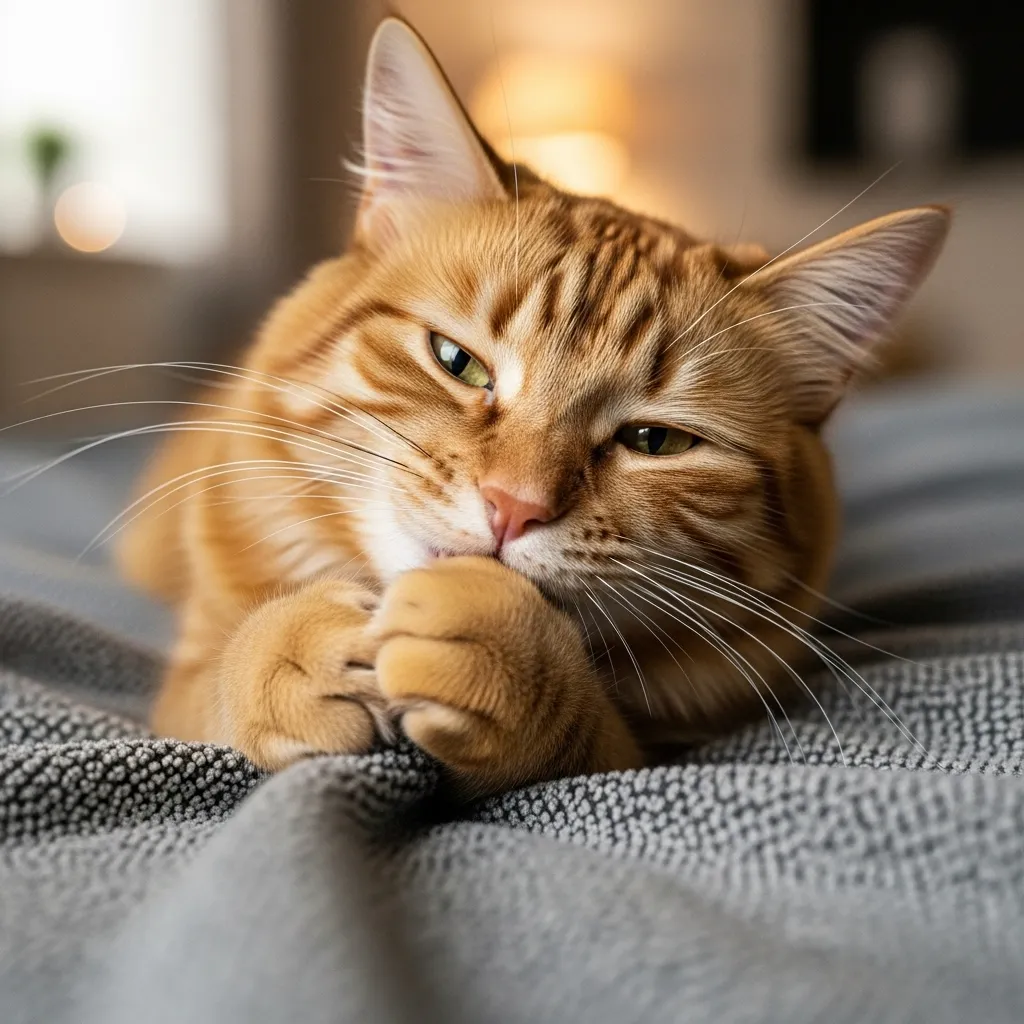
It All Starts with Mom: The Nursing Instinct That Never Really Leaves
Kittens knead their mother’s belly to stimulate milk flow. While they nurse, they often purr, rhythmically push with their paws, and sometimes lightly bite or suckle the nipple area.
When a kitten is separated from mom (especially before 10–12 weeks), they keep looking for something soft that smells like safety. Your fluffy blanket becomes the perfect substitute.
That’s why cats who knead and bite blankets almost always purr at the same time – they’re literally reliving the happiest, most secure moments of their lives.
For deeper insight into this nursing-like behavior, see our article on American Shorthair kneading habits.
Why the Biting Part? Two Main Reasons
- Teething or leftover kitten energy
Young cats (under 1 year) bite more because their adult teeth are still settling in. The pressure feels good, just like a human baby gnaws on a teething ring. - Sensory satisfaction
Many cats love the texture contrast – soft fabric plus the slight resistance when they bite down. It’s the feline version of stress-ball squeezing.
If the biting turns into aggressive chewing or swallowing fabric, that’s different. That could point to pica, anxiety, or even dental pain. More on that below.
The Humping Question: Hormones, Habit, or Something Else?
Let’s address the elephant (or humping cat) in the room.
Unneutered males
Humping is 95% driven by testosterone. Intact toms will mount anything soft that carries a familiar scent – blankets, pillows, stuffed animals, even your arm when you’re unlucky.
Neutered males and females
Yes, neutered cats still hump. Here’s why:
- Residual hormones can linger for 4–8 weeks after neutering, sometimes longer in cats neutered later in life.
- It becomes a learned comfort habit. The motion releases endorphins, so the brain says “this feels amazing, do it again.”
- Stress relief. Just like some humans jog or chew nails when anxious, some cats hump when overstimulated or bored.
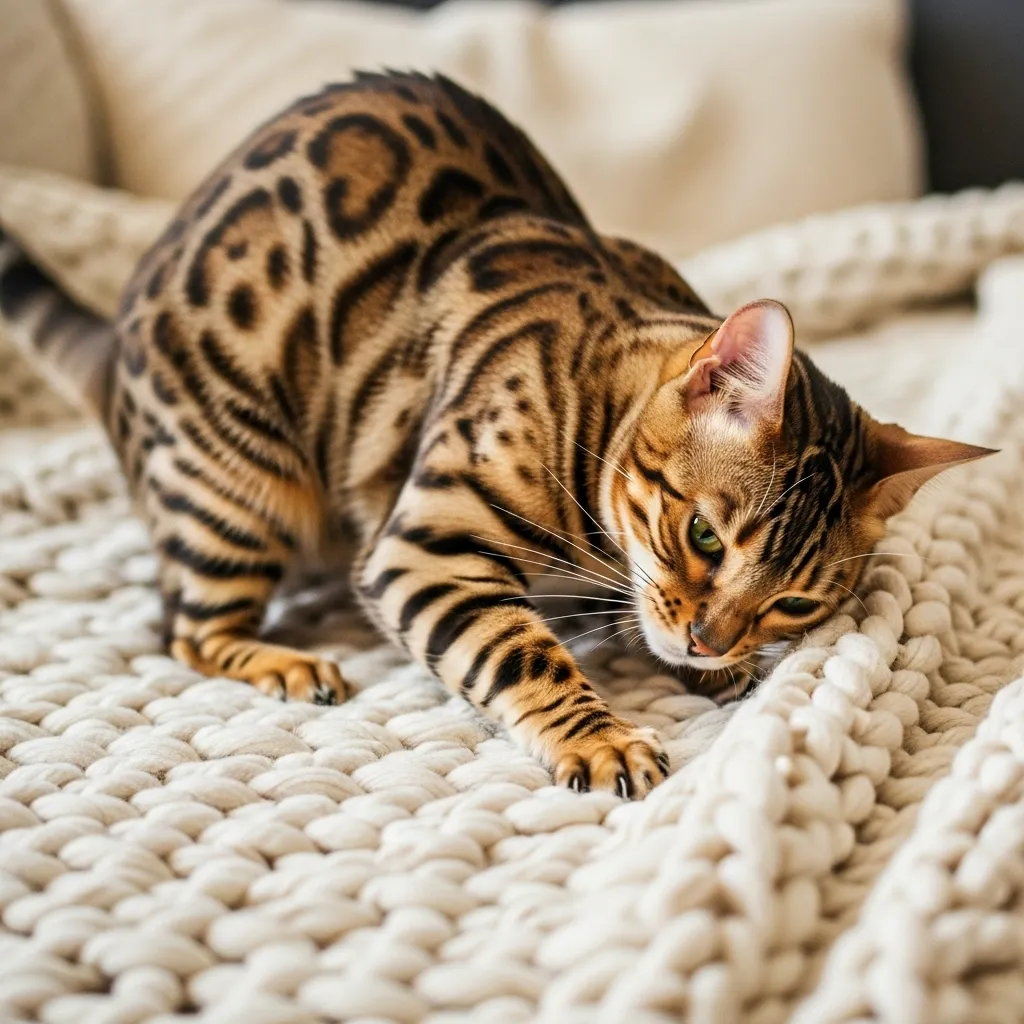
Interesting fact: Siamese, Bengal, and other high-energy breeds show blanket-humping more often, probably because they have extra energy to burn.
Is It Ever a Sign of Stress or Anxiety?
Sometimes, yes.
When blanket biting and humping suddenly increase, look for these red-flag companions:
- Excessive grooming or bald spots
- Hiding more than usual
- Changes in appetite or litter-box habits
- Nighttime yowling or restlessness
Cats under stress will fall back on baby behaviors because they’re predictable and soothing. Moving house, a new pet, or even rearranged furniture can trigger it.
Check our complete guide to cat anxiety signs for a full checklist.
Breed Tendencies: Who’s Most Likely to Turn Your Blanket into a Love Interest?
From years of reader comments and vet data, these breeds top the blanket-biting + humping charts:
- Siamese and Oriental types (vocal and needy)
- Bengals (high drive)
- Ragdolls (love soft textures)
- Any cat that was orphaned or bottle-raised
When Should You Worry? Red Flags vs Normal Quirks
| Normal & Harmless | See a Vet Soon |
|---|---|
| Gentle biting while purring | Swallowing threads or fabric pieces |
| Occasional humping sessions | Sudden intense increase in behavior |
| Happens only on soft blankets | Bleeding gums or bad breath while chewing |
| Cat is otherwise playful & social | Weight loss, vomiting, or diarrhea |
If your cat is eating the blanket (not just mouthing it), rule out pica and dental issues first.
How to Gently Reduce Blanket Biting and Humping (Without Stressing Your Cat)
You don’t have to live with destroyed bedding. Try these steps in order:
- Increase interactive play
15–20 minutes twice a day with a wand toy mimics hunting and burns the energy that fuels humping. - Offer acceptable alternatives
- A dedicated “kitty blanket” with your scent
- Snuggle toys with heartbeat simulators (great for early-weaned cats)
- Catnip or silver vine stuffed kickers
- Use calming tools when needed
Feliway diffusers or calming treats can lower the anxiety-driven version of the behavior. - Interrupt and redirect (never punish)
When you see the prelude (circling, kneading), start a play session or toss a treat trail away from the bed. - Consider timing of neutering
If your male cat was neutered after 1 year of age, a small percentage keep the humping habit for life. It’s usually harmless.
Want step-by-step play ideas? Explore our guide on keeping Siamese cats entertained – the techniques work for any breed.
Can You Actually Stop a Cat from Getting on the Bed Completely?
Some owners try, but most give up. Cats view your bed as prime territory.
A better compromise: give them their own heated cat bed right next to yours. Many cats switch once they realize the new bed is warmer and still smells like you.
We reviewed the best beds for different breeds here: Best beds for American Shorthair cats (most tips apply universally).
FAQ Quick Answers to the Questions You’re Googling at 2 A.M.
Why does my neutered male cat still hump blankets?
The motion is self-rewarding. It started as a hormonal behavior, turned into a comfort habit, and now releases feel-good brain chemicals.
Is blanket biting and humping sexual?
Only in intact cats. In neutered/spayed cats it’s more like thumb-sucking in humans – a self-soothing relic.
My cat only does it to my laundry. Is that weird?
Not at all. Your clothes carry the strongest concentration of your scent, which equals safety and love to them.
Should I let my cat keep doing it?
If no fabric is being swallowed and everyone can sleep, yes. It’s making them happy. If it bothers you or damages items, redirect gently.
Will my cat grow out of it?
Many do around 2–4 years old when energy levels drop. Others keep a mild version for life – think of it as their security blanket (literally).
Final Thoughts
Your cat isn’t being naughty or confused. They’re just doing what baby kittens do when they feel safe, warm, and a little nostalgic: recreating the comfort of nursing on mom, with your blanket standing in as the next best thing.
Watch for sudden changes, give them plenty of play and love, and offer alternatives when you need your comforter to stay in one piece. Most of the time, a little understanding goes a lot further than trying to make them stop completely.
For more quirky cat behaviors explained by people who actually live with these little weirdos every day, browse the rest of Cat Bloom Haven. You’ll find everything from why cats burrowing under blankets is peak happiness to how to stop cats scratching furniture when they’re overstimulated.
Your bed might never be 100% cat-hair-free, but at least now you know exactly why they love it so much.
See you in the next guide – and sweet dreams (humping optional).
Explore more expert cat care and behavior guides on Cat Bloom Haven.