How to Keep Cat Off Bed: A Complete, No-Nonsense Guide That Actually Works
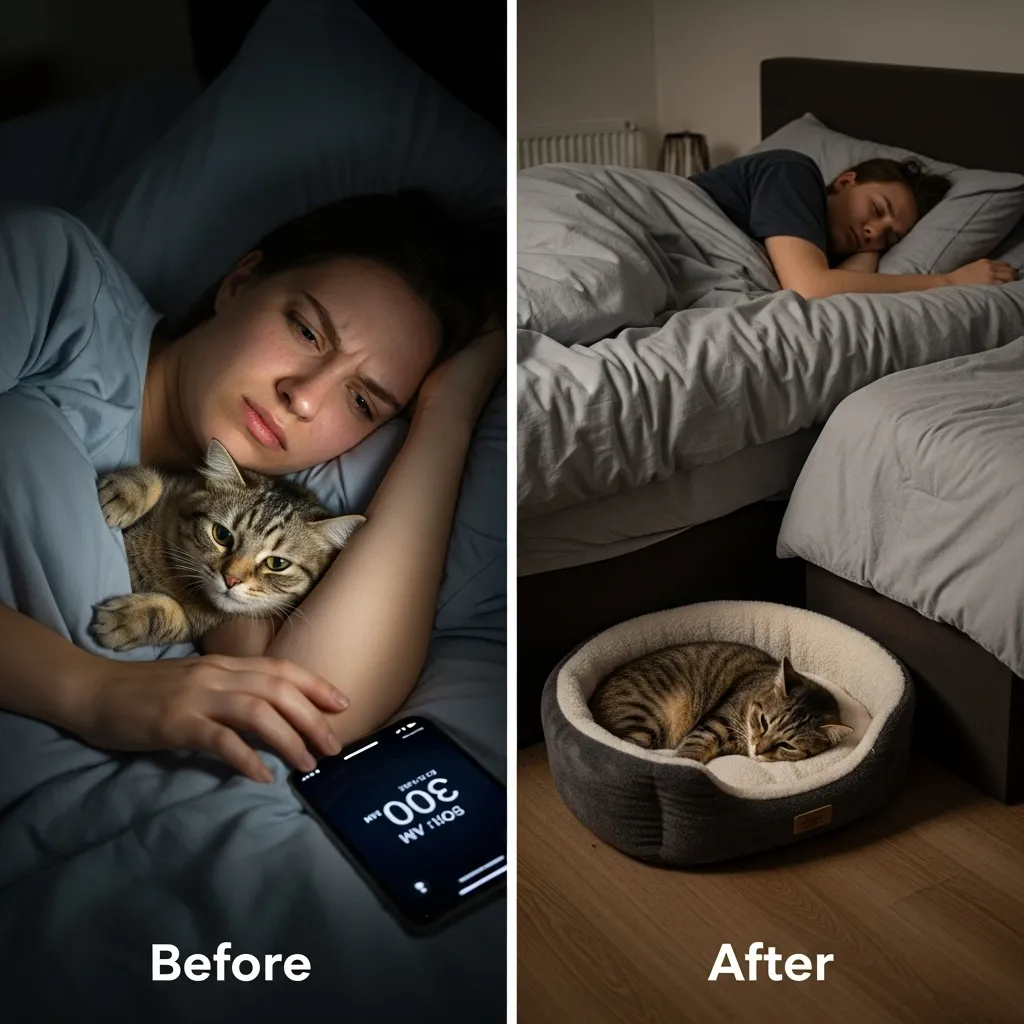
You love your cat. You also love sleeping without a furry heat-seeking missile parked on your chest at 3 a.m. If you’re here because you’ve tried everything (sprays, foil, stern lectures) and your cat still treats your bed like a five-star resort, you’re in the right place.
I’ve helped hundreds of cat owners solve this exact problem as a feline behavior consultant. The good news? Cats aren’t ignoring you out of spite. They’re on your bed for very logical (to them) reasons. Fix the reasons, and the behavior disappears – usually within a week or two.
Key Takeaways (Read This First)
- Cats choose your bed because it’s warm, high, smells like you, and feels safe.
- Punishment almost never works long-term and can damage trust.
- The fastest, kindest solution combines three things: better alternatives + gentle discouragement + consistent routine.
- Most cats accept the new rules in 7–14 days if you stay 100% consistent.
- Nighttime crying or sudden bed obsession can signal stress or health issues – rule those out first.
Ready for the full plan?
Why Cats Sleep on Beds (And Why Yelling “No!” Doesn’t Fix It)
Understanding the “why” is everything. Once you know the motivation, you can offer a better deal.

- Your scent = safety and love
Your bed smells strongly of you. To a cat, that’s the ultimate security blanket. This is why cats often sleep on the side of the bed their favorite person uses. - Warmth
Cats have a higher body temperature than we do (around 102°F). Your body heat plus blankets equals cat paradise. - Height and safety
An elevated surface lets them monitor the room. Instinct says predators can’t sneak up from behind. - Softness and texture
Memory-foam mattresses and fluffy duvets beat most cat beds by a mile. - Routine and bonding
Many cats see bedtime as prime bonding time. If you’ve ever let them sleep with you even once, they remember forever.
For deeper insight into cat sleeping behavior, check our complete guide on cat sleeping habits.
The 3-Step System That Actually Works
Step 1: Make Your Bed the Least Appealing Place in the House (Without Being Mean)
Do NOT use:
- Double-sided tape (cats just learn to step around it)
- Citrus sprays (most cats don’t care, and some hate the smell so much it stresses them)
- Ssscat cans (scary, breaks trust, and cats often figure out it’s motion-triggered)
Do this instead:
- Close the bedroom door every single time. Consistency is everything. If the door is closed 199 nights out of 200, the cat learns nothing.
- If you can’t close the door (partner, kids, etc.), use a lightweight plastic carpet runner, nub-side up, on the bed when you’re not in it. Cats hate the texture under their paws, and it’s silent and harmless.
- Strip the bed of the comforter during the day. No fluffy landing zone = far less appealing.
Pro tip: Place the carpet runner only when you leave the room. Remove it at bedtime so you don’t step on it yourself.
Step 2: Give Your Cat a Better Offer (This Is the Part Most People Skip)
Your cat will only accept “no bed” if you give them something they like more.
Best alternative sleeping spots that actually compete with your bed:
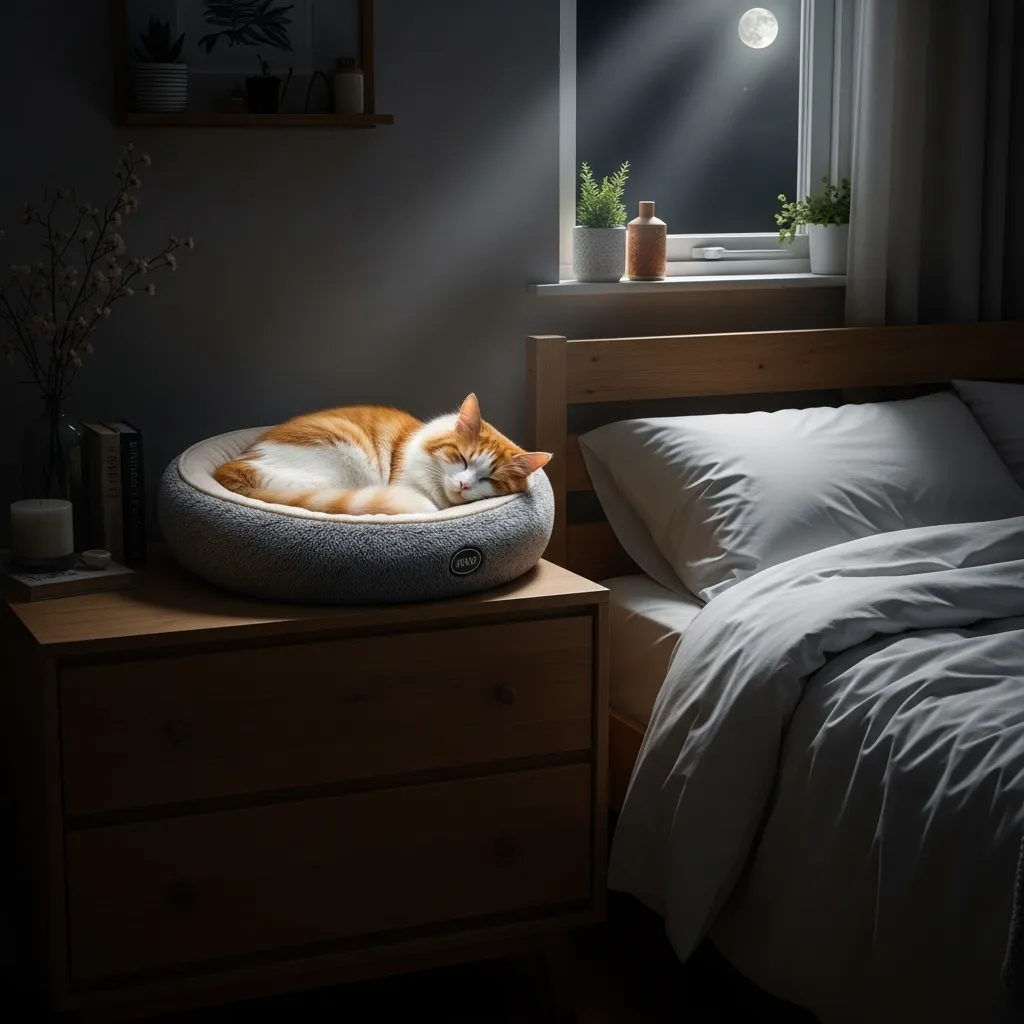
- A heated cat bed placed on a chair, dresser, or cat tree near your bed (same height + warmth + your scent nearby).
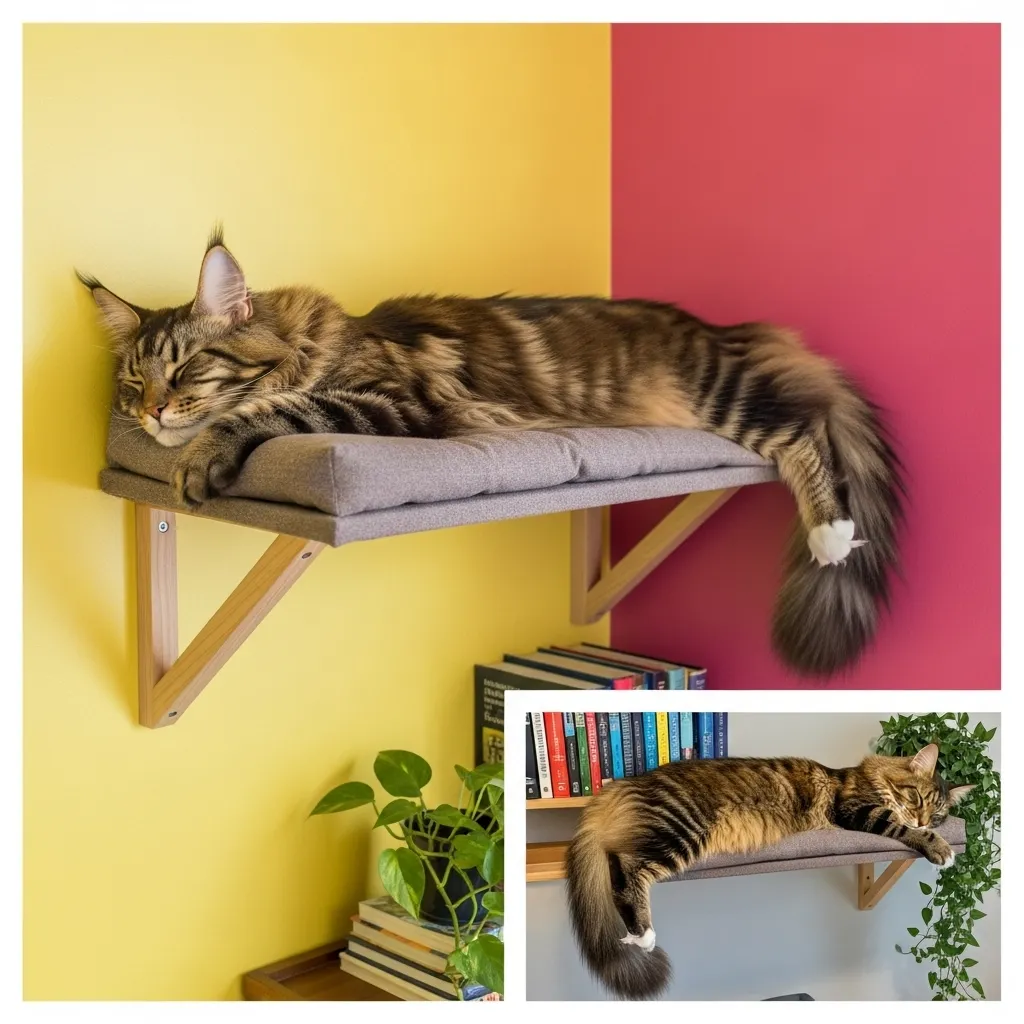
Recommended: K&H Thermo-Kitty or any self-warming pad with washable cover. - An elevated cat perch or window hammock in your bedroom. Cats love surveying their kingdom.
- Your unwashed hoodie or T-shirt inside their new bed for the first week. Instant “mom/dad smell” without you being the bed.
- A cardboard box on its side on top of your dresser with a blanket inside. Never underestimate the power of a good box.
Explore elevated sleeping spots for cats and the best beds for different breeds in our breed-specific guides (for example, best beds for American Shorthair cats or cozy options for Munchkin cats).
Step 3: Build a Rock-Solid Nighttime Routine
Cats thrive on predictability.
Ideal routine:
- Play session 30–60 minutes before your bedtime (wand toy, laser, anything that ends with a “kill”).
- Feed a small meal or high-protein snack right after play (the “hunt-catch-eat-groom-sleep” sequence is hardwired).
- Lights out, door closed (or runner in place).
Do this every night. Within a week, most cats start waiting for dinner instead of crying at the bedroom door.
Cat Boundary Training: Positive Reinforcement Beats Punishment Every Time
How to train cat to stay off bed the smart way:
- Reward the behavior you want
Every time you see your cat choose their new bed, quietly give a treat or gentle praise. Timing matters – within 3 seconds. - Redirect instead of scold
If they jump on the bed, calmly pick them up and place them in their new spot. No drama, no eye contact, no lecture. - Use a “positive interrupt” sound
A clicker or consistent word (“psst”) followed immediately by leading them to their bed + treat works wonders.
Read our full cat training tips and cat boundary training guide for more techniques.
Common Roadblocks and How to Fix Them
Problem: Cat cries and scratches at the door all night
Solution: Ignore completely for 3–5 nights (earplugs help). Any attention rewards the crying. Most cats stop once they realize it gets zero response. If it continues past a week, check for separation anxiety signs.
Problem: Cat sneaks in the second the door opens in the morning
Solution: Keep a basket of treats by the door. The moment you open it, toss a few treats away from the bed. You’re teaching “door opening = goodies on the floor,” not “door opening = sprint to bed.”
Problem: Multiple cats, only one wants the bed
Solution: Give the bed-loving cat the best alternative spot first. The other cat usually follows.
Special Cases
Kittens under 6 months
They’re still learning rules. Be extra consistent and provide multiple warm, high spots.
Senior cats or cats with arthritis
Warmth and easy access matter more. A low, heated orthopedic bed on the floor might be the only realistic option.
Newly adopted or anxious cats
Let them sleep with you for the first few weeks to build trust, then slowly transition using the steps above.
Tools That Actually Help
- Heated beds (self-warming or plug-in)
- Plastic carpet runner, nub-side up
- Pheromone diffusers (Feliway Optimum) in the bedroom
- Automatic feeder for late-night snack scheduling
- High perches or window beds
FAQ Quick Answers
Why does my cat sleep with me all of a sudden?
Sudden changes often mean stress, illness, cold weather, or a new household dynamic. Rule out health issues first.
Will my cat hate me if I lock them out?
No. Cats adapt quickly when given good alternatives and routine. Most owners report their cats become more playful and affectionate once the nighttime chaos stops.
How long does it take to train a cat to stay off the bed?
7–21 days with full consistency. Half-measures stretch it to months.
What if nothing works?
Book a vet visit to rule out pain, hyperthyroidism, or anxiety, then consult a certified behaviorist.
Final Thoughts
Keeping your cat off the bed isn’t about winning a battle. It’s about understanding what they need (warmth, height, safety, your scent) and giving it to them in a way that doesn’t involve your pillow.
Do the work for two weeks – close the door, offer irresistible alternatives, stick to the routine – and you’ll wake up to a cat who loves their own luxurious spot almost as much as they love you.
Want more practical cat behavior fixes? Explore our complete cat care guide section or dive into specific topics like why cats sleep pressed against you, cat nighttime behavior, or how to set bedroom boundaries for cats.
Sweet dreams – fur-free ones.
Your bed, your rules – and your cat can still feel loved. You’ve got this.