How to Groom a Long-Haired Cat: The Ultimate Stress-Free Guide
Meta Description: Tired of mats, hairballs, and grooming battles? Our expert guide on how to groom a long-haired cat reveals pro techniques, essential tools, and gentle methods to transform grooming from a chore into a bonding experience. Your cat’s healthier, happier coat awaits.
Key Takeaways: Your Quick Grooming Blueprint
- Prevention is Paramount: Consistent, gentle brushing 3-4 times a week is non-negotiable to prevent painful mats, which can lead to skin infections.
- Tool Triumph: The right cat grooming tools a stainless steel comb, a slicker brush, and an undercoat rake—are 90% of the battle won.
- Bonding, Not Battling: Keep sessions short (5-10 minutes), positive, and full of rewards. This is about building trust, not forcing compliance.
- Mats Require Care: Never cut out mats with scissors. Use a detangling spray and a mat splitter or dematting comb, working slowly from the edges.
- Know When to Call a Pro: Severe matting, extreme grooming anxiety in cats, or necessary hygiene trims are all valid reasons to seek professional cat grooming.
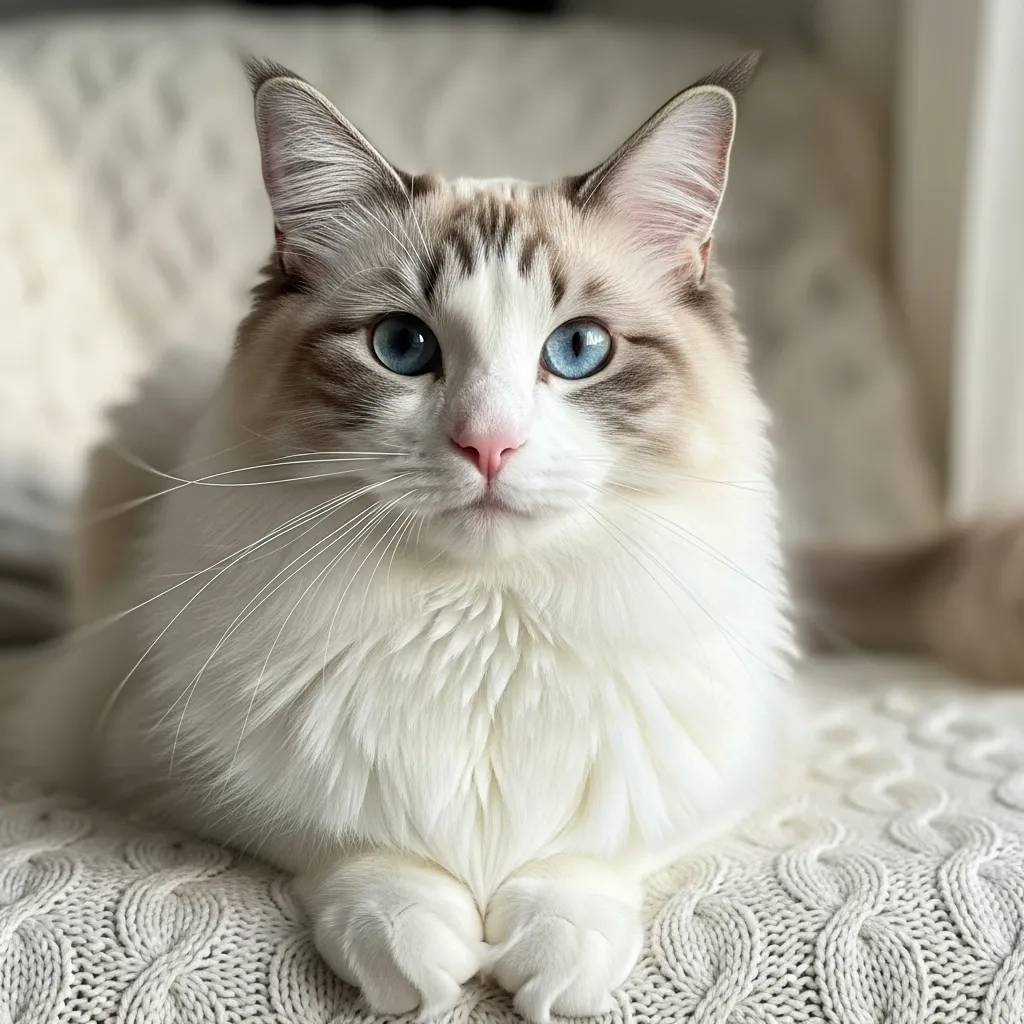
Introduction: More Than Just a Pretty Coat
That magnificent, flowing coat on your Maine Coon, Persian, or Ragdoll is a sight to behold. But beneath that beauty lies a potential tangle of challenges for both you and your feline friend. Learning how to groom a long-haired cat isn’t a vanity project; it’s a fundamental pillar of their health and well-being.
Without a consistent cat grooming routine, that gorgeous fur can quickly become a nightmare of mats, tangles, and hairballs. This comprehensive cat grooming guide is designed to transform you from a hesitant owner into a confident grooming guru. We’ll walk you through everything from selecting the perfect cat grooming tools to mastering gentle brushing for cats, turning a potentially stressful ordeal into a cherished moment of connection. Let’s dive in.
Why Grooming is Non-Negotiable for Long-Haired Cats
Long-haired cat grooming is as essential as providing fresh water and a nutritious diet. In the wild, cats’ ancestors had shorter coats and different lifestyles. Our pampered indoor companions rely on us to replicate the benefits of their natural self-care.
The Health Risks of Neglect: Beyond the Tangles
- Painful Matting: Mats are not just unsightly clumps. They pull tightly on the skin with every movement, causing constant discomfort and even pain. Tight mats can restrict movement and cut off circulation.
- Skin Infections: Mats trap moisture, dirt, and debris against the skin, creating a perfect breeding ground for bacteria and yeast. This can lead to painful, itchy, and infected hot spots.
- Hairballs Prevention: When cats groom themselves, they ingest loose fur. A well-brushed cat swallows far less hair, significantly reducing the frequency and severity of hairballs.
- Parasite Hiding Spots: Fleas and ticks can easily hide undetected within a thick, matted coat, making infestation harder to spot and treat.
- Early Problem Detection: Regular grooming sessions are your chance to run a full health check. You can feel for lumps, bumps, sores, or parasites you might otherwise miss.
As we explore in our guide to Ragdoll cat care, a proactive approach is always best for fluffy breeds.
Your Essential Long-Haired Cat Grooming Toolkit
You wouldn’t build a house without a hammer, and you can’t properly groom a long-haired cat without the right implements. Investing in high-quality cat grooming tools makes the process easier, safer, and more effective.

| Tool | Purpose | Best For |
|---|---|---|
| Stainless Steel Comb | Your most important tool. Detangles, removes loose fur, and checks for small mats. | All-over finishing, tackling tangles around the neck and chest. |
| Slicker Brush | Removes loose topcoat fur and breaks up minor tangles. | Daily or every-other-day maintenance brushing. |
| Undercoat Rake | Gently removes the dense, soft undercoat that causes mats and shedding. | Breeds with thick undercoats like Maine Coons and Norwegian Forest Cats. |
| De-matting Comb/Mat Splitter | Safely cuts through severe mats without pulling the skin. Blades are designed to slide under the mat. | Handling cat hair matting and tangles that a comb can’t get through. |
| Blunt-Tipped Scissors | For safely trimming small, isolated tangles or fur around the rear end. | NEVER for cutting out large mats. Only for careful, precise trims. |
| De-shedding Tool | Reduces shedding by reaching deep into the undercoat to remove loose hair before it sheds. | Seasonal shedding periods, deshedding brush for long-haired cats is a popular search for a reason. |
| Detangling Spray | A light, cat-safe spray that lubricates the fur, reducing friction and static. | Making gentle brushing for cats even gentler, especially on knots. |
Pro Tip: For a truly luxurious experience, consider incorporating natural cat grooming products like wipes or sprays with oatmeal or aloe to soothe the skin.
The Step-by-Step Guide to a Stress-Free Grooming Session
Mastering cat grooming techniques is about patience and process. Rushing will only create grooming anxiety in cats. The goal is a calm, predictable routine.
Step 1: Set the Stage for Success
- Timing is Everything: Choose a time when your cat is naturally relaxed, perhaps after a meal or a play session. Never attempt to groom a playful or agitated cat.
- Create a Calm Environment: Find a quiet room with minimal distractions. Have all your tools and some high-value treats within arm’s reach.
- Start with Connection: Begin with a few minutes of gentle petting and calm talking to put your cat in a relaxed state.
Step 2: The Art of the Brush-Out
This is the core of brushing long-haired cats. Follow this sequence for the best results.
- The Initial Comb-Through: Start with your stainless steel comb. Gently comb through the fur in the direction of hair growth, starting from the head and moving toward the tail. This helps you identify any problem areas without aggravating them.
- Address the Undercoat: Use your undercoat rake or de-shedding tool on areas with thick fur—the back, sides, and belly (if your cat allows). Use gentle, short strokes to lift out the dead undercoat.
- Slicker Brush Pass: Go over the entire coat with your slicker brush to catch any remaining loose fur from the topcoat and create a smooth, polished look.
- Tackle Trouble Zones: Pay special attention to high-friction areas prone to preventing mats in cat fur: behind the ears, under the arms, the “pants” on the back legs, and the chest. Use your comb and a detangling spray here.
- The Final Check: Give one more light pass with the comb to ensure everything is smooth and tangle-free.
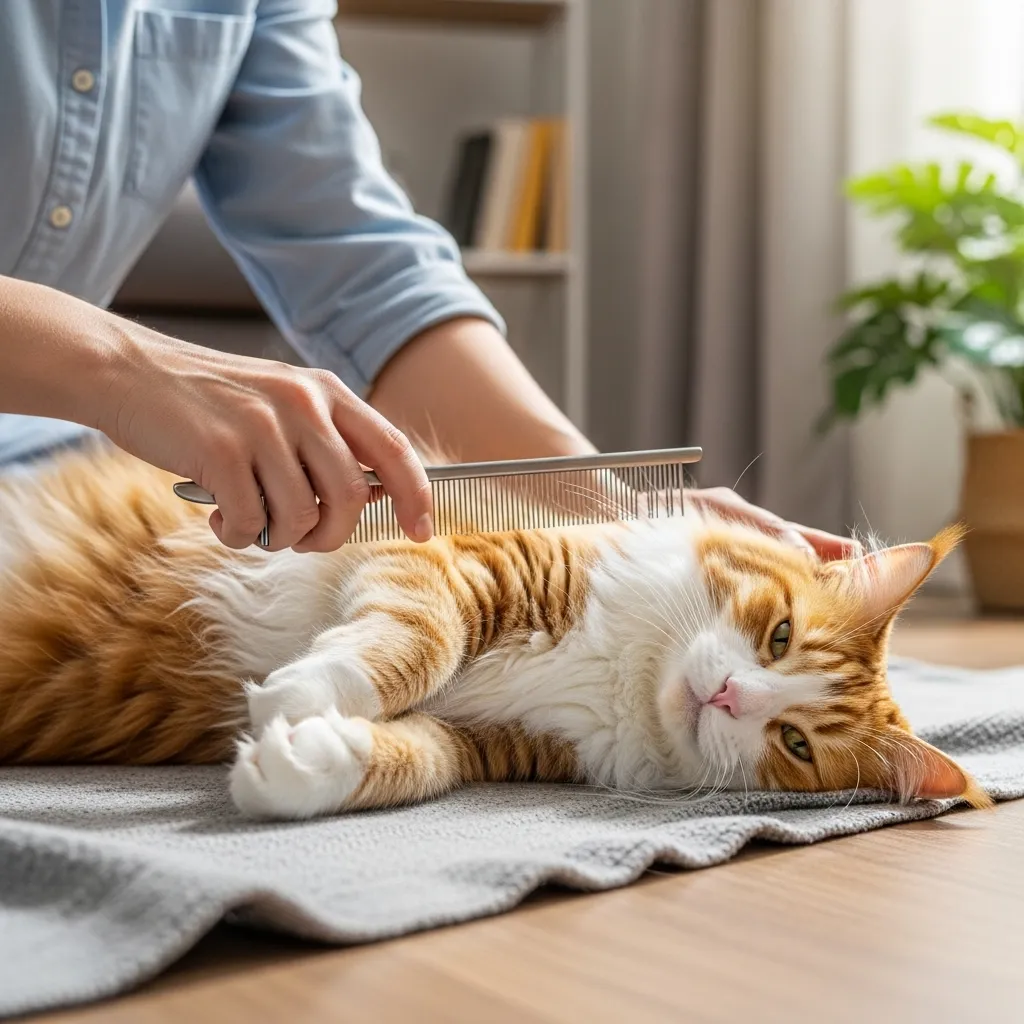
What to Do When You Find a Mat:
- Do NOT use scissors.
- Spray the mat with detangling spray.
- Use your fingers to gently try and pull the mat apart from the edges.
- If that fails, use a dematting comb. Place the teeth at the base of the mat, closest to the skin, and gently work through it in small sections.
- For large, severe mats that are close to the skin, it’s time to call a professional cat grooming service.
For more on handling specific coat challenges, see our breed-specific guide for the Norwegian Forest Cat.
Step 3: The Nose-to-Tail Finishing Touches
- Eyes: Use a soft, damp cloth to gently wipe away any tear stains from the corners of the eyes. Use a different part of the cloth for each eye.
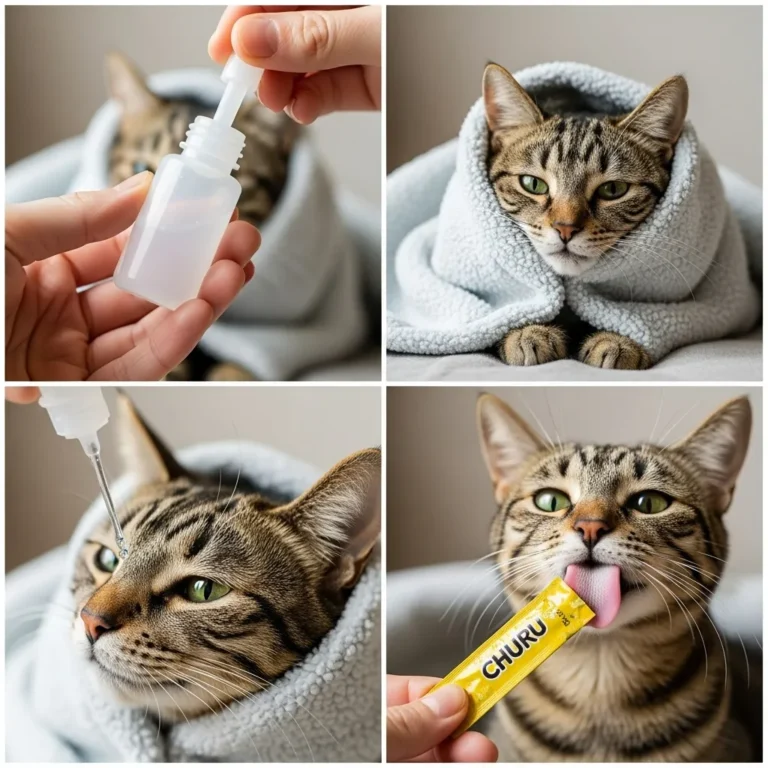
- Ears: Check the ears for dirt or debris. Use a vet-recommended ear cleaner on a cotton round—never use cotton swabs (Q-tips) inside the ear canal. Learn the proper method in our guide on how to give cat ear drops.
- Nails: Gently press on the paw pad to extend the claw. Use sharp, cat-specific nail clippers to trim only the clear, sharp tip, avoiding the pink quick (which contains nerves and blood vessels). If you’re unsure, our article on how to trim Siamese cats’ nails offers universal tips.
- Sanitary Trim: For many long-haired cats, fur around the rear end can become soiled. If needed, carefully use blunt-tipped scissors to trim this area short to maintain cat hygiene. For a detailed walkthrough, our piece on cat hygiene teach bum clean is invaluable.
Bathing Your Long-Haired Cat: A Rare but Sometimes Necessary Task
Most cats are excellent self-cleaners and rarely need baths. However, there are times when cat bathing tips become essential.
When is a Bath Necessary?
- If they get into something toxic, sticky, or greasy.
- If they have a skin condition requiring a medicated shampoo prescribed by a vet.
- If they are unable to groom themselves effectively due to obesity, arthritis, or illness.
How to Bathe a Cat with Minimal Trauma
- Prepare Your Station: Use a rubber mat in a sink or tub for stability. Have towels, a pitcher for rinsing, and cat-specific shampoo ready.
- Brush First: Always brush your cat thoroughly before the bath. Water will tighten any existing mats into impossible knots.
- Use Lukewarm Water: Water should be comfortably warm, not hot.
- The Process: Gently wet your cat, avoiding the face and ears. Apply shampoo, lather gently, and rinse extremely thoroughly until the water runs completely clear.
- Dry Thoroughly: Wrap your cat in a towel and blot dry. You can use a hairdryer on the lowest, coolest setting, held far away, if your cat isn’t frightened by it. Never leave a long-haired cat damp, as this can cause skin issues.
For a step-by-step tutorial for a specific breed, check out our guide on how to bathe a Bengal kitten.
Solving Common Long-Haired Cat Grooming Challenges
Even with the best techniques, you may hit a snag. Here’s how to handle common problems.
My Cat Hates Grooming! What Do I Do?
This is one of the most common issues owners face. If you’re wondering how to groom a cat that hates it, you’re not alone.
- Start Slow: Begin with just 30-second sessions where you only brush their favorite spots (like under the chin) and follow it immediately with a high-value treat.
- Associate with Good Things: Only bring out the grooming tools right before a meal or a play session.
- Try Different Tools: Your cat may dislike the feeling of a slicker brush but tolerate a comb, or vice-versa.
- **Consider **Grooming Anxiety Relief for Cats: Products like calming pheromone sprays (Feliway) or calming treats can take the edge off. In severe cases, consult your vet.
- Know Your Limits: If your cat becomes truly aggressive, stop. Forcing it will only damage your bond. This is when professional cat grooming is a wise investment in your sanity and your cat’s well-being.
How to Handle Severe Matting
If you discover your cat is already severely matted, the safest option is always to seek a professional. However, for smaller mats, you can try how to detangle cat fur at home with a dematting tool and immense patience. If the mats are large, widespread, or close to the skin, a professional groomer or vet will need to shave them out. This is often the kindest and least stressful solution for the cat.
Managing Hairballs Through Grooming
Regular brushing is the number one way to manage cat hairballs prevention. By removing the loose fur yourself, you prevent your cat from ingesting it. If hairballs persist despite regular grooming, it’s worth discussing with your vet, as covered in our article on American Shorthair hairballs.
Building a Lifelong Grooming Routine
Consistency is the golden rule of long-haired cat care. A little bit of maintenance several times a week is infinitely easier than a marathon session once a month.
- Frequency: Aim for a full brush-out 3-4 times per week.
- Make it a Ritual: Incorporate grooming into your daily routine, perhaps while watching TV in the evening.
- **Turn it into a **Cat Spa Day: Once a week, go the extra mile with a nail trim, ear check, and a treat-filled cat pampering routine. This reinforces that grooming is a positive, bonding experience.
FAQ: Your Pressing Long-Haired Cat Grooming Questions, Answered
Why is it important to groom a long-haired cat regularly?
Regular long-haired cat grooming prevents painful mats and skin infections, reduces hairballs, helps you monitor their health, and strengthens your bond. It is a critical part of their healthcare.
What are the essential grooming tools for long-haired cats?
The non-negotiable cat grooming tools are a stainless steel comb, a slicker brush, and an undercoat rake. A detangling spray and a dematting comb are also highly recommended.
How can I make the brushing process more comfortable for my cat?
Use gentle brushing for cats techniques: start with short sessions, use a detangling spray, focus on pleasant areas first, and always pair grooming with treats and praise to create a positive association.
When should I consider bathing my long-haired cat?
Only bathe your cat when necessary, such as when they get into something dirty or toxic, or if they have a medical condition requiring a special shampoo. Over-bathing can strip natural oils from their skin and coat.
What should I do if my cat dislikes grooming?
Go back to basics with very short, positive sessions. Use high-value rewards and ensure you’re using the right tools. For severe grooming anxiety in cats, consult your vet or a professional groomer for advice.
When is it necessary to seek professional help for grooming?
Seek professional cat grooming for severe, skin-tight matting, if your cat is extremely aggressive or fearful during grooming, or if you need a specialized haircut or sanitary shave.
Conclusion: From Furry Foe to Flowing Friend
Learning how to groom a long-haired cat is a journey of patience, love, and the right technique. It transforms a potential point of conflict into a profound expression of care. By embracing a consistent cat grooming routine, equipped with the proper cat grooming tools, you are not just maintaining a beautiful coat you are actively safeguarding your cat’s health, comfort, and happiness.
The bond you build during these quiet, caring sessions is irreplaceable. So take a deep breath, gather your tools and treats, and embark on the rewarding path of mastering long-haired cat care. Your feline friend will thank you with purrs, headbutts, and a glorious, healthy coat.
Explore more expert cat care, behavior, and breed-specific guides on Cat Bloom Haven.