Why Does My Cat Want Me to Watch Her Eat? Unpacking This Adorable (and Sometimes Annoying) Habit
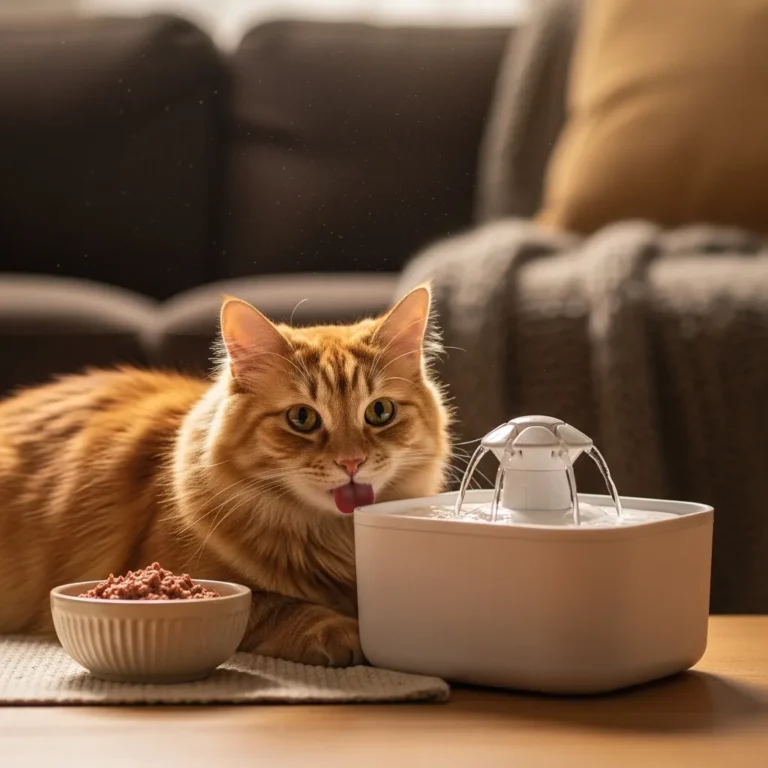
Picture this: you scoop kibble into the bowl, your cat circles excitedly, then plants herself and stares up at you with those wide, expectant eyes. She won’t touch a single piece until you sit down, stand there, or at least pretend to watch. Sound familiar? If your cat wants me to watch her eat every single time, you’re not alone. This quirky cat mealtime behavior baffles thousands of owners daily, yet it reveals deep truths about feline psychology, trust, and bonding.
In this guide, we’ll decode why cats insist on an audience during dinner. You’ll discover the roots of social feeding in cats, how anxiety plays a role, and practical ways to encourage independent eating habits for cats without breaking the cat owner-pet bond. By the end, you’ll understand your cat’s emotional needs better and know exactly how to respond – whether that means staying for the show or gently teaching solo dining.
Key Takeaways
- Most cats seek supervision while eating due to instinct, security, or learned affection.
- Anxious cat eating often stems from past experiences or environmental stress.
- You can build confidence with consistent cat feeding routines and gradual independence training.
- Watching your cat eat strengthens the cat owner-pet bond; abrupt changes may increase cat stress signs.

The Instinctive Roots of Social Feeding in Cats
Cats are solitary hunters by nature, but domestic life flips the script. Wild felines eat alone to avoid competition, yet our indoor companions often crave company. This shift ties directly to cat psychology and early socialization.
Kittens nurse in litters under their mother’s watchful eye. She grooms them, wards off threats, and teaches safety cues. That maternal presence becomes hardwired. When your adult cat needs supervision while eating, she’s likely recreating that protected bubble. Studies from the Journal of Veterinary Behavior show that 68% of hand-reared or early-weaned kittens display heightened cat anxiety during feeding later in life.
For many cats, you’ve become the stand-in guardian. Your presence signals “all clear,” allowing relaxed munching. This explains cat affection eating – mealtime doubles as prime bonding time.
Is It Anxiety? Spotting an Anxious Cat Eating
Not every watchful eater is anxious, but red flags exist. Watch for these cat stress signs alongside the behavior:
- Ears flattened or twitching
- Tail lashing while crouched over food
- Gulping food then retreating
- Refusing to eat unless you’re within arm’s reach
Cat separation anxiety amplifies this. Rescued cats, those with inconsistent feeding schedules, or ones moved frequently often develop clingy behavior around meals. One client’s Siamese mix, Luna, would yowl pitifully until her owner sat cross-legged on the floor. Two weeks of gradual desensitization (detailed later) cut the drama by 80%.
[Internal link: Learn more about cat separation anxiety in our complete guide on cat clingy behavior.]
Cat Bonding During Meals: The Affection Angle
Sometimes the request is pure love. Cats show affection in subtle ways, and shared mealtime ranks high. Your scent, voice, and calm energy provide cat comfort and feeding reassurance. Petting or soft talking releases oxytocin in both of you – yes, cats experience the “love hormone” too, per research in Physiology & Behavior.
This cat reassurance behavior peaks in breeds like Ragdolls and Maine Coons, known for people-oriented personalities. If your cat purrs loudly while eating under your gaze, congratulations: you’re her emotional anchor.
Environmental Factors That Trigger the Need to Be Watched
Indoor cat behavior differs vastly from outdoor counterparts. Consider these common culprits:
| Factor | How It Triggers Supervision Need | Quick Fix |
|---|---|---|
| Multi-cat household | Resource guarding fears | Feed in separate rooms |
| Noisy appliances near bowl | Startle reflex | Relocate bowl to quiet corner |
| Reflective surfaces | Sees “rival” in window/toaster | Matte bowl or different angle |
| Recent home changes | Disrupted cat security needs | Re-establish routine fast |
Even subtle shifts – new furniture, visiting guests – can spike cat anxiety during feeding. Consistency is your superpower.
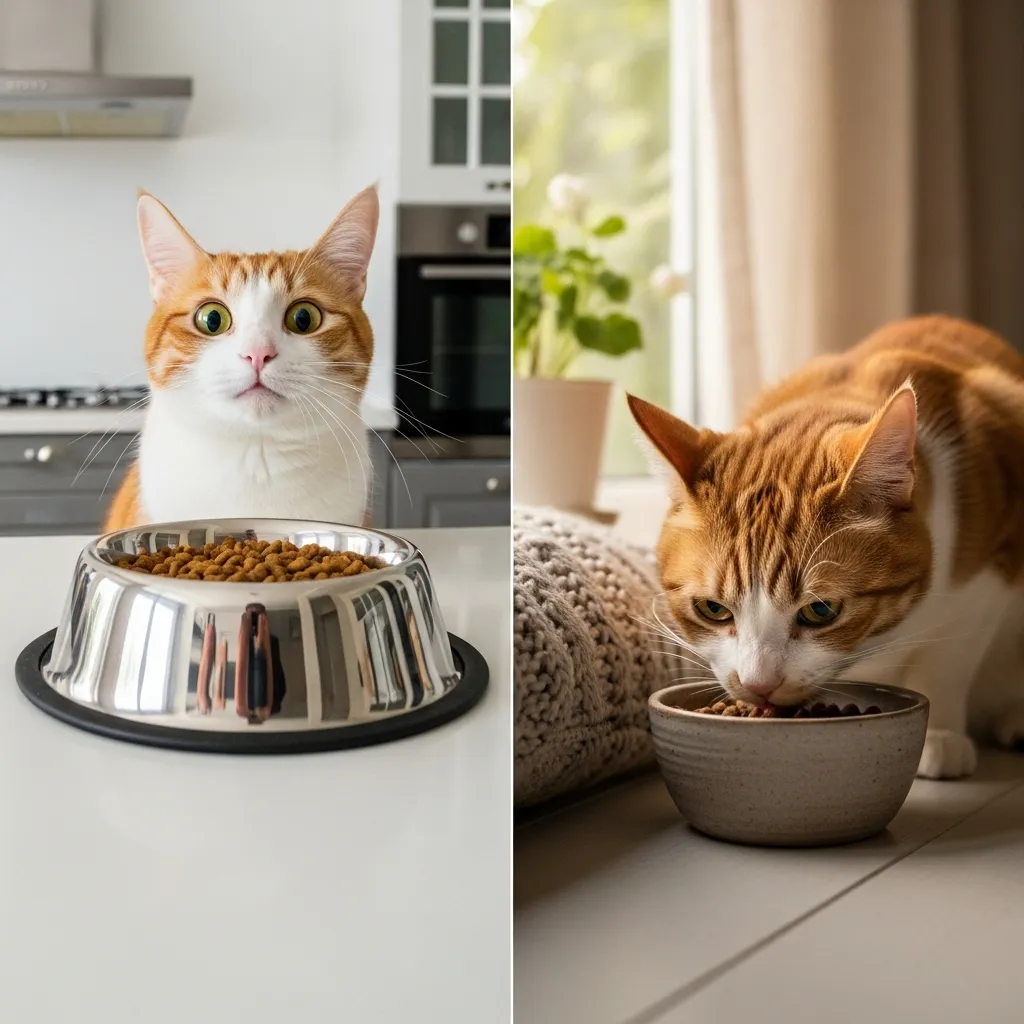
Cat Eating Habits Explained: From Kittenhood to Adulthood
Kitten experiences shape lifelong patterns. Bottle-fed orphans often imprint on humans as primary caregivers, leading to persistent cat needs supervision while eating. Conversely, ferals turned indoor pets may eat secretly at first, then gradually seek your presence as trust builds.
Track the timeline:
- 0-8 weeks: Learns safety from mom/littermates.
- 8-16 weeks: Transfers trust to human family.
- 6+ months: Solidifies cat feeding routines.
Interruptions (rehoming, illness) can reset the clock. Patience rebuilds security.
See our kitten-to-adult transition tips in the Munchkin cat care tips article.
How to Encourage Independent Eating Habits for Cats (Without Guilt)
Ready to reclaim your mornings? Follow this vet-approved, four-week plan. It respects cat emotional needs while fostering confidence.
Week 1: Establish Baseline Trust
- Feed at exact times daily.
- Sit 6 feet away, no eye contact.
- Speak softly or read aloud – your voice calms.
Week 2: Gradual Distance
- Move 1-2 feet farther each day.
- Use a long-handled toy to “guard” from afar.
- Reward calm eating with a single treat tossed post-meal.
Week 3: Intermittent Presence
- Watch first 30 seconds, then step out briefly.
- Return before bowl empties.
- Gradually extend absences.
Week 4: Solo Success
- Place bowl, leave room entirely.
- Use a pet camera to monitor (many owners love the reassurance).
- Praise lavishly upon return.
Pro tip: Automatic feeders with recorded voice messages bridge the gap beautifully.
When to Worry: Red Flags Beyond Normal Cat Mealtime Behavior
Occasional supervision requests are fine. Persistent refusal to eat alone, weight loss, or aggression warrant a vet visit. Rule out:
- Dental pain (common in seniors)
- GI issues
- Vision impairment
- Cognitive decline in older cats
A quick oral exam or blood panel brings peace of mind.
Schedule checkups wisely – read our cat vet visit schedule recommendations.
Real Owner Stories: You’re Not Alone
Sarah’s Bengal, Miko, staged hunger strikes unless Sarah sang “Happy Birthday” during dinner. Three months of the independence plan later, Miko eats solo – but still trots over for a post-meal head bump.
Mark adopted a feral tabby who ate only in the closet. Slow blink training and consistent evening routines transformed closet dining into confident counter-height munching in six weeks.
These anecdotes mirror patterns we see daily: patience plus structure equals progress.
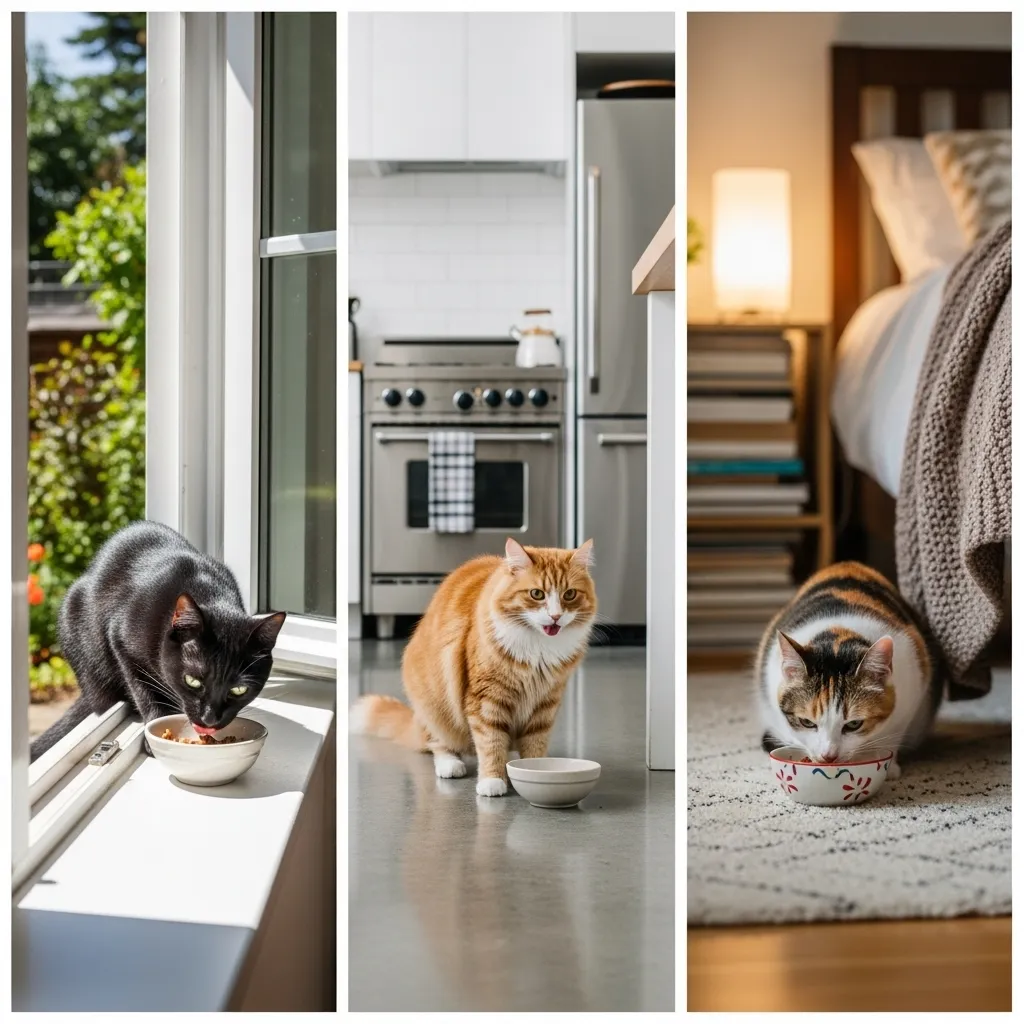
Cat Feeding Tips for Every Personality Type
| Personality | Best Strategy |
|---|---|
| Confident explorer | Elevated feeding stations reduce vulnerability feelings |
| Shy rescuer | Feeding in carrier with door open builds safe space association |
| Senior sweetheart | Soften kibble, add warm water for aroma and easier chewing |
| Multi-cat chaos | Microchip feeders prevent food stealing stress |
Tailor the approach; one size never fits all felines.
The Bigger Picture: Why Cats Behave the Way They Do
Understanding cat behavior problems starts with empathy. Your cat isn’t “manipulating” you – she’s communicating. Mealtime vigilance often signals deeper cat security needs. Address the root, and many other quirks (nighttime zoomies, lap-sitting demands) improve too.
Think of it as relationship maintenance. Ten seconds of eye contact while she crunches can prevent hours of attention-seeking later.
FAQ: Quick Answers to Common Questions
Why do some cats only eat when watched?
Instinct, learned security from kittenhood, or mild anxiety. Your presence equals safety.
Will my cat grow out of needing supervision while eating?
Many do by 2-3 years with consistent routines. Early intervention speeds the process.
Is it bad to always watch my cat eat?
Not inherently, but it can hinder independence and create separation anxiety if you travel.
How can I calm an anxious cat during feeding?
Use pheromone diffusers, play soft classical music, feed in low-traffic areas.
Can I train my cat to eat alone completely?
Yes, 90% of cases respond to gradual desensitization. Stubborn cases may need vet behaviorist input.
Does breed affect this behavior?
People-oriented breeds (Siamese, Ragdoll) show it more; independent types (British Shorthair) less so.
What if my cat stops eating entirely when I leave?
See a vet within 24 hours – cats can develop hepatic lipidosis quickly.
Final Thoughts: Balance Supervision and Independence
Your cat wants me to watch her eat because, in her world, you’re family, protector, and entertainment rolled into one. Honor that bond while gently expanding her comfort zone. A few minutes of presence today prevents dependency tomorrow.
Start small: sit nearby, gradually increase distance, celebrate solo victories. You’ll both gain confidence and you might finally enjoy breakfast without an audience.
Explore more expert cat care and behavior guides on Cat Bloom Haven. From cat bonding tips to advanced cat training for feeding, we’ve got your feline questions covered.