Why Does My Cat Keep Licking His Lips? The Complete Expert Guide to Understanding This Behavior
If you’ve ever caught your cat licking his lips over and over sometimes with a little swallow, sometimes with a worried look you know how unsettling it can feel. One minute everything seems normal, the next you’re googling “cat licking lips repeatedly” at 2 a.m. wondering if you should call an emergency vet.
You’re not overreacting. Cat lip licking is one of those subtle behaviors that can mean anything from “I just finished a tasty meal” to “something is seriously wrong in my mouth or stomach.” In this guide, we’ll walk through every possible reason from the completely harmless to the truly urgent so you know exactly what to watch for and when to act.
Key Takeaways (Read This First)
- Occasional lip licking after eating or grooming is normal.
- Frequent or intense lip licking, especially with swallowing, gagging, drooling, or appetite changes, usually signals a problem.
- The most common serious causes are dental disease, nausea, oral pain, and stress.
- Never ignore lip licking that appears suddenly or lasts more than 24–48 hours.
- A quick mouth check at home can reveal obvious issues (red gums, bad breath, broken teeth), but only a vet can diagnose the real cause.
Now let’s dig deeper.
Normal vs. Abnormal Cat Lip Licking: How to Tell the Difference
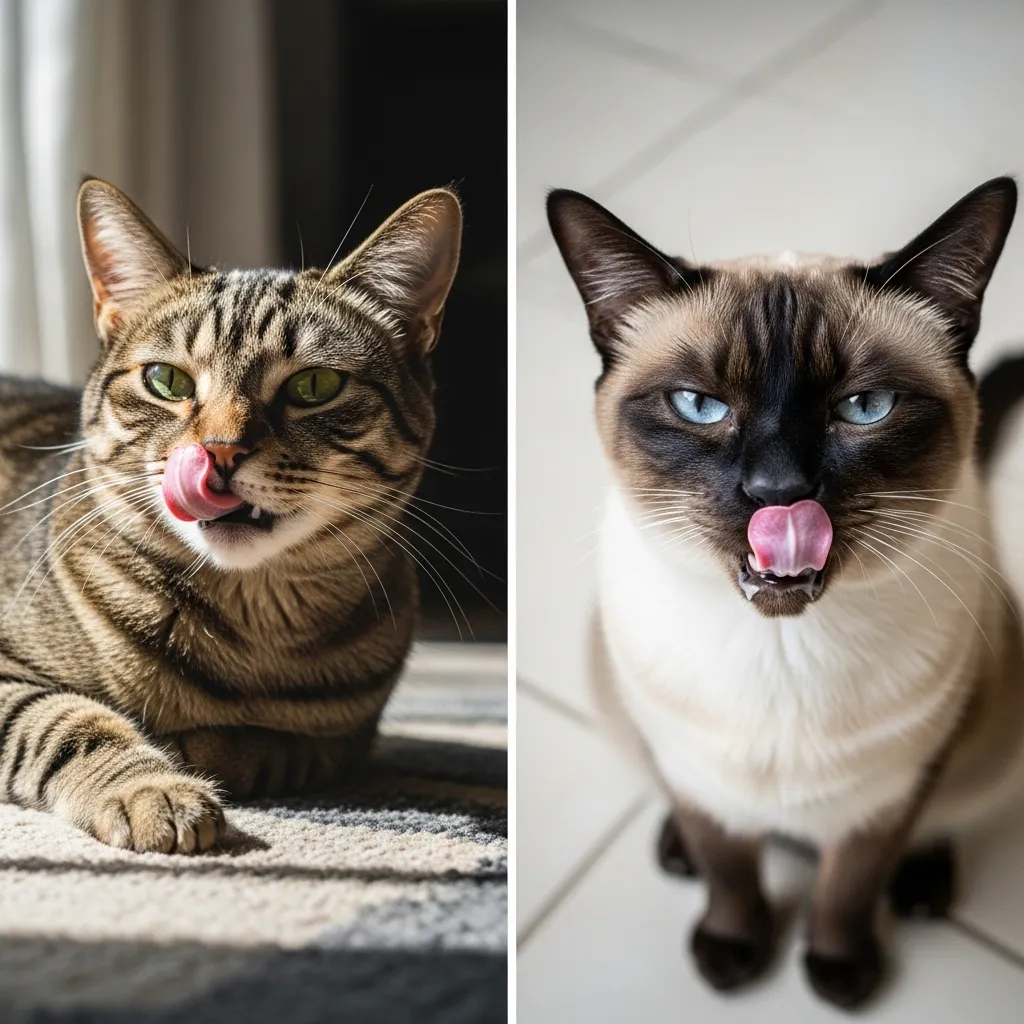
Cats lick their lips for perfectly healthy reasons every day. Understanding the difference between normal and abnormal saves you worry and helps you spot trouble early.
Normal lip licking looks like this:
- A few quick licks right after eating or drinking
- Brief licking during or after grooming
- One or two licks when you offer a treat they love
Abnormal lip licking usually includes:
- Repeated licking every few seconds or minutes
- Licking combined with frequent swallowing
- Lip smacking, teeth chattering, or gagging motions
- Drooling or foamy saliva
- Pawing at the mouth
- Refusing food that they normally love
If your cat keeps licking his mouth and any of the abnormal signs are present, keep reading.
The Top 8 Reasons Your Cat Keeps Licking His Lips
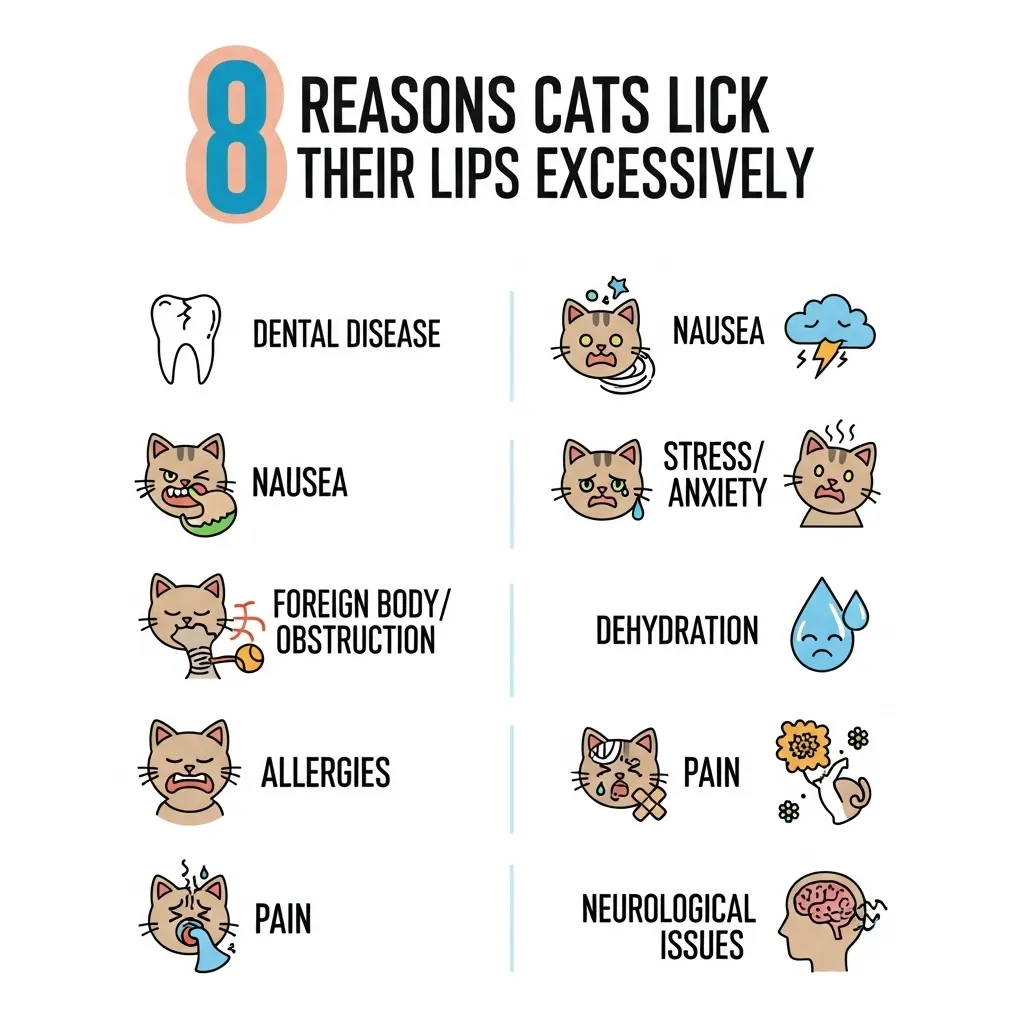
1. Dental Disease and Oral Pain (The #1 Medical Cause)
Up to 70% of cats over age three have some form of dental disease. Gingivitis, periodontitis, tooth resorption, and stomatitis all hurt a lot. Lip licking is often the only outward sign.
Watch for these clues:
- Bad breath that smells like rot or ammonia
- Red, swollen, or bleeding gums
- Brown tartar along the gum line
- Drooling, sometimes tinged with blood
- Dropping food or crying when chewing
What to do: Schedule a veterinary dental exam as soon as possible. Many cats feel dramatically better after professional cleaning and extractions.
2. Nausea and Digestive Discomfort
Cats that feel nauseous lick their lips to soothe the sensation and stimulate saliva production. Common triggers include hairballs, eating too fast, food intolerance, or gastrointestinal upset.
Pair lip licking with:
- Repeated swallowing or gulping
- Grass eating or vomiting
- Reduced appetite
- Retching or bringing up foam
Quick tip: If your cat licks his lips after eating and then vomits undigested food 10–30 minutes later, he may be eating too quickly. Try a slow-feed bowl or puzzle feeder.
3. Stress and Anxiety
Yes, anxiety can make cats lick their lips. It’s a displacement behavior – something they do when they feel conflicted or overwhelmed.
Common anxiety triggers:
- New pet or baby in the home
- Moving house
- Loud noises (construction, fireworks)
- Changes in routine
An anxious cat may also show hiding, reduced appetite, or over-grooming. Lip licking from stress is often episodic and improves when the stressor is removed.
Helpful resource: Read our complete guide to cat stress behaviors and proven calming techniques.
4. Something Stuck in the Mouth or Throat
Grass blades, string, or even a piece of toy can lodge between teeth or wrap around the base of the tongue. Cats lick repeatedly trying to dislodge it.
Signs of a foreign object:
- Pawing frantically at the mouth
- Gagging or retching
- Excessive drooling
- Head shaking
This is an emergency if the object is a needle, thread, or linear material (danger of intestinal blockage).
5. Food Intolerance or Allergies
Some cats develop new sensitivities to proteins in their diet (chicken, fish, beef are common culprits). Symptoms can appear suddenly, even after years on the same food.
Other signs of food intolerance:
- Itchy skin or ears
- Vomiting or diarrhea
- Lip licking mainly after meals
Switching to a limited-ingredient or hydrolyzed protein diet for 8–12 weeks is the only way to confirm.
6. Mouth Ulcers or Stomatitis
Feline chronic gingivostomatitis is a painful inflammatory condition that causes severe ulcers on the gums, tongue, and cheeks. Affected cats often lick their lips constantly and may drool bloody saliva.
This condition usually requires aggressive treatment, including tooth extractions and lifelong management.
7. Toxin Exposure or Bitter Taste
Did your cat just taste something unpleasant? Plants (lilies, aloe), household cleaners, or topical flea medication that gets on their paws can trigger frantic lip licking.
Rinse the mouth gently with water and call your vet or a pet poison hotline immediately if you suspect toxin ingestion.
8. Neurological or Rare Conditions
In very rare cases, lip licking and swallowing can stem from seizures, nerve damage, or behavioral conditions like feline hyperesthesia. These usually come with other unusual symptoms (rippling skin, sudden aggression, staring episodes).
When to Call the Vet: Red-Flag Combinations
Book an appointment the same or next day if you see lip licking plus any of these:
- Visible blood in saliva
- Refusal to eat for more than 24 hours
- Vomiting more than once
- Lethargy or hiding
- Bad breath that appeared suddenly
- Swollen face or jaw
Emergency vet now if:
- Constant drooling and pawing at mouth (possible foreign body or toxin)
- Difficulty breathing
- Collapse or extreme weakness
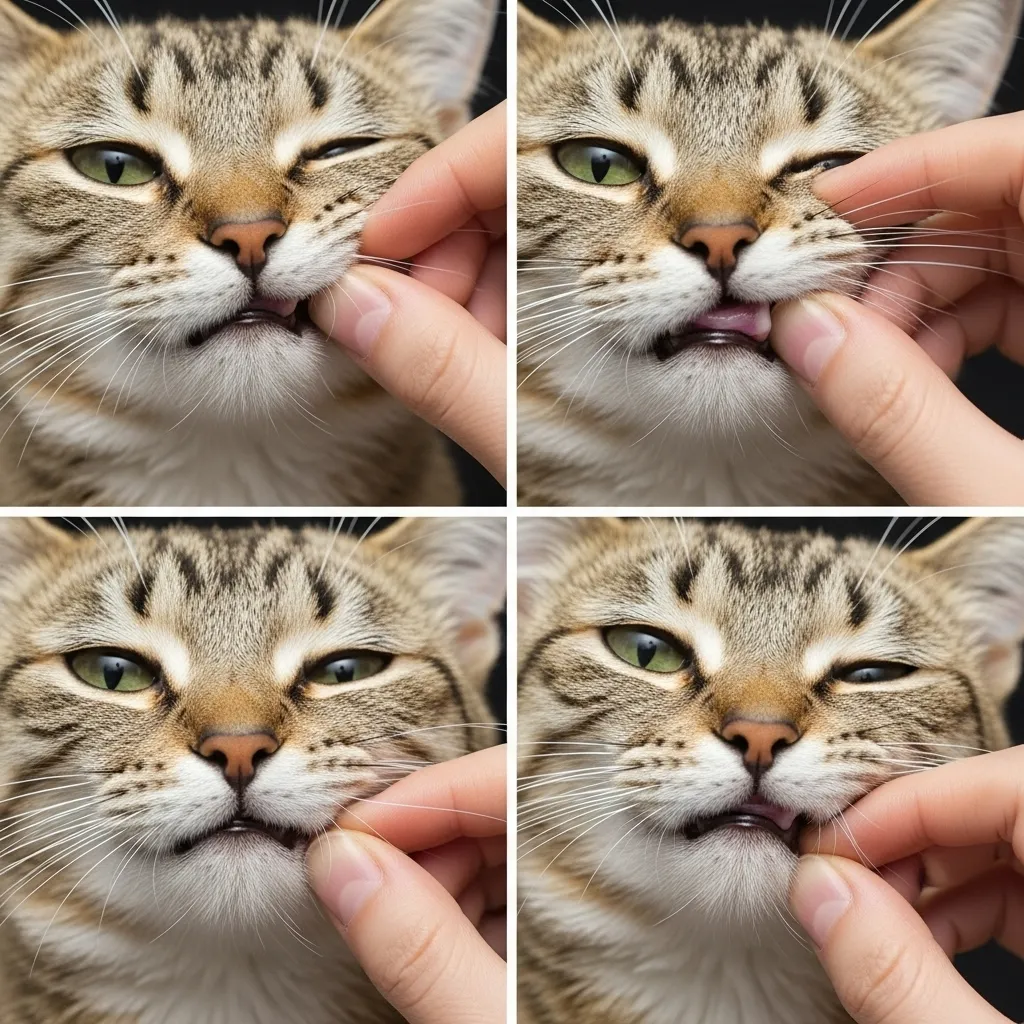
How to Examine Your Cat’s Mouth at Home (Safely)
- Choose a quiet moment when your cat is relaxed.
- Gently lift the lip on one side look for red gums, swelling, or loose teeth.
- Check the back molars if possible; that’s where problems often hide.
- Stop immediately if your cat becomes stressed or tries to bite.
Never force the mouth open. If you see anything abnormal, let the vet do a proper exam under sedation.
Prevention and Daily Habits That Reduce Lip Licking
- Brush your cat’s teeth daily or at least 3–4 times a week (use feline toothpaste only).
- Schedule annual veterinary wellness exams with oral check.
- Feed an age-appropriate, high-quality diet.
- Provide hairball remedy or a hairball-control food if needed.
- Minimize stress with routine, safe spaces, and pheromone diffusers when changes occur.
Frequently Asked Questions
Why does my cat lick his lips and swallow repeatedly?
This combination almost always points to nausea, oral pain, or something irritating the mouth or throat.
Is lip licking after eating normal?
A few licks right after a meal is completely normal. Repeated licking 10–30 minutes later usually means nausea or oral discomfort.
Can dry food cause lip licking?
Yes – large kibble pieces can scrape gums, or your cat may simply dislike the taste/texture of a new formula.
My cat licks his lips when I pet him is that stress?
Possibly. Some cats show mild anxiety through displacement behaviors when overstimulated.
Why does my cat lick his lips and gag at the same time?
Gagging plus lip licking can indicate hairballs, nausea, or a foreign object. Monitor closely.
Will lip licking from anxiety go away on its own?
Usually yes, once the stressor is removed. Chronic anxiety may require pheromone therapy or medication.
Final Thoughts
Watching your cat lick his lips repeatedly is one of those moments that can range from “totally fine” to “we need the vet now.” The vast majority of cases turn out to be dental disease or mild nausea both very treatable when caught early.
Trust your instincts. You know your cat better than anyone. If the behavior feels off, make the call. A quick dental cleaning or diet change can give your cat instant relief and spare you weeks of worry.
For more expert advice on cat health, behavior, and wellness, explore the hundreds of in-depth guides here on Cat Bloom Haven.
Your cat’s comfort is worth it – and so is your peace of mind.