Why Do Cats Meow at Humans? The Complete Guide to Understanding Your Cat’s Voice
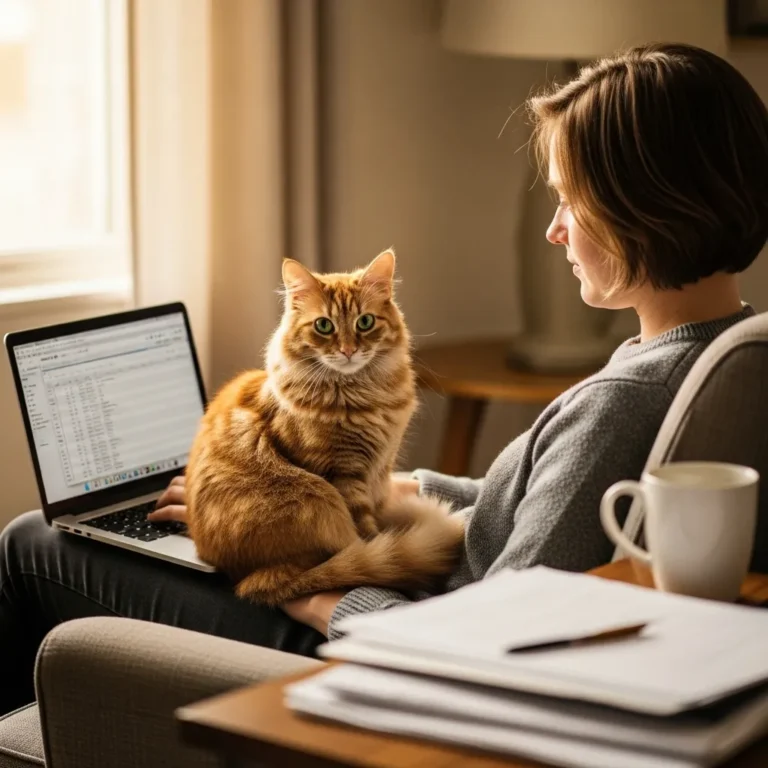
Your cat stares at you and lets out a perfectly timed “mrrrow?” right when you sit down with dinner. Five minutes later, another meow. Then a louder one. Before you know it, you’re having a full conversation with a creature who definitely understands every word you say (or so they’d like you to believe).
If you’ve ever wondered “what does it mean when a cat meows at you,” you’re not alone. This single question is one of the most searched cat behavior topics online for a simple reason: cats meow at humans far more than they meow at other cats. Once you understand why, everything about living with a cat clicks into place.
In this complete cat vocalization guide, we’ll break down every type of meow, what your cat is really saying, and how to respond so both of you feel heard.
Key Takeaways (Read This First)
- Adult cats rarely meow at each other; they developed meowing specifically to talk to humans.
- The same cat can make over 20 different meow variations, each with its own meaning.
- Pitch, length, and volume all carry information; high-pitched meows are usually friendly or requesting, low-pitched can signal annoyance or discomfort.
- Excessive or sudden changes in meowing often point to stress, pain, or unmet needs.
- Combining meows with body language gives you the full message.
Why Do Cats Meow at Humans But Not at Other Cats?
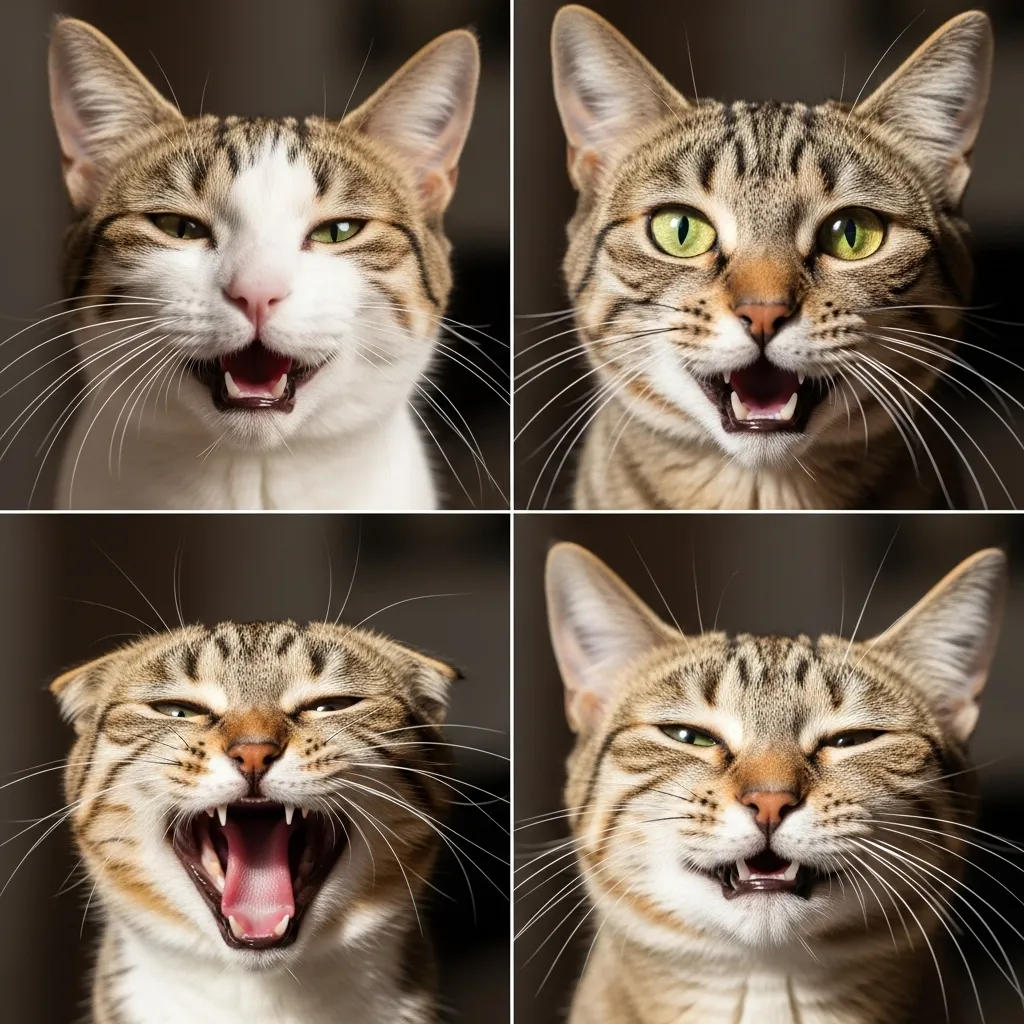
Kittens meow to their mothers. Adult feral cats almost never meow to each other; they use scent, body signals, hisses, growls, and yowls instead. Domestic cats, however, kept the kitten-mother communication channel open and redirected it toward the one species willing to open cans: us.
Scientists call this “neotenization” cats retain juvenile traits into adulthood when it gives them an advantage. Meowing works on humans the same way a baby’s cry works on parents. We’re biologically wired to respond.
Your cat isn’t “talking down” to you. They’re using the most effective tool evolution handed them.
The 7 Main Reasons Behind Cat Meowing
1. Greeting and Acknowledgment
That soft, short “mrrp” or trilling sound when you walk in the door? It’s literally “Hi, you’re back!” Siamese, Bengal, and other vocal breeds often add a rising inflection like a question: “Where have you been?”
2. Attention-Seeking Meows
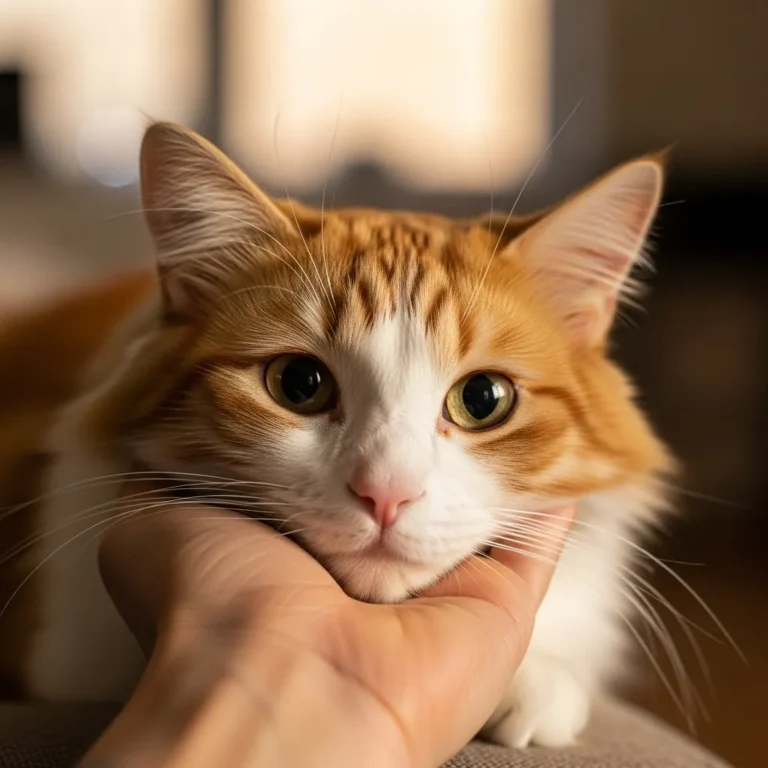
The classic. Your cat wants play, pets, or simply to confirm you still exist. Attention-seeking meows often come in sequences and get louder if ignored.
Pro tip: A quick 2-minute play session or a few calm pets usually resets the cycle better than giving food every time.
[Internal link: Discover exactly how cats show affection in our guide to cat affection signs]
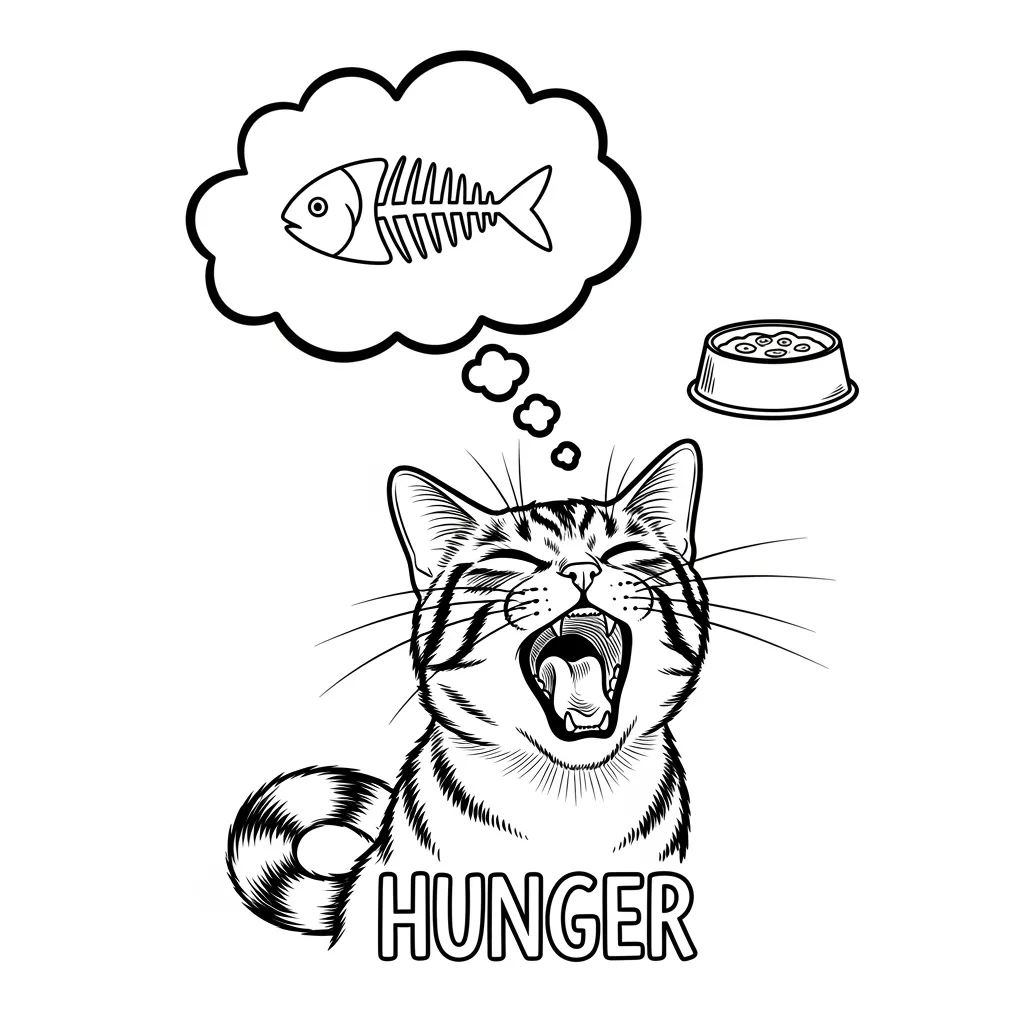
3. Hunger or Food-Related Demands
The food meow is unmistakable: insistent, rhythmic, and often combined with leading you to the bowl. Some cats start this performance 30 minutes before scheduled mealtimes because they’ve trained you well.
4. Desire to Go In or Out
Door-related meows are some of the most frustrating for owners. Cats hate closed doors; it blocks information and opportunity. A polite meow can turn into a full opera if you don’t respond.
5. Stress, Fear, or Discomfort
High-pitched, wavering, or repeated distress meows in cats usually mean something is wrong. Sudden excessive meowing in cats, especially at night, can signal pain, cognitive decline in seniors, or anxiety.
6. Boredom or Desire for Stimulation
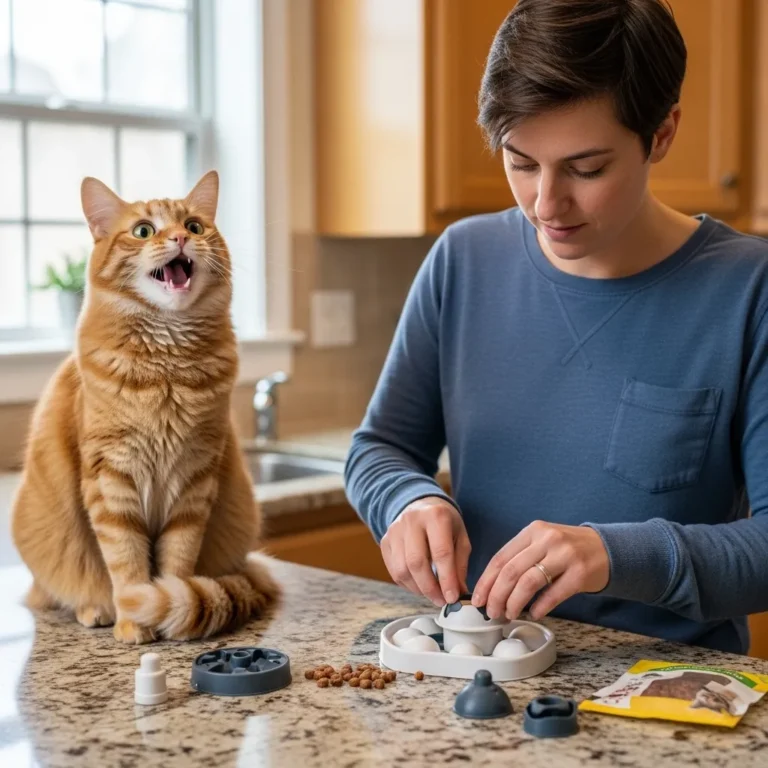
Understimulated cats invent jobs. Meowing at you becomes their new career. Interactive toys, food puzzles, and scheduled playtime are the cure.
7. Affection and Contentment
Yes, some cats “talk” when happy. You’ll hear soft chirps and trills while they head-butt you or knead. It’s the feline version of humming.
Types of Cat Meows: Your Field Guide to Interpreting Cat Sounds
Every cat owner eventually learns their own cat’s vocabulary. Here are the most universal ones:
| Meow Type | Sound Description | Likely Meaning | Typical Body Language |
|---|---|---|---|
| Short, high-pitched | “Mrrp!” or “prrt” | Friendly greeting | Tail up, ears forward, relaxed eyes |
| Long, drawn-out | “Meeeoowww” | Demand (food, door, attention) | Direct stare, tail flicking |
| Low-pitched growl-meow | “Mrr-oww” | Annoyance or mild warning | Ears slightly back, tense body |
| Rapid-fire series | Meow-meow-meow-meow | Urgency or excitement | Pacing, circling |
| Chirrup / Trill | Rising “brrrp” or “mrrrow?” | Happy invitation to follow or play | Tail quiver, bouncy posture |
| Chattering | Teeth-chattering at birds | Frustration or predatory excitement | Staring out window, tail twitching |
| Yowl | Long, low, mournful | Distress, pain, or territorial | Arched back, piloerection (rare toward humans) |
Want to go deeper into cat body language? Read our full cat tail language guide and cat sitting positions meanings
Cat Meow Frequency by Breed: Who Talks the Most?
Some breeds are naturally chattier:
- Siamese & Oriental breeds – Extremely vocal; will hold full conversations
- Bengal – Loud, varied, and opinionated
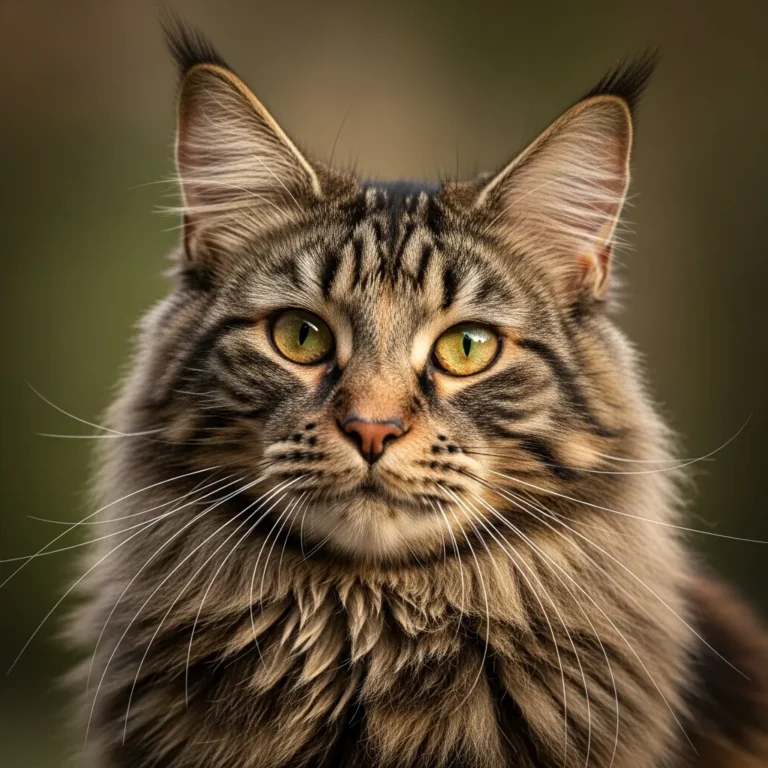
- Maine Coon – Surprisingly talkative with chirps and trills
- Sphynx – Very demanding voice
- American Shorthair & British Shorthair – Usually quiet unless motivated
Age matters too. Kittens meow constantly. Seniors sometimes become more vocal again due to cognitive changes or hearing loss.
Explore personality differences in our complete cat breeds personalities guide
Why Is My Cat Meowing So Much Lately? Red-Flag Causes
A sudden increase in vocalization almost always means something changed. Common triggers:
- Medical issues (hyperthyroidism, hypertension, dental pain, arthritis)
- Hearing or vision loss (they meow more because they’re disoriented)
- Cognitive dysfunction in older cats
- Stress from a new pet, moved furniture, or schedule change
- Unspayed females in heat (continuous loud yowling)
- Separation anxiety in cats (especially worse when you leave or at night)
If your cat starts meowing at night or seems restless, schedule a vet visit first. Pain is the most overlooked reason for sudden excessive meowing.
Cat Meowing at Night: Reasons and Solutions
Nocturnal meowing drives owners crazy. Most cases fall into three buckets:
- Hunger – Switch to a larger evening meal or an automatic feeder timed for 4 a.m.
- Boredom – Add a late-night play session to tire them out.
- Anxiety or cognitive decline – Nightlights, pheromone diffusers, or medication can help.
Why Cats Meow and Rub on Things at the Same Time
Head-bunting + meowing is peak cat affection. They’re leaving facial pheromones (marking you as safe) while verbally checking in. It’s the feline equivalent of “Hey, I love you, feed me now.”
How to Respond to Your Cat’s Meows (Without Reinforcing Bad Habits)
- Greeting meows → Answer back softly and give a quick head scratch.
- Food meows → Stick to scheduled feeding; don’t reward screaming.
- Attention meows → Offer play or affection on your terms, not the second they demand it.
- Distress meows → Investigate immediately and contact your vet if it continues.
Cats learn fast. If yelling works, they’ll keep doing it.
Struggling with unwanted behaviors? Check our cat training and communication tips
FAQ: Your Top Cat Meowing Questions Answered
What does it mean when a cat meows at you constantly?
Usually a bid for attention, food, or access. Rule out medical causes first, especially in seniors or if the behavior is new.
Do different cat breeds meow differently?
Yes. Siamese have a loud, low-pitched voice often described as sounding like a baby. Maine Coons trill more than meow. Quiet breeds like British Shorthair rarely speak unless necessary.
Why has my cat started meowing at night all of a sudden?
Common causes: hunger, boredom, pain, cognitive decline, or anxiety after a change in the household.
Is it normal for cats to meow back when you talk to them?
Completely normal and a sign of bonding. They’re matching your attempt to communicate.
How can I make my cat stop meowing so much?
Meet their needs on a schedule, enrich their environment, and ignore attention-seeking meows (hard but effective). Never punish vocalization; it usually makes things worse.
Final Thoughts: Listen, Respond, and Enjoy the Conversation
Your cat meows at humans because, somewhere along the way, they decided we’re part of their family worth talking to. Every meow is an attempt at connection, whether they’re saying hello, demanding dinner, or telling you their leg hurts.
Pay attention to pitch, context, and body language, and you’ll understand your cat better than most owners ever do. The reward? A deeper, calmer, and often hilarious relationship with the small creature who has graciously allowed you to live in their home.
Ready for more expert insights into cat behavior and care? Explore the rest of Cat Bloom Haven from breed guides to health tips and everything in between.
Your cat has a lot to say. Keep listening.