Why Does My Cat Bite Me and Not My Husband? A Deep Dive into Cat Biting Behavior, Bonding, and How to Stop It for Good
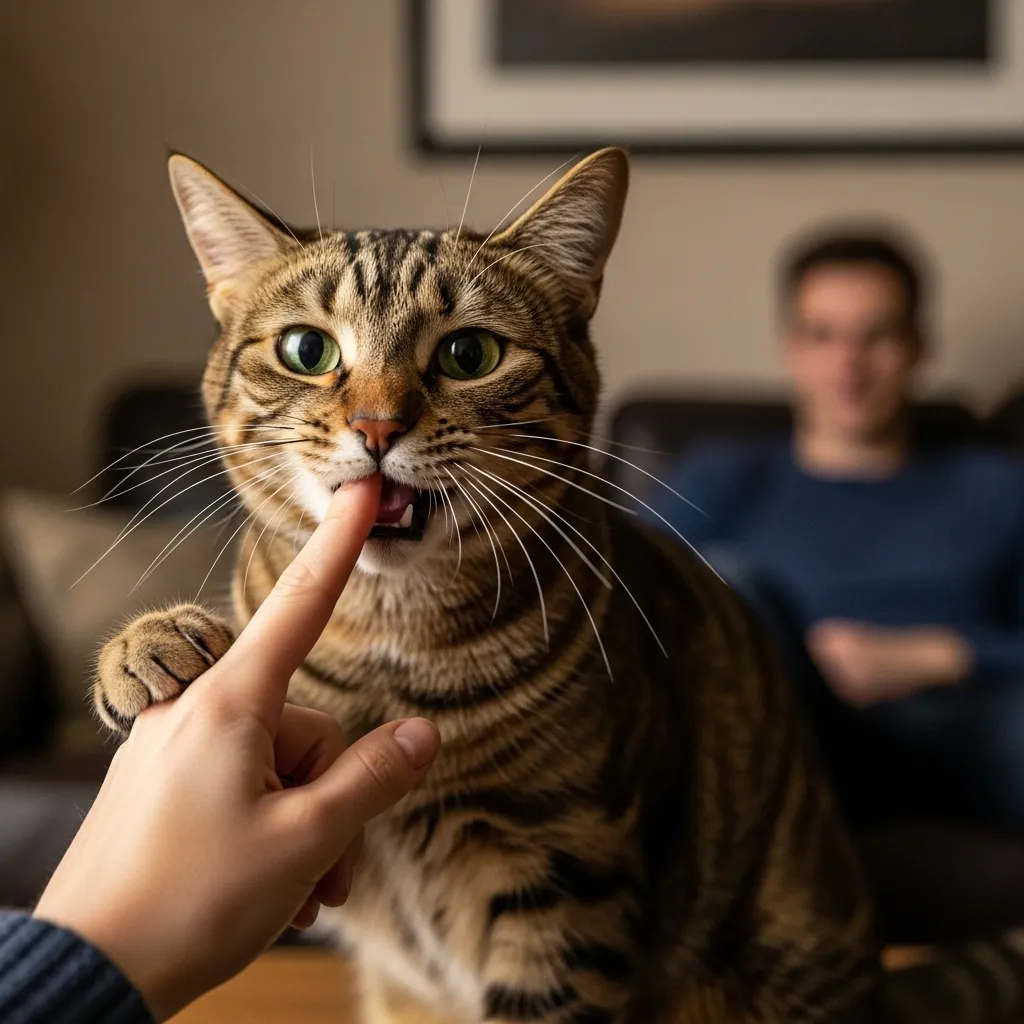
Picture this: You’re lounging on the couch, giving your cat a gentle scratch behind the ears, when chomp! those sharp little teeth sink into your hand. Meanwhile, your husband walks by, and your feline friend couldn’t care less. No swipes, no hisses, not even a playful nibble. If you’ve ever wondered, “Why does my cat bite me and not my husband?” you’re not alone. This puzzling cat biting behavior frustrates thousands of cat owners every year, but the reasons are rooted in feline psychology, bonding patterns, and subtle triggers most people overlook.
In this comprehensive guide from Cat Bloom Haven, we’ll unpack the reasons cats bite their owners, explain playful vs aggressive cat bites, reveal how cats choose their favorite person, and give you vet-approved strategies to prevent cat biting behavior once and for all. Whether your cat is overstimulated, poorly socialized, or simply sees you as their primary playmate, you’ll walk away with actionable solutions.
Key Takeaways :
- Cats bite specific people due to attachment strength, play habits, or overstimulation thresholds.
- Playful biting feels soft and is often preceded by pouncing; aggressive biting is sudden, hard, and accompanied by hissing or flattened ears.
- Cats form stronger bonds with the person who feeds, plays, or grooms them most explaining cat preferences in multi-person households.
- You can stop cat biting with positive reinforcement, redirected play, and reading feline body language.
Understanding Cat Aggression Explained: It’s Not Personal (Usually)
Let’s start with a truth bomb: Cat aggression isn’t always about anger. In fact, most causes of cat aggression stem from fear, overstimulation, or misplaced play instincts not malice. According to feline behaviorists, cats bite for six primary reasons:
- Play aggression – Kittens learn hunting through mock attacks.
- Overstimulation – Too much petting crosses a sensory threshold.
- Fear or stress – Sudden movements or loud noises trigger defense.
- Redirected aggression – Your cat lashes out at you after seeing a stray outside.
- Pain or illness – Undiagnosed arthritis or dental issues cause irritability.
- Territorial instincts – Especially in multi-cat or multi-person homes.
Expert Tip: Dr. Sarah Wooten, DVM, notes: “Cats don’t have a concept of ‘fairness.’ They react to stimuli in the moment. If you’re the one petting them when they hit their limit, you get the bite not your husband who’s across the room.”
But why you and not your partner? That’s where cat-human bonding and cat attachment to humans come in.
How Cats Choose Their Favorite Person: The Science of Feline Affection
Cats aren’t aloof they’re selective. Research from Oregon State University shows cats form secure attachments similar to human infants, but with one key difference: they choose based on interaction quality, not quantity.
Who Becomes the “Favorite”?
| Factor | Why It Matters | Example |
|---|---|---|
| Primary Caregiver | Feeding, litter scooping, grooming | You refill the bowl → stronger bond |
| Play Style Match | High-energy vs calm play | You use wand toys → more engagement |
| Scent Familiarity | Cats recognize “their” humans by smell | You sleep with the cat → scent bonding |
| Respect for Boundaries | Stops petting when asked | Husband backs off → less overstimulation |
In most cases, the cat bites the person they’re most bonded to because that’s who they interact with most. Your husband? He might be the “cool uncle”—present, but not the main event.
Real-Life Example: “My cat Luna only bites me during cuddle sessions,” says Jenna from Texas. “My fiancé barely pets her. Turns out, I was overstimulating her with belly rubs she didn’t want!”
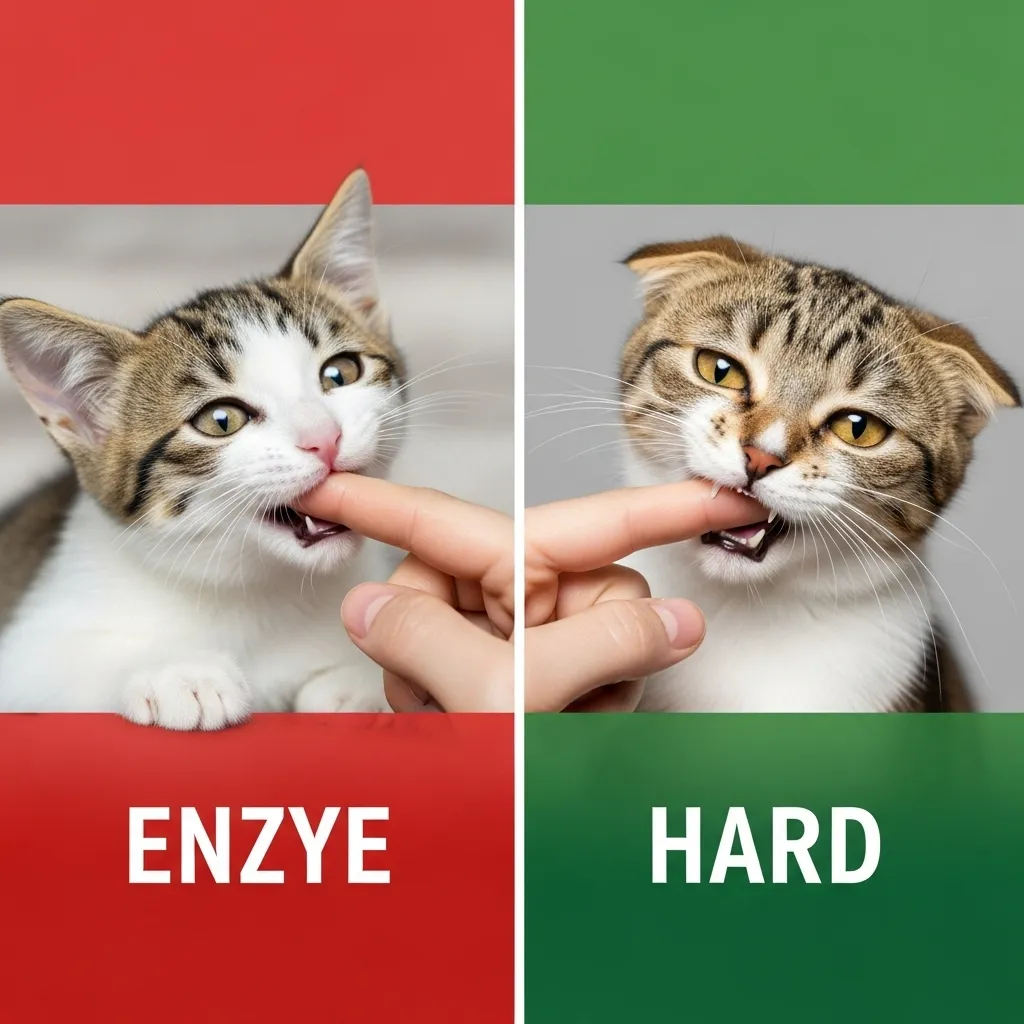
Playful vs Aggressive Cat Bites: How to Tell the Difference
Not all bites are created equal. Here’s a side-by-side breakdown:
| Playful Cat Bites | Aggressive Cat Bites |
|---|---|
| Soft, inhibited pressure | Hard, skin-breaking force |
| Preceded by play bow or wiggling | Sudden, no warning |
| Ears forward, tail wagging | Ears flat, tail thrashing |
| Stops when you yelp or freeze | Continues or escalates |
| Often during active play | Triggered by stress or pain |
Pro Tip: If your cat leaves puncture wounds or draws blood, it’s not play. Seek a vet to rule out cat socialization issues or medical causes.
Signs of Cat Overstimulation: The #1 Cause of “Petting and Biting”
This is the most common trigger for cats biting one owner but not another.
Classic Signs of Cat Overstimulation (The “Petting Tolerance Threshold”)
- Tail twitching or lashing
- Skin rippling along the back
- Ears flicking backward
- Sudden stillness before the bite
- Dilated pupils
Vet-Backed Insight: The average cat tolerates 3–7 seconds of petting before overstimulation kicks in (Journal of Feline Medicine and Surgery, 2022). If you’re the designated “petter,” you’re more likely to cross this line.
Solution: Use the “3-Second Rule” pet for 3 seconds, pause, and watch body language. Resume only if tail is calm and ears are forward.
Interpreting Feline Body Language: Your Cat’s Silent Warnings
Cats communicate 90% through non-verbal cues. Missing these is like ignoring a flashing red light.
Key Cat Communication Signals to Watch
| Body Part | Relaxed | Warning | Danger |
|---|---|---|---|
| Ears | Forward | Rotating sideways | Flat against head |
| Tail | Loose, curved | Twitching tip | Puffed, thrashing |
| Eyes | Soft blink | Wide stare | Dilated pupils |
| Whiskers | Relaxed | Pulled back | Forward, tense |
Action Step: Film your cat during petting sessions. Slow-motion replay reveals micro-signals you miss in real time.
Triggers for Cat Biting: Why It Happens in Multi-Person Households
Let’s decode cat preferences in multi-person households:
- You’re the “Fun Parent” – You initiate play → cat sees you as a wrestling buddy.
- Scent Transfer – You handle the cat more → your smell = safety (and target practice).
- Energy Mismatch – High-energy cats bite calm owners who don’t “play rough” enough.
- Past Trauma – Rescued cats may bite women more if abused by a female in the past.
Case Study: A client’s cat bit only the wife. Turns out, the husband used a laser pointer daily redirected play reduced bites by 80% in two weeks.
How to Prevent Cat Biting Behavior: 7 Vet-Approved Strategies
Ready to stop the bites? Here’s your step-by-step plan.
1. Master Positive Reinforcement for Cats
- Reward calm behavior with treats or clicker training.
- Ignore bites (no yelling reinforces attention-seeking).
2. Introduce Redirected Play
- Use wand toys or kicker fish to satisfy hunting instincts.
- End sessions before overstimulation (5–10 minutes max).
3. **Respect *Cat Attachment to Humans* Boundaries**
- Let the cat initiate contact.
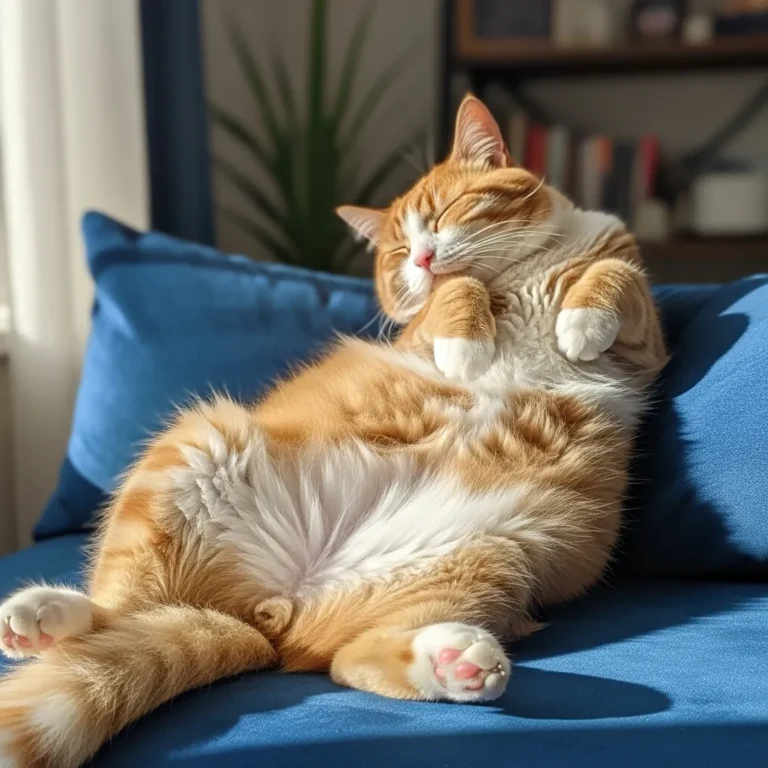
- Avoid belly rubs unless invited (rare!).
4. Enrich the Environment
- Add vertical space (cat trees, shelves).
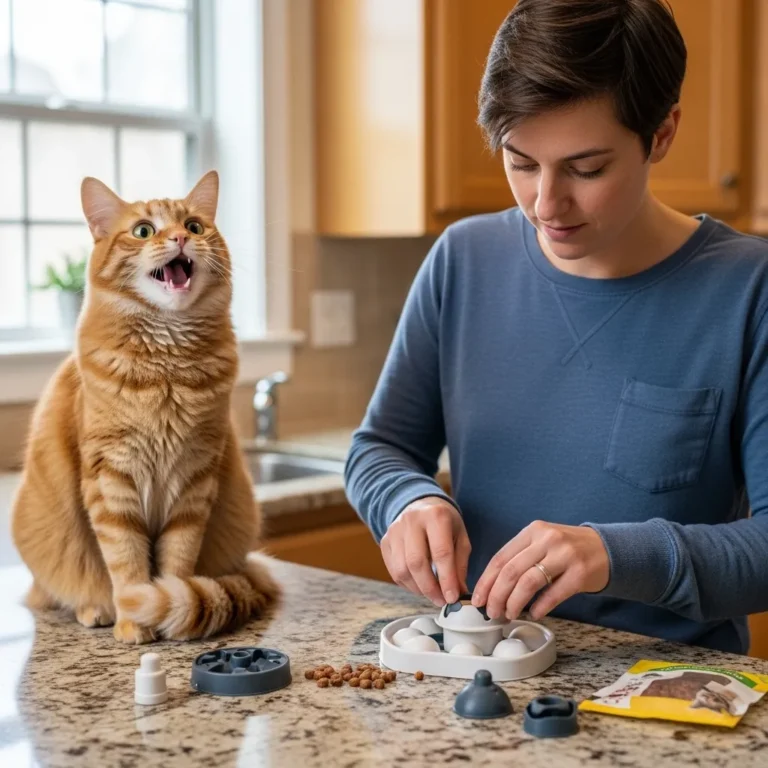
- Use puzzle feeders to reduce boredom aggression.
5. Rule Out Medical Causes
- Annual vet exams + dental checks.
- Bloodwork for hyperthyroidism or pain.
6. Desensitize Over Time
- Pair petting with treats (classical conditioning).
- Gradually increase duration as tolerance builds.
7. Balance Household Roles
- Have your husband feed/play 50% of the time to redistribute bonding.
Cat Socialization Issues: When Early Life Shapes Adult Behavior
Kittens not handled between 2–7 weeks often develop fear-based biting. Adult cats can improve, but it takes patience.
Socialization Red Flags
- Hisses at new people
- Hides during visitors
- Bites ankles when approached
Fix: Use treat luring and short, positive exposures. Never force interaction.
Real Owner Stories: “My Cat Stopped Biting Me After This…”
Maria, 34: “I was the only one playing with Mr. Whiskers. Once my partner started morning feather wand sessions, the bites dropped 70%. It was jealousy!”
Liam, 28: “Turns out my cat hated the scented lotion I used. Switching to unscented = zero bites in a month.”
FAQ: Your Top Cat Biting Questions Answered
How can I tell if my cat’s biting is playful or aggressive?
Playful bites are soft, inhibited, and part of a play sequence. Aggressive bites break skin and come with hissing or flattened ears.
Why might a cat show affection to one person but not another?
Cats bond strongest with their primary caregiver (feeder, player). The “less involved” person avoids overstimulation.
How can I prevent my cat from biting me specifically?
Use the 3-second petting rule, redirect play to toys, and have your husband share caregiving duties.
What role does socialization play in cat biting?
Poor kittenhood socialization leads to fear-biting in adulthood. Resocialization with treats and patience helps.
What are common triggers for cat biting?
Overstimulation, rough play, pain, or seeing outdoor cats through windows.
How do I respect my cat’s body language?
Stop petting at the first tail twitch or ear flick. Let the cat re-approach.
Final Thoughts: Reclaim Peaceful Cuddles with Your Cat
Your cat isn’t choosing sides they’re reacting to patterns, energy, and instinct. By understanding cat biting behavior, respecting signs of cat overstimulation, and balancing cat-human bonding, you can transform those painful nibbles into purrs.
Start tonight: Hand the wand toy to your husband, set a 3-second petting timer, and watch the magic unfold.
Ready for more? Explore expert cat care and behavior guides on Cat Bloom Haven from American Shorthair playful personality to stop cat biting and everything in between.
Your cat doesn’t hate you they just need better communication. Let’s fix that. 🐾
Discover more cat behavior secrets in our ultimate guide to understanding cat behavior.]