How to Clean Cat Poop from Carpet: A Step-by-Step Guide to Stain and Odor Removal
Picture this: You walk into your living room, and there it is, a fresh (or worse, not-so-fresh) pile of cat poop on your carpet. Your heart sinks. The smell hits next. But don’t panic. Accidents happen, even with the most well-trained cats. The good news? You can fully remove cat poop stains, eliminate odors, and restore your carpet, often with items you already have at home.
In this complete guide, we’ll walk you through how to clean cat poop from carpet safely, effectively, and fast. Whether it’s fresh, dried, or smeared in by curious paws, you’ll learn pet-safe methods, natural cleaners, enzyme-powered solutions, and prevention tips to keep your home fresh and your cat happy.
Key Takeaways Up Front
- Act fast: The sooner you clean, the easier stain and odor removal becomes.
- Never use ammonia-based cleaners; they mimic urine and attract repeat offenses.
- Enzyme cleaners are the gold standard for breaking down organic matter and eliminating smells.
- Always blot, don’t rub, to avoid pushing waste deeper into fibers.
- Combine mechanical removal, cleaning, and disinfection for best results.
- Address underlying cat behavior to prevent future accidents.
Why Cat Poop Accidents Happen on Carpet
Cats are clean creatures by nature. When they go outside the litter box, something’s usually off. Understanding why helps you clean up and prevent repeats.
Common triggers include:
- Litter box issues: Dirty box, wrong litter type, or poor location.
- Medical problems: Diarrhea from diet changes, parasites, or GI upset.
- Stress or anxiety: New pets, moving, or loud noises.
- Territorial marking: Especially in multi-cat homes.
- Age-related decline: Senior cats may struggle to reach the box in time.
Pro Tip: If accidents become frequent, schedule a vet visit. Conditions like inflammatory bowel disease or urinary issues can cause inappropriate elimination. Explore our detailed guide on cat litter box problems for deeper insights.
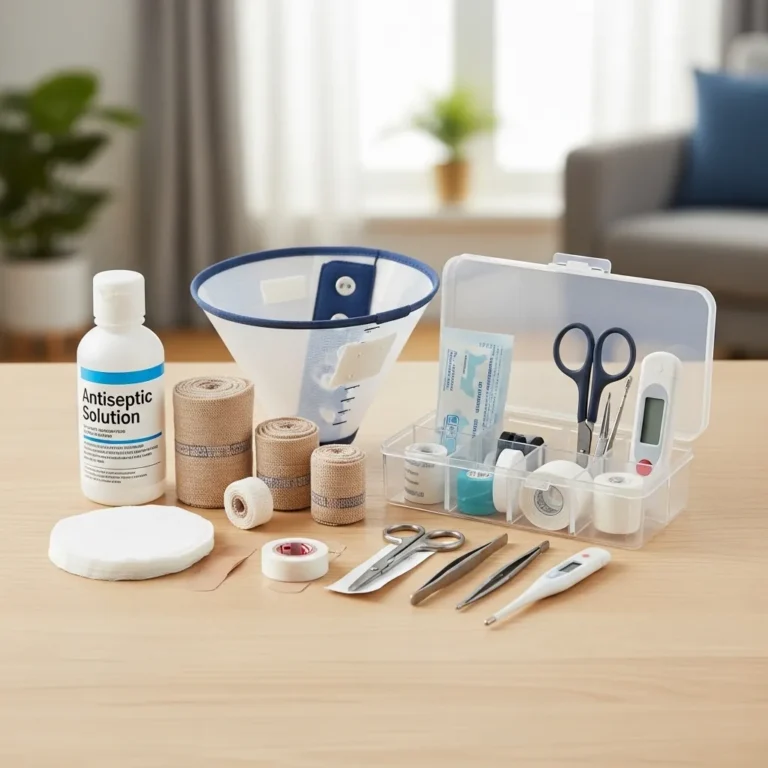
Tools and Supplies You’ll Need
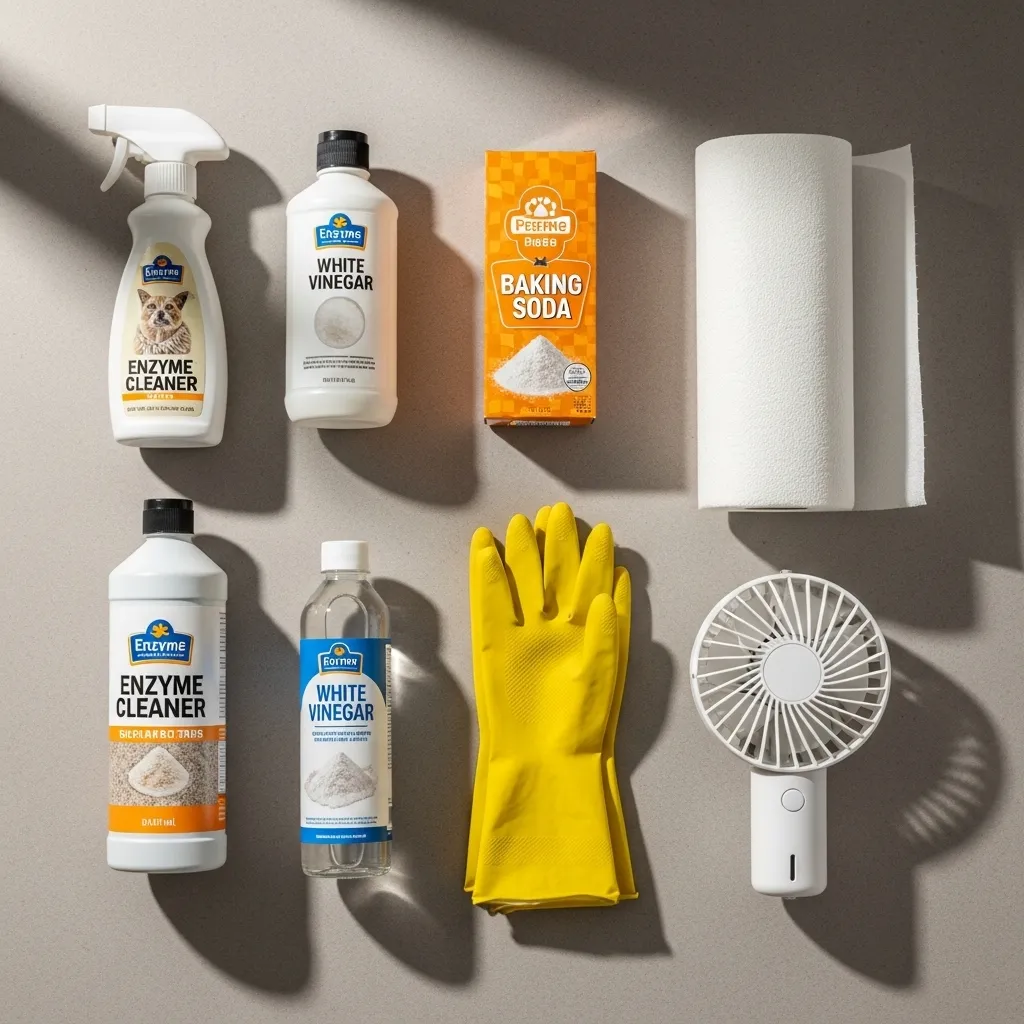
Gather these before starting. Having everything ready speeds up the process and prevents spreading.
| Item | Purpose | Pet-Safe? |
|---|---|---|
| Paper towels or disposable rags | Solid waste pickup | Yes |
| Plastic scraper or spoon | Lift dried poop | Yes |
| Enzyme cleaner (e.g., Nature’s Miracle, Rocco & Roxie) | Break down proteins and odors | Yes |
| White vinegar + water (1:1) | Natural deodorizer and mild cleaner | Yes |
| Baking soda | Absorb odors | Yes |
| Clean white cloths | Blotting | Yes |
| Gloves | Hygiene | Yes |
| Trash bag | Waste disposal | Yes |
| Fan or open windows | Speed drying | Yes |
Step 1: Remove Solid Waste Immediately
Time is critical. The longer poop sits, the deeper it seeps.
For Fresh Poop
- Put on gloves.
- Use paper towels to gently lift as much solid matter as possible.
- Fold the towel inward to trap waste and dispose in a sealed bag.
- Avoid pressing down; this pushes residue into carpet fibers.
For Dried or Smashed-In Poop
- Use a plastic scraper to gently lift crusted pieces.
- Work from the outside in to avoid spreading.
- Vacuum loose particles with a hose attachment (no brush roll).
Warning: Never use a steam cleaner on fresh accidents. Heat sets stains and odors permanently.
Step 2: Blot and Pre-Treat the Area
After removing solids, address liquid and residue.
- Blot the spot with clean, dry paper towels to absorb moisture.
- Mix a solution of 1 part white vinegar to 1 part warm water.
- Lightly dampen a white cloth with the mixture.
- Blot (don’t rub) from the edges toward the center.
- Repeat until no more color transfers to the cloth.
This step neutralizes odor and begins breaking down organic matter.
Step 3: Apply an Enzyme Cleaner (The Odor Eliminator)
This is non-negotiable for cat poop smell removal.
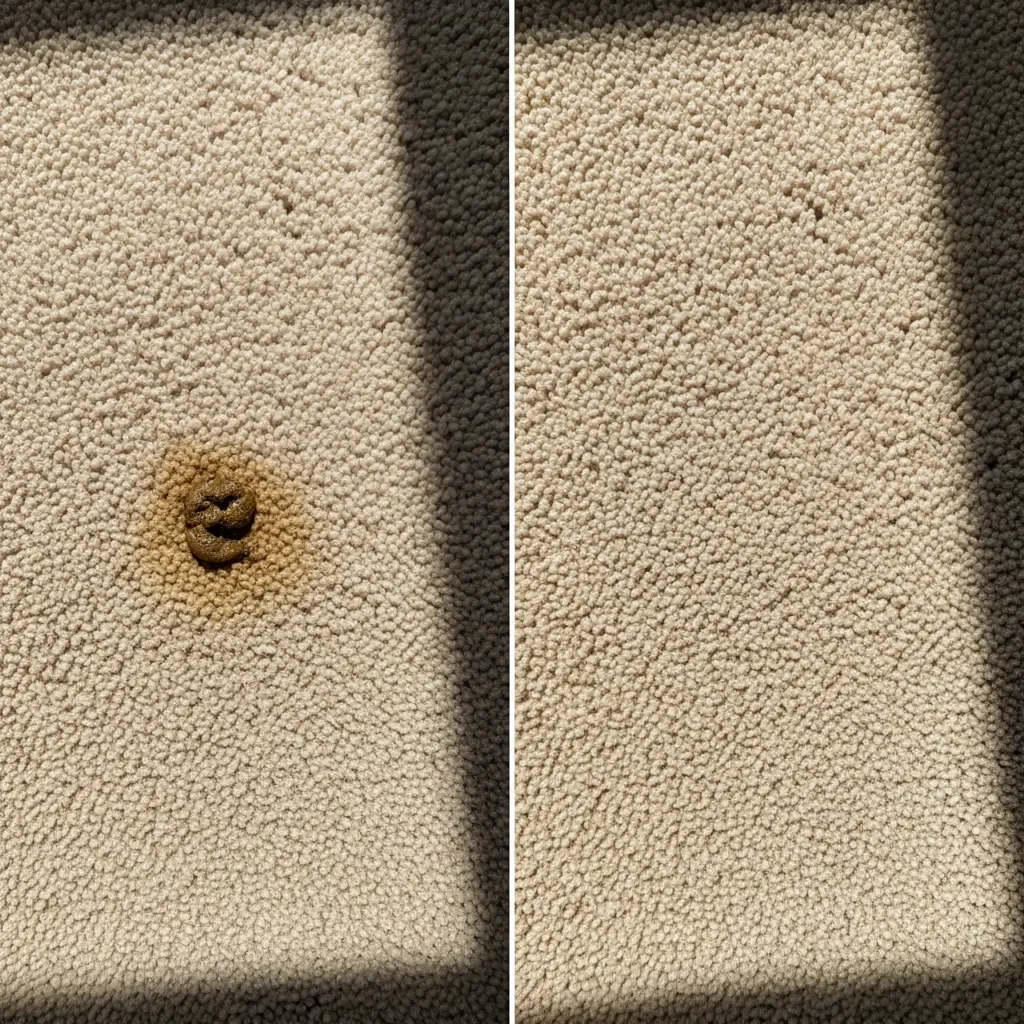
Enzyme cleaners contain live bacteria that eat the proteins in poop, urine, and vomit, fully eliminating odor at the source.
How to Use Enzyme Cleaner
- Test in an inconspicuous area first.
- Saturate the spot completely; the cleaner must reach the padding beneath.
- Let it sit for 15–30 minutes (or per label instructions).
- Blot excess with a clean towel.
- Allow to air dry fully.
Best Enzyme Cleaner for Cat Poop 2025:
- Rocco & Roxie Stain & Odor Eliminator – Fast-acting, clove scent.
- Nature’s Miracle Cat Enzymatic Cleaner – Budget-friendly, trusted for decades.
- Angry Orange Enzyme Cleaner – Citrus-powered, great for multi-pet homes.
Real Owner Story: “My Bengal had diarrhea on our cream carpet. One application of Rocco & Roxie, and the smell was gone in 24 hours. No re-marking!” – Sarah, Cat Bloom Haven reader.
Discover more enzyme cleaner recommendations in our pet stain carpet cleaning guide.
Step 4: Deodorize with Baking Soda (Optional but Effective)
Once the area is dry:
- Sprinkle a generous layer of baking soda over the spot.
- Gently work it into the fibers with a soft brush.
- Let sit for 4–8 hours (overnight is best).
- Vacuum thoroughly.
This pulls lingering odors from deep within the carpet.
Step 5: Disinfect Carpet After Pet Accident
Poop carries bacteria like E. coli and parasites. Disinfection protects your family.
Pet-Safe Disinfectant Options
- Hydrogen peroxide (3%) + water (1:3): Apply, let bubble 5 minutes, blot.
- Veterinary-grade disinfectants like Rescue or F10SC (diluted per instructions).
Avoid bleach; it’s toxic to cats and damages carpet.
How to Dry Carpet After Cleaning
Wet carpet invites mold and mildew. Speed drying with:
- A fan pointed at the area.
- Open windows for cross-ventilation.
- A wet/dry vac to extract moisture.
- Elevate furniture legs if needed.
Most spots dry in 6–12 hours. Check padding beneath if heavily soaked.
Natural Cleaners for Cat Poop: DIY Recipes
Short on enzyme cleaner? Try these household cleaning solutions for pet stains:
Vinegar + Dish Soap Boost
- 1 cup warm water
- 1 cup white vinegar
- 1 tsp mild dish soap (Dawn is safe)
- Apply, blot, rinse with water, blot dry.
Club Soda Method
- Pour club soda over the stain.
- Let fizz for 2 minutes.
- Blot with a clean towel.
- Great for fresh, soft poop.
Cleaning Dried Cat Poop from Carpet
Dried poop is trickier but manageable:
- Scrape off crust with a dull knife.
- Vacuum loose flakes.
- Soften remaining residue with a damp cloth for 5 minutes.
- Follow enzyme cleaner steps above.
How to Remove Poop Stains from Carpet Naturally
Stubborn brown stains? Try this:
- Make a paste: 3 parts baking soda + 1 part hydrogen peroxide.
- Apply to stain.
- Let dry completely (2–4 hours).
- Vacuum.
Works on old, set-in marks.
Deep Clean Carpet After Pet Accident
For severe or repeated accidents:
- Rent a hot water extraction cleaner (like Rug Doctor).
- Use pet-specific carpet shampoo.
- Extract slowly for maximum soil removal.
Do this after enzyme treatment, not instead of it.
Preventing Cat Accidents: Long-Term Solutions
Cleaning is half the battle. Here’s how to stop repeats.
1. Optimize the Litter Box
- One box per cat, plus one extra.
- Scoop daily, full clean weekly.
- Use unscented, clumping litter.
- Place in quiet, accessible spots.
Learn more in our litter training guide.
2. Address Stress and Behavior
- Provide vertical space, scratching posts, and playtime.
- Use pheromone diffusers (Feliway) in high-stress homes.
- Rule out medical causes with your vet.
3. Block Access to Problem Areas
- Close doors or use baby gates.
- Place double-sided tape or aluminum foil on carpet; cats hate the texture.
4. Maintain a Clean Carpet with Cats
- Vacuum 2–3 times weekly.
- Spot-clean immediately.
- Schedule professional cleaning yearly.
Check out our full guide on how to maintain a clean carpet with cats.
Fast Cat Poop Stain Remover: Emergency Hack
Stepped in it? Need results in under 10 minutes?
- Scoop solids.
- Pour club soda directly on the spot.
- Blot with paper towels.
- Sprinkle cornstarch to absorb moisture.
- Vacuum after 5 minutes.
Not perfect, but buys time until full cleaning.
Eco-Friendly Carpet Cleaning for Cat Owners
Love the planet and your cat? Go green:
- Bio-enzyme cleaners (Seventh Generation, ECOS).
- Reusable microfiber cloths instead of paper towels.
- Solar-powered fans for drying.
When to Call a Professional
Some messes need expert help:
- Large areas or deep padding saturation.
- Persistent odor after multiple cleanings.
- Vintage or delicate carpets.
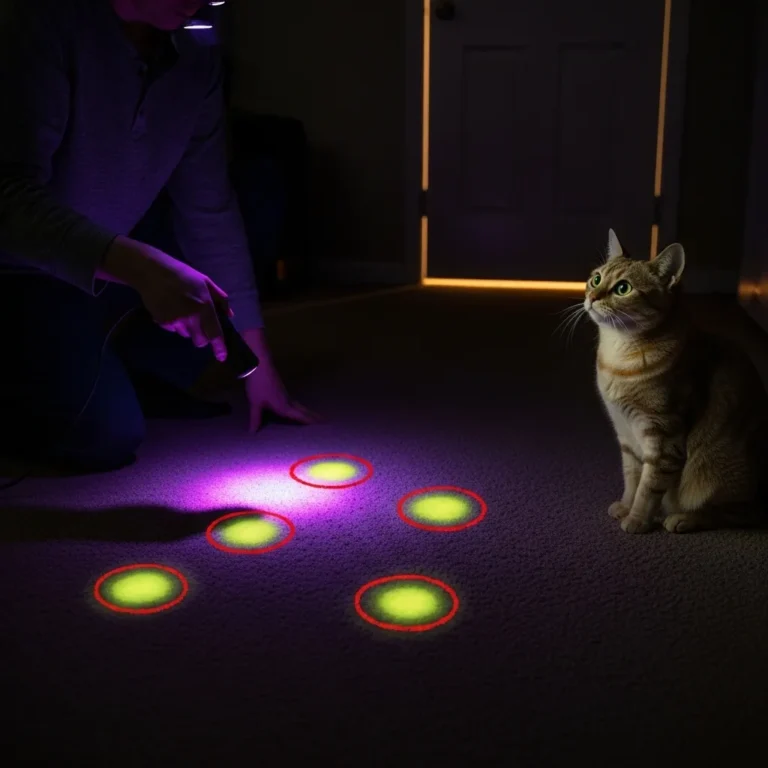
Pros use truck-mounted extraction and UV tools to find hidden residue.
FAQ: Your Top Cat Poop Carpet Questions Answered
What is the best way to clean cat poop from carpet?
Remove solids, blot with vinegar solution, apply enzyme cleaner, and let air dry. Baking soda helps with lingering smells.
How do I get rid of cat poop odor in carpet?
Enzyme cleaners are essential. They break down odor-causing proteins. Follow with baking soda and thorough drying.
Can I use bleach to clean cat poop from carpet?
No. Bleach is toxic to cats and damages fibers. Use pet-safe enzyme cleaners instead.
How do I remove old, dried cat poop stains?
Scrape, soften with warm water, then use enzyme cleaner. For color stains, try a baking soda + peroxide paste.
Is vinegar safe for cleaning cat accidents?
Yes, in moderation. It neutralizes odor but won’t fully eliminate deep stains without enzymes.
How long does it take to dry carpet after cleaning cat poop?
6–12 hours with good airflow. Use fans and open windows to speed it up.
Why does my cat keep pooping on the carpet?
Check litter box cleanliness, stress, or health issues. Frequent accidents warrant a vet visit.
Final Thoughts: Keep Your Home Fresh and Your Cat Happy
Cleaning cat poop from carpet doesn’t have to be a nightmare. With the right steps, you can erase stains, banish odors, and prevent future accidents. Act fast, use enzyme power, and address the root cause.
Your carpet, your nose, and your feline friend will thank you.
Ready for more expert cat care tips? Explore our full library of behavior, health, and cleaning guides at Cat Bloom Haven. From funny cat memes to American Shorthair care, we’ve got you covered.