How to Tackle Cat Matted Fur: Your Ultimate Guide to Pain-Free Grooming and a Healthy Coat
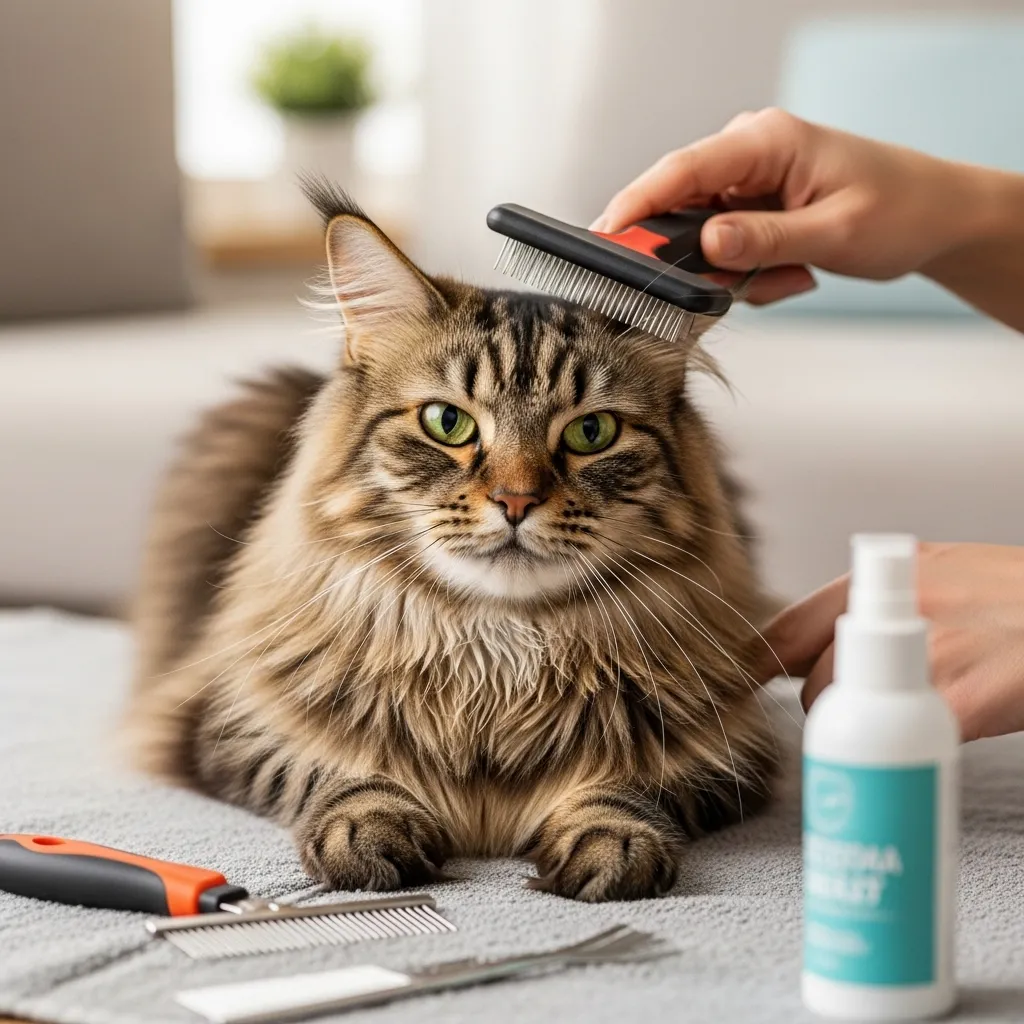
Dealing with cat matted fur can feel overwhelming, especially when your feline friend starts to look more like a tangled ball of yarn than a sleek pet. Matted fur isn’t just a cosmetic issue it can cause discomfort, skin irritation, or even infections if left unchecked. Whether you’re a new cat parent or a seasoned owner of a long-haired beauty, this guide will walk you through everything you need to know about removing matted fur, preventing it, and keeping your cat’s coat healthy and smooth. From step-by-step de-matting techniques to the best tools and preventive tips, we’ve got you covered with expert advice to make grooming stress-free for both you and your cat.
In this article, you’ll learn:
- Why cat fur gets matted and how to spot it early.
- Safe, pain-free methods to remove cat matted fur at home.
- The best tools and techniques for cat grooming for matted fur.
- Tips for long-haired cat maintenance to prevent future mats.
- When to seek professional cat grooming services for severe cases.
Let’s dive in and help your cat feel their best!
Key Takeaways for Cat Matted Fur Solutions
- Understand the Cause: Matted fur often stems from poor grooming, humidity, or health issues like obesity or arthritis.
- Act Early: Regular brushing prevents mats from worsening and reduces discomfort.
- Use the Right Tools: A mat comb for cats or de-matting tool is essential for safe removal.
- Prioritize Comfort: Pain-free grooming techniques keep your cat calm and cooperative.
- Know When to Get Help: Severe mats may require a vet or professional groomer.
- Prevent Mats: Daily brushing and proper nutrition keep your cat’s coat healthy.
Explore our detailed guide on cat fur care for more tips on maintaining a shiny, mat-free coat.
What Is Cat Matted Fur and Why Does It Happen?
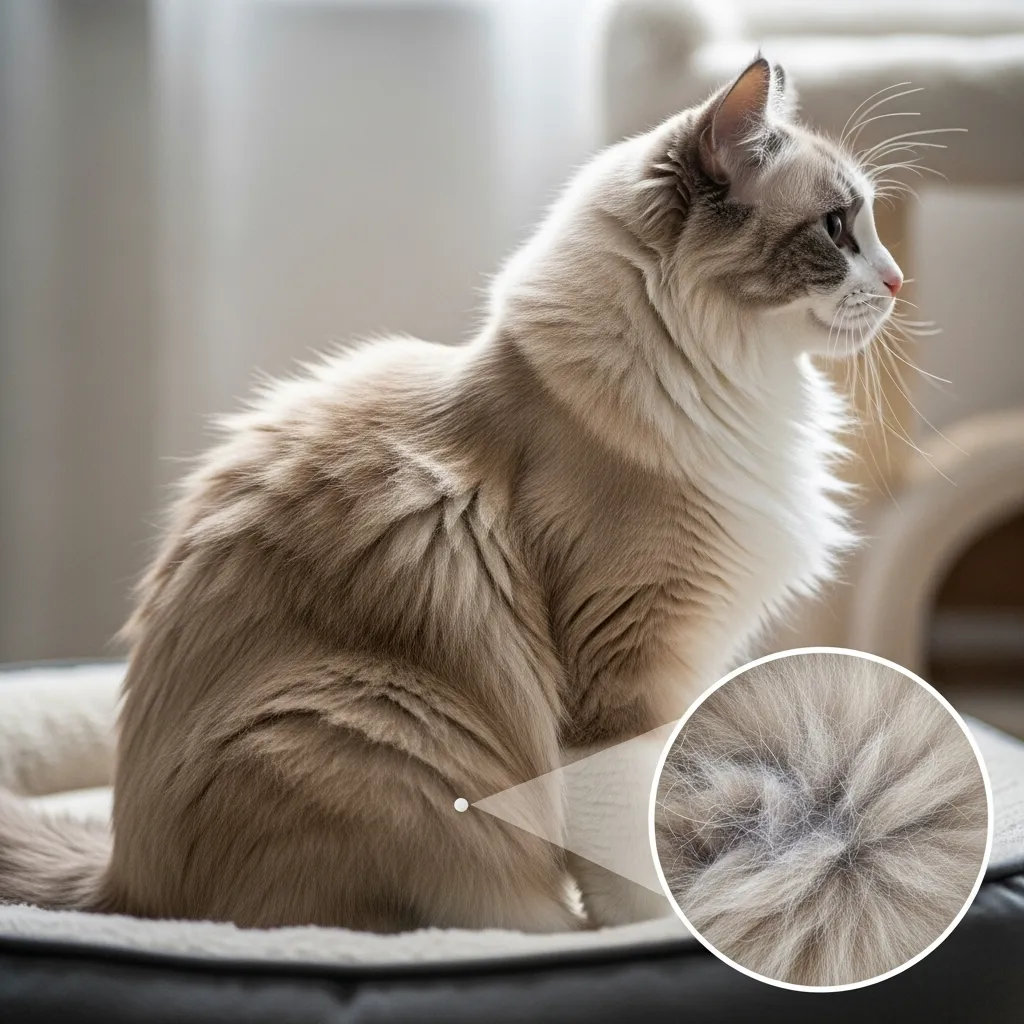
Matted fur occurs when loose hairs tangle and clump together, forming tight knots that can pull on your cat’s skin. These mats are most common in long-haired breeds like Persians, Maine Coons, or Norwegian Forest Cats, but even short-haired cats can develop them. Mats can range from small, loose clumps to large, dense patches that are painful to touch.
Causes of Cat Matted Fur
Understanding why your cat’s fur gets matted is the first step to addressing it. Here are the most common culprits:
- Lack of Regular Grooming: Cats that aren’t brushed regularly, especially long-haired breeds, are prone to tangles.
- Shedding: Loose fur that isn’t removed can knot together, especially during heavy shedding seasons.
- Environmental Factors: Humidity, dirt, or sticky substances (like food or litter) can cause fur to clump.
- Health Issues: Obesity, arthritis, or dental problems can make it hard for cats to groom themselves effectively.
- Skin Conditions: Allergies or infections can lead to excessive scratching or oily fur, promoting matting.
Curious about why your cat might be struggling to groom? Check out our cat health care guide for insights into underlying issues.
Why Does My Cat’s Fur Get Matted More Often?
If you’re noticing frequent matting, it could be tied to your cat’s breed, age, or lifestyle. Long-haired cats like Ragdolls or Siberians naturally require more grooming than short-haired breeds like the American Shorthair. Older cats or those with mobility issues may struggle to reach certain areas, leading to mats on their back or hindquarters. Stress or changes in routine can also reduce a cat’s self-grooming habits, making regular brushing even more critical.
Recognizing the Signs of Matted Fur
Before diving into how to detangle cat fur, it’s important to spot mats early. Look for these signs:
- Tangled Clumps: Fur that feels rough or looks clumped, often near the base of the tail, belly, or behind the ears.
- Behavioral Changes: Your cat may flinch, hiss, or avoid being touched in matted areas due to pain.
- Skin Irritation: Redness, scabs, or bald spots under mats signal discomfort or infection.
- Excessive Scratching: Mats can itch, causing your cat to scratch or over-groom certain spots.
If you notice these signs, act quickly to prevent discomfort or complications like skin infections.
How to Remove Cat Matted Fur Safely at Home
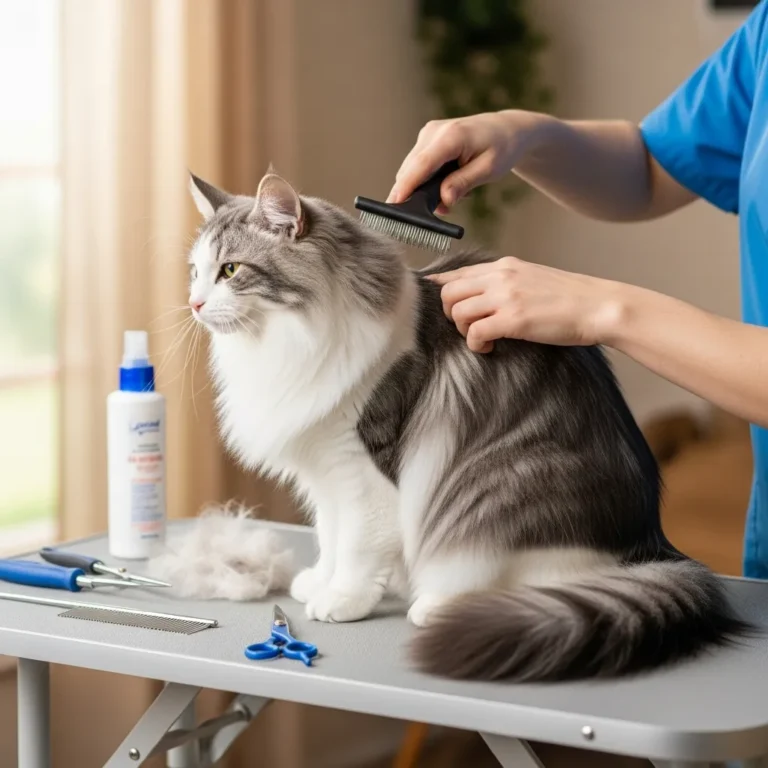
Removing cat matted fur requires patience, the right tools, and a gentle approach to keep your cat comfortable. Rushing or using improper techniques can cause pain or stress, making future grooming sessions a battle. Here’s a step-by-step guide to de-matting cat fur at home.
Step 1: Prepare for a Stress-Free Grooming Session
A calm cat is a cooperative cat. Set the stage for success:
- Choose a Quiet Space: Pick a familiar, distraction-free area like a cozy corner of your home.
- Gather Tools: You’ll need a mat comb for cats, de-matting tool, or wide-tooth comb, plus treats for rewards.
- Check Your Cat’s Mood: Groom when your cat is relaxed, not hungry or agitated.
- Use a Towel: Place a towel under your cat to catch loose fur and keep them comfortable.
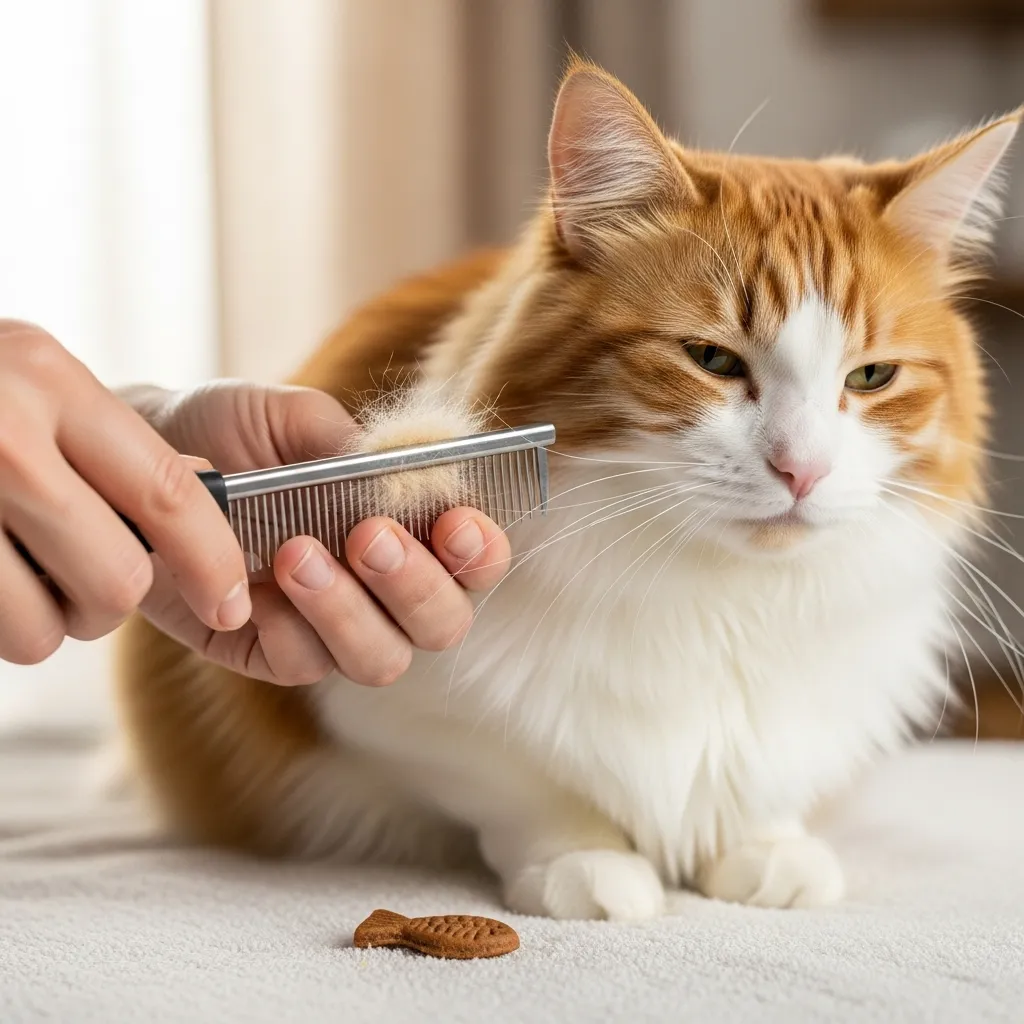
Step 2: Gently Detangle Small Mats
For minor mats, you can often work them out without cutting:
- Start at the Edges: Use your fingers or a wide-tooth comb to gently tease apart the mat, working from the outer edges inward.
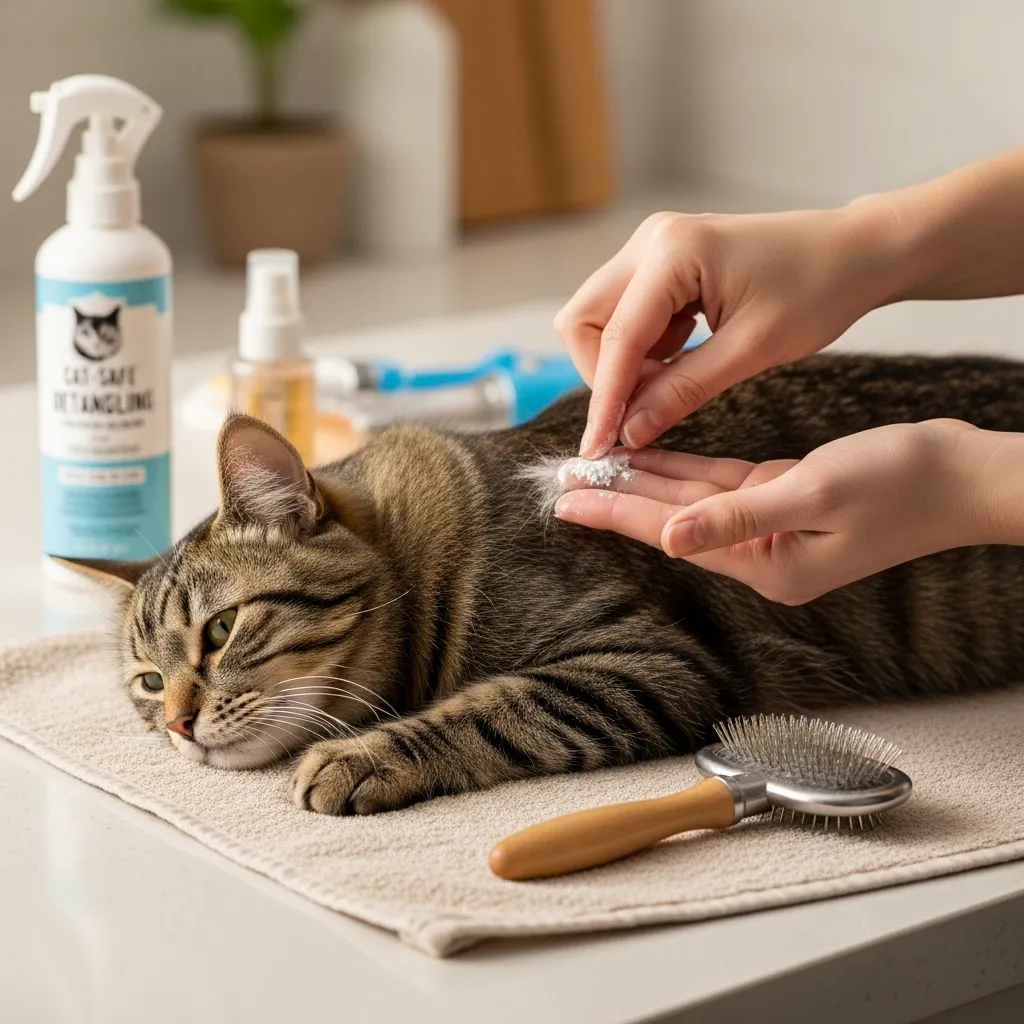
- Apply a Detangling Spray: A cat-safe detangling spray (available at pet stores) can loosen knots and make combing easier.
- Work Slowly: Take breaks if your cat seems stressed, offering treats to keep them calm.
- Avoid Pulling: Pulling on mats can hurt your cat and damage their skin.
Want more tips on keeping your cat calm during grooming? Discover our cat stress signs guide for expert advice.
Step 3: Tackle Stubborn Mats with a De-Matting Tool
For tougher cat fur knots removal, a specialized de-matting tool is your best friend. These tools have sharp, curved blades designed to cut through mats without harming the skin.
- Hold the Mat: Gently grasp the mat at its base to prevent pulling on the skin.
- Use Short Strokes: Work the de-matting tool through the mat in small, controlled strokes, moving away from the skin.
- Check for Irritation: After removing the mat, inspect the skin for redness or sores and clean with a vet-approved antiseptic if needed.
- Reward Your Cat: Offer treats or praise to reinforce positive grooming experiences.
Step 4: Post-Grooming Care
Once the mats are gone, follow up to keep your cat comfortable:
- Brush the Area: Use a slicker brush to smooth out the fur and prevent new tangles.
- Check for Skin Issues: Mats can hide infections or parasites, so monitor the area for a few days.
- Clean Up: Remove loose fur from the grooming area to keep your home tidy.
Learn more about maintaining a healthy coat in our cat fur care guide.
Best De-Matting Tools for Cats
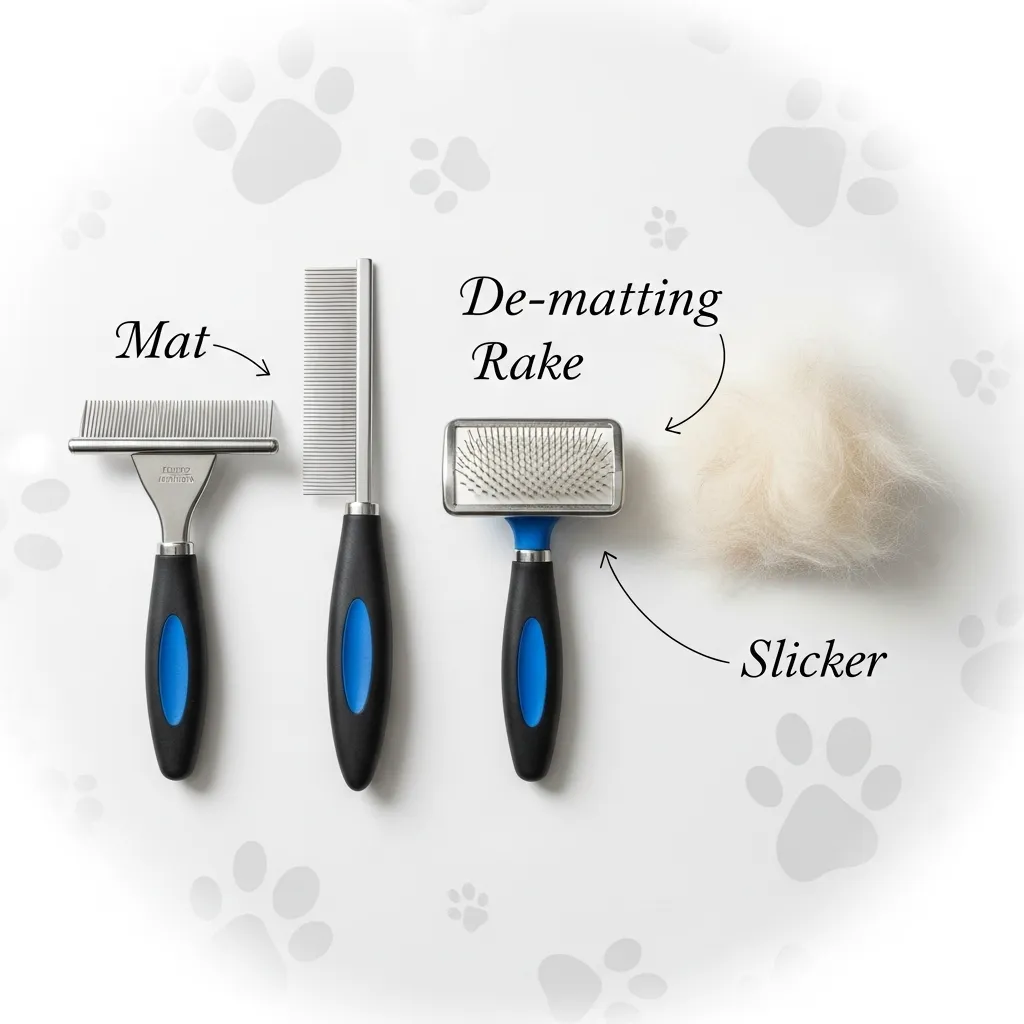
Choosing the right tools makes cat grooming for matted fur easier and safer. Here’s a quick comparison of top options:
| Tool | Best For | Pros | Cons |
|---|---|---|---|
| Mat Comb for Cats | Small to medium mats | Precise, affordable, easy to use | May not handle severe mats |
| De-Matting Rake | Long-haired cats | Cuts through tough mats safely | Requires careful handling |
| Slicker Brush | Preventing mats | Gentle, good for daily use | Less effective for existing mats |
| Electric Clippers | Severe mats | Quick for large mats | Can scare cats; risk of nicks |
Top Picks:
- Safari De-Matting Comb: Great for long-haired breeds, with sharp but safe blades.
- Hertzko Slicker Brush: Ideal for daily brushing to prevent mats.
- GoPets Dematting Comb: Dual-sided for versatility with small and large mats.
Pro Tip: Always choose tools designed for cats, as dog grooming tools may be too harsh. Check out our cat grooming tips for more tool recommendations.
Pain-Free Cat Grooming: Tips for a Happy Cat
Grooming a cat with matted fur can be stressful, but these pain-free cat grooming tips will keep your feline friend relaxed:
- Start Young: Introduce grooming early to build a positive routine, especially for long-haired cat grooming tips.
- Use Positive Reinforcement: Reward your cat with treats or playtime after grooming.
- Keep Sessions Short: Limit grooming to 5–10 minutes for skittish cats, gradually increasing as they get comfortable.
- Watch for Stress Signals: Dilated pupils, flattened ears, or growling mean it’s time for a break.
- Use Calming Aids: Pheromone sprays or calming treats can ease anxiety during grooming.
Explore more ways to keep your cat calm in our cat stress signs guide.
Caring for Long-Haired Cats Prone to Matting
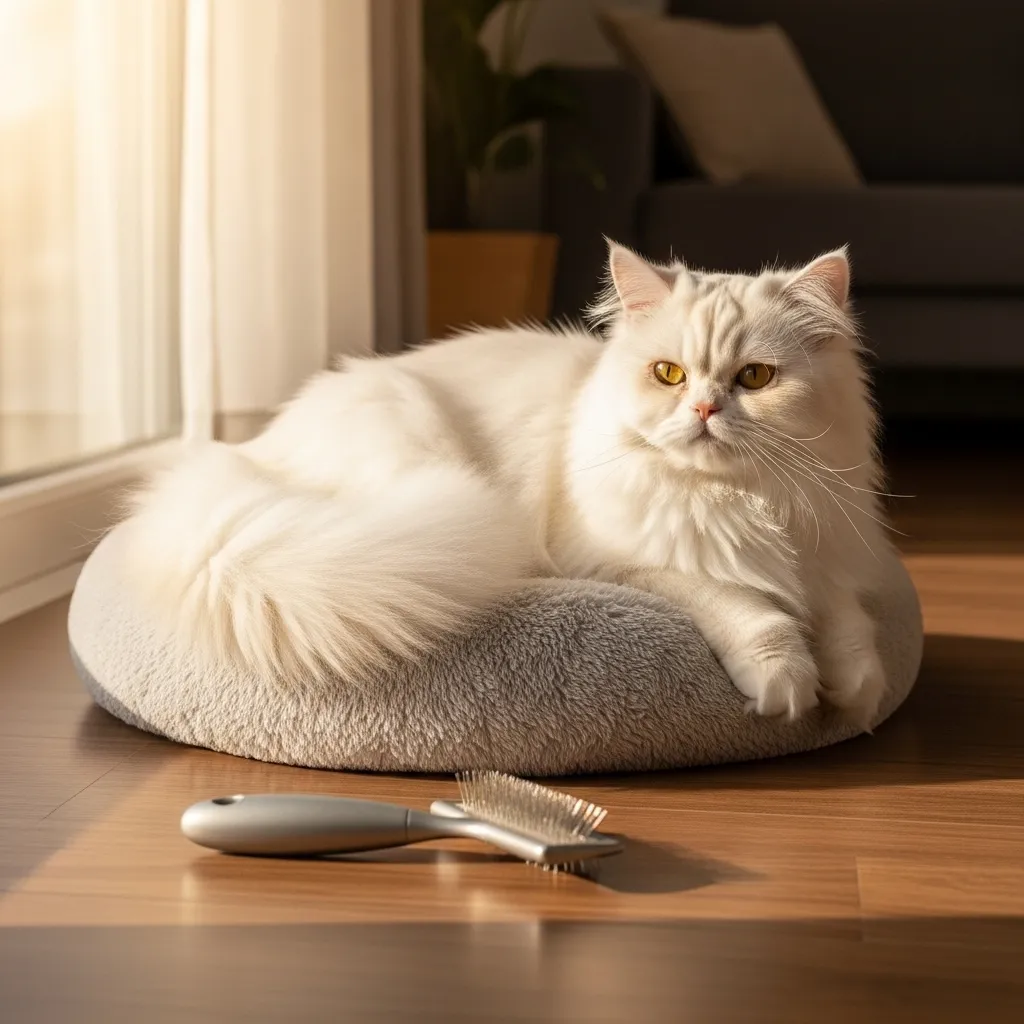
Long-haired breeds like Persians, Ragdolls, and Norwegian Forest Cats are especially prone to matting. Here’s how to manage long-haired cat maintenance:
- Daily Brushing: Use a slicker brush or wide-tooth comb to remove loose fur and prevent tangles.
- Focus on Problem Areas: Pay extra attention to the belly, hindquarters, and behind the ears.
- Bathe Sparingly: Over-bathing can strip natural oils, leading to matting. Use a cat-safe shampoo when needed.
- Monitor Diet: A balanced diet rich in omega-3 fatty acids supports a healthy, tangle-free coat.
Discover breed-specific grooming tips in our Persian cat breed guide or Norwegian Forest cat grooming guide.
When to Seek Professional Cat Grooming Services
Some mats are too severe for home grooming, especially if they’re close to the skin or causing pain. Here’s when to call in the pros:
- Large or Tight Mats: Mats that cover large areas or are tightly knotted may require clipping.
- Skin Irritation or Infection: Red, sore, or oozing skin under mats needs a vet’s attention.
- Stressed or Aggressive Cats: If your cat won’t tolerate grooming, a professional can handle it safely.
- Recurring Mats: Frequent matting may signal an underlying health issue that a vet can diagnose.
Professional groomers use specialized tools and techniques to remove mats without stress. Search for cat grooming near me to find trusted local services, or ask your vet for recommendations.
Need help finding a vet? Check out our guide on finding the best vet for your cat.
Preventing Cat Mats: Long-Term Solutions
Preventing cat hair matting solutions is easier than dealing with mats after they form. Here’s how to keep your cat’s coat smooth and healthy:
- Establish a Brushing Routine: Brush your cat 2–3 times a week (daily for long-haired breeds) to remove loose fur.
- Use the Right Brush: A slicker brush or mat comb for cats works best for most breeds.
- Keep Your Cat Active: Exercise helps cats groom themselves by improving mobility.
- Monitor Health: Regular vet checkups catch issues like obesity or arthritis that can lead to matting.
- Groom After Baths: If bathing your cat, ensure their fur is fully dry and brushed to prevent tangles.
Learn more about keeping your cat’s coat healthy in our healthy cat coat care guide.
Home Remedies for Matted Cat Fur
For minor mats, these home remedies for matted cat fur can help:
- Cornstarch: Lightly dust cornstarch on small mats to loosen them, then comb gently.
- Coconut Oil: A tiny amount can soften mats, but use sparingly to avoid greasy fur.
- Detangling Spray: DIY sprays with water and a drop of cat-safe conditioner can ease combing.
Caution: Avoid human hair products or oils not approved for cats, as they can be toxic. Always consult your vet before trying new remedies.
Common Mistakes to Avoid When De-Matting Cat Fur
To ensure pain-free cat grooming, steer clear of these pitfalls:
- Using Scissors: Cutting mats with scissors risks nicking your cat’s skin. Use a de-matting tool instead.
- Pulling Too Hard: Tugging on mats causes pain and makes your cat dread grooming.
- Ignoring Skin Issues: Mats can hide infections or parasites, so always check the skin after removal.
- Skipping Regular Brushing: Waiting until mats form makes grooming harder than preventing them.
FAQ: Quick Answers to Common Cat Matted Fur Questions
What causes fur matting in cats?
Matting is caused by loose fur tangling due to poor grooming, shedding, humidity, or health issues like obesity or arthritis.
What’s the best way to remove cat mats?
Use a mat comb for cats or de-matting tool, work gently from the edges inward, and take breaks to keep your cat calm.
How can I groom a cat with matted fur without causing pain?
Use a detangling spray, work slowly, and reward your cat with treats. Stop if they show signs of stress.
When should I seek professional grooming services?
Call a professional for large, tight mats, skin irritation, or if your cat is too stressed for home grooming.
How do I prevent cat fur mats?
Brush regularly, use a slicker brush, monitor your cat’s health, and ensure a balanced diet for a healthy coat.
What are the best de-matting tools for cats?
Top choices include the Safari De-Matting Comb, Hertzko Slicker Brush, and GoPets Dematting Comb for safe, effective mat removal.
Want more answers? Explore our cat grooming tips for additional insights.
Conclusion: Keep Your Cat’s Coat Mat-Free and Healthy
Dealing with cat matted fur doesn’t have to be a struggle. By understanding the causes, using the right tools, and following a regular cat brushing routine, you can keep your cat’s coat smooth, shiny, and comfortable. Whether you’re tackling minor tangles at home or seeking professional cat grooming services for severe mats, patience and care are key to a happy, healthy cat.
Start implementing these cat hair matting solutions today, and you’ll notice a difference in your cat’s comfort and appearance. For more expert advice on keeping your feline friend in top shape, explore our detailed guides on cat fur care and long-haired cat maintenance at Cat Bloom Haven.
Your cat deserves a tangle-free, stress-free life—let’s make it happen! 😺