Most Dangerous Cat Species Unveiled: The Furry Threats Lurking in Your Backyard and Beyond
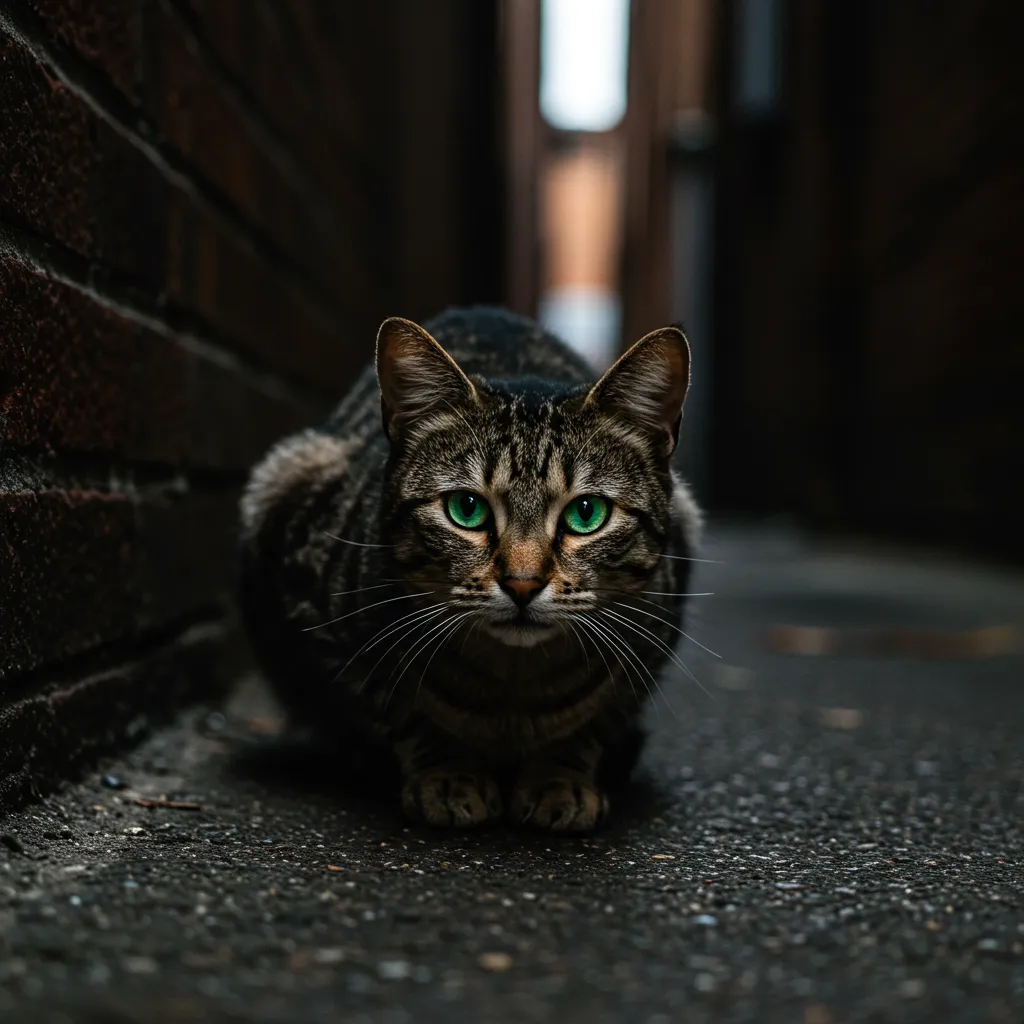
Hey there, fellow cat enthusiast—or maybe you’re more of a “cats are cute from afar” kind of person. Picture this: You’re out for a peaceful jog in your quiet Florida neighborhood, the sun dipping low, birds chirping… and suddenly, a blur of fur launches itself at your leg, claws out, teeth bared. Not a lion from the savanna, mind you, but a feral cat—one of those unassuming domestic escapees turned wild menace. Stories like this aren’t just urban legends; they’re real, and they highlight why understanding the most dangerous cat species isn’t just trivia for wildlife buffs. It’s about safety, conservation, and unraveling the thin line between our pampered pets and nature’s deadliest predators.
If you’ve ever Googled “dangerous cats” after a scratchy encounter or scrolled through viral videos of aggressive cat breeds hissing at the mailman, you know the confusion: Are we talking massive deadly big cats like tigers, or everyday felines gone rogue? The truth? Danger comes in all sizes—from the pint-sized black-footed cat with a 60% kill rate to escaped hybrids prowling Britain’s countryside. Competitors might skim the surface with quick lists, but this guide dives deep. We’ll unpack real cases, genetic secrets, evolutionary twists, and practical tips to keep you safe. By the end, you’ll have the ultimate toolkit to spot, understand, and coexist with these elusive predator cats. Let’s claw our way in.
Escaping Domestic Terror: The Feral Cat Menace in Florida and Beyond
You might think feral cat problems are just a nuisance—overturned trash bins and midnight yowls—but they can turn deadly fast. Feral cats, those wild offspring of abandoned pets, embody the feral cat menace that’s exploding in urban and rural areas alike. In the U.S. alone, estimates peg their population at 60-100 million, and they’re not just competing for food; they’re reshaping ecosystems and posing direct threats to humans.
The Florida Feral Cat Attack: A Wake-Up Call from Suwannee County
Nothing illustrates the Florida feral cat attack like the 2023 rampage in Suwannee County. It started innocently enough: Locals in Luraville, a sleepy North Florida town, reported a “ferocious feline” stalking State Road 51. Then, bam—two residents, out for routine walks near 174th Street, were mauled. One jogger suffered deep scratches requiring stitches; the other needed emergency rabies shots after the cat bolted into the brush. The Suwannee County Sheriff’s Office issued an urgent warning: “This feral cat is aggressive and potentially rabid. Do not approach.”
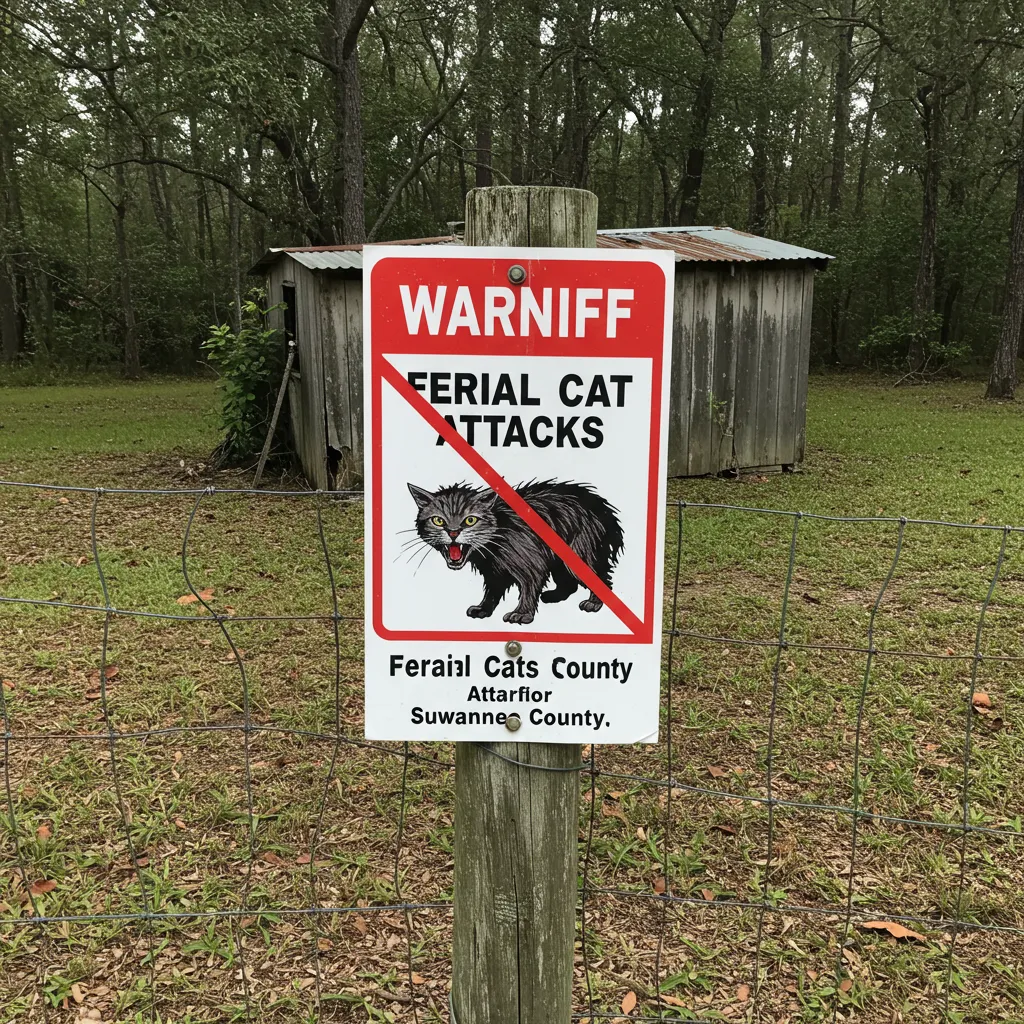
Why did this escalate so quickly? Feral cats in Florida thrive in the humid, prey-rich environment, but stress from habitat loss and human encroachment flips their survival switch. This one evaded capture for weeks, turning a quiet community into a no-go zone. Deputies set traps baited with tuna, but the cat—described as tabby-colored and battle-scarred—outsmarted them, hissing from the shadows. It was eventually caught and euthanized, testing negative for rabies, but the damage was done: Hospital bills, fear, and a stark reminder of the rabies alert cat cases that plague unmanaged colonies.
Step-by-Step: How to Spot and Handle a Feral Cat Threat
If you’re in a high-risk area like Florida’s suburbs, here’s your actionable playbook—richer than any skimpy “stay inside” advice:
- Assess the Risk: Look for signs like matted fur, notched ears (from fights), and dilated pupils. Feral cats avoid eye contact but charge if cornered.
- Create Distance: Back away slowly—never run, as it triggers chase instinct. Use a barrier like a jacket or stick.
- Report and Trap: Call animal control immediately. For humane trapping, use a live trap with smelly bait (canned fish works wonders). Cover it with a towel to calm the cat.
- Post-Encounter Care: Wash wounds with soap and water, then seek medical help for antibiotics or rabies prophylaxis. Florida mandates reporting bites.
| Feral Cat Dangers | Impact on Humans | Mitigation Tips |
|---|---|---|
| Physical Attacks | Scratches, bites leading to infection (e.g., cat-scratch fever) | Wear gloves when handling strays; vaccinate pets. |
| Disease Transmission | Rabies (rare but fatal), toxoplasmosis | Annual vet check-ups; avoid raw meat handling. |
| Ecological Harm | Kills billions of birds/small mammals yearly | Support TNR (Trap-Neuter-Release) programs. |
This incident isn’t isolated—feral populations in Florida have surged 20% since 2020, fueled by abandoned pets during the pandemic. It’s a classic clash of wild vs domestic felines: What starts as a housecat ends up a dangerous wild cat.
The Broader Feral Cat Problems: Health Hazards and Wildlife Woes
Beyond bites, ferals carry rabies in cats risks—though rare, with only 200-300 U.S. cases yearly, cats top domestic animal rabies reports. A 2025 CDC outbreak in an urban colony exposed 15 people, underscoring the rabies alert. Then there’s toxoplasmosis, linked to birth defects, and the ecological toll: Ferals kill 1.4-3.7 billion birds annually in the U.S. alone.
Pros of TNR: Reduces populations humanely, cuts aggression by 66%.
Cons: Doesn’t eliminate disease vectors; needs ongoing funding.
For more on managing strays, check our [related post on backyard wildlife safety].
The Evolutionary Edge: Unpacking Cat Genetics and Evolution
Ever wonder why cats are such efficient killers? It’s in their DNA. Cat genetics and evolution reveal a family tree honed for predation, with big cat genetics showing surprising stability amid lethal adaptations. A 2023 Texas A&M study sequenced 96 feline genomes, uncovering why these predatory behavior in cats makes them apex threats.
Stable Yet Lethal: Genomic Stability in Large Cats
Unlike dogs’ chaotic 19,000-year domestication, cats evolved conservatively. Domestic cats share 95.6% DNA with tigers, but big cats boast “stable chromosomes”—fewer rearrangements than other mammals. This genomic rock-solidity lets deadly big cats like lions pass down hunting prowess unchanged for millennia.
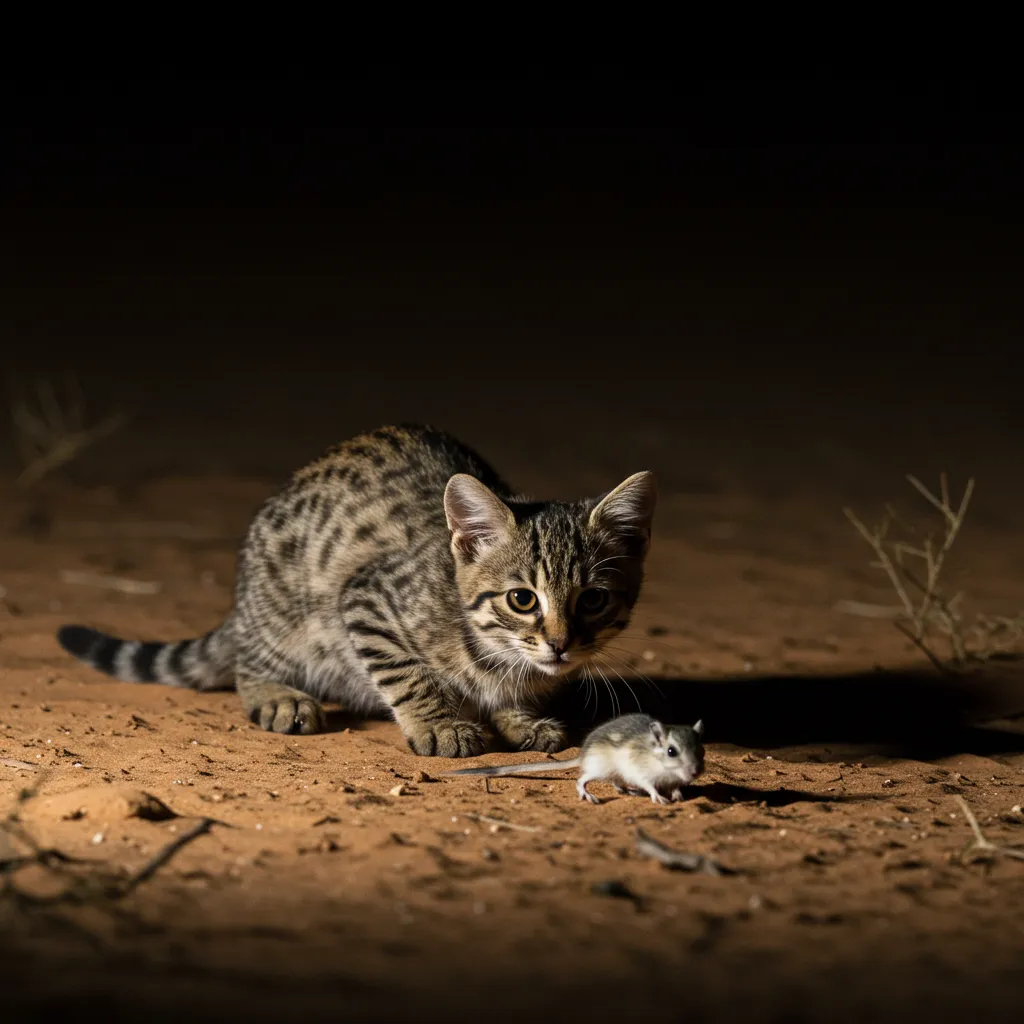
Take the black-footed cat: At 2-3 kg, it’s the most dangerous cat by success rate (60% kills vs. lions’ 25%). Its genes prioritize stealth over size, evolving in Africa’s arid zones.
DXZ4: The DNA Sequence Fueling Cat Speciation
Enter DXZ4—a satellite repeat on the X chromosome evolving 20x faster than the rest of the cat genome. This “speciation hotspot” drove feline divergence 10 million years ago, creating branches from fluffy Persians to razor-clawed jaguars. In cat species evolution, DXZ4 mutations likely spurred sex-specific traits, like males’ enhanced aggression.
Real-life example: Hybrid experiments show DXZ4 mismatches cause infertility, explaining why hybrid big cats are rare in the wild.
Olfactory Genes: A Scent of Danger in Feline Hunting Habits
Cats’ noses are legend—tigers detect prey 2 km away. But evolution traded some olfactory receptors (ORGs) for vomeronasal ones (detecting pheromones). Domestic cats lost 20% more ORGs than wild kin, per the study, making ferals hyper-reliant on scent for ambushes.
Quick Comparison Table: Olfactory Genes Across Cats
| Cat Type | ORG Count | Hunting Edge | Example |
|---|---|---|---|
| Big Cats (e.g., Tiger) | ~800 | Long-range tracking | Stalks deer via urine trails |
| Small Wild Cats (e.g., Black-Footed) | ~750 | Ambush precision | 60% kill rate on rodents |
| Domestic/Feral | ~600 | Social aggression | Detects fear pheromones in attacks |
Britain’s Big Cat Phenomenon: Sightings, Secrets, and the Quest for Truth
Across the pond, Britain’s big cat phenomenon has fueled folklore for decades. From the Beast of Exmoor to shadowy panthers in Surrey, sightings spike yearly—over 13 in Devon/Cornwall alone since 2020. Is it mass hysteria, or proof of dangerous cat species unveiled roaming free?
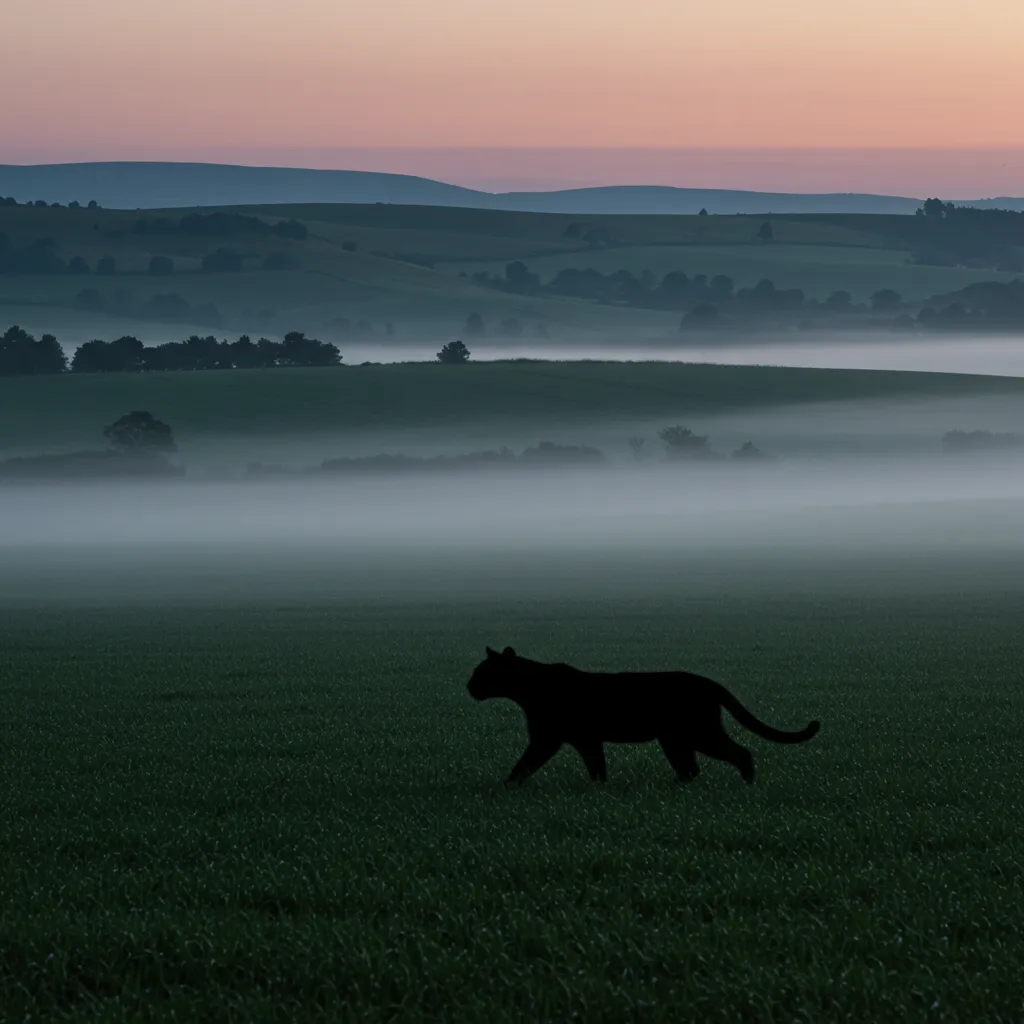
Mapping the Mystery: Hotspots and Recent Sightings
Gloucestershire leads with DNA-confirmed leopard hair in 2023. A Surrey builder logs 50+ reports yearly, convinced five beasts prowl. Recent X buzz? A February 2025 North Yorkshire clip shows a “leopard-like” cat slinking through fields. Another from Peterborough: A six-foot black panther dwarfing a Rottweiler.
Top UK Big Cat Hotspots
- Exmoor (Devon): Puma sightings since 1983; sheep kills traced to “large feline.”
- Scottish Highlands: Lynx escapes confirmed in 2025.
- Surrey Woods: Melanistic leopards; 2024 DNA match.
Government Secrecy on Big Cats: Cover-Ups or Caution?
Files declassified in 2024 reveal 1980s “hissing creature” reports dismissed as “escaped exotics.” Theories? Post-1976 Dangerous Wild Animals Act, owners released cats to dodge licenses. A 2024 DNA study confirmed a “large felid” scat—likely escaped puma. Yet, officials stay mum, citing “public panic.” Big cat hunter Danny Bamping calls it “feasible, not unlikely.”
This Britain’s big cat sightings enigma blends thrill with cat safety and public concern: Pets vanishing, livestock mauled. Tip: Install trail cams; report to Big Cats UK.
What Is the Most Dangerous Cat? Ranking Aggressive Breeds and Deadly Weapons
So, crown the king: The black-footed cat edges out tigers for deadliness per hunt. But danger varies—most dangerous cat depends on context.
Aggressive Cat Breeds on the Prowl: Domestic Dynamos
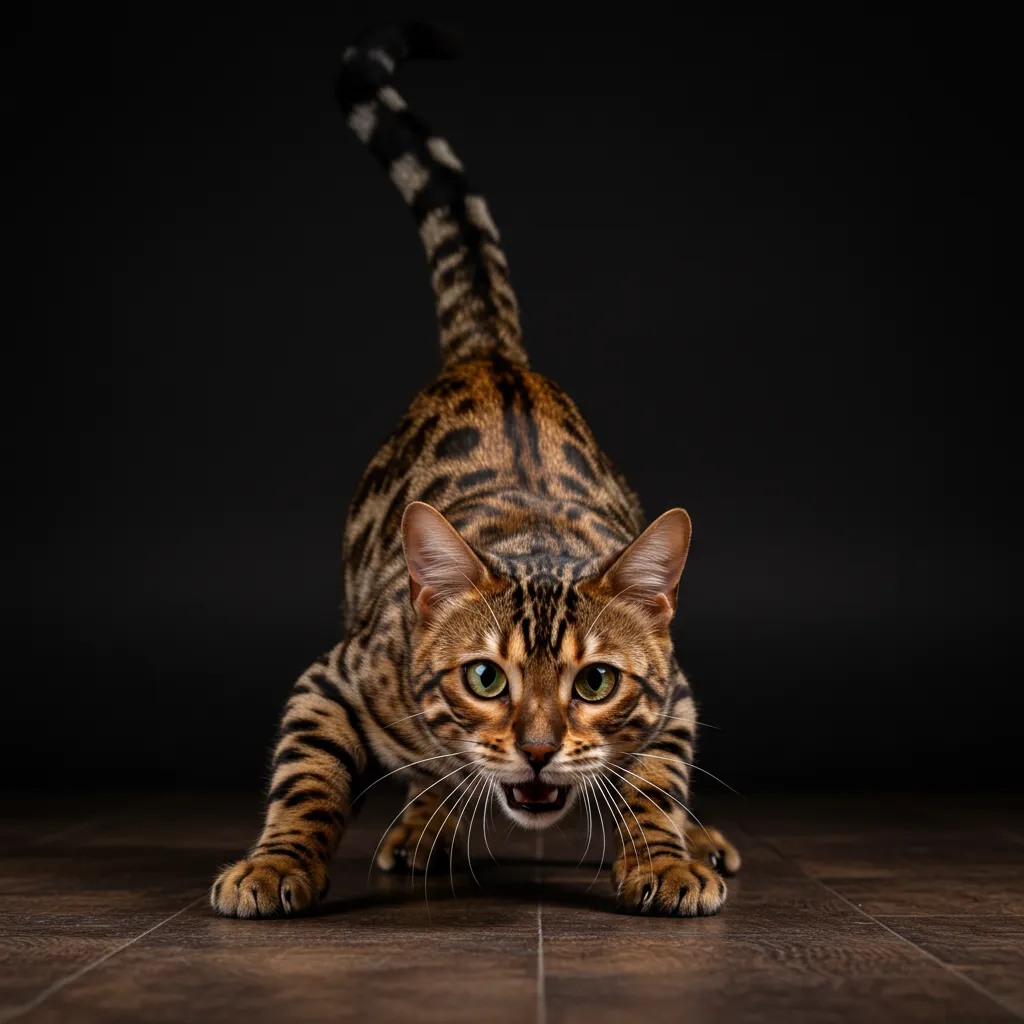
Not all threats are wild. Aggressive cat breeds like Bengals (wild Asian leopard cat hybrid) lash out from high energy. Siamese yowl and swipe; Sphynx demand attention or else.
Top 5 Aggressive Breeds (With Taming Tips)
- Bengal: Hyperactive; Channel with puzzle toys.
- Siamese: Vocal bullies; Early socialization key.
- Sphynx: Clingy biters; Scheduled playtime.
- Pixie-Bob: Bobcat-like; Leash training for outdoors.
- Egyptian Mau: Speed demons; Vertical spaces calm nerves.
Deadly Natural Weapons: Wild vs. Domestic Felines Compared
Claws, teeth, speed—cats pack deadly natural weapons of cats. Lions’ 1,200 PSI bite crushes skulls; ferals’ retractable claws infect via bacteria.
| Weapon | Wild (e.g., Leopard) | Domestic/Feral | Lethality Edge |
|---|---|---|---|
| Bite Force | 300-1,000 PSI | 200 PSI | Wild: Bone-crushing |
| Claws | 4cm, razor-sharp | 2-3cm, barbed | Feral: Infection risk |
| Speed/Agility | 60 mph bursts | 30 mph | Wild: Ambush kings |
Leopards top human attacks (700+ yearly in India). Domestics? Rare fatalities, but scratches hospitalize 10,000 yearly.
Explore more in our [guide to cat body language].
Unveiling the Secret World of Hybrid Big Cats in the U.K.
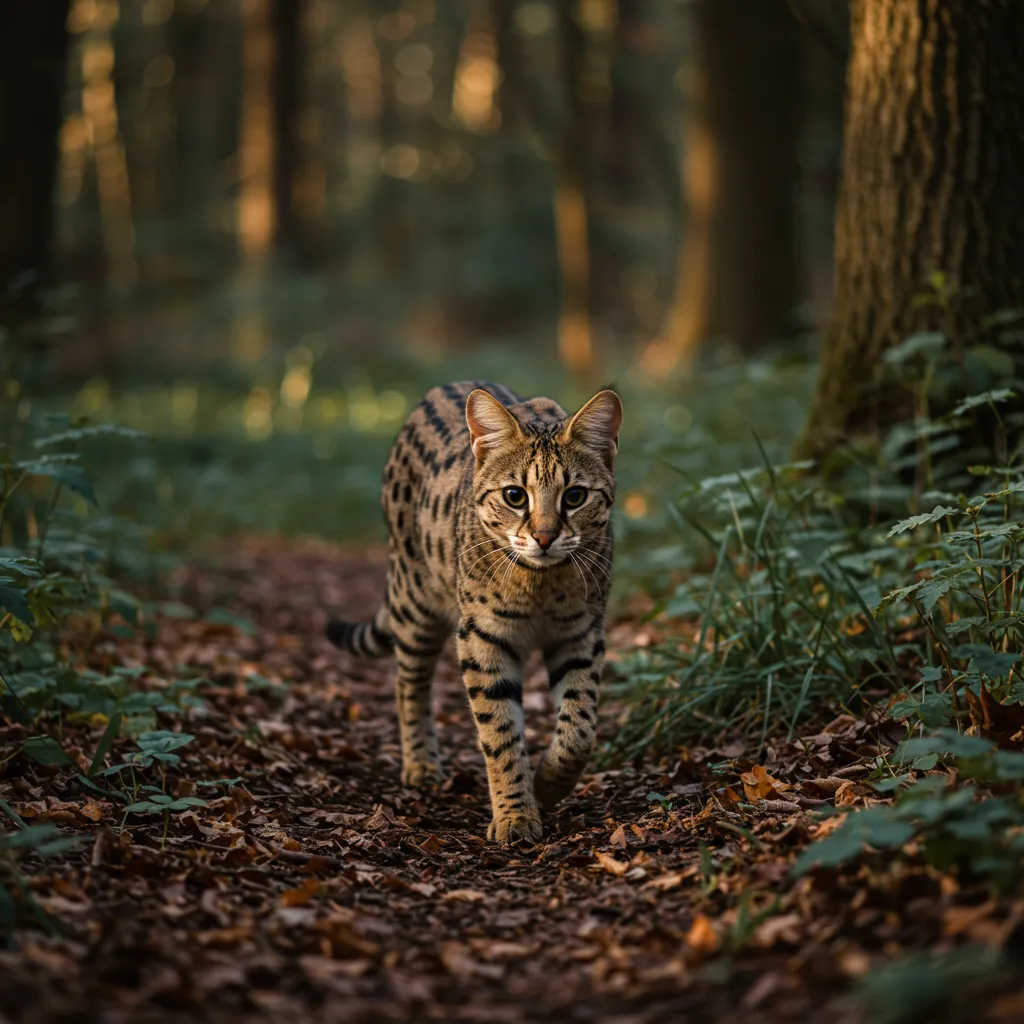
Hybrid big cats in the UK blur lines further. Savannahs (serval x domestic) grow to 15kg, legal but feisty. Rumors swirl of pumapards (puma x leopard) in suburbs.
Hybrid Species: The New Predators Among Us
Post-Act releases bred wild hybrids, per messybeast.com. A 2024 Scottish “Boddam Cat” video shows a lynx-like hybrid. Hybrid cats UK pose conservation vs safety cats dilemmas: Thrilling biodiversity or public hazard?
Pros: Genetic diversity boosts resilience.
Cons: Unpredictable aggression; escapes strain resources.
Governmental Secrecy: The Hidden Existence of Mysterious Predators
Why the hush? Fear of mass culls. A 2025 lynx capture in Highlands proves quick action possible. Yet, experts urge transparency for conservation of big cats.
Conclusion: Taming the Feline Frontier – Balancing Awe and Awareness
We’ve journeyed from Florida’s feral fury to Britain’s shadowy beasts, decoding the most dangerous cat species through genetics, attacks, and hybrids. Key takeaways? Danger spans scales—the black-footed cat’s precision rivals a tiger’s might, while ferals remind us domestication is fragile. Cat species evolution gifted us wonders, but conservation vs safety cats demands balance: Protect habitats without endangering hikes.
FAQ: Quick Answers on Dangerous Cats
What are some of the most dangerous cat breeds?
The black-footed cat tops wild lists with a 60% kill rate; domestics include Bengals and Siamese for aggression.
How do genetics play a role in the danger posed by big cats?
DXZ4 drives speciation for lethal traits; stable genomes preserve hunting edges like olfactory prowess.
What is the situation with big cats in Britain?
Hundreds of sightings yearly, DNA evidence in Gloucestershire; likely escaped hybrids.
Are hybrid big cats a cause for concern?
Yes—unpredictable and invasive, but rare; monitor via trail cams.
How can we address the impact of dangerous cats on people and wildlife?
Promote TNR, vaccinate, and fund conservation; balance with education on risks.