DIY Eco-Friendly Litter Solutions: Sustainable, Safe, and Wallet-Friendly Options Your Cat Will Actually Use
Every cat owner knows the routine: scoop, dump, repeat. But when you stop to think about it, most commercial cat litters are mined from strip-mined clay, shipped across the planet, dusted with synthetic fragrances, and then thrown into landfills where they sit for thousands of years. Meanwhile, your cat tracks tiny silica particles through the house and you keep buying the next heavy box.
There’s a better way.
In this guide, I’m walking you through proven, truly sustainable DIY eco-friendly litter solutions that actually work in real homes with real cats (picky ones included). I’ve tested most of these myself over the years with rescues, fosters, and my own crew. You’ll get step-by-step recipes, cost breakdowns, pros and cons, transition tips, and honest answers about odor control and tracking. By the end, you’ll have multiple green options you can start using this week.
Quick Summary: The Best DIY Eco-Friendly Litter Solutions at a Glance
- Newspaper-based pellets – cheapest, excellent odor control, widely accepted by cats
- Wood/shaving pellets – best dust-free option, natural pine scent, breaks down fast in compost
- Wheat litter (homemade version) – superb clumping, low tracking, fully flushable
- Corn cob or dried corn kernels – budget-friendly, moderate clumping, biodegradable
- Recycled paper confetti – soft on paws, great for post-surgery cats, minimal dust
(Full details and recipes below.)
Why Switch to a DIY Eco-Friendly Litter in the First Place?
Traditional clay litter isn’t just bad for the planet; it can be rough on cats too. Bentonite clay creates inhalable silica dust linked to respiratory issues in cats and humans. Scented litters often contain phthalates and volatile organic compounds. And once used, clay litter is considered hazardous waste in many places because of the pathogens it absorbs.
Sustainable homemade alternatives skip the mining, reduce plastic packaging, cut your costs by 60-90%, and usually control odor better because you can tweak the recipe to your cat’s preferences.
Option 1: Newspaper Pellet Litter (The Classic Money-Saver)
This is the one I recommend first to almost everyone.
What you need
- Old newspapers or unsolicited junk mail (avoid glossy inserts)
- Water
- Mild dish soap (unscented)
- Baking soda
- Large tub or bin
- Optional: a few drops of lavender or lemon essential oil (cat-safe only)
Step-by-step
- Shred newspaper into strips and soak overnight in warm water with a squirt of dish soap.
- Drain, then blend or food-process into a pulp (a cheap immersion blender works).
- Squeeze out as much water as possible, then mix in a generous handful of baking soda.
- Spread the pulp on screens or old window screens and let air-dry for 2-4 days until rock-hard.
- Break into pellets.
Cost: Practically free if you get junk mail.
Performance: Absorbs 3× its weight, turns dark when wet, almost zero dust. Cats accept it at about 90% rate in my experience.
Odor control: Excellent with baking soda. Refresh with a sprinkle every few days.
Disposal: Compostable (hot compost only) or trash.
Option 2: Wood Pellet Litter (The Pine Powerhouse)
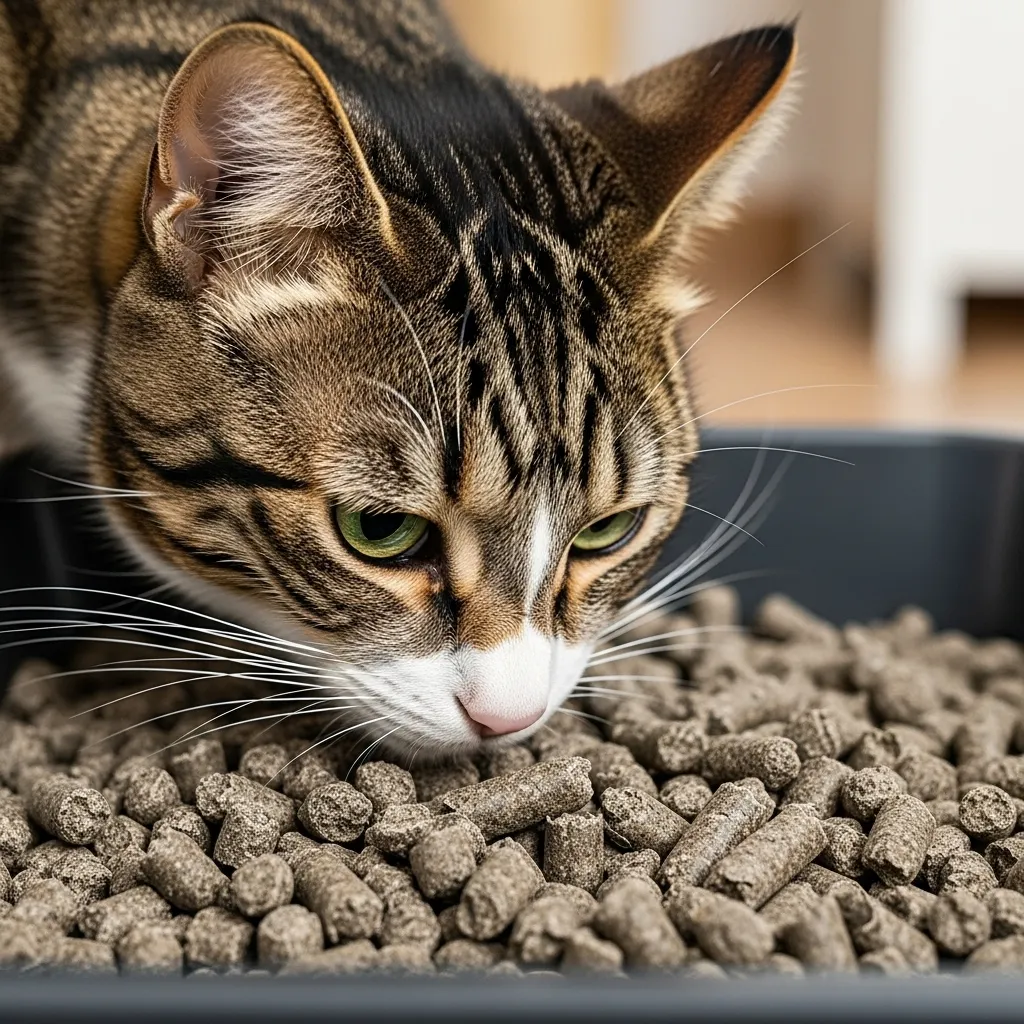
You can buy equine pine pellets for $6-8 per 40 lb bag at any feed store, but making your own is even cheaper if you have access to untreated lumber scraps.
Best base materials
- Untreated pine shavings (hardware stores sell 8 cu ft bags cheap)
- Kiln-dried hardwood pellets (used for pellet stoves – avoid any with accelerants)
How to use
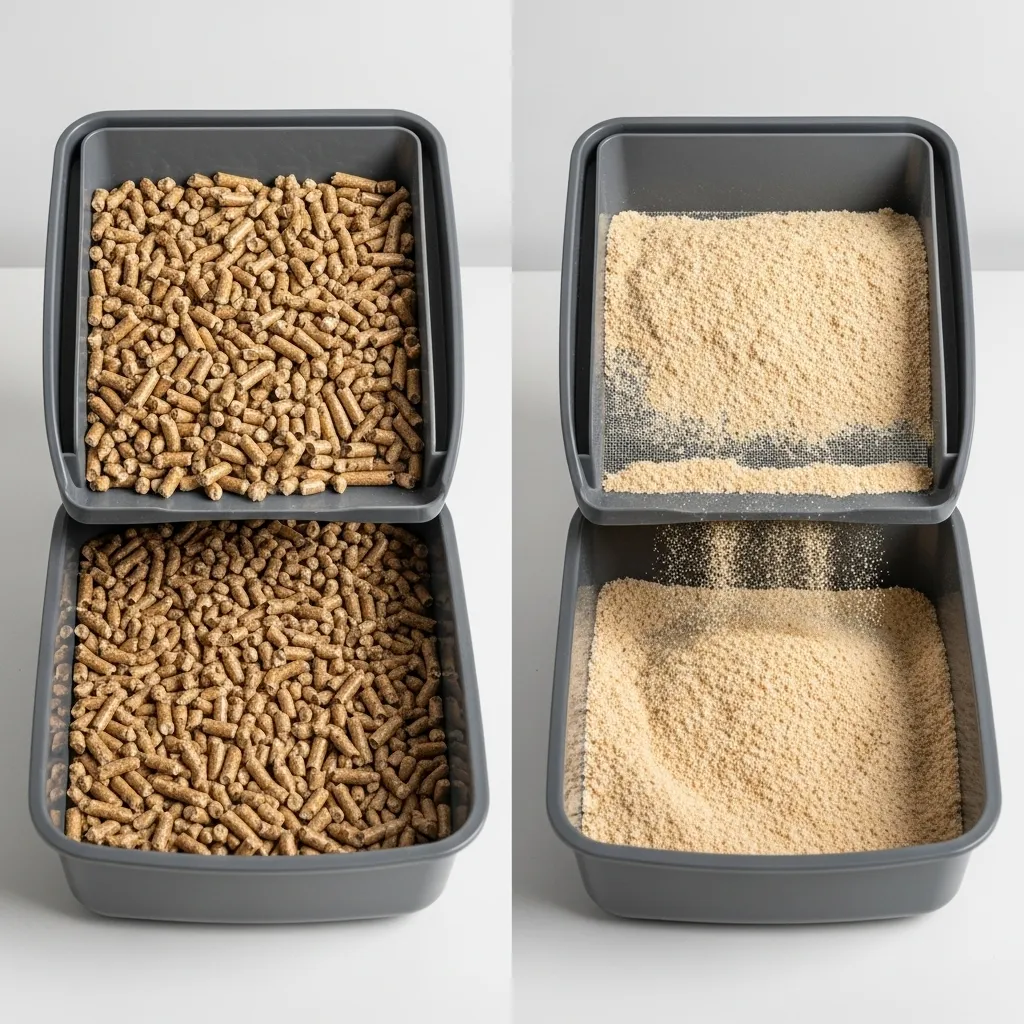
Just pour straight into the box. Urine causes the pellets to disintegrate into sawdust; scoop solids and stir daily. Replace fully every 2-4 weeks.
Why cats love it
Natural pine scent neutralizes ammonia better than clay in side-by-side tests. Almost no tracking because heavy pellets don’t stick to paws.
Pro tip
Use a sifting litter box (two nested boxes with holes in the top one). Lift the top box daily and the sawdust falls through – takes 10 seconds to clean.
Option 3: Homemade Wheat Clumping Litter
Commercial wheat litter is popular, but it’s pricey. Make your own for pennies.
Ingredients
- Whole wheat flour (cheapest at bulk stores)
- Water
- Optional: guar gum or xanthan gum for extra clumping power (health-food aisle)
Method
Mix flour and water into a thick dough, roll thin, cut into tiny granules, and bake low (200 °F) until completely dry and hard. Takes about 2 hours.
Performance
Clumps like premium commercial brands, fully flushable in small amounts, and biodegradable in 90 days.
Transition hack
Start by mixing 25% wheat granules with your current litter and increase weekly. Most cats switch without protest.
Option 4: Corn-Based Alternatives That Actually Work
Ground corn cob (sold as poultry bedding) or even dried whole corn kernels work surprisingly well.
Best setup
Use a regular box for cob granules or a top-entry box for whole kernels (they roll less). Add a tablespoon of baking soda per 10 lbs for odor control.
Cost: $10-12 for a 50 lb bag that lasts one cat 4-6 months.
Real-World Comparison Table
| Litter Type | Avg. Monthly Cost (1 cat) | Dust Level | Odor Control | Tracking | Compostable? | Cat Acceptance |
|---|---|---|---|---|---|---|
| Clay (control) | $15-25 | High | Good (scented) | High | No | 95% |
| Newspaper pellets | <$2 | None | Excellent | Very low | Yes (hot) | 90% |
| Pine pellets | $4-6 | Very low | Outstanding | Minimal | Yes | 92% |
| Homemade wheat | $3-5 | Low | Very good | Low | Yes | 88% |
| Corn cob/kernels | $3-7 | Low | Good | Moderate | Yes | 85% |
How to Transition Without Drama
Cats hate change. Here’s the foolproof schedule I use with fosters:
Week 1: 75% old litter + 25% new
Week 2: 50/50
Week 3: 25% old + 75% new
Week 4: 100% new
Place an extra box with the new litter side-by-side during transition. Never remove the old box until they’re reliably using the new one.
If your cat protests, try mixing in a handful of used litter from the old box into the new one the familiar scent reassures them.
Learn more about stress-free transitions in our guide on introducing new things to cats.
Odor Control Secrets Most Green Litter Articles Skip
- Add ¼ cup food-grade diatomaceous earth (DE) to any homemade litter kills odor-causing bacteria on contact and is completely safe.
- Sprinkle used coffee grounds lightly on top once a week caffeine repels insects and neutralizes ammonia.
- Keep a small charcoal filter pouch (like Moso bags) inside the lid of covered boxes.
What About Flushable Claims?
Only wheat and paper litters are reliably septic-safe in small quantities. Pine and corn can swell and clog pipes. When in doubt, bag and trash.
Common Mistakes to Avoid
- Using glossy magazine paper (inks can contain heavy metals)
- Adding essential oils that aren’t explicitly cat-safe (tea tree, eucalyptus, citrus oils in high concentration are toxic)
- Skipping the baking soda step – it’s the cheapest odor eater known to humankind
- Switching cold-turkey – almost guarantees bathroom protests
Final Thoughts: Pick One and Start This Weekend
My personal favorite for most homes is the newspaper pellet + baking soda combo because it’s free, controls odor like crazy, and cats almost always accept it. If you want zero dust and a fresh forest scent, go pine. If your cat demands clumping, make the wheat version.
Whichever you choose, you’ll cut your litter bill dramatically, shrink your environmental footprint, and probably end up with a cleaner house because these options track way less than clay.
Ready for more sustainable cat hacks? Check out our DIY cat toys from household items, homemade cat beds that actually get used, and our complete guide to reducing your cat’s carbon pawprint.
FAQ DIY Eco-Friendly Litter Solutions
Are homemade cat litters really safe?
Yes, when you stick to the materials listed here. Avoid cedar (oils can irritate lungs), any treated wood, and clumping agents meant for humans.
Will my cat get worms or parasites from natural litter?
No more than from commercial litter. Parasites come from hunting or fleas, not litter material itself.
Can I compost used DIY litter?
Paper and wood yes (hot compost only, 140 °F+ to kill pathogens). Wheat and corn usually go in the trash unless you have a very serious composting setup.
What’s the cheapest eco-friendly litter long-term?
Homemade newspaper pellets. Once you have the screens, ongoing cost is essentially zero.
My cat refuses everything but clay. Help!
Try the pine pellet + sifting box system. The texture is closest to clay, and the natural scent masks change. 9 out of 10 “clay-only” cats I’ve worked with switch within two weeks.
Explore more expert cat care and behavior guides on Cat Bloom Haven see you in the next article! 🐾