DIY Cat Scratch Posts: The Ultimate 2025 Guide to Saving Your Furniture (and Your Wallet)
If your couch looks like it survived a horror movie and your cat still acts like nothing happened, you’re not alone. Cats need to scratch. It’s not negotiable. They do it to sharpen claws, mark territory, stretch muscles, and blow off steam. Give them nothing acceptable, and your furniture pays the price.
The good news? You can stop the destruction for under $30 and two hours of work. A solid DIY cat scratch post beats most store-bought ones because you control the size, stability, texture, and exact spot your cat loves. I’ve built more than twenty of these over the years for my own cats and foster kittens, and I’m handing you the blueprints that actually work in real homes.
Key Takeaways (Read This First If You’re in a Hurry)
- The best DIY cat scratch posts are tall (at least 31–36 inches), rock-solid, and wrapped in sisal rope not carpet.
- Total cost usually runs $15–$45 depending on materials you already have.
- Vertical posts work for most cats; horizontal or angled ones save senior or small-breed cats (Munchkin, anyone?).
- Add a base at least 16×16 inches (bigger is better) so it never tips over.
- One weekend project can last 5–8 years with occasional re-wrapping.
Ready for the deep dive? Let’s build something your cat will actually use.
Why Cats Scratch (and Why Cheap Store Posts Fail)
Scratching is hard-wired. Claw health, scent marking, and full-body stretching all happen at once. Most $25 cardboard scratchers collapse in a month, and carpet-wrapped posts confuse cats because carpet feels exactly like your sofa.
Real sisal rope is the gold standard. It’s rough, fibrous, and shreddable everything cat claws crave. Cardboard works as a budget second choice, but rope wins every long-term test I’ve run.
Tools and Materials You’ll Actually Need
You probably own half this list already.
Essential:
- 4×4 wooden post (3–4 feet tall, untreated)
- ¼-inch or ⅽ-inch sisal rope (100–150 feet, natural not polypropylene)
- 16×16 inch (or larger) plywood or MDF for the base
- Wood screws (2½–3 inch)
- Staple gun + staples or hot glue gun
- Wood glue
Optional but awesome:
- Carpet remnant or faux fur for the base (hides paw prints)
- Catnip spray
- Hanging toy or feather teaser

7 Proven DIY Cat Scratch Post Designs (From Basic to “Your Cat Will Never Leave This Thing”)
- The Classic Vertical Tower (90 % of cats love this)
- The Heavy-Duty Double Post (perfect for multi-cat homes)
- The Horizontal Floor Scratcher (senior and small-breed friendly)
- The Wall-Mounted Corner Savior
- The Cardboard Castle Hybrid
- The Tree-Stump Lookalike (Pinterest’s favorite)
- The Catio Monster Post (outdoor edition)
I’ll walk you through the two most popular ones step-by-step.
Design #1: The Classic Vertical Tower (Under $30, 60 Minutes)
Step 1 – Cut your 4×4 to height. 36 inches is perfect for full stretch; 31 inches works if ceiling height is tight.
Step 2 – Build the base. Screw a 16–20 inch square of plywood to one end of the post. Add a second layer if you want zero wobble (I always do).
Step 3 – Wrap the rope. Start at the bottom, staple or glue the first loop, then wrap upward as tightly as possible. Every 10–15 wraps, hammer staples through the rope into the wood. Keep going until you reach the top or run out of rope.
Step 4 – Optional cozy top. Glue a square of carpet or faux sheepskin on the top so your cat can nap after destroying the post.
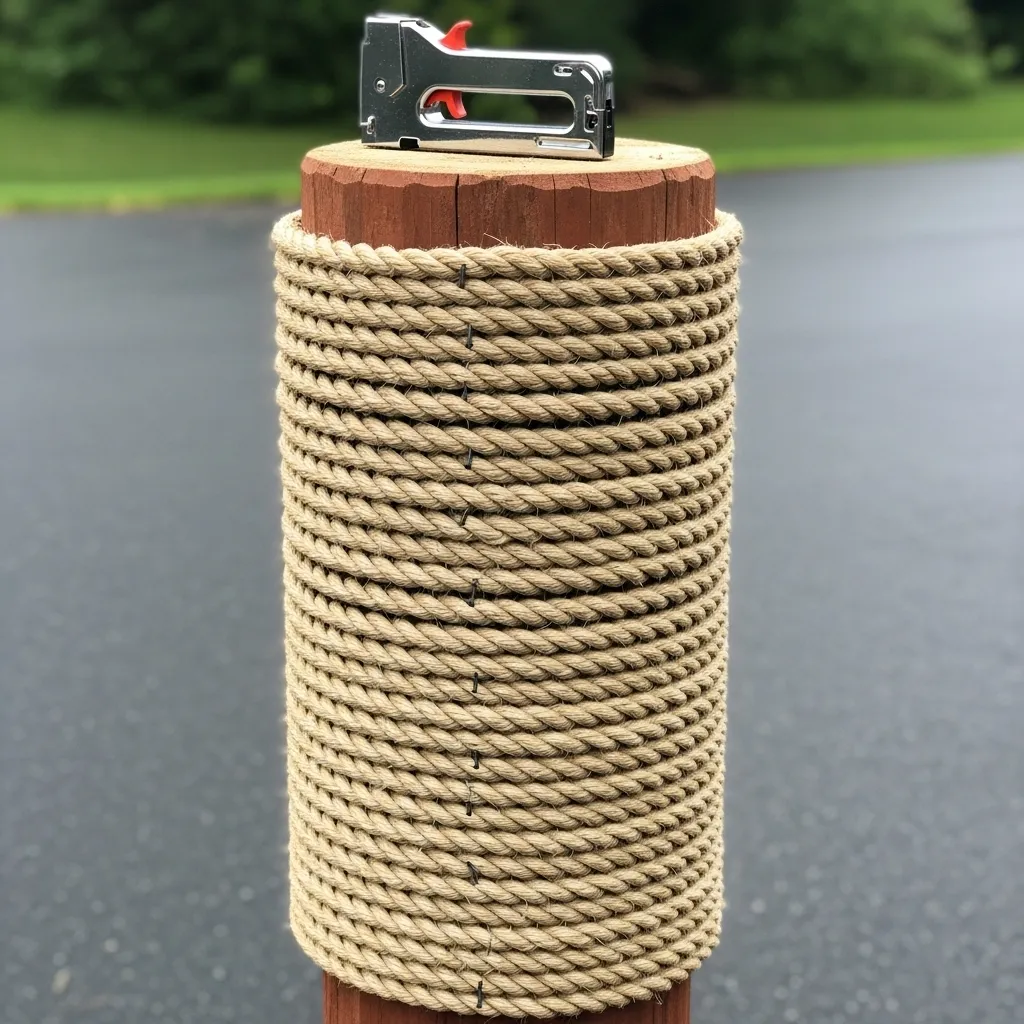
Pro tip: If your cat ignores it the first day, rub a little catnip into the rope or drag a feather toy up and down. They catch on fast.
Design #3: Horizontal Floor Scratcher (Best for Older Cats or Munchkins)
Some cats refuse vertical posts. My 14-year-old Siamese only wants to scratch lying down. This design fixes that.
- Take a 24×12 inch piece of plywood.
- Glue and staple sisal rope flat in a zigzag or spiral pattern.
- Add wooden sides so claws don’t catch the carpet underneath.
Takes 30 minutes and costs about $18. (Full tutorial with measurements in our DIY cat toys guide.)
Where to Place Your New Masterpiece
Location beats everything else. Cats scratch where they feel safe and where the family hangs out.
Top spots:
- Next to the couch arm they already attack
- Near their favorite sleeping spot
- By a sunny window
- Both ends of a hallway they sprint down
Put multiple posts in multi-cat homes. One per cat plus one extra ends most fights.
Common Mistakes That Make Cats Ignore Your Beautiful Creation
- Base too small → tips over → cat never trusts it again
- Using carpet instead of sisal → smells like furniture → confusion
- Post too short → can’t fully stretch → they go back to the sofa
- Loose rope → comes undone in a week
How Long Will It Last? (Real Numbers)
My first sisal post from 2019 is still going strong in 2025 with three cats using it daily. Re-wrap the bottom third every 3–4 years and the whole thing lasts a decade.
Budget Breakdown (2025 Prices)
- 8-ft 4×4 post – $12–$16
- 150 ft sisal rope – $18–$25
- Plywood base – $8–$12
- Screws & glue – $3
Total: $41–$56 (or half that if you have scraps)
Eco-Friendly & Zero-Waste Options
Old jeans cut into strips, leftover carpet squares, or even reclaimed pallet wood all work. Just make sure anything you use is free of chemicals.
FAQ Quick Answers Google Loves
How tall should a DIY cat scratch post be?
At least 31–36 inches so an adult cat can fully stretch. Taller is always better.
Is sisal rope better than cardboard?
Yes for longevity. Cardboard is cheaper and many cats love it, but it lasts 3–12 months max.
Will my cat actually use a homemade scratcher?
95 % do if it’s stable, tall enough, covered in real sisal, and placed where they already scratch.
Can I make one for under $10?
Absolutely. Use a fallen tree branch wrapped in rope or a large cardboard box lined with corrugated strips.
What if I’m not handy?
The horizontal floor version requires zero power tools just glue and rope.
Final Thoughts
Your cat isn’t trying to ruin your life. They’re just being a cat. Give them something taller, stabler, and more satisfying than your furniture, and the scratching war ends the same day.
Build one this weekend. Take a photo. Send it to me on Instagram I love seeing these come to life.
Want more projects that actually work? Explore our complete DIY cat toys section or discover why cats scratch furniture in the first place in our full guide to stopping unwanted scratching.
Your couch (and your cat) will thank you.