Can Cats Be Trained Like Dogs? A Behavior-Based Explanation
Many cat owners wonder if their feline friends can learn tricks and commands the way dogs do. The short answer is yes, cats can absolutely be trained. But the process looks different because of how cats think, learn, and interact with people. While dogs often thrive on pleasing their owners, cats train best when the activity benefits them directly.
This guide breaks down the science behind cat and dog behavior. It explains why cats seem harder to train at first glance. You will also find practical tips, real examples, and step-by-step methods to teach your cat useful skills. Whether you want a simple “sit” or something more advanced like fetching or walking on a leash, positive reinforcement works wonders.
Key Takeaways
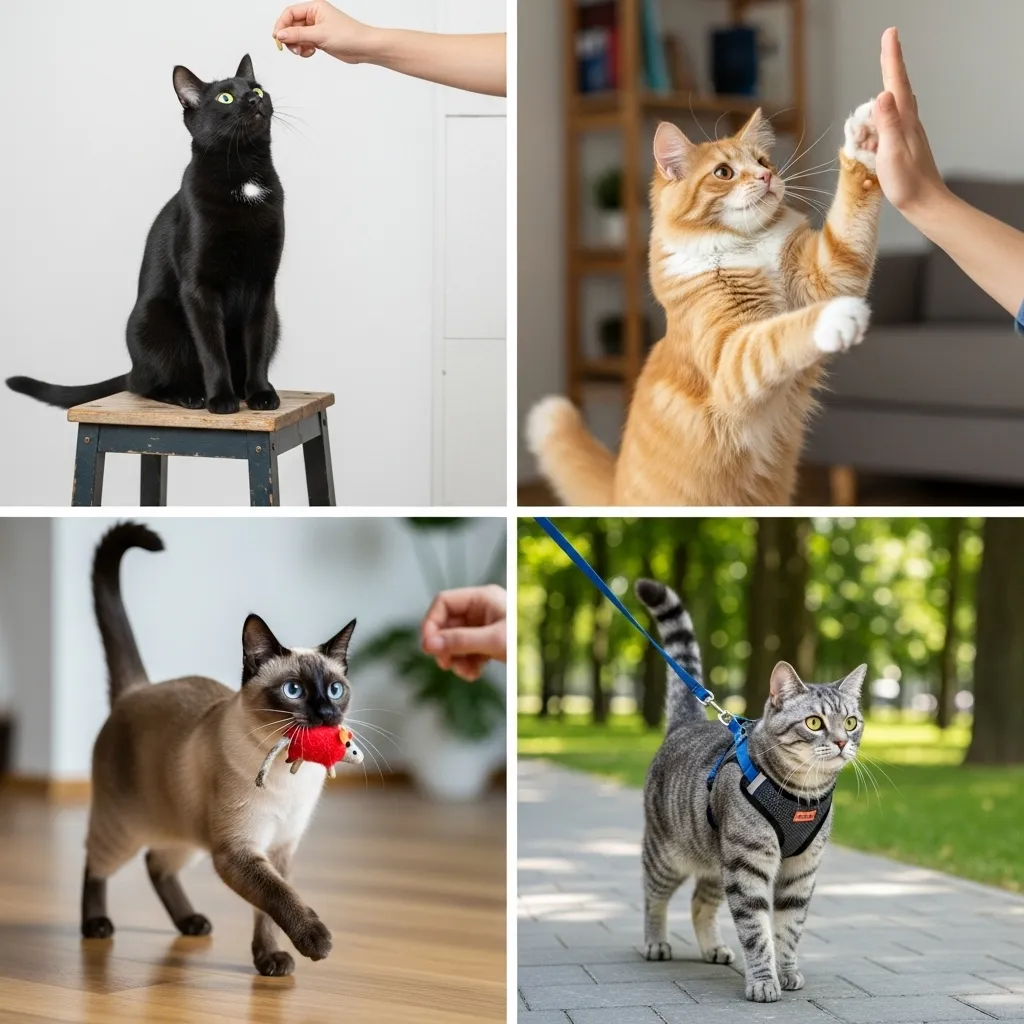
- Cats can learn many commands dogs do, including sit, come, high-five, fetch, and leash walking.
- Training relies on motivation; food treats usually work best for cats.
- Positive reinforcement builds trust and makes sessions fun, while punishment creates fear.
- Some breeds, like Abyssinians, Bengals, Maine Coons, and Siamese, pick up training faster due to their energy and curiosity.
- Short, consistent sessions (5-10 minutes) yield the best results.
- Patience is key; cats learn on their terms, but success strengthens your bond.
Evolutionary Differences: Why Cats and Dogs Learn Differently
Cats and dogs evolved in distinct ways, shaping their trainability.
Dogs descend from pack animals. They developed strong social hierarchies and a drive to cooperate with group members, including humans. This makes them eager to follow cues and seek approval. Studies show dogs excel at reading human gestures, like pointing, because cooperation aided survival.
Cats, however, evolved as solitary hunters. Their ancestors, African wildcats, hunted alone and formed loose colonies only when food was abundant. Cats lack the same pack instinct. They prioritize independence and self-reliance. This means they don’t naturally look to humans as leaders. Instead, they weigh if a behavior is worth the effort.
These roots explain common perceptions. Dogs often seem more obedient because training taps into their social wiring. Cats appear stubborn, but they simply need clear personal incentives. With the right approach, cats learn just as well; the method must respect their nature.
For context, research from organizations like the ASPCA and International Cat Care highlights that cats respond strongly to positive reinforcement. They can master tricks, harness walking, and even agility courses when motivated.
The Power of Positive Reinforcement in Cat Training
Positive reinforcement is the gold standard for training cats. It involves rewarding desired behaviors immediately, increasing the chances they repeat them.
Here’s why it works so well:
- Cats avoid stress. Punishment, like yelling or spraying water, causes fear and damages trust. It may suppress behavior temporarily but doesn’t teach alternatives.
- Rewards build association. A treat or play session right after a behavior links it to something pleasant.
- Timing matters. Reward within 3 seconds for clear connection.
Common rewards:
- High-value treats (tuna flakes, chicken bits, or commercial soft treats).
- Play with a favorite toy.
- Praise and gentle petting (if your cat enjoys it).
Tools like a clicker (a small device that makes a distinct sound) mark the exact moment of success. Pair the click with a treat, and it becomes a powerful signal.
Experts from the American Association of Feline Practitioners emphasize positive methods. They note cats trained this way show less stress and stronger owner bonds.
Common Commands and Tricks You Can Teach Your Cat
Cats can learn a surprising variety. Start with basics and build up. Sessions should be short and end on a high note.
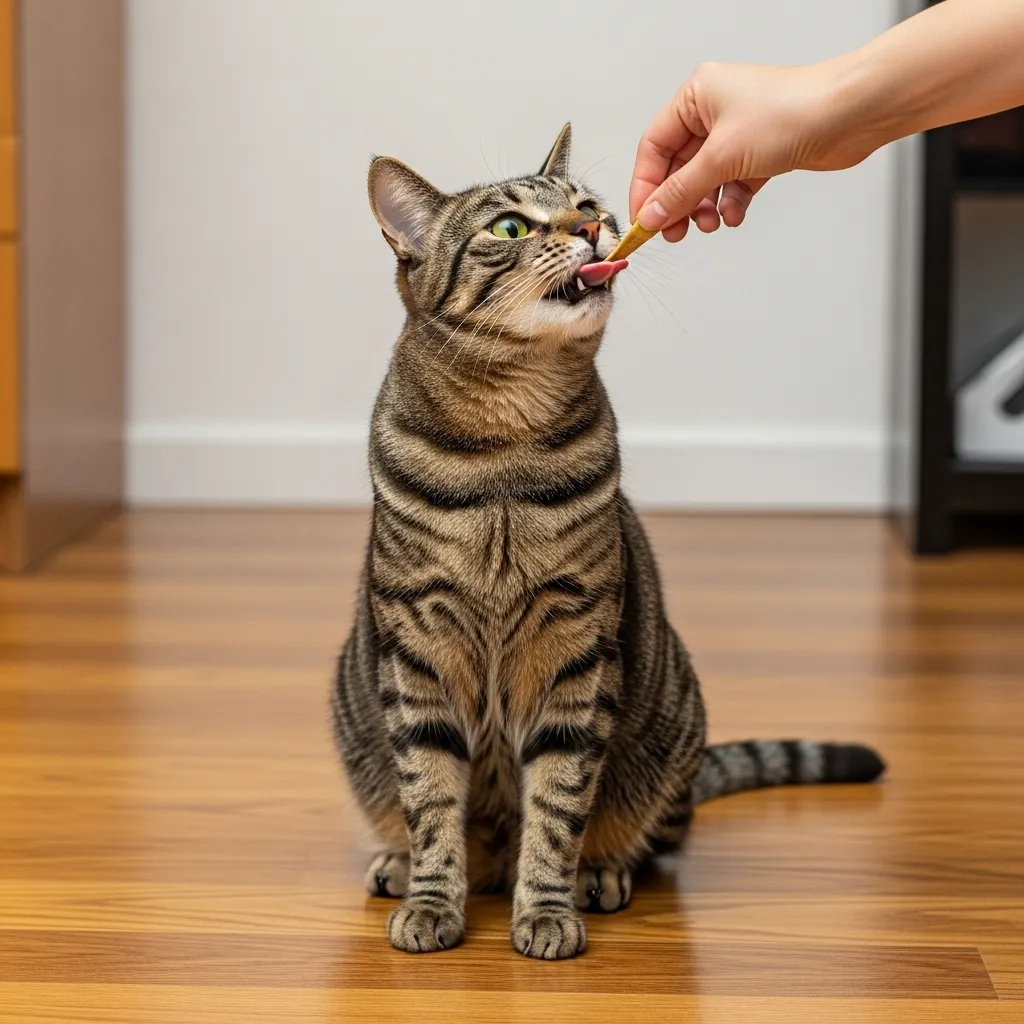
Teaching “Sit”
One of the easiest commands.
- Hold a treat above your cat’s nose and move it slowly back over their head.
- As their bottom lowers, say “sit” and click/reward.
- Repeat 5-10 times per session.
- Once reliable, add the verbal cue before luring.
Useful for calm moments, like before meals or vet visits.
High-Five or Paw Shake
Fun and impressive.
- Start with your cat sitting.
- Hold a treat in your closed fist at chest level.
- Wait for a paw touch; click and reward.
- Gradually raise your open hand and add “high-five.”
Many cats master this quickly since pawing is natural curiosity.
Come When Called
Great for safety.
- Call your cat’s name in a happy tone from a short distance.
- When they approach, click and reward generously.
- Practice in different rooms, gradually increasing distance.
Fetch
Not all cats play fetch, but motivated ones excel.
- Use a favorite toy; toss it short distances.
- Reward returns with treats or play.
- Breeds like Bengals and Abyssinians often love this.
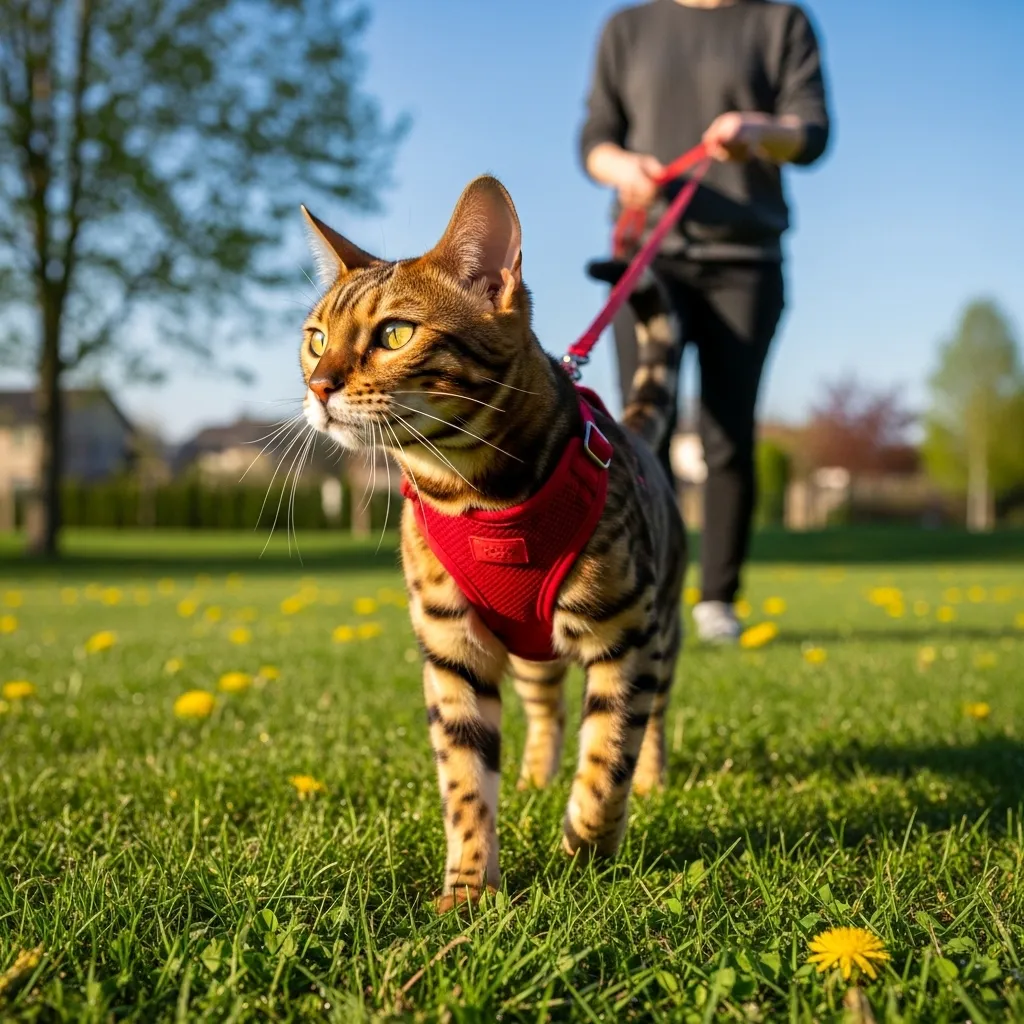
Harness and Leash Walking
Allows safe outdoor exploration.
- Introduce the harness indoors first; reward wearing it.
- Let them drag the leash, then hold it loosely.
- Follow your cat’s lead outside; never pull.
Success stories abound, with cats enjoying neighborhood strolls or hikes.
Cat Breeds More Likely to Train Quickly
While any cat can learn, some breeds show dog-like enthusiasm:
- Abyssinian → Energetic, playful, and intelligent; loves fetch and tricks.
- Bengal → Active and curious; many enjoy water, fetching, and leash walks. Check our Bengal cat guide for personality insights.
- Siamese → Vocal and people-oriented; thrives on interaction and learns fast.
- Maine Coon → Gentle giants; affectionate and often trainable for commands.
- Ragdoll → Relaxed but responsive; good for calm tricks like sit or come.
Mixed-breed cats often surprise with their eagerness too. Early socialization helps every cat.
Real-Life Examples and Success Stories
Shelters like the ASPCA use clicker training for cats, teaching high-fives, hoop jumps, and carrier entry. These skills boost adoptability.
Adventure cat communities share stories of felines hiking trails or visiting cafes on leashes. One common theme: starting young and using patience.
In homes, trained cats show fewer behavior issues. They redirect energy into positive outlets, reducing scratching or boredom-related mischief.
Troubleshooting Common Challenges
- Short attention span Keep sessions brief; stop before boredom sets in.
- Low motivation Experiment with rewards; hunger helps (train before meals).
- Regression Practice regularly; vary rewards to maintain interest.
- Fear of harness Go slow; associate with treats over days or weeks.
If issues persist, consult a certified behaviorist.
FAQ
Can any cat be trained, regardless of age?
Yes, though kittens learn fastest. Adult cats adapt well with patience.
Is clicker training necessary?
No, but it speeds precision. A verbal marker like “yes!” works too.
How long does training take?
Basics like sit may take days; complex tricks weeks. Consistency matters most.
Are cats as obedient as dogs after training?
Not exactly; cats perform when motivated. They retain skills but choose when to comply.
What if my cat ignores treats?
Try play rewards or affection. Some cats prefer praise.
Can training help with problem behaviors?
Absolutely. Redirect scratching or jumping with alternatives and rewards. Discover more tips in our cat training behavior guide.
Which breeds are hardest to train?
More independent ones like Persians, but individual personality varies more than breed.
Final Thoughts
Cats can indeed be trained like dogs, often to the same impressive level, when you understand their behavior-based motivations. The key lies in positive reinforcement, respect for their independence, and making it rewarding for them.
Training deepens your connection, provides mental stimulation, and turns everyday interactions into joyful moments. Start small, celebrate progress, and watch your cat surprise you.
Explore more expert cat care and behavior guides on Cat Bloom Haven, from breed-specific tips to health advice. Your feline friend deserves the best.