How Hot Is Too Hot for Cats? The Complete Guide to Keeping Your Cat Safe and Comfortable When Temperatures Rise
Your cat sprawls on the hardwood floor, belly flat, legs stretched like he’s melting. Or maybe he’s glued to your side, panting lightly, refusing to move even when you open the fridge. If you’ve ever wondered “how hot is too hot for cats,” you’re not alone. Summer heatwaves catch many owners off guard, and cats are masters at hiding discomfort until it’s serious.
In this guide, I’ll walk you through everything you need to know: the exact temperatures that become dangerous, how different breeds and ages handle heat, the earliest signs your cat is overheating (before it turns into heatstroke), and proven ways to keep them cool and hydrated. No fluff – just clear, vet-backed advice that works.
Quick Summary: Key Temperature Numbers Every Cat Owner Must Know
- Ideal indoor temperature for cats: 68–78 °F (20–26 °C)
- Caution zone: 80–85 °F (27–29 °C) – start active cooling
- Danger zone: 86 °F+ (30 °C+) – risk of heat exhaustion rises fast
- Critical: 90 °F+ (32 °C+) or high humidity – heatstroke can develop in minutes
- Normal cat body temperature: 100.5–102.5 °F (38–39.2 °C)
- Over 104 °F (40 °C) internally = veterinary emergency
Bookmark these numbers. They’re the difference between a lazy summer and a trip to the ER.
How Cats Regulate Body Temperature (And Why They’re Not as Good at It as Dogs)
Cats cool themselves primarily through panting and grooming. When they lick their fur, saliva evaporates and pulls heat away from the skin – clever, but limited. Unlike dogs, cats have very few sweat glands (only on their paw pads), so they rely heavily on behavior and environment.
They also seek cool surfaces, spread out to maximize contact with tile or hardwood, and reduce activity. If those options disappear, body temperature climbs quickly.
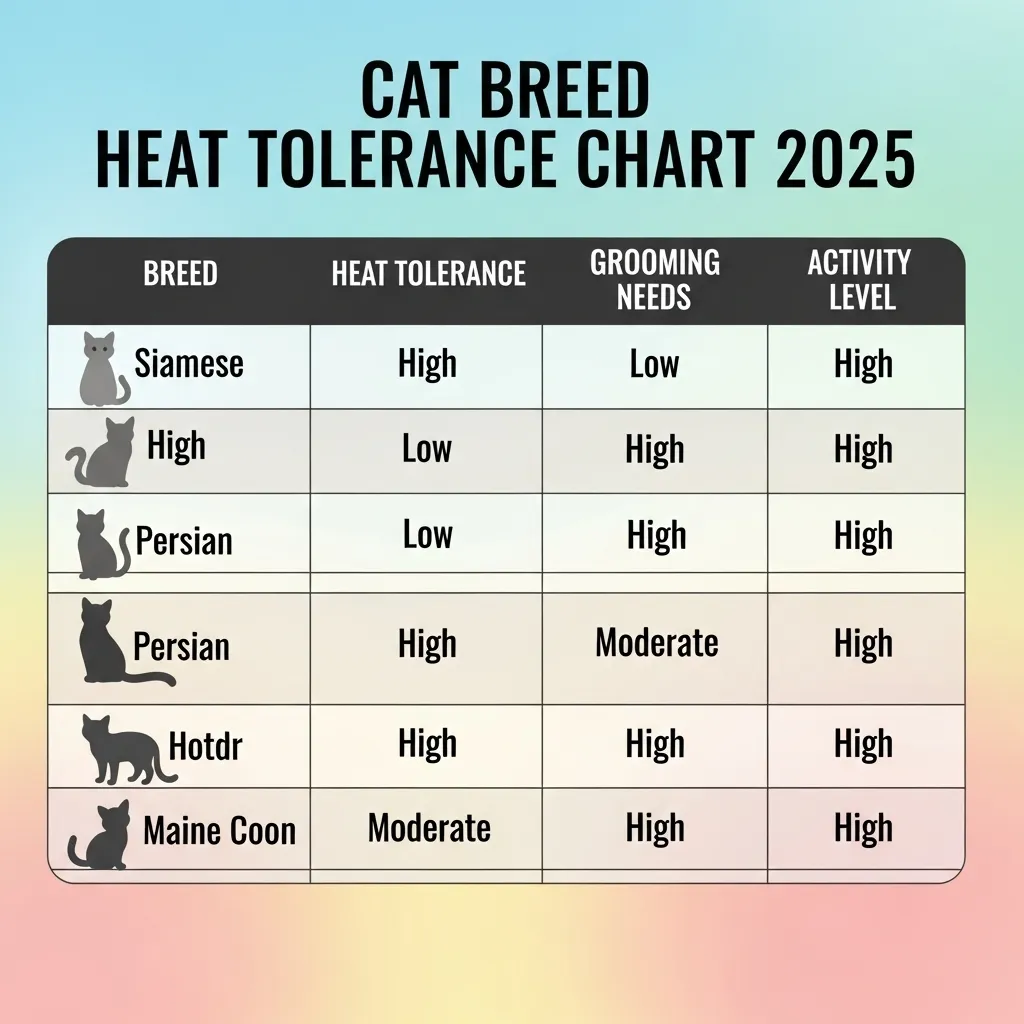
What Temperature Can Different Cat Breeds Tolerate?
Not all cats are created equal when it comes to heat tolerance.
| Breed / Type | Heat Tolerance | Notes |
|---|---|---|
| Persian, Himalayan, Exotic | Very low | Flat faces (brachycephalic) + thick coat = high risk |
| Maine Coon, Norwegian Forest, Siberian | Moderate–good | Built for cold; long, dense coats trap heat |
| Ragdoll, British Longhair | Low–moderate | Heavy undercoat makes summer tough |
| Siamese, Oriental, Bengal | Good | Short, sleek coat + lean body |
| Sphynx & hairless breeds | Excellent | No fur = rapid heat loss, but they sunburn easily |
| Senior cats (10+ years) | Reduced | Slower metabolism, heart/kidney issues make cooling harder |
| Kittens under 6 months | Reduced | Immature temperature regulation |
| Overweight cats | Very reduced | Extra fat acts like insulation |
If you have a flat-faced Persian or an overweight senior, treat anything above 78 °F as potentially dangerous.
The 9 Early Signs Your Cat Is Too Hot (Before It Becomes Heatstroke)
Many owners miss the subtle clues. Watch for these:
- Excessive grooming or wet-looking fur (trying to cool via saliva)
- Seeking cool surfaces constantly – tile, sinks, bathtubs
- Lethargy or refusing to play/move
- Panting or open-mouth breathing (cats rarely pant – this is serious)
- Drooling or sticky saliva
- Bright red gums and tongue
- Rapid heartbeat
- Vomiting or diarrhea
- Staggering, collapse, or seizures (full heatstroke – act immediately)
Cat Heatstroke Symptoms vs. Heat Exhaustion Know the Difference
Heat exhaustion (still reversible)
- Mild–moderate panting
- Lethargy, hiding
- Slightly elevated temperature
Heatstroke (life-threatening)
- Heavy panting or difficulty breathing
- Dark red or pale gums
- Body temperature over 104 °F
- Collapse, seizures, coma
Heatstroke can kill within hours. Never wait “to see if they improve.”
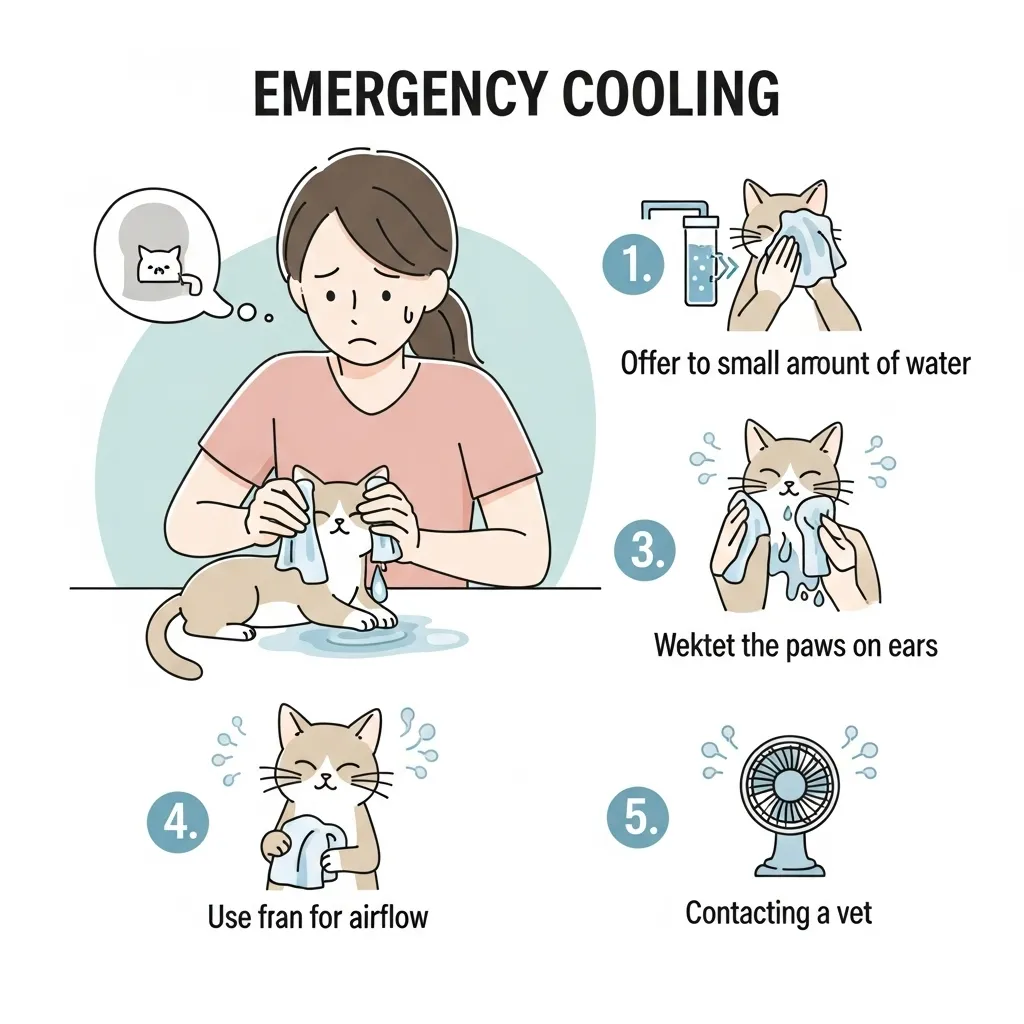
How to Cool Down a Cat Fast – Step-by-Step Emergency Protocol
- Move to a cool, shaded, air-conditioned room
- Offer cool (not ice-cold) water
- Wet paws, ears, and groin with room-temperature water
- Place a damp towel underneath them (not on top – they hate feeling trapped)
- Use a low fan pointed near (not directly at) them
- Alcohol wipes on paw pads (evaporates quickly – use sparingly)
- Transport to vet immediately if temperature exceeds 104 °F or they collapse
Do NOT submerge in ice water – it causes shock.
Proven Ways to Keep Cats Cool All Summer Long
1. Master the Indoor Temperature Sweet Spot
Aim for 72–78 °F during the day. Use smart thermostats or portable AC units in the rooms they use most.
2. Create Multiple Cool Zones
- Ceramic tiles or cooling mats (the gel ones work brilliantly – see our tested favorites)
- Frozen water bottles wrapped in a towel
- Elevated beds so air flows underneath
- Cardboard boxes on cool floors (they still love boxes even in summer)
3. Hydration Hacks That Actually Work
- Multiple water stations around the house
- Cat water fountains (moving water tempts them)
- Add ice cubes or a tiny splash of tuna juice
- Feed wet food – it’s 70–80 % water
Learn more hydration tricks in our complete cat hydration guide.
4. Grooming for Temperature Control
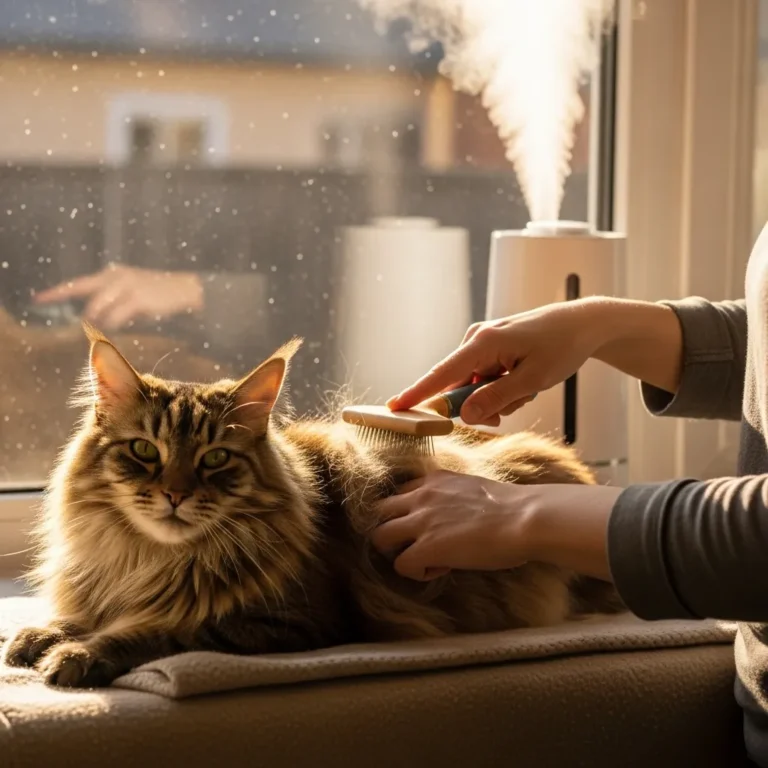
Daily brushing removes excess undercoat and helps air reach the skin. Long-haired breeds benefit most. Never shave – the coat protects from sunburn.
5. Best Cooling Products That Cats Actually Use in 2025
- Pressure-activated gel cooling mats (no freezing needed)
- Chillow pillows cut in half
- Window hammocks with mesh fabric for airflow
- Lightweight summer beds with elevated mesh
6. Safe Outdoor Time (If They Insist)
Never leave outdoor cats in direct sun between 10 a.m.–4 p.m. Provide shaded areas, shallow kiddie pools, and bring them in during peak heat.
Special Considerations: Age, Health, and Medication
- Senior cats and kittens: Keep below 77 °F
- Cats with heart disease, asthma, or obesity: Treat 80 °F as the upper limit
- Cats on certain medications (e.g., diuretics): Higher dehydration risk
Talk to your vet if your cat falls into any of these groups.
FAQ Your Most Common Hot-Weather Questions Answered
Q: Can cats stay in hot rooms if they have water?
A: No. Above 86 °F, even with water, heat stress builds quickly, especially for indoor-only cats unused to high temperatures.
Q: Is 80 degrees too hot for cats indoors?
A: It’s the upper edge of safe for healthy adult shorthairs. Long-haired, senior, or brachycephalic cats will already feel uncomfortable.
Q: How can I tell if my cat is dehydrated in summer?
A: Gently pinch the skin at the scruff. If it doesn’t snap back instantly, they need fluids.
Q: Are cooling mats worth it?
A: Yes – our readers and vets consistently rate the top pressure-activated ones 4.8/5. They’re reusable and cats actually lie on them.
Q: My cat pants after playing – is that normal?
A: Brief mild panting after intense zoomies is usually fine. Continuous or open-mouth panting is not.
Final Thoughts
Heat stress sneaks up faster than most owners expect. A room that feels “a little warm” to you can push your cat into the danger zone in under an hour, especially if humidity is high.
Keep the house below 78 °F when possible, watch for the early signs we covered, and never hesitate to cool them actively if they show discomfort.
Your cat depends on you to be their personal thermostat. Stay vigilant, and summer can stay fun instead of frightening.
Want more seasonal care tips? Check out our popular guides:
→ How cold is too cold for cats – winter edition
Stay cool, and keep those kitties cooler.
Cat Bloom Haven – where curious cats and their humans find answers. 🐾