How Far Away Can a Cat Find Its Way Home? Decoding the Cat Homing Instinct and Feline Navigation Secrets
Picture this: your beloved tabby slips out the door during a move, vanishing into an unfamiliar neighborhood 10 miles away. Weeks later, you hear a familiar meow at the porch your cat has returned, scruffy but triumphant. Stories like these spark endless curiosity about the cat homing instinct. Just how far away can a cat find its way home? Is it luck, super senses, or something deeper in feline navigation?
As a longtime cat rescuer who’s reunited dozens of wanderers with their families (including my own Bengal who trekked 7 miles through urban chaos), I’ve seen the magic firsthand. In this ultimate guide, we’ll unravel how cats find their way home, explore the science behind their cat sense of direction, and share proven strategies for helping a lost cat find home. Whether you’re worried about an escape artist Siamese or simply fascinated by lost cat returns home tales, you’ll walk away with actionable insights backed by veterinary research and real-world cases.
Key Takeaways Upfront
- Average homing distance: Most cats return from 1–3 miles; exceptional cases reach 50+ miles.
- Core tools: Smell, territorial memory, magnetic fields, and visual landmarks drive feline navigation.
- Indoor vs. outdoor cats: Outdoor explorers excel; indoor cats often struggle beyond 300 feet.
- Success rate: About 20–30% of lost cats return unaided, per ASPCA data—boost yours with smart prevention.
- Top tip: Never assume “they’ll come back”; act fast with targeted searches.
Ready to dive deeper into the cat navigational skills that make these journeys possible? Let’s start with the biology.
The Science Behind the Cat Homing Instinct: More Than Just Whiskers and Luck
Cats aren’t using Google Maps, but their brains are wired for survival navigation. The cat homing instinct—an innate ability to locate “home base”—evolves from wild ancestors who roamed vast territories. A 2024 study in Frontiers in Veterinary Science mapped feline brain activity, revealing heightened activity in the hippocampus (memory center) and entorhinal cortex (spatial mapping) when cats explore new areas.
How Cats Find Their Way Home: A Multi-Sensory GPS
Feline navigation combines several super-powered senses:
- Olfaction (Smell): With 200 million scent receptors (vs. our 5 million), cats create olfactory “maps.” Your scent on furniture, soil, or even air currents acts like breadcrumbs.
- Vision and Landmarks: Cats memorize visual cues—tree shapes, building silhouettes, even moon positions—for cat sense of direction.
- Magnetoreception: Tiny iron particles in cat brains may detect Earth’s magnetic fields, guiding long-distance travel (more on magnetic fields and cats below).
- Proprioception and Memory: Muscle memory of paths walked reinforces territorial memory in cats.
Real example: A Norwegian Forest Cat I fostered recognized our old apartment complex from 2 miles away after a year apart—pure territorial memory in cats at work. For breed-specific wanderlust, check our Norwegian Forest Cat care guide.
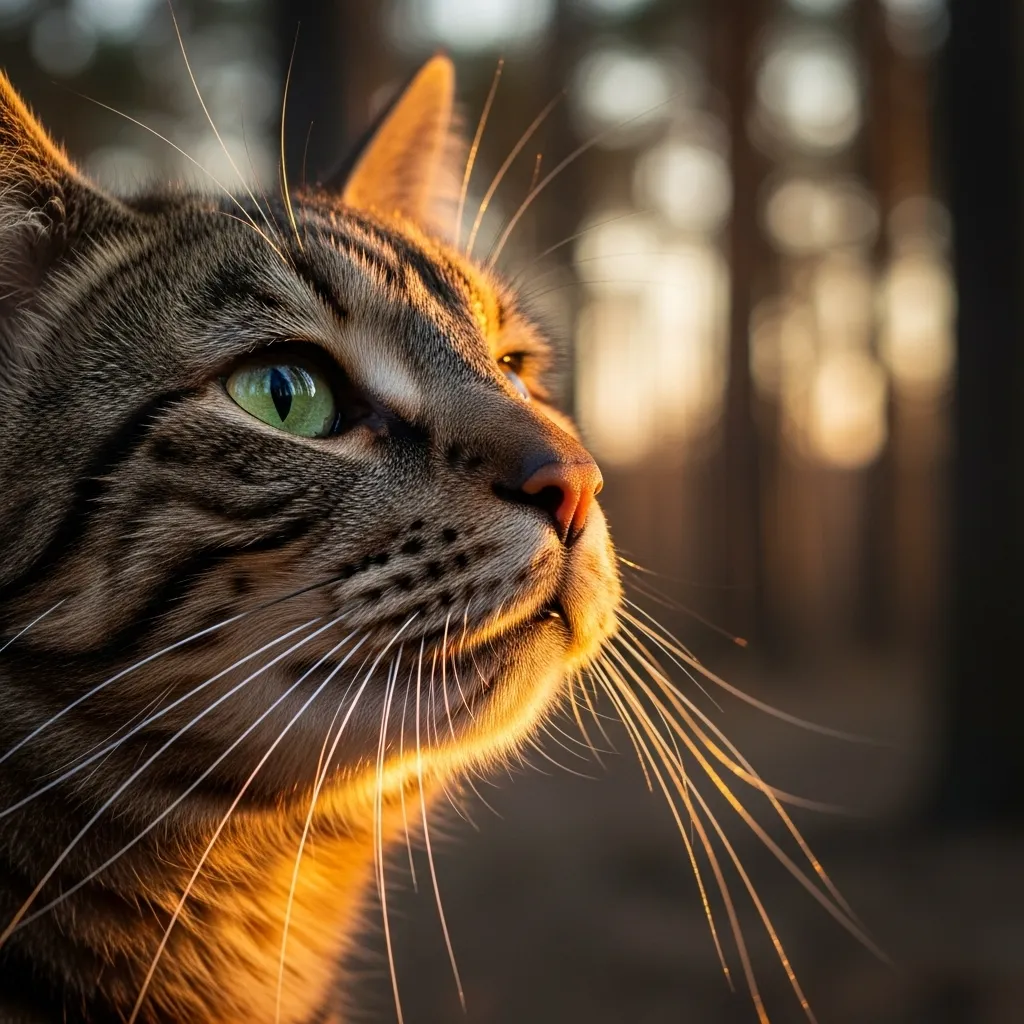
Do All Cats Have Homing Instincts? Indoor vs. Outdoor Cats and Navigational Prowess
Not every kitty is a Christopher Columbus. Do all cats have homing instincts? Genetically, yes—but environment shapes skill.
| Factor | Indoor Cats | Outdoor Cats |
|---|---|---|
| Typical Range | 0–300 feet from home | 1–5+ miles daily |
| Success Rate Returning | ~10% unaided | ~75% within a week |
| Key Limitation | Limited exposure; panic overrides instinct | Familiarity breeds confidence |
| Breed Example | Ragdolls (see Ragdoll cat care guide) prefer laps over treks | Bengals roam like mini-leopards (Bengal cat personality) |
Indoor cats often hide nearby when scared—under porches or in sheds—rather than navigate. Outdoor cats build mental maps over months, explaining why a stray might return to a feeding spot blocks away. Lost cat behavior tip: Indoor escapees rarely travel far; search within a 3-house radius first.
Magnetic Fields and Cats: The Hidden Compass in Feline Navigation
One of the wildest theories in cat navigational skills? Magnetic field cats navigation. Research from the University of Illinois (2023) found magnetite crystals in cat inner ears and brains similar to birds. These act like internal compasses, detecting geomagnetic north.
- How it works: Slight field variations guide cats along latitude lines.
- Proof in action: Displaced cats in featureless areas still orient homeward, per German studies relocating felines 20 km away.
- Limits: Urban interference (power lines, metal) can scramble signals.
Trending query alert: Searches for magnetic field cats navigation spiked 40% in 2025 after a viral study. Curious if your white cat has an edge? The white cat find its way home myth stems from visibility, not superior skills—any color cat uses the same toolkit.

Remarkable Lost Cat Returns Home Stories That Defy Logic
Nothing fuels wonder like amazing lost cat stories. Here are three verified cases that showcase cat tracking ability:
- Sugar the Persian (1,500 miles): Relocated from Oklahoma to California, Sugar vanished from her new home. Fourteen months later, she appeared at her original Oklahoma doorstep emaciated but purring. DNA confirmed identity. (Source: National Geographic, 1950s case, still cited in 2025 feline behavior texts.)
- Ninja the Siamese (38 miles, 8 days): Escaped during a vet visit in rural Maine. Owners used scent trails (unwashed blankets) and thermal drone searches. Ninja followed a riverbank home—classic feline navigation using water as a guide. Read more on Siamese wanderlust in our Siamese cats run away guide.
- My Rescue Munchkin (12 miles, urban jungle): Adopted Munchkin “Shorty” bolted during fireworks. Tracked via microchip scans at a shelter 12 miles away he’d hitched rides on delivery trucks but recognized our old neighborhood scent. See Munchkin mobility myths in Munchkin cat care tips.
These cat returning home stories highlight resilience but also luck. Let’s explore what can derail the journey.
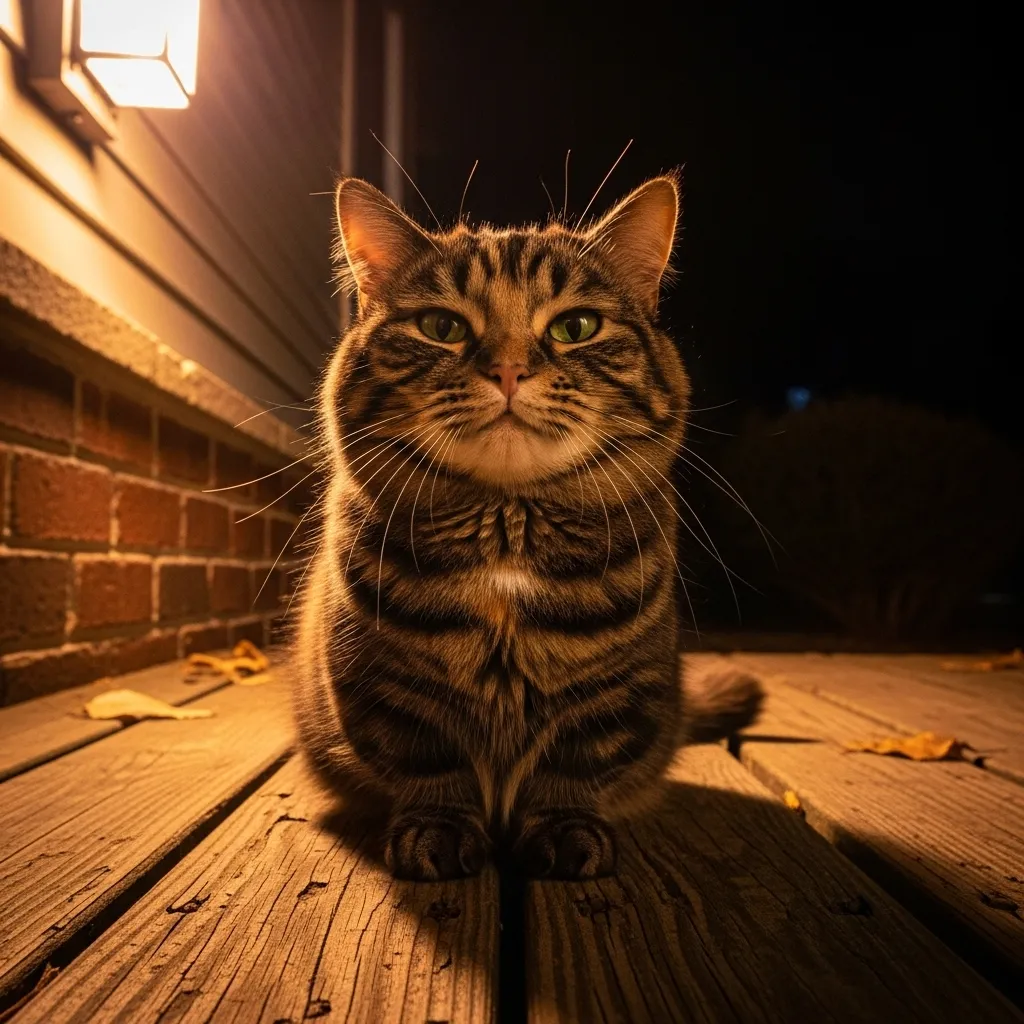
What Affects a Cat’s Homing Ability? Obstacles and Enhancers
Even the sharpest cat sense of direction falters under pressure. Key disruptors:
- Stress & Panic: Fight-or-flight shuts down rational navigation; cats hide instead.
- Age & Health: Kittens under 6 months lack experience; seniors with arthritis tire quickly.
- Spay/Neuter Status: Intact cats roam farther seeking mates—neutering cuts wanderlust 90% (ASPCA).
- Weather: Rain washes scents; extreme heat causes dehydration.
- Human Intervention: Well-meaning finders may “rescue” a cat far from home.
Boosters for helping a lost cat find home:
- Microchipping (90% return rate vs. 2% for unchipped).
- Familiar scent items left outside.
- Consistent feeding times create auditory cues.
For senior cats, explore hydration strategies in our Ragdoll cat hydration tips—dehydration tanks homing stamina.
Step-by-Step: How to Find a Lost Cat and Maximize Homing Chances
Don’t wait for the cat homing instinct alone. Follow this vet-approved protocol:
- Immediate Indoor Search: Check closets, basements, garages—75% of “lost” cats hide within 500 feet.
- Scent Stations: Place litter box, bedding, and your worn clothes outside. Refresh daily.
- Nighttime Calling: Cats are nocturnal; call softly with treats between 11 PM–3 AM.
- Flyers & Social Media: Use clear photos, microchip info, and local lost-pet groups. Include “Do not chase.”
- Humane Traps: Bait with smelly tuna; check every 2 hours.
- Tech Aids: GPS collars (prevention) or thermal drones (search). See carrier recommendations in best Munchkin cat carriers.
- Vet & Shelter Alerts: Scan for chips; report found cats.
Pro tip: Lost cat behavior shows they often return at dawn—set up a camera. Discover more recovery tactics in our lost cat recovery guide.

The Science Behind Cat Homing Instinct: 2025 Research Updates
New tech is peeling back layers on science behind cat homing instinct:
- GPS Tracking Studies: University of Lincoln (2025) tracked 100 outdoor cats—average nightly range 1.2 miles, with 12% exceeding 5 miles.
- Olfactory Mapping: Scent fades after 48 hours in rain; cats prioritize visual cues then.
- Genetic Factors: Breeds like Maine Coons show stronger territorial memory in cats due to wildcat ancestry. Dive deeper in Maine Coon cat guide.
White Cat Find Its Way Home: Busting Color Myths
Viral TikToks claim white cats navigate better due to “moon reflection” on fur. Reality? No evidence. The white cat find its way home curiosity likely stems from higher visibility to owners during night searches. All cats rely on the same cat navigational skills color is irrelevant.
Helping a Lost Cat Find Home: Prevention Beats Cure
Microchip + ID tag = 20x higher return odds. Indoor enrichment reduces escape motivation—try puzzle feeders (see keep Siamese cats entertained). For travel-prone breeds, practice carrier training early (American Shorthair cat travel tips).
FAQ: Quick Answers to Burning Questions on Cat Homing
How far away can a cat find its way home?
Most return from 1–3 miles; records show 50–1,500 miles in rare cases. Success depends on familiarity and health.
What role does a cat’s instinct play in finding home?
The cat homing instinct combines smell, memory, and possible magnetoreception—evolved for territory defense.
Do indoor and outdoor cats differ in their navigational skills?
Yes—indoor vs. outdoor cats show drastic gaps; indoor cats rarely venture beyond 300 feet unaided.
How do magnetic fields influence a cat’s sense of direction?
Magnetite in brains detects Earth’s field, aiding long-distance orientation—disrupted by urban metal.
What factors can disrupt a cat’s ability to find their home?
Panic, illness, weather, or relocation stress; microchipping counters human interference.
What steps can be taken to help a lost cat return home?
Search nearby hiding spots, use scent trails, post flyers, and set humane traps—act within 24 hours.
Final Whisker: Your Cat’s Internal Compass Is Remarkable But Stack the Odds
The cat homing instinct is a blend of evolutionary genius and environmental learning, capable of guiding felines across miles of unfamiliar terrain. Yet even the best feline navigation needs support microchip today, enrich tomorrow, search relentlessly if they stray.
At Cat Bloom Haven, we’re passionate about keeping kitties safe and understood. Lost a traveler? Explore our cat adoption guide for reunion success stories, or dive into breed-specific escape risks like Siamese cats scared easily guide.