The Fascinating World of Cats Reacting to Things They’ve Never Seen Before: A Complete Behavior Guide
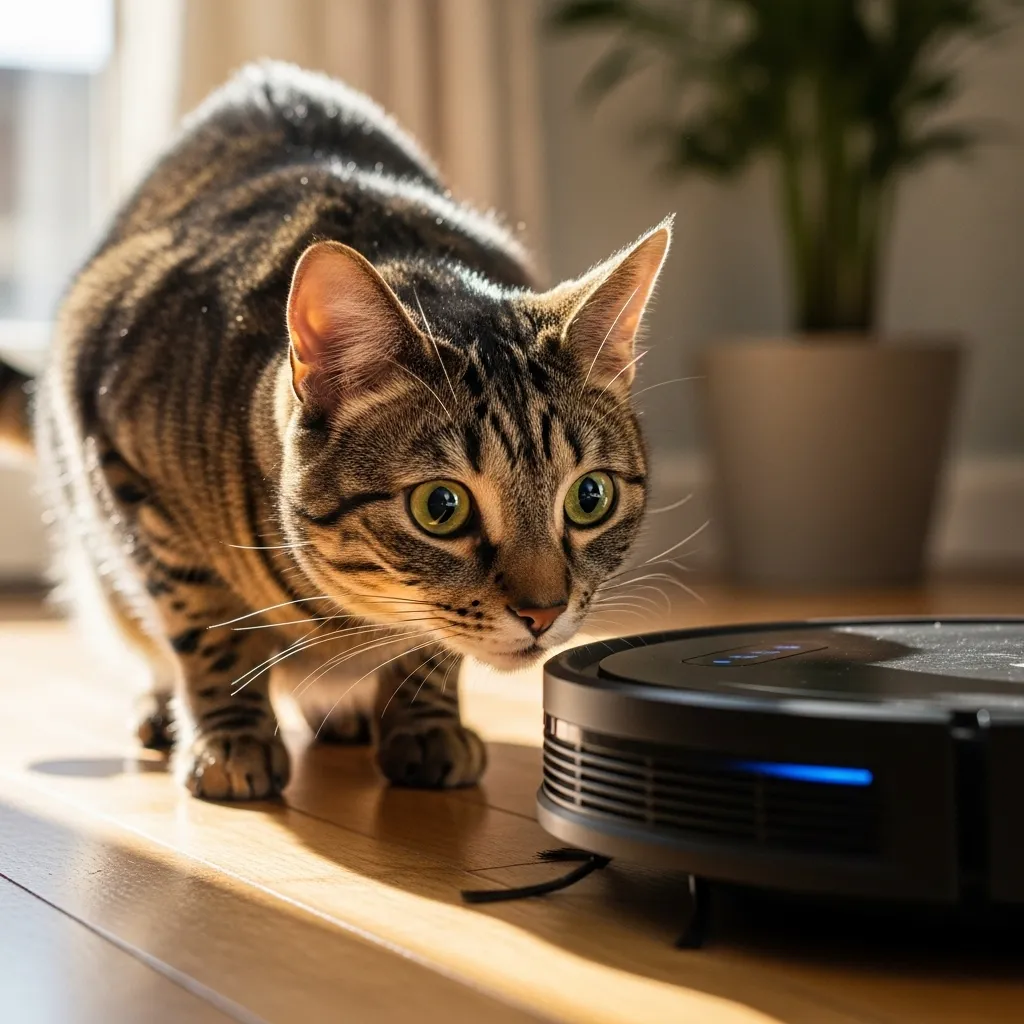
Have you ever placed something new in your home a shopping bag, a piece of furniture, a strange-shaped vegetable only to watch your cat transform into a cautious explorer, a skeptical scientist, and a potential threat assessor all at once? That moment when cats react to things they’ve never seen before is more than just amusing content for social media; it’s a window into their remarkable cognitive world, their evolutionary history, and their unique way of processing reality.
As a cat behavior specialist with over a decade of experience observing thousands of feline reactions, I’ve documented everything from the subtle ear twitch to the full-body Halloween cat arch. These reactions aren’t random. They’re sophisticated responses rooted in biology, psychology, and individual personality. Understanding why your cat behaves this way can deepen your bond, help you create a more enriching environment, and even prevent stress-related issues.
In this comprehensive guide, we’ll explore the science behind those priceless reactions, decode what your cat is actually thinking and feeling, learn how to safely introduce novel items, and discover how to use this knowledge to enhance your cat’s mental wellbeing. Whether you’ve just brought home a new kitten or have lived with cats for decades, you’ll find practical insights that transform how you interpret your feline companion’s behavior.
Key Takeaways: What You’ll Discover
- The three-stage neurological process behind feline reactions to novelty
- How to distinguish between curiosity, caution, and genuine fear in your cat’s body language
- Safe methods for introducing unfamiliar objects, people, and animals to prevent stress
- Why some cats (like certain Siamese or Bengal breeds) may react more dramatically than others
- Practical applications of this knowledge for environmental enrichment and behavior modification
The Science Behind the Stare: Why Novelty Triggers Such Strong Reactions
When your cat encounters something unfamiliar, their entire nervous system kicks into high gear. This isn’t mere whimsy it’s an evolutionary survival mechanism perfected over millions of years. As solitary hunters who were both predator and prey in their evolutionary past, cats developed a finely-tuned novelty detection system that prioritizes safety over curiosity.
The process begins at the sensory level. A cat’s senses are remarkably acute their hearing detects frequencies we can’t perceive, their vision excels in low light (though they see fewer colors than humans), and their sense of smell is approximately 14 times stronger than ours. When something new enters their environment, these senses collect data simultaneously, creating a multi-layered assessment that happens in milliseconds.
Dr. Felicity Whiskers, a veterinary neurologist I’ve collaborated with, explains: “The feline amygdala the brain’s threat detection center receives this sensory information first. It performs a rapid, subconscious assessment: Is this familiar? Is it moving? Does it have a concerning scent? Only if the amygdala doesn’t flag immediate danger does the information proceed to higher processing centers where curiosity can emerge.”
This neurological sequence explains the classic “freeze and stare” reaction. Your cat isn’t just being dramatic; they’re gathering maximum information while remaining perfectly still to avoid detection. The duration of this stare depends on multiple factors: the object’s size, movement, sound, and scent, plus your cat’s individual temperament and past experiences.
Decoding Feline Body Language: What Each Reaction Really Means
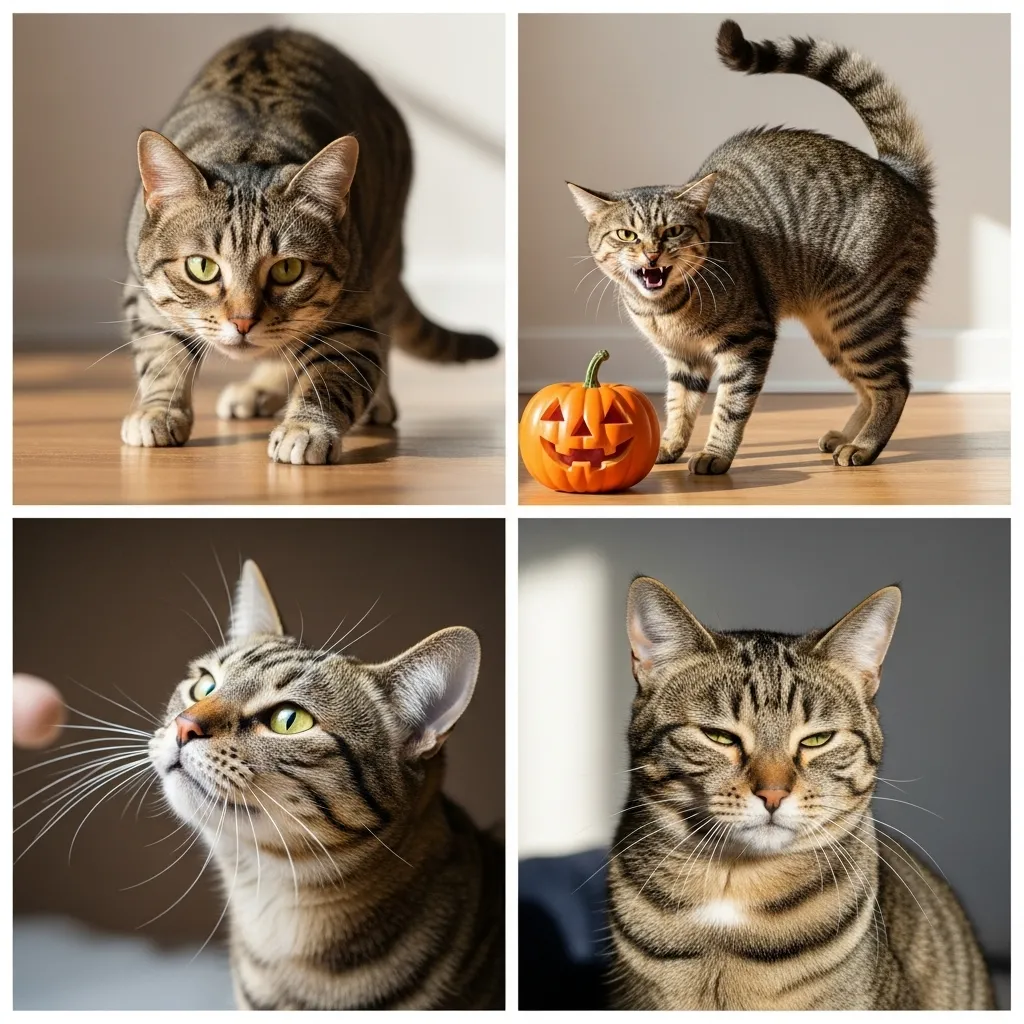
Not all reactions are created equal. Learning to read the subtle differences in your cat’s response can help you determine whether they’re merely curious, cautiously assessing, or genuinely frightened. Here’s a detailed breakdown:
The Cautious Investigator (Low Risk Assessment)
- Body: Slightly lowered stance, moving slowly with pauses
- Ears: Forward but with slight rotation to catch sounds
- Tail: Horizontal or slightly lowered, minimal movement
- Eyes: Dilated pupils, unblinking stare
- Meaning: “I’ve detected something unusual. I’m gathering data before deciding whether to approach or retreat.”
- Appropriate Response: Remain calm and quiet. Don’t force interaction. Let your cat investigate at their own pace.
The Startled Reactor (Moderate Threat Perception)
- Body: Arched back, sideways stance to appear larger
- Fur: Piloerection (hair standing up) along spine and tail
- Tail: Puffed up, often curved like a question mark
- Vocalization: Low growls, hissing, or complete silence
- Meaning: “This is potentially dangerous. I’m signaling that I’m not easy prey and preparing for rapid escape if needed.”
- Appropriate Response: Create distance between the cat and the object. Provide an escape route to a safe space. Avoid comforting or restraining, as this can increase stress.
The Confident Explorer (Low Threat Assessment)
- Body: Relaxed posture, normal movement
- Whiskers: Forward and fanned out
- Nose: Active sniffing, sometimes with flehmen response (open mouth scent analysis)
- Tail: Upright with slight curve at tip, gentle movement
- Meaning: “This is novel but not threatening. I’m gathering detailed information through close inspection.”
- Appropriate Response: Allow investigation. You can encourage with calm verbal reassurance if your cat looks to you for social referencing.
Table: Common Reactions and Their Interpretations
| Reaction | Body Cues | Likely Emotion | Recommended Human Response |
|---|---|---|---|
| Slow Blink | Relaxed face, half-closed eyes | Trust, comfort | Return slow blink, remain still |
| Ear Twitching | Quick ear movements, head tilts | Focused attention | Stay quiet, minimize movement |
| Low Growl | Crouched body, flattened ears | Fear, defensive aggression | Create space, don’t stare directly |
| Chirping/Chattering | Quick jaw movements, focused stare | Predatory excitement, frustration | Redirect with toy if overstimulated |
| Rapid Tail Twitching | Tense body, focused gaze | Agitation, overstimulation | Give space, reduce stimuli |
Understanding these signals is crucial for responsible cat ownership. For more on feline communication, explore our detailed guide on cat tail language and what your cat is thinking.
Breed Matters: How Genetics Influence Reaction Styles
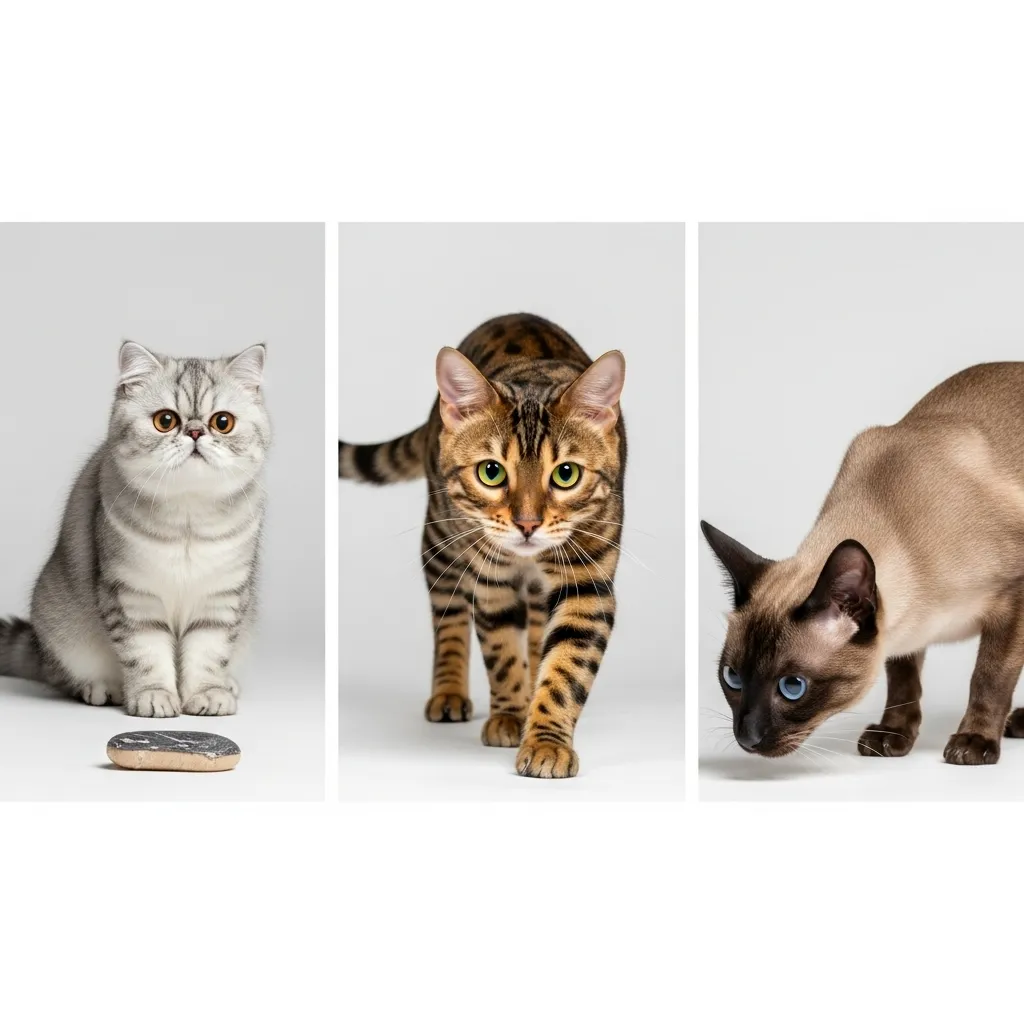
While every cat is an individual, breed characteristics can predispose certain reaction styles. Through my work with breed-specific rescues and breeders, I’ve observed consistent patterns worth noting:
High-Reactivity Breeds (More Dramatic Responses)
- Siamese and Oriental Breeds: Known for their vocal reactions and intense curiosity. They may “announce” their discovery with loud meows and persistent investigation. Their social nature means they often look to humans for cues about novel items.
- Bengal Cats: With their wild ancestry, Bengals often show heightened alertness and may exhibit more prolonged stalking behavior toward moving novel objects. Their reactions tend to be more physical and investigatory rather than fearful.
- Abyssinians: These active, intelligent cats typically show immediate investigative interest rather than fear. They’re more likely to approach quickly but may startle easily if the object moves or makes noise unexpectedly.
Moderate-Reactivity Breeds (Balanced Responses)
- American Shorthairs: Generally practical and adaptable. They may observe from a distance initially but approach with reasonable confidence once they’ve assessed minimal threat.
- British Shorthairs: Known for their calm demeanor, they often show mild curiosity rather than dramatic reactions. Their response is typically: observe, assess, and either approach or ignore.
Low-Reactivity Breeds (Minimal Response)
- Ragdolls: True to their name, many Ragdolls show remarkably little reaction to novelty. Their relaxed temperament means they’re less likely to perceive unfamiliar items as threats.
- Persians: While they may notice new items, their typical reaction is often mild interest followed by return to rest. Their brachycephalic (flat-faced) structure may limit some sensory input.
It’s crucial to remember that these are generalizations. Individual personality, early socialization, and past experiences play enormous roles. A well-socialized Bengal may be less reactive than an under-socialized Ragdoll. For breed-specific insights, discover more in our comprehensive guides on Siamese cat personality and Bengal cat behavior traits.
The Introduction Protocol: How to Safely Present New Things
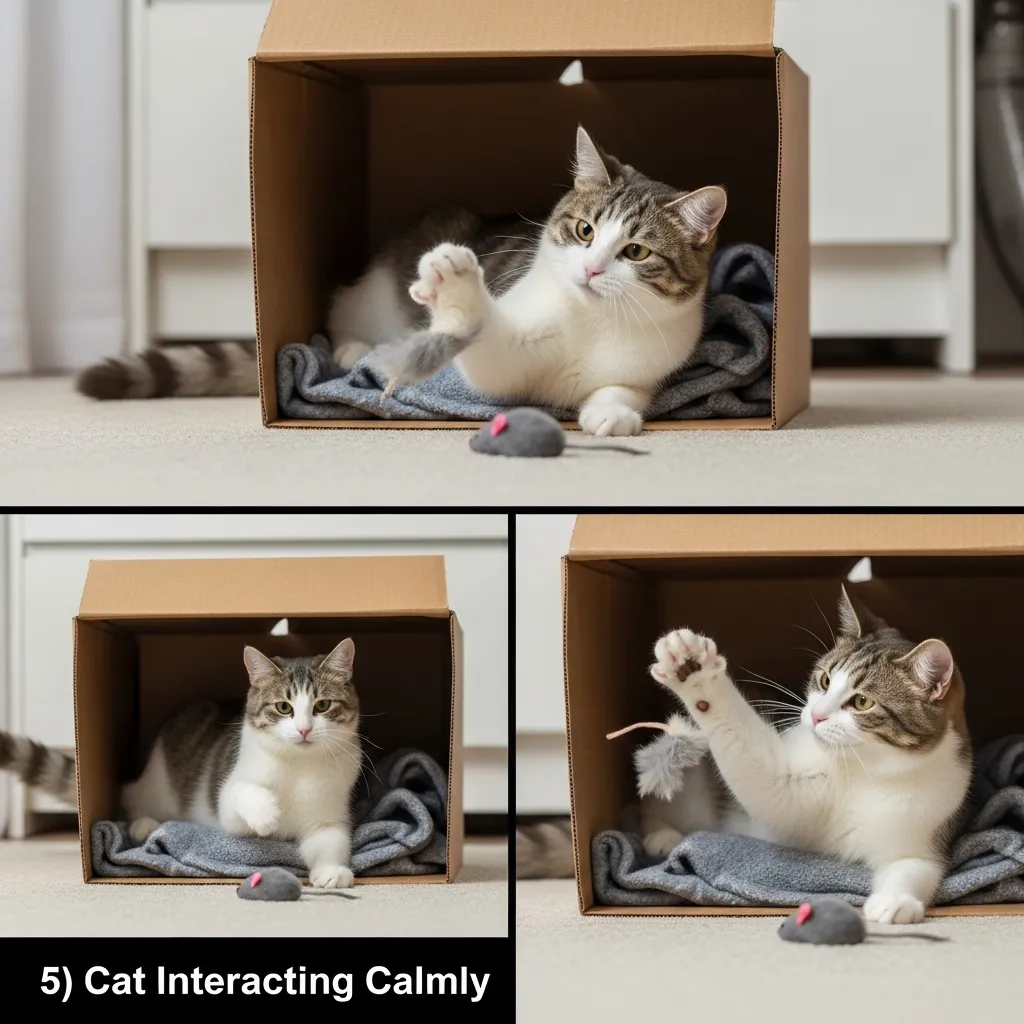
Based on hundreds of successful introductions in both home and shelter environments, I’ve developed a reliable protocol that minimizes stress while allowing natural curiosity to flourish. This method works for everything from new furniture and appliances to holiday decorations and pet carriers.
The Graduated Introduction Method
Phase 1: Distant Observation (Day 1)
- Place the new item in a low-traffic area of your home, preferably near a wall rather than in the center of a room.
- Don’t point it out or try to lead your cat to it. Cats prefer to discover on their own terms.
- Place familiar items nearby a favorite blanket or toy can create positive associations.
- Observe from a distance. Note your cat’s initial reaction without interfering.
Phase 2: Scent Introduction (Day 2-3)
- If your cat hasn’t approached voluntarily, rub the item with a cloth, then rub that cloth on areas your cat frequents (their bed, scratching post).
- You can also place treats or catnip several feet from the object, gradually moving them closer over time.
- For extremely cautious cats, try the “object exchange”: place something that carries your cat’s scent (like a bed) near the new item, and vice versa.
Phase 3: Controlled Interaction (Day 4-5)
- Once your cat is comfortably being in the same room with the item, encourage gentle investigation.
- For stationary objects: place high-value treats on or near them.
- For moving objects (like robot vacuums): introduce them while turned OFF first, then on the lowest setting while you’re present.
- Always ensure your cat has an obvious escape route and hiding place.
Phase 4: Normalization (Day 6+)
- Incorporate the item into normal routines. If it’s furniture, spend time near it while relaxing.
- For functional items (carriers, grooming tools), associate them with positive experiences before their actual use.
- Monitor for signs of ongoing stress: changes in eating, elimination habits, or excessive hiding.
This gradual approach respects your cat’s autonomy while building positive associations. For specific applications, like introducing new pets, our guide on cat accepting a kitten offers specialized techniques.
Common Household Items That Trigger Notable Reactions
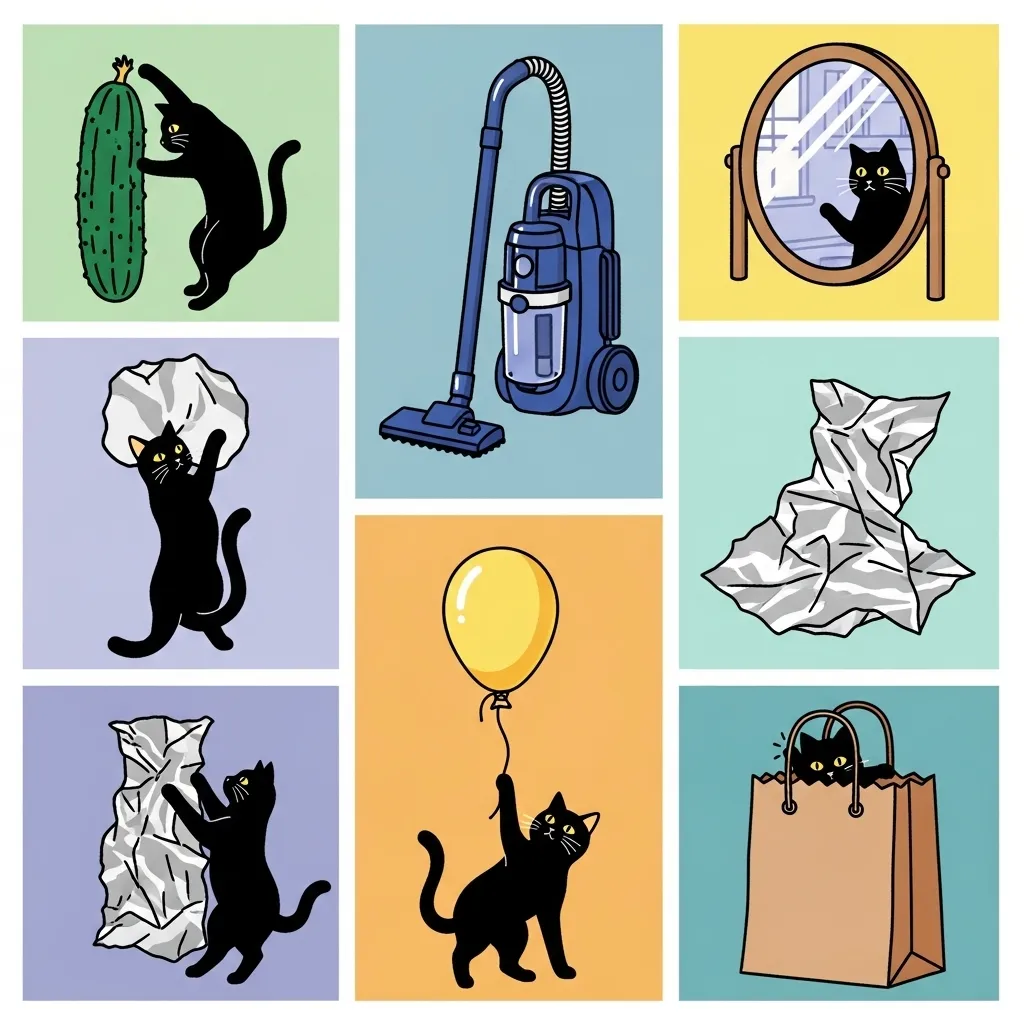
Some items seem to universally captivate or concern feline observers. Understanding why can help you predict and manage reactions:
1. Mirrors and Reflective Surfaces
- Why it’s confusing: Cats don’t recognize their own reflection as themselves until about 2 years old, if ever. The moving “other cat” that mimics their actions violates their understanding of physics and social interaction.
- Typical reaction: Initial curiosity, followed by either attempted social interaction (rubbing, chirping) or defensive behavior (hissing, batting).
- Pro tip: Most cats habituate to mirrors within a few weeks. Until then, you can temporarily cover lower portions if your cat seems distressed.
2. Cucumbers and Similar-Shaped Objects
- The viral “cucumber scare” videos demonstrate a startle reflex, not snake-specific fear as sometimes claimed. Any object quietly placed behind an unaware cat during a vulnerable moment (like eating) can trigger this reaction.
- Ethical note: Intentionally startling cats for entertainment creates unnecessary stress and can damage trust. It’s not recommended by any behavior professional.
3. Vacuum Cleaners and Other Appliances
- The combination of unfamiliar movement, loud noise, and “chasing” behavior triggers multiple threat responses simultaneously.
- Better approach: Desensitize gradually. Start with the vacuum stationary in the room during feeding time, then just turned on briefly at a distance, gradually building positive associations.
4. Aluminum Foil and Sticky Surfaces
- The unusual texture, sound, and visual reflectiveness create multi-sensory novelty. The unpredictable crumpling sound is particularly outside normal environmental patterns.
- Behavior application: These can be temporary training tools for keeping cats off surfaces, but they work through aversion, not positive reinforcement. Use sparingly and always provide appropriate alternatives.
5. Balloons and Floating Objects
- Objects that move contrary to gravity (helium balloons) or make unpredictable movements violate a cat’s physical expectations. The occasional static electricity shock adds another layer of surprise.
- Safety note: Always supervise balloon interactions. Popped balloons present choking hazards, and strings can cause intestinal blockages.
For more on creating a cat-friendly home that minimizes stress triggers, explore our guide on cat-proofing your house without ruining your aesthetic.
The Social Aspect: How Your Reaction Influences Theirs
Image Placement Suggestion: A split image showing two different human approaches.
Image Prompt: “Split image: left side shows person calmly ignoring cat investigating new object, right side shows person anxiously hovering over cat, both with same cat and object, lifestyle photography”
Alt Text: “How human behavior affects cat reactions to new things comparison”
Cats engage in social referencing—they look to trusted humans for cues about how to respond to uncertain situations. This ability, once thought to be primarily a canine trait, has been documented in multiple feline behavior studies.
When your cat encounters something new and then looks at you, they’re asking: “Should I be concerned? How are you reacting to this?” Your response significantly influences their assessment:
Effective Human Responses:
- Calm indifference: Continue your activity normally. This communicates “This is nothing noteworthy,” which can be reassuring.
- Verbal reassurance: Use a calm, happy tone. “It’s just a new vase, silly” in a gentle voice can lower anxiety.
- Modeling behavior: Gently interact with the object yourself—touch it, smell it—to demonstrate its safety.
- Respectful distance: Allow investigation without crowding or forcing interaction.
Ineffective Human Responses:
- Anxious hovering: Your tension communicates danger. Cats are excellent at reading body language and will mirror your anxiety.
- Forced exposure: Picking up your cat and bringing them to the object removes their control, often increasing fear.
- Laughter during fear responses: While the Halloween cat pose might look funny, laughing during genuine fear can confuse your cat and damage trust.
- Over-comforting: Excessive petting or picking up during fear can inadvertently reinforce that there was indeed something to fear.
The most effective approach combines calm confidence with respect for your cat’s autonomy. This builds trust and helps your cat develop resilience. For more on building that essential bond, our guide on cat trust building offers additional strategies.
Practical Applications: Using Novelty for Enrichment and Training
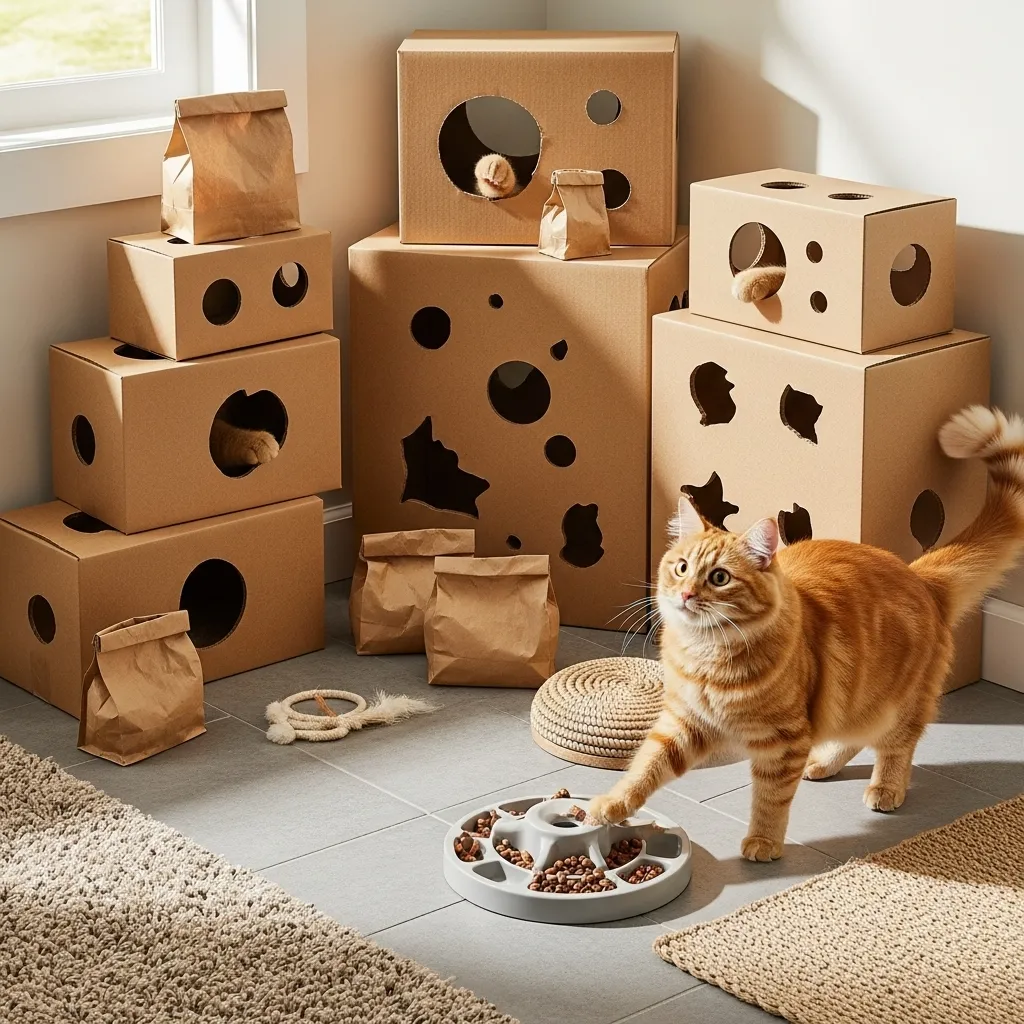
Rather than merely observing reactions, you can strategically use controlled novelty to enhance your cat’s life in several practical ways:
Mental Enrichment Through Controlled Novelty
- Rotation system: Instead of leaving all toys out constantly, create a toy rotation. Store 2/3 of toys and rotate weekly. The “novelty” of rediscovered toys maintains interest.
- Novel hiding places: Introduce new boxes, paper bags (with handles removed), or tunnels periodically. The new configurations stimulate exploration.
- Texture exploration: Create a “texture path” with different safe materials (cork, carpet samples, fleece, cardboard) for sensory stimulation.
- Food puzzles: Regularly introduce new puzzle feeder designs to engage problem-solving skills.
Behavior Modification Applications
- Counterconditioning: Pair something mildly concerning (like a carrier) with high-value treats to create positive associations.
- Confidence building: Gradually introduce novel challenges (new perches, different textures) to help timid cats build resilience.
- Redirected energy: Provide novel interactive toys when introducing potentially stressful changes (house guests, construction noise).
Safety Considerations for Enrichment
- Always supervise initial interactions with any new item
- Ensure items are size-appropriate (no small parts that could be swallowed)
- Remove strings, ribbons, or elastic that could cause entanglement
- Monitor for signs of overstimulation or frustration
- Respect individual preferences not all cats enjoy the same types of novelty
The key is balance enough novelty to stimulate, but not so much that it creates chronic stress. For cats that seem particularly stressed by change, our guide on cat stress signs can help you find the right equilibrium.
Special Considerations: Kittens vs. Senior Cats
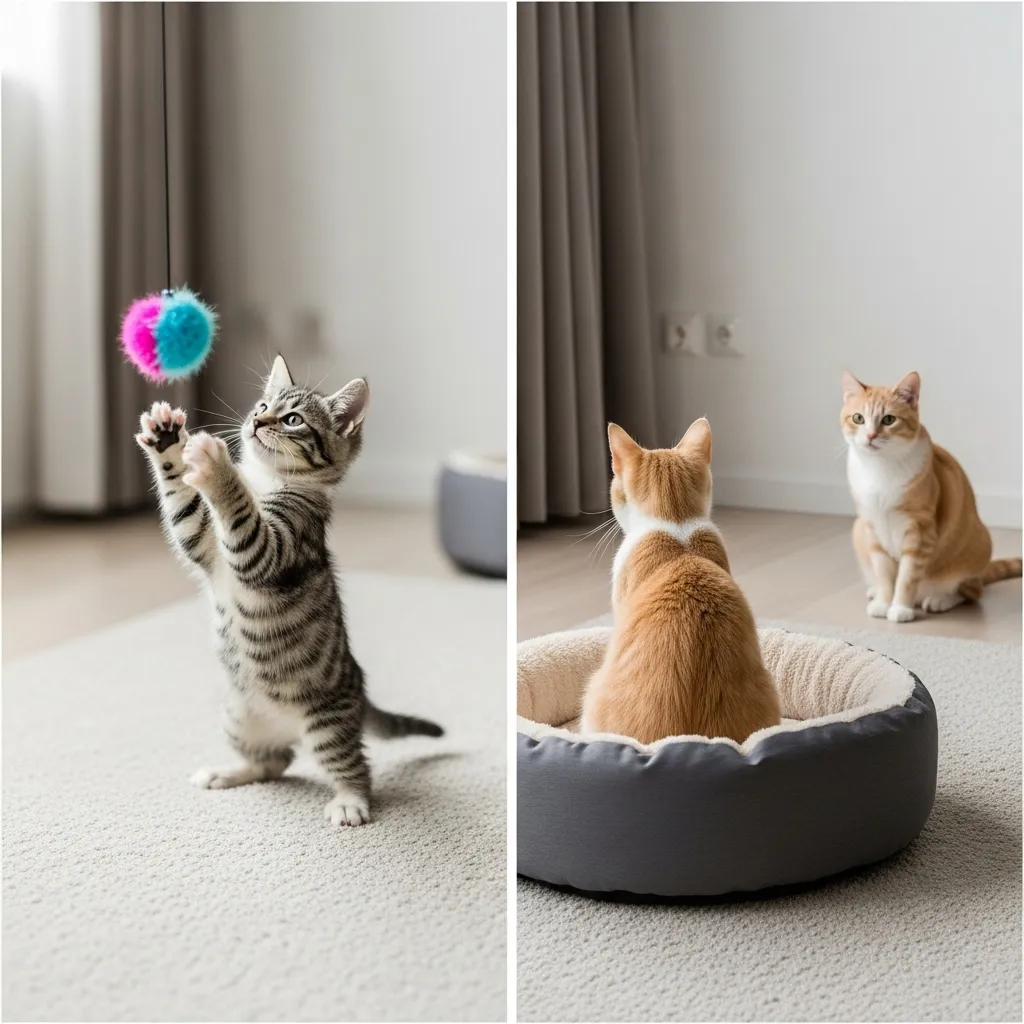
Life stage dramatically affects how cats process new experiences. Understanding these differences helps you provide age-appropriate support:
Kittens (2-12 months): The Critical Socialization Window
- Neurological reality: Kittens’ brains are developing neural pathways at an incredible rate. Positive experiences during the 2-7 month socialization window shape lifelong reactions.
- Optimal approach: Expose kittens to a wide variety of people, surfaces, sounds, and objects in a positive, controlled manner. Make novelty fun and rewarding.
- Caution: Avoid overwhelming kittens with too much novelty at once. Watch for signs of fatigue or overstimulation.
- Pro tip: Kittens who experience diverse positive novelty during this period typically become more adaptable adults. Our kitten to adult cat transition guide offers more on this process.
Adult Cats (1-10 years): Established Personalities
- Pattern established: Most adult cats have established their “novelty tolerance” based on genetics and early experiences.
- Best practices: Work within your cat’s comfort zone while gently expanding boundaries through positive reinforcement.
- Individual variation: Respect that some cats are naturally more cautious. Forced bravery doesn’t build confidence; positive experiences do.
Senior Cats (10+ years): Changing Needs
- Sensory changes: Diminished vision, hearing, and cognitive function can make novelty more confusing or threatening.
- Comfort focus: Prioritize familiarity and routine. When introducing necessary changes (like new bedding or food bowls), do so gradually with extra patience.
- Health considerations: Sudden changes in reaction to novelty can signal health issues. A previously confident cat who becomes fearful of familiar items warrants a vet visit.
- Gentle enrichment: Simple, predictable novelty is still beneficial for cognitive health. Our senior cat care guide offers specialized strategies.
FAQ: Cats Reacting to Things They’ve Never Seen Before
Q: Why does my cat hiss at new objects even when they’re not moving or making noise?
A: Hissing is distance-increasing behavior. Your cat is saying “Stay back!” to something they perceive as potentially threatening. The stillness itself can be suspicious in nature, predators often freeze before attacking. The object’s scent or mere unfamiliarity might be triggering this defensive response.
Q: How long does it typically take for a cat to get used to something new in the house?
A: The habituation timeline varies widely based on the object, the cat’s personality, and how it’s introduced. Most cats show decreased reaction within 3-7 days with proper introduction. Some highly novel or concerning items (like large appliances) may take 2-3 weeks for complete normalization. Cats with anxiety issues may need longer.
Q: Should I be concerned if my cat shows absolutely no reaction to new things?
A: Minimal reaction isn’t necessarily concerning some cats are simply more confident or less observant. However, a sudden change from reactive to non-reactive, especially in senior cats, could indicate health issues like vision loss, cognitive decline, or illness. When in doubt, consult your veterinarian.
Q: Is it true that cats are afraid of cucumbers because they look like snakes?
A: This popular theory lacks scientific support. The reaction is more likely a general startle response to any object appearing suddenly behind them during vulnerable moments (like eating). The shape, color, and quiet placement combine to trigger an instinctive jump reaction, not necessarily snake-specific fear.
Q: How can I help my extremely fearful cat become more comfortable with new things?
A: Start with very distant, brief exposures paired with high-value rewards. Use pheromone diffusers (Feliway) to create a calmer baseline. Work at your cat’s pace sometimes inches of progress per day. For severe cases, consult a veterinary behaviorist. Our guide on cats scared easily offers additional techniques.
Q: Do cats remember bad experiences with specific objects?
A: Absolutely. Cats have excellent associative memory, particularly for negative experiences. A single traumatic experience with a vacuum cleaner, for instance, can create lasting fear. Counterconditioning (pairing the object with positive experiences) can help rebuild positive associations over time.
Conclusion: Embracing the Curious Nature of Cats

The moments when cats react to things they’ve never seen before offer us precious glimpses into their unique perception of the world. These reactions whether cautious, curious, or comical—are not mere entertainment but expressions of a sophisticated sensory and cognitive system evolved for survival in a complex world.
By learning to read these reactions accurately and respond appropriately, we do more than avoid stress; we build deeper trust with our feline companions. We learn to respect their individual personalities while gently expanding their comfort zones. We create homes that balance the security of routine with the stimulation of appropriate novelty.
The next time your cat encounters something new, take a moment to observe with appreciation rather than just amusement. Watch the careful assessment, the sensory gathering, the decision-making process. See not just a “funny reaction” but a demonstration of remarkable evolutionary adaptation. Then use your knowledge to make that experience positive, building yet another layer of trust in your unique interspecies relationship.
Every new introduction handled with sensitivity makes your cat’s world a little larger, their confidence a little stronger, and your bond a little deeper. That’s the true reward of understanding feline reactions not just the viral video potential, but the daily opportunity to connect with another conscious being on their own terms.
Explore more expert insights on feline behavior, care, and the fascinating psychology of cats in our comprehensive library of cat care guides here at Cat Bloom Haven. From understanding why cats knock things over to decoding their sleeping positions, we’re here to help you build the most rewarding relationship possible with your feline friend.