The Hidden Language of Harmony: A Masterclass in Multi-Cat Dynamics
Key Takeaways: What You’ll Learn About Multi-Cat Households
- Cats are not naturally solitary: They form complex, fluid social structures called “colonies” based on shared resources, not pack mentality.
- The core equation for peace is Resources + Space: Conflict arises when resources (food, water, litter, attention) are scarce or poorly placed, not from simple personality clashes.
- Body language is everything: Subtle signs like tail positioning, ear flicks, and shared resting spaces tell the true story of your cats’ relationship, often long before a fight breaks out.
- Successful introductions are a science, not a race: A rushed introduction can set back harmony for months. A slow, scent-focused process is non-negotiable.
- Stress is the silent disruptor: Chronic, low-grade stress from social tension is a leading cause of behavioral and medical issues in multi-cat homes, from inappropriate elimination to cystitis.
Introduction: The Feline Social Puzzle
Imagine your home not as a simple living space, but as a delicate, living ecosystem. Within it, a silent, intricate dance of social dynamics unfolds daily a dance of shared sunbeams, negotiated pathways, and subtle communications. This is the reality of a multi-cat household. For many cat lovers, the dream of a home filled with feline companionship can sometimes feel fraught with mystery. Why do they suddenly hiss after years together? Why does one cat always seem jealous of the other cat? The challenges of managing multiple cats at home are real, but they are not insurmountable. They stem from a fundamental misunderstanding of cat social dynamics.
The popular myth of the “lone wolf” cat is just that a myth. Cats are facultatively social. In the wild, where resources are abundant, they form complex, matriarchal colonies. Our homes are their territory, and we are their resource providers. The key to unlocking harmony between cats lies not in treating them like tiny, solitary dogs, but in understanding and respecting their unique social blueprint. This guide will move beyond basic tips and delve into the why behind multiple cats behavior, giving you the framework to diagnose issues, prevent conflict, and cultivate a truly peaceful multi-cat household.
Chapter 1: Decoding the Feline Social Structure: It’s Not a Pack
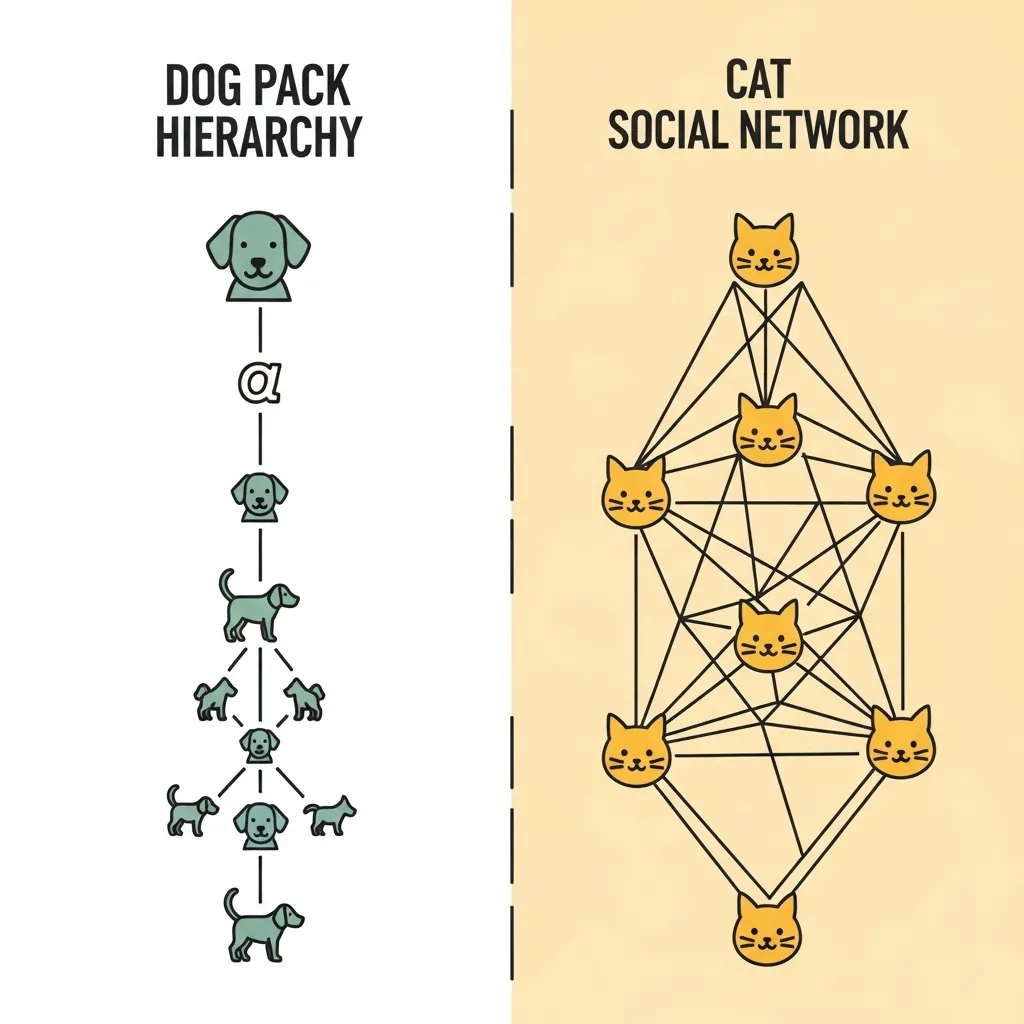
Dogs have hierarchies. Cats have networks. This is the first critical paradigm shift.
How Cats Interact With Each Other in a stable group is less about dominance and submission, and more about resource management and preference. Relationships are often fluid and context-dependent. Two cats may groom each other (allogroom), a sign of social bonding, but still need separate feeding stations to feel secure. This isn’t hypocrisy; it’s sophisticated social calculus.
Cat hierarchy behavior is often misinterpreted. The cat who gets the prime perch or eats first isn’t necessarily the “alpha.” She is often simply the most confident or has the highest priority of access at that moment. True problems arise not from hierarchy, but from competition. When resources are limited a single litter box in a dark corner, one food bowl, scarce vertical space cats sharing space are forced into competition, which triggers stress and territorial behavior.
Expert Insight: “Think of a well-managed office,” explains a feline behavior consultant. “People have their own desks (core territories), share the break room and printer (common resources), and get along with some colleagues better than others. They aren’t fighting for a ‘boss’ title; they just need their own space and unhindered access to supplies to do their work peacefully. Cats are the same.”
Chapter 2: The Pillars of Peace: Resource Management & Environmental Design
This is the most actionable part of creating harmony. Multi-cat household problems almost always trace back to a failure in one of these pillars.
The Golden Rule: The “N+1” Principle
For N number of cats, you should have N+1 of every critical resource. This means:
- Litter Boxes: 3 boxes for 2 cats, placed in different, low-traffic locations. This is the single most effective strategy to prevent cat litter box problems.
- Food/Water Stations: Multiple stations, separated visually. This prevents one cat eating the other cat’s food and allows for peaceful meals.
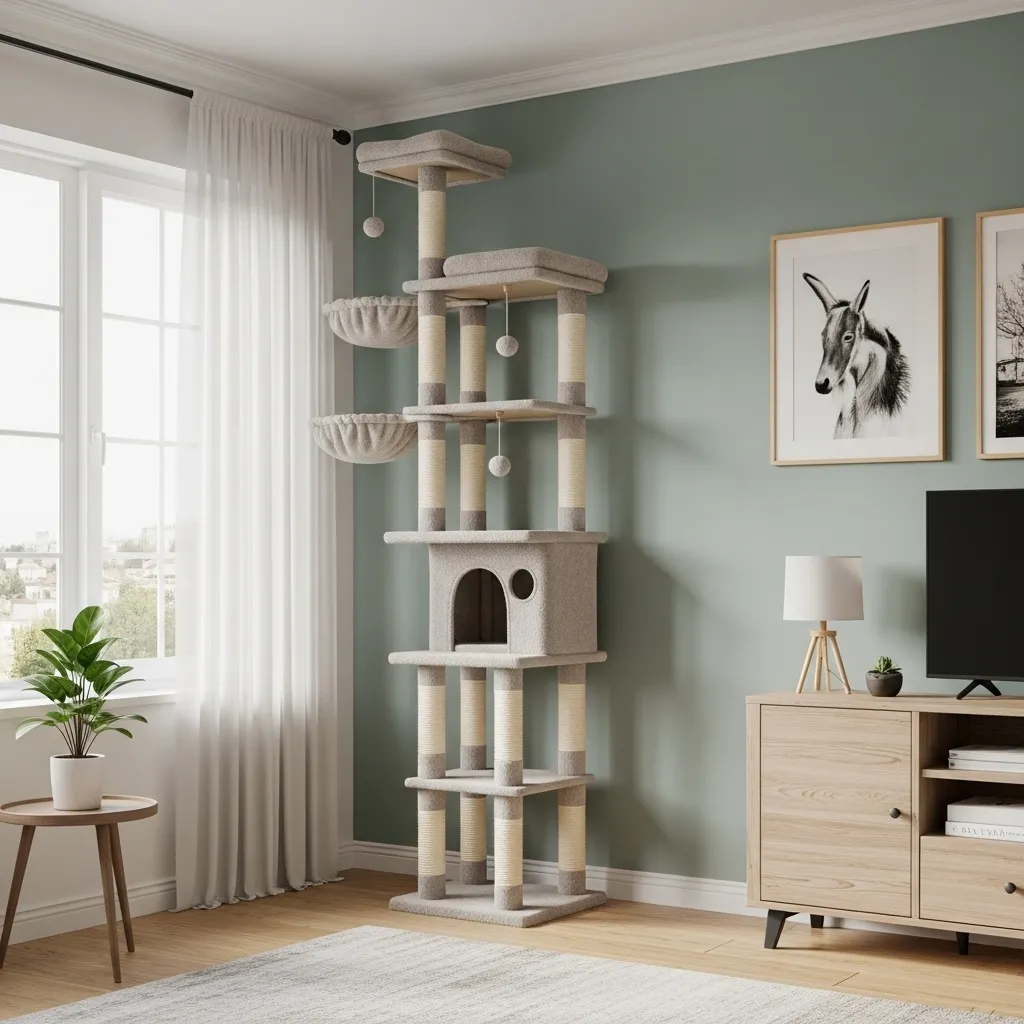
- Resting & Perching Zones: Ample vertical territory—cat trees, wall shelves, window perches. Height equals security and reduces tension.
Spatial Arrangement: The Art of Zoning
Cats navigate their world via lanes and hubs. Create clear “cat superhighways” using furniture that allows them to move through a room without being ambushed. Break up open floor plans with strategically placed cat trees or shelves. Provide hiding spots (like covered beds or open boxes) in every room as “escape hatches.”
For those in tighter quarters, our guide on best tips for multiple cats in small apartments offers space-saving solutions that adhere to these core principles.
Chapter 3: Speaking Fluent Feline: Reading Body Language & Social Signals
To manage multi-cat dynamics, you must become a translator. Overt fights are easy to spot; the subtle signs of stress in multi-cat homes are often missed.
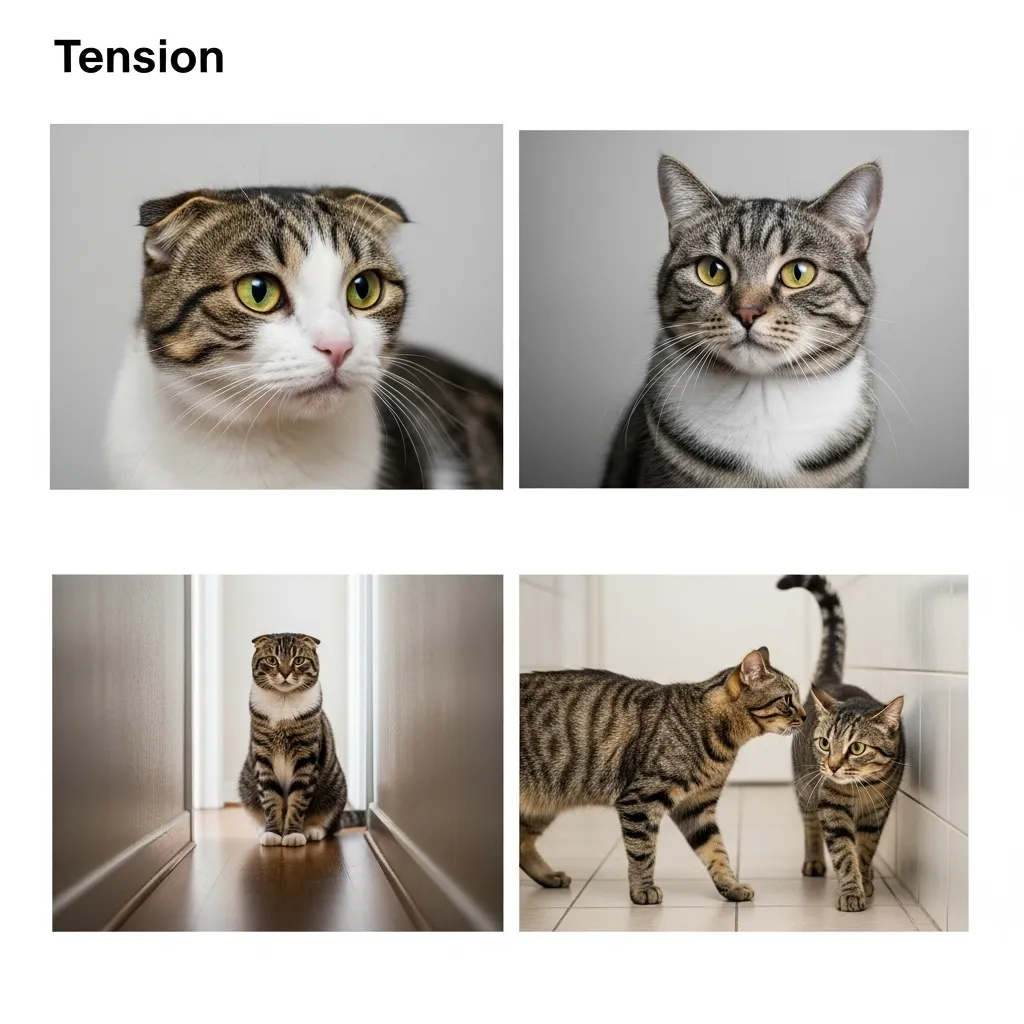
The Language of Tension (What Conflict Looks Like Before a Fight):
- Staring: A hard, fixed stare is a threat.
- Blocking: One cat sitting in a doorway, preventing another’s access.
- Silent Displacement: A cat jumps up, causing another to immediately leave the spot.
- Over-Grooming or Lack of Grooming: Stress-related changes in self-care.
- Changes in Vocalization: Increased hiding, or conversely, constant loud meowing can indicate anxiety.
The Language of Harmony (Signs Your Cats Are Bonded):
- Allorubbing: Passing by and rubbing cheeks/body on each other. This mingles scent, marking the other as “family.”
- Allogrooming: Gently grooming each other, often around the head and neck.
- Parallel Resting: Sleeping or resting in the same room, even if not touching.
- Tail-Up Greeting: Approaching each other with tails held high in a relaxed question-mark shape.
Understanding cat body language with other cats allows you to intervene before a conflict escalates. If you see tense staring, you can calmly distract with a toy or treat, redirecting their focus.
Chapter 4: The Foundational Ritual: Introducing Cats to Each Other Correctly
Whether introducing a new cat to resident cats or trying to re-introduce feuding housemates, the process is identical and cannot be rushed. This is where most multi-cat dynamics go wrong from the start.
Phase 1: Scent is Everything (Days 1-3+)
Keep the new cat in a separate “base camp” room with all its resources. Do not let the cats see each other. Swap bedding daily so they can acclimate to each other’s scent. Feed them on opposite sides of the closed door, gradually moving the bowls closer. The goal is to create a positive association: “Your smell means good things (food!).”
Phase 2: Controlled Sight (Days 4-7+)
Use a baby gate, a cracked door with a doorstop, or two screened carriers facing each other. Allow visual contact during supervised, short sessions, always paired with high-value treats or play. If either cat shows fear or aggression (hissing, growling, stiff posture), end the session calmly and return to Phase 1 for longer.
Phase 3: Supervised Integration (Week 2+)
Allow short, supervised visits in a neutral space. Have toys ready to engage them. Watch for signs of stress. Keep sessions positive and brief. Never leave them unsupervised until you are confident in their peaceful coexistence, which can take weeks or even months.
For a step-by-step walkthrough tailored to specific breeds, our resource on Bengal cat introduction tips provides breed-sensitive advice that applies to many high-energy cats.
Chapter 5: From Conflict to Calm: Proactive Management & When to Seek Help
Why do cats fight in the same house? The triggers are usually predictable: competition, redirected aggression (e.g., seeing an outdoor cat and taking it out on a housemate), or medical issues. A sudden onset of fighting always warrants a vet visit to rule out pain or illness.
Strategies to Reduce Conflict Between Cats:
- Interrupt, Don’t Punish: Clap your hands, toss a soft pillow nearby, or use a calm, firm voice to break a stare or pre-fight posture. Never yell or physically punish, as this increases overall stress.
- Play Therapy: Use interactive wand toys to engage both cats in play, releasing pent-up energy and creating shared positive experiences.
- Pheromone Support: Synthetic feline pheromone diffusers (like Feliway Friends) can create a background signal of calm and security.
- Separate Resources: Go back to basics. Ensure full compliance with the N+1 rule for all resources.
When Professional Help is Needed:
If fighting is severe, frequent, or causing injury, or if stress is manifesting as cat peeing everywhere outside the box, consult a certified feline behaviorist or a vet with a behavior specialty. They can create a customized behavior modification plan.
Our article on calming an angry cat offers immediate de-escalation techniques that are useful in tense moments.
Chapter 6: The Long Game: Fostering Lifelong Harmony
Improving harmony between cats is an ongoing commitment to their environmental and emotional needs. It’s about observation and adaptation.
- Routine is Security: Feed, play, and groom on a predictable schedule. Uncertainty breeds anxiety.
- Individual Attention: Spend one-on-one time with each cat daily to fulfill their social needs and strengthen your individual bonds.
- Environmental Enrichment: Rotate toys, provide puzzle feeders, and create new safe viewing spots (a new perch by a bird feeder) to prevent boredom, which can lead to pestering and conflict.
Conclusion: The Rewarding Ecosystem
Navigating multi-cat dynamics is less about enforcing peace and more about architecting an environment where peace can flourish naturally. By viewing your home through a feline lens prioritizing abundant resources, respectful space, and clear communication you transform it from a potential battleground into a thriving colony. The reward is profound: the sight of your cats engaged in a quiet cat nap together, the soft sound of mutual grooming, and the deep satisfaction of providing a truly harmonious life for your feline family.
Ready to dive deeper into creating the perfect feline-friendly home? Explore our extensive library of expert guides on cat behavior, breed-specific care, and DIY cat enrichment ideas on Cat Bloom Haven.
Frequently Asked Questions (FAQs)
Q: Do cats get jealous of other cats?
A: Cats do not experience jealousy as humans do. What appears as jealousy like pushing another cat off your lap is usually resource guarding. The cat is competing for a valued resource: your attention. Ensuring each cat gets predictable, individual attention reduces this behavior.
Q: How to stop cats fighting immediately?
A: Make a loud, abrupt noise (clap, shake a can of coins) to startle them apart without touching them, as you may get scratched. Once separated, give them time to calm down in different rooms before assessing the cause of the fight.
Q: What are the best tips for multi-cat households?
A: The three non-negotiable tips are: 1) Provide N+1 litter boxes in separate locations, 2) Create ample vertical territory (cat trees, shelves), and 3) Feed cats separately and in peace.
Q: How long does it take for cats to get along?
A: There is no universal timeline. A proper introduction can take anywhere from two weeks to several months. Patience and proceeding at the cats’ pace are critical for long-term success. Rushing the process is the most common cause of prolonged tension.